
RNA sequencing shows which genes are active in a cell and how that activity changes with disease or treatment. Drug developers, hospitals and research groups use it to make better decisions earlier, so it has moved from a specialist lab tool into everyday research. This has opened steady revenue for companies that sell instruments, reagents, software and sequencing services.
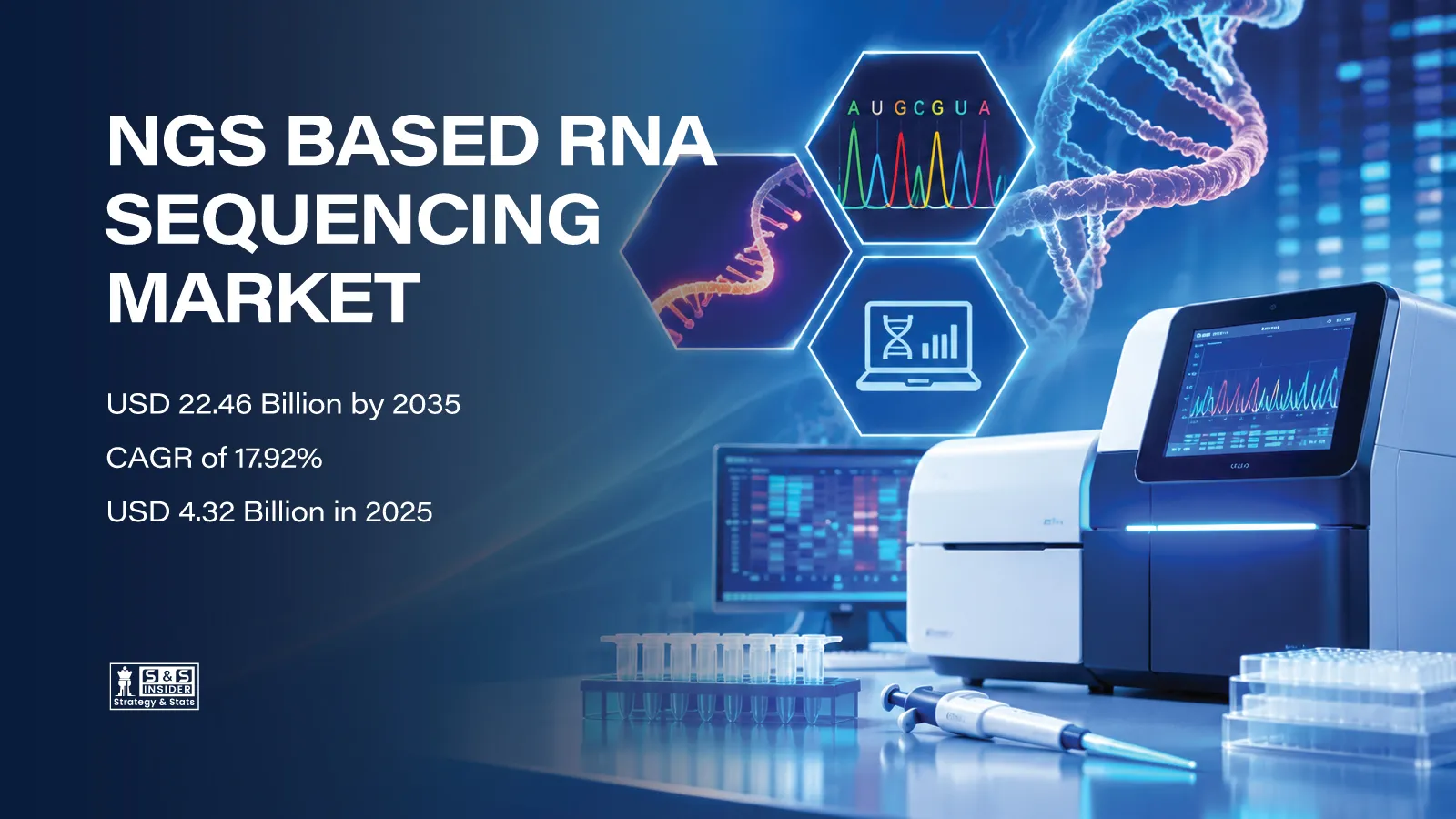
According to a recent study by SNS Insider, the global NGS-Based RNA Sequencing Market was valued at USD 4.32 Billion in 2025 and is expected to reach USD 22.46 Billion by 2035, growing at a CAGR of 17.92% over 2026–2035. The market is estimated at USD 5.09 Billion in 2026.
Gain Actionable Intelligence on the NGS based RNA Sequencing Market - Request a Sample Report
Drug Developers Treat RNA Data as a Way to Lower Risk
Failed drug programs are costly, and most failures happen late. RNA sequencing gives developers an earlier view of how a compound affects cells. That helps them stop weak candidates sooner and put money behind stronger ones.
Every study then creates repeat demand. Teams run more samples, use more consumables and keep the data for later analysis. Suppliers that support this full cycle earn income over the life of a program, not from a single sale.
Developers also want partners who can turn raw data into clear answers. Vendors that offer analysis support alongside sequencing are seen as part of the research team rather than as an outside supplier.
Clinical Use Opens a Larger and Steadier Market
Hospitals are starting to use RNA sequencing to guide cancer treatment and to diagnose rare diseases. Clinical testing runs every day. Buyers need validated workflows and consistent results, and once they adopt a method they tend to stay with it.
Reimbursement is still the main hurdle. Insurers want clear proof that a test changes care before they pay for it. Companies that build this evidence early will find it easier to win hospital contracts.
Clinical labs also need help with sample quality, data handling and reporting. Many have few bioinformatics staff, which makes simple, end-to-end systems more attractive than flexible research tools.
NGS-Based RNA Sequencing Market Segmentation Highlights
By Product and Service: RNA-seq platforms and consumables held 53.40% of the market in 2025. Services are growing fastest, at a 19.74% CAGR, as more labs outsource their work.
By Technology: Sequencing by synthesis held 57.80% in 2025. Nanopore sequencing is expanding fastest, at a 21.38% CAGR, because buyers want long reads and portable systems.
By Application: Drug discovery and development held 52.60% in 2025. Clinical diagnostics is growing fastest, at a 21.64% CAGR, as testing moves into patient care.
North America Leads with 44.60% Market Share as Asia Pacific Advances at 19.06% CAGR
North America held 44.60% of the market in 2025. The U.S. was valued at USD 1.73 Billion and is growing at a 16.48% CAGR, supported by strong drug research spending.
Asia Pacific held 24.80% and is the fastest-growing region, at a 19.06% CAGR. National genome programs and new local platforms in China, Japan and India create room for new suppliers.
Europe held 24.30%, Latin America 3.50% and the Middle East & Africa 2.80%. In these regions, demand comes from population studies and growing research budgets.
Sequencing as a Service Could Widen the Customer Base
Many smaller labs, biotech startups and hospitals cannot justify buying their own instruments or hiring data specialists. For them, service models make RNA sequencing practical. They pay per project and get analyzed results back.
This helps suppliers reach customers that would otherwise stay out of the market. It also smooths revenue, because services do not depend on large capital purchases that follow funding cycles.
Shared data platforms and biobank partnerships add another layer of value. Providers that combine sequencing, storage and analysis in one offer can charge for convenience and build long customer relationships.
Competitive Outlook: Cost, Read Length and Ease of Use
Competition centers on lowering cost per sample, offering longer and more accurate reads, and making workflows simpler. New entrants are putting pressure on prices, which pushes established suppliers to add value through software and support.
Buyers increasingly judge vendors on the whole workflow, from sample preparation to the final report. Companies that cut steps and reduce the need for expert staff will be better placed to win new users.
NGS-Based RNA Sequencing Market Outlook Through 2035
The market is set to grow about fivefold, from USD 4.32 Billion in 2025 to USD 22.46 Billion by 2035. Drug research will remain the base of demand, and clinical diagnostics and services will drive the fastest gains. Suppliers that offer affordable, simple and clinically proven solutions are best placed to benefit.



