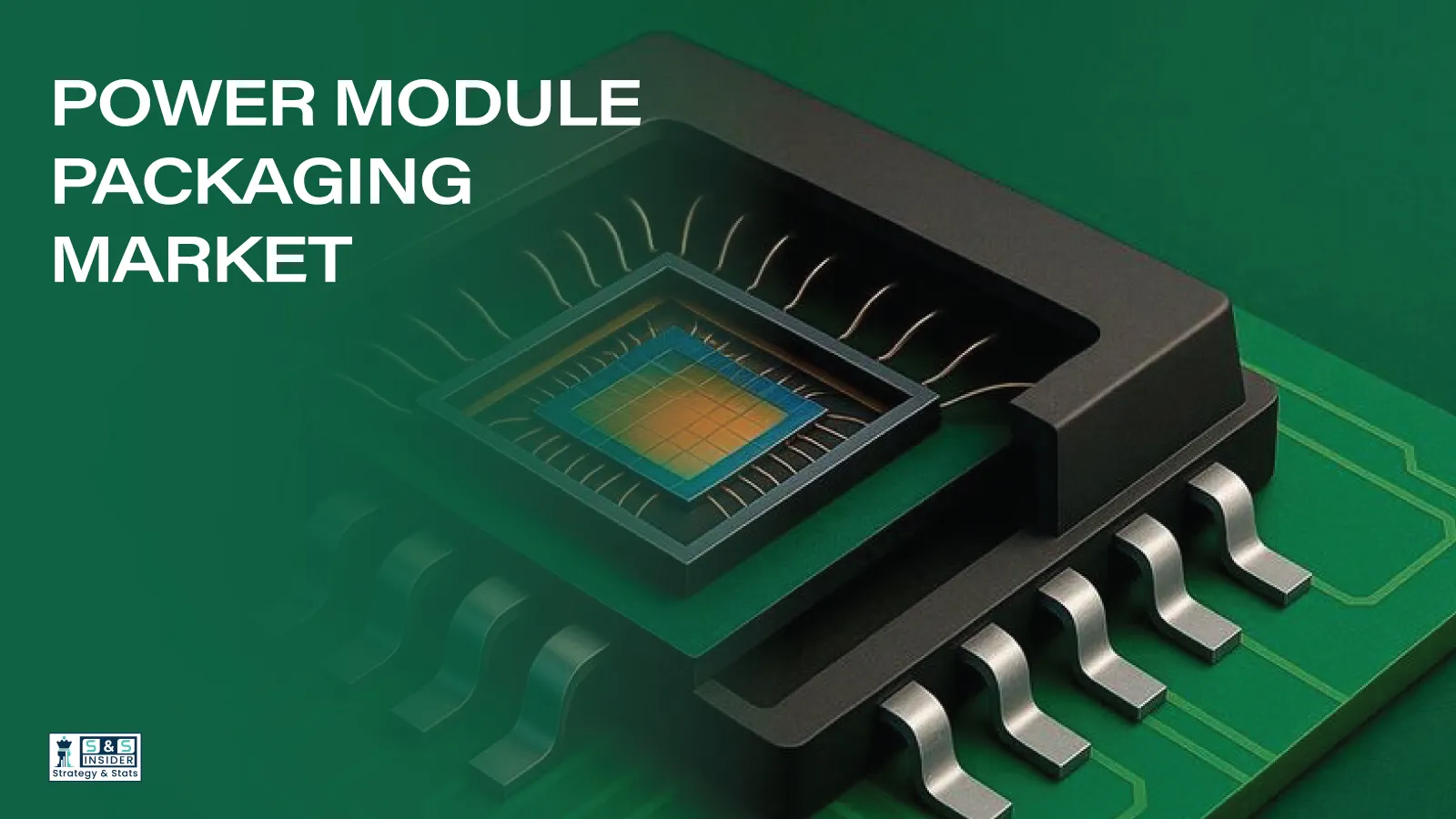
The Power Module Packaging market is showing significant growth due to an increase in the usage of electric vehicles, implementation of renewable energy, AI-based data centers, and industrial electrification. Power module packaging technology plays an essential part in improving thermal management, reliability, energy density, and energy efficiency of today's power electronics systems. Adoption of the latest semiconductor materials like SiC and GaN requires power modules to be packed using the latest techniques that would provide better thermal dissipation, reliability, power density, increased operating temperature, and increased switching frequency. Technologies such as double-sided cooling, sintered silver die attach, embedded die packaging, copper wire bonding, and silicon nitride substrates are enabling the performance of future power modules.
According to SNS Insider, the global Power Module Packaging Market is valued at USD 2.77 Billion in 2025 and is expected to reach USD 6.98 Billion in 2035, growing at a CAGR of 9.66% from 2026 to 2035. The growth in the market can be attributed to the increased production of electric vehicles, investments in renewable energy infrastructure, rise in AI-based data centers, and increased use of efficient power converters in industrial applications. Moreover, various government schemes that help in the manufacture of semiconductor products and development of domestic supply chains are also contributing to the growth of the market.
Competitive Landscape:
Some of the major companies operating in the Power Module Packaging Market are Infineon Technologies AG, Mitsubishi Electric Corporation, Fuji Electric Co., Ltd., STMicroelectronics NV, Semikron Danfoss, Hitachi Energy Ltd., Wolfspeed Inc., onsemi, Renesas Electronics Corporation, ROHM Semiconductor, and others.
Strategic Developments & Industry Innovations:
-
Infineon Technologies AG in 2025 released a new roadmap for AI data center power supplies that combine silicon, silicon carbide, and gallium nitride technologies. The new platform provides an efficiency rate of up to 97.5% by means of advanced 8 kW and 12 kW power architectures developed in order to accommodate the requirements of hyperscale AI computing infrastructure with reduced energy usage and CO2 footprint.
-
In Q3 2025, Denso Corporation revealed huge investment into advanced silicon carbide power module packaging technology for next generation 800V traction inverters in electric vehicles.
-
In 2025, Wolfspeed Inc. increased the capacity of its silicon carbide manufacturing plant in Mohawk Valley, US, in order to cater to growing requirements of automotive, renewable energy and industrial power electronics customers.
Key Players Driving Innovation in Power Module Packaging:
1. Infineon Technologies AG: Leading Advanced Power Module Innovation for Electrification
Infineon Technologies is a top-notch supplier of power semiconductors and power modules used in electric vehicles, renewable energy generation, industrial automation, and data centers around the globe. Infineon provides an extensive range of silicon-based, silicon carbide, and gallium nitride-based products that can deliver maximum efficiency and reliability.
Continuous investment by Infineon in the development of innovative packaging solutions, AI data center power systems, and wide bandgap semiconductors ensures the leadership of the company in the field of power electronics development globally.
2. Wolfspeed Inc.: Advancing Silicon Carbide Manufacturing for High-Performance Power Systems

Wolfspeed is a world leader in silicon carbide technology and an important supplier of SiC wafers, components, and power electronics solutions. Wolfspeed specializes in the development of next-generation electric vehicles, renewable energy systems, industrial motor controls, and charge stations through innovative wide-bandgap semiconductor technology.
The increased presence of the company in the country in terms of its manufacturing capacity and development of silicon carbide in large volumes contribute to the demands of the industry regarding power modules that would function under high voltage, temperature, and switching frequencies.
3. Semikron Danfoss: Transforming Power Module Packaging Through Advanced Thermal Management
Semikron Danfoss is one of the best companies producing power semiconductor modules and advanced packaging solutions for the application areas of automobiles, industries, renewables, and transportation sectors. This company focuses on advanced packaging concepts to increase power density, thermal management, and reliability.
Semikron Danfoss’s experience in pressure contact technology, double-sided cooling concepts, and power modules makes the customers more efficient and compact in terms of system integration.
Emerging Opportunities in the Power Module Packaging Industry Through 2035
It is anticipated that the Power Module Packaging Market would see remarkable growth due to the increasing need for efficient power conversion technologies in electric cars, renewable energy systems, artificial intelligence data centers, and industrial automation systems. The developments in silicon carbide and gallium nitride semiconductors and in cooling systems, bonding techniques, and packaging structures would keep enhancing the performance and reliability of power electronics.
Some of the companies driving the technological developments in the industry include Infineon Technologies, Wolfspeed, and Semikron Danfoss. As the demand for energy-efficient systems, sustainable transport, and next generation computing increases, power module packaging is expected to remain one of the critical technologies behind it all.