
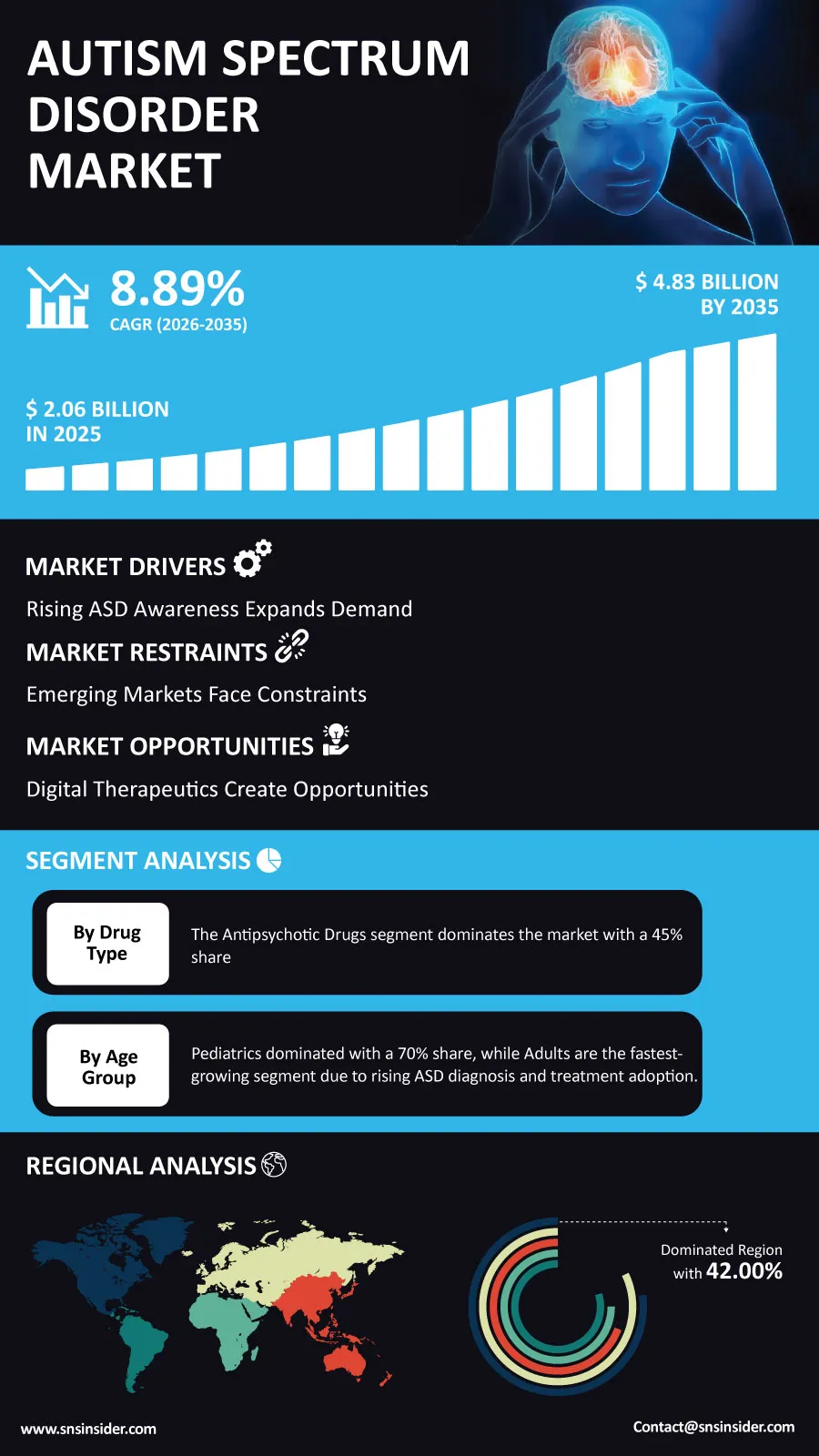
The global Autism Spectrum Disorder Market is entering a new phase of development as healthcare providers, pharmaceutical companies, and policymakers prioritize earlier diagnosis and more effective treatment strategies. "According to a recent study by SNS Insider, the global Autism Spectrum Disorder Market size valued at USD 2.06 billion in 2025, is anticipated to grow to USD 4.83 billion by 2035, registering a CAGR of 8.89% over the 2026–2035 forecast period."
The increasing acknowledgment of autism status is changing the demand for treatments all over the globe. Improvements in the methods of diagnosis and availability of treatment options are forcing health sectors around the world to invest in varied therapeutic modalities. Moreover, the innovations in more personalized forms of therapy and digital health technologies have allowed the potential treatment to be more precise in terms of patient care.
To Get Detailed Insights on the Autism Spectrum Disorder Market – Request a Sample Report
Early Diagnosis and Precision Medicine Transform Treatment Landscape
Healthcare providers are becoming more focused on identifying the autism spectrum disorder at an early age to allow for timely interventions that have a positive impact on the patient. Increased awareness among the family members, educators and practitioners is causing a higher number of cases to be diagnosed, while the government programs in screening ensure that the process of enabling treatment becomes easier.
At the same time, pharmaceutical companies are researching new treatments specifically tailored for the particular needs of certain patients. The use of precision medicine, behavioral support services, technologies of digital monitoring, and telemedicine are creating a tighter connection between the patients and the treatment process and making it easier for caregivers to assist them.
Key Market Findings Highlight Expanding Therapeutic Opportunities
Antipsychotic drugs remained the leading drug category in 2025, accounting for 45% of market revenue, reflecting their established role in managing behavioral symptoms associated with autism spectrum disorder. Stimulants are projected to register the fastest growth as clinicians increasingly address co-existing ADHD-related symptoms among ASD patients.
By disease type, Autistic Disorder represented the largest segment with a 60% market share in 2025. Meanwhile, Pervasive Developmental Disorder (PDD) is expected to witness the fastest expansion as broader diagnostic criteria and improved awareness support earlier identification of diverse ASD presentations.
Among age groups, Pediatrics dominated the market with a 70% revenue share due to widespread early intervention programs and increasing parental awareness. Adult therapeutics are expected to record the fastest growth as late-stage diagnoses become more common and treatment availability expands globally.
Hospital pharmacies accounted for 50% of overall market revenue in 2025, supported by physician-guided treatment protocols and integrated hospital care. Online pharmacies are anticipated to experience the strongest growth during the forecast period as digital healthcare adoption and home medication delivery continue to accelerate.
Digital Healthcare Innovation Creates New Growth Potential
Technological advancement is becoming ever more vital in autism care. For example, through the use of AI-assisted screening tools, remote monitoring systems, telemedicine, and digital therapeutic methods, access to care has become more widespread for patients living in underserved regions.
The combination of software-based behavioral and medication therapy makes monitoring easier for doctors and helps patients stick to their treatments. Such changes will lead to minimizing difficulties in treatment and better managing illnesses in the long run.
Furthermore, the growth of the industry is getting a boost from new advances in the realm of product development. Thus, during 2025 a number of companies announced innovations in clinical research, AI-based diagnostics technology, and partnerships for genetic research that is centered around achieving greater accuracy in treatments and speeding up future drug development.
Regional Markets Continue to Strengthen Worldwide
North America remained the largest regional market in 2025, accounting for 42% of global revenue. The region benefits from advanced healthcare infrastructure, comprehensive insurance coverage, established autism treatment centers, and strong investment in clinical research. Within North America, the United States generated USD 660 million in 2025 and is projected to reach USD 1,508.84 million by 2035, growing at a CAGR of 8.62%.
Europe represented 26% of the global market, supported by well-developed healthcare systems, growing public awareness campaigns, and government-backed pediatric care initiatives.
Asia Pacific captured 20% of market revenue in 2025 and is expected to be the fastest-growing regional market throughout the forecast period. Expanding healthcare infrastructure, rising screening programs, increasing pharmaceutical investments, and broader adoption of telemedicine solutions are driving rapid market development across China, India, Japan, and Australia.
Latin America accounted for 5% of global revenue, while the Middle East & Africa contributed 7%, with improving healthcare access and public-private collaborations creating new opportunities for autism therapeutics.
Leading Companies Expand Innovation Across the Market
Competition within the autism spectrum disorder therapeutics market continues to intensify as pharmaceutical companies accelerate clinical research, precision medicine programs, and digital healthcare partnerships. Recent investments in AI-assisted diagnostics, biomarker research, and next-generation therapies are expected to broaden treatment options while supporting future market expansion.
Major companies operating in the global autism spectrum disorder market include Otsuka Pharmaceutical Co., Ltd., Johnson & Johnson Services Inc., Pfizer Inc., Eli Lilly and Company, Roche Holding AG, Novartis AG, Merck & Co., Inc., Bristol Myers Squibb Company, AbbVie Inc., AstraZeneca, MapLight Therapeutics, PaxMedica Inc., Yamo Pharmaceuticals LLC, Axial Therapeutics Inc., Zynerba Pharmaceuticals Inc., Curemark LLC, Vanda Pharmaceuticals Inc., ACADIA Pharmaceuticals Inc., Anavex Life Sciences Corp., and NeuroNOS.
An SNS Insider analyst Parry Kardani commented, "Continued advances in early diagnosis, personalized medicine, and digital therapeutic technologies are redefining autism spectrum disorder care. Organizations investing in innovative treatment approaches and integrated patient management solutions will be well positioned to address the growing global demand for effective ASD therapies.
About the Author

Get in touch




