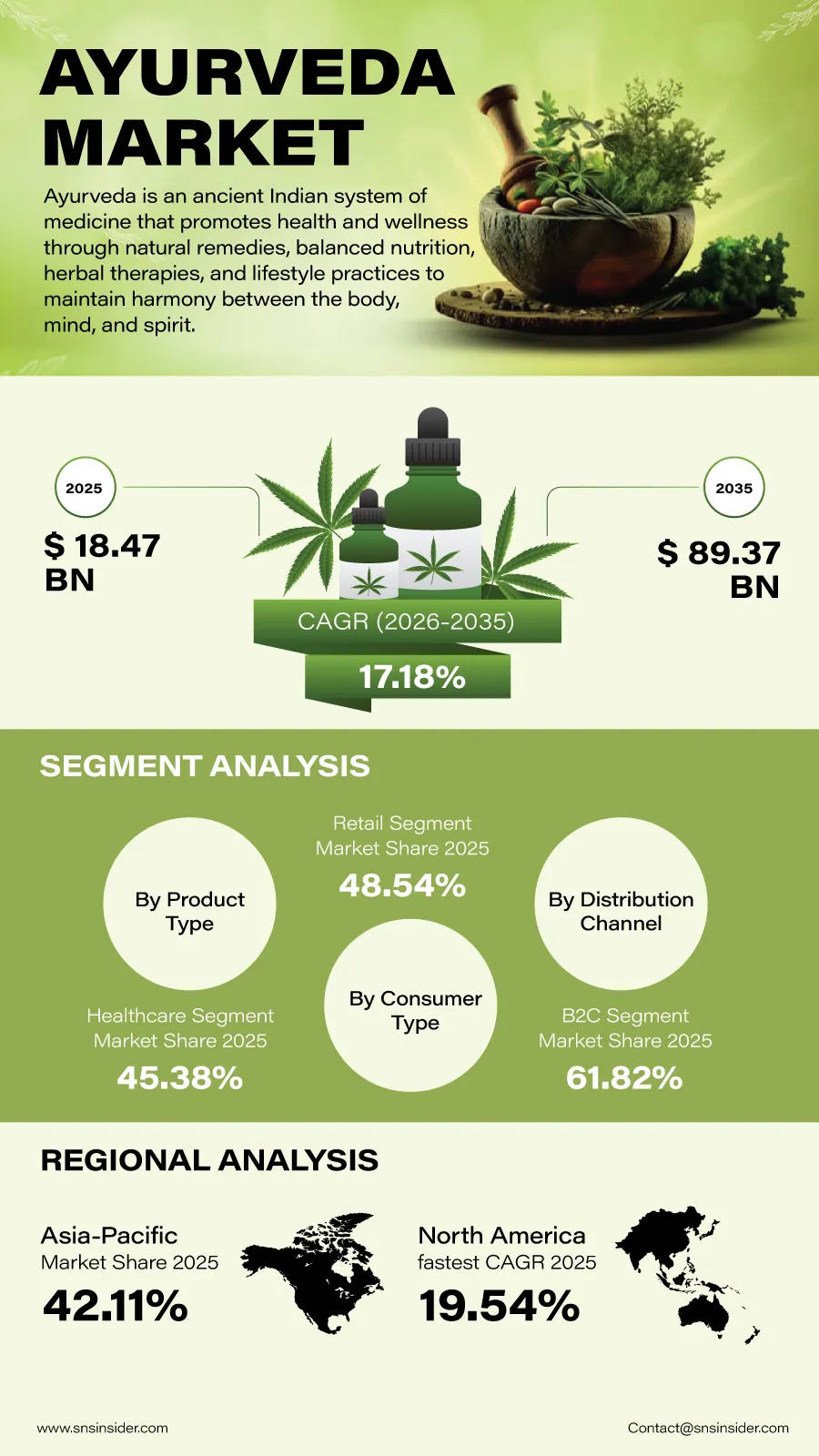
The global Ayurveda Market is projected to witness exceptional growth over the next decade as consumers increasingly embrace natural healthcare solutions, holistic wellness practices, and plant-based products. “According to a recent study by SNS Insider, the global Ayurveda Market size valued at USD 18.47 billion in 2025, is anticipated to grow to USD 89.37 billion by 2035, registering a CAGR of 17.18% over the 2026–2035 forecast period.”
Increasing awareness for preventive healthcare, growing demand for botanical ingredients and evolving consumer preferences towards clean-label wellness products are transforming the global healthcare and personal care industries. Ayurveda is moving out of the traditional roots into the mainstream markets of healthcare, nutrition, beauty and lifestyle with people looking for options that ensure long-term well-being.
The industry is also benefiting from increasing product innovation, wider retail availability, and stronger digital engagement, allowing manufacturers to reach consumers across both developed and emerging economies.
Preventive Wellness Becomes a Global Consumer Priority
Healthcare systems and consumers are increasingly focused on long-term health rather than treatment of illness after the fact. This transition is fueling the growth of herbal supplements, functional nutrition, wellness therapies and nature-inspired personal care products.
In response, manufacturers are increasingly combining old-world botanical know-how with new-world manufacturing standards, better quality assurance and consumer-friendly formulations in their product portfolios. Digital wellness platforms and personalized health recommendations are further improving accessibility, and stimulating increased adoption among younger consumers.
Growing interest in sustainable sourcing, environmentally friendly packaging and transparent product labelling is also influencing purchasing decisions, creating new opportunities for companies developing premium herbal healthcare solutions.
Key Market Findings Highlight High-Growth Segments
Among product categories, healthcare products accounted for 45.38% of global market revenue in 2025, reflecting strong consumer demand for herbal supplements, immunity-support products, and wellness formulations.
Meanwhile, personal care products are expected to register the fastest growth through 2035, expanding at a CAGR of 17.18%, driven by increasing preference for botanical skincare, haircare, and beauty products.
From a distribution perspective, retail channels represented 48.54% of total market revenue in 2025, maintaining their leadership through broad consumer accessibility and established purchasing habits. However, online and e-commerce platforms are projected to record the fastest growth at a CAGR of 18.31%, supported by rapid digitalization and changing shopping behavior worldwide.
By consumer category, business-to-consumer (B2C) sales accounted for 61.82% of market revenue in 2025, highlighting strong direct consumer demand for Ayurvedic products. Within application areas, therapeutics and healthcare represented 39.71% of total revenue, while cosmetics and personal care are anticipated to witness the fastest growth, advancing at a CAGR of 18.04% during the forecast period.
Innovation and Wellness Trends Continue to Shape the Industry
The Ayurveda industry continues to evolve as manufacturers develop innovative formulations, functional foods, herbal nutraceuticals, and science-backed wellness products to meet changing consumer lifestyles.
More collaboration between healthcare providers, wellness brands, research institutions and digital health companies is helping to support broader product development and raising consumer awareness worldwide. Companies are also leveraging artificial intelligence, personalized wellness platforms and online consultation services to enhance customer engagement and improve product recommendations.
These developments are strengthening Ayurveda's position within the broader preventive healthcare and wellness ecosystem.
Regional Markets Present Significant Growth Opportunities
Asia Pacific led the industry with a revenue share of 42.11% in 2025, on account of the growing consumer acceptance, growing herbal product industries, favorable government initiatives and established traditional healthcare practices. The region continues to be the main driver of growth for the global Ayurveda industry.
North America is expected to be among the fastest growing regional markets with a CAGR of 19.54% during 2026-2035. Increasing interest in holistic wellness, rising adoption of herbal supplements, expansion of digital retail platforms, and increasing consumer preference for plant-based healthcare products are driving demand across the region.
Leading Companies Continue to Expand Global Presence
The Ayurveda market is highly competitive with manufacturers concentrating on product innovation, international expansion, sustainable sourcing and premium wellness offerings. The companies are launching new products to consolidate their market position. The market position of the companies is being supported by strategic partnerships, digital commerce activities and investments in research and quality assurance.
Key companies operating in the global Ayurveda market include Dabur, Himalaya Wellness, Patanjali Ayurved, Emami, Baidyanath, Hamdard Laboratories, Kerala Ayurveda Ltd, Organic India, Sri Sri Tattva, and Maharishi Ayurveda.
An SNS Insider analyst Parry Kardani commented, "Consumer demand is shifting beyond conventional healthcare toward integrated wellness solutions that emphasize prevention, natural ingredients, and long-term health management. Continued innovation, digital transformation, and expanding global awareness are expected to create substantial growth opportunities across the Ayurveda market over the coming decade."
An Infographic Representation of the Global Ayurveda Market
About the Author

Get in touch