
Chronic Disease Management Market is entering a period of accelerated digital transformation due to growing efforts on the part of healthcare professionals around the world to manage chronic conditions on a long-term basis. Increased usage of technology in healthcare, growing virtual care options, and focus on preventive medicine are some of the factors changing the disease management paradigm and providing growth opportunities.
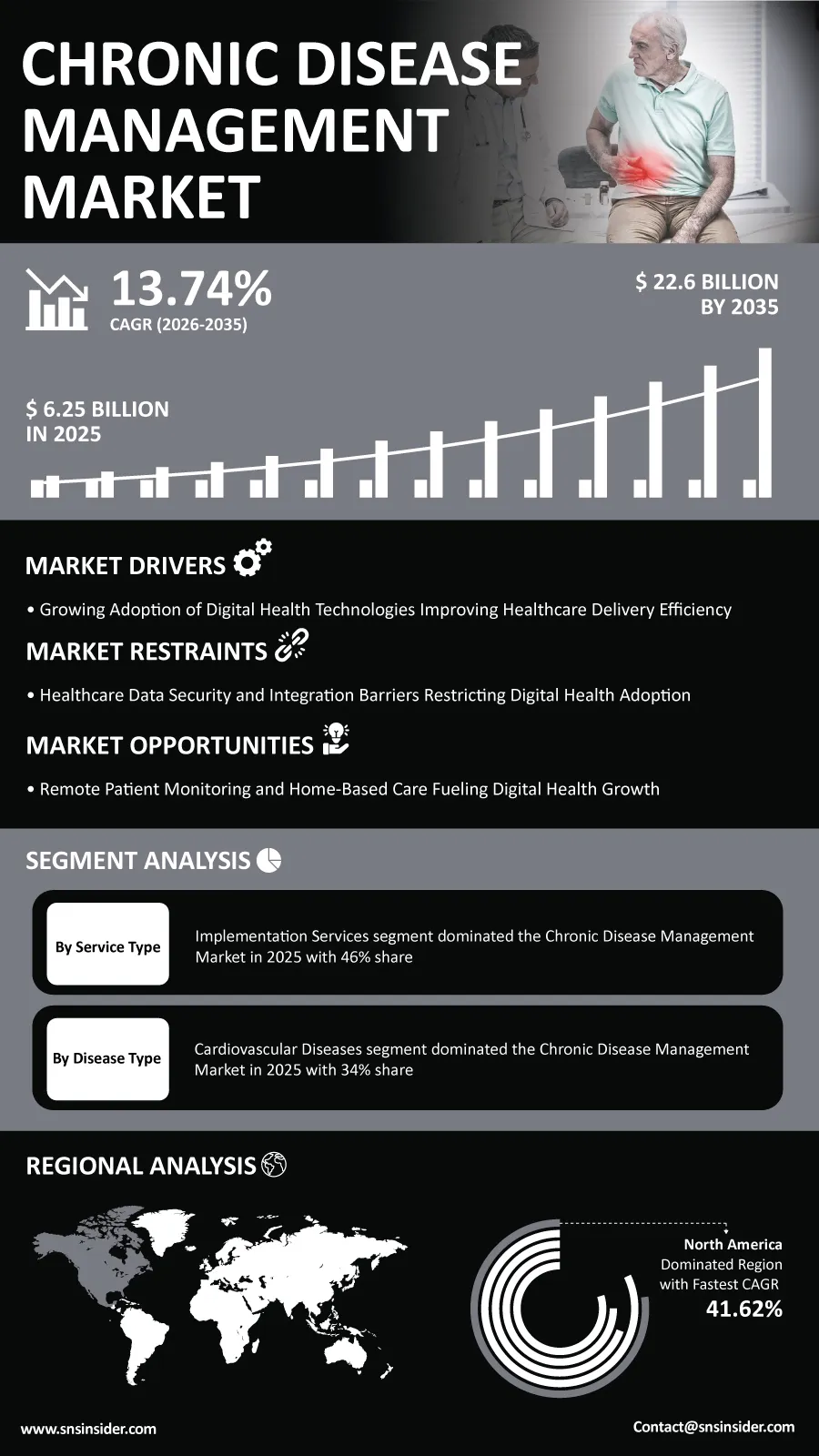
According to a recent study by SNS Insider, the global Chronic Disease Management Market size valued at USD 6.25 billion in 2025, is anticipated to grow to USD 22.6 billion by 2035, registering a CAGR of 13.74% over the 2026–2035 forecast period. Healthcare systems are increasingly leveraging artificial intelligence, cloud computing, and remote monitoring technologies to improve clinical outcomes, reduce avoidable hospitalizations, and deliver more personalized care for patients managing long-term medical conditions.
With the rising cost of healthcare, the healthcare industry is increasingly focusing on a proactive approach to health that can help detect health risks early and keep patients engaged continuously. With the increasing use of wearables and predictive analytics, healthcare providers have been able to track their patients even outside of hospitals.
To Get Detailed Insights on the Chronic Disease Management Market – Request a Sample Report
Digital Care Models Transform Long-Term Disease Management
The healthcare industry is witnessing rapid growth in technology platforms that are linking physicians, patients, and caregivers under a unified digital environment. Remote patient monitoring systems have started offering continuous insights into blood pressure, sugar levels, cardiac function, and breathing issues, enabling the doctors to act before the situation worsens.
Through artificial intelligence, healthcare organizations are also gaining improved disease management capabilities by predicting which patients are at higher risk of hospitalization. Additionally, telemedicine systems are becoming increasingly popular due to their ability to offer specialist consultations even when an individual faces challenges reaching out to healthcare facilities.
Increased use of behavioral health integration solutions is also transforming the healthcare industry by providing a better understanding of the link between psychological well-being and chronic disease outcomes. When used in conjunction with population health management platforms, these systems are empowering organizations to deliver coordinated healthcare services.
Market Segments Reflect Expanding Digital Healthcare Adoption
By service type, in 2025, Implementation Services had the highest market share of around 46% as there is increased demand for technology integration within hospitals and healthcare providers. During the forecasted period, Educational Services will witness high growth because there is an increase in focus towards patient engagement and caregiver training.
Based on disease type, cardiovascular diseases accounted for the largest market share at around 34% in 2025 backed by the rising global prevalence of cardiovascular diseases. The highest growth is anticipated in diabetes management during the forecast period till 2035 owing to increased digitalization by healthcare professionals.
By delivery mode, the cloud-based platform accounted for around 52% revenue share of the market owing to its scalability, accessibility of information, and integration capability with telehealth as well as electronic health records. The web-based platform is projected to grow at the fastest rate due to increasing digital healthcare services being provided by healthcare facilities.
Among end users, Healthcare Providers will account for around 61% of the market revenue by creating widespread adoption of chronic care management solutions among hospitals and clinics. The fastest growing segment will be Healthcare Payers as insurance providers increase their investments into preventive care solutions aimed at improving patient outcomes and reducing overall healthcare costs.
AI, Remote Monitoring, and Preventive Care Drive Industry Innovation
Technology keeps on revolutionizing the way chronic diseases are managed by the use of patient monitoring and data-based decision making. Devices, sensors and applications that are connected are enhancing the interaction between patients and healthcare practitioners and allow interventions to be made among at-risk populations.
The healthcare industry is also employing the concept of value-based care to improve patient outcomes. With continued developments in the reimbursement models, digital chronic disease management is fast emerging as an effective tool to prevent readmissions and increase drug compliance among others.
Regional Markets Accelerate Healthcare Digitalization
North America held the position of being the largest regional market, accounting for about 41.62% of the total revenues. This is due to the presence of an advanced healthcare infrastructure, increased digital health technology, favorable reimbursements, and investments in telemedicine solutions. In North America, the share of the U.S. was about 78%. In 2025, the U.S. Chronic Disease Management Market amounted to USD 1.83 billion and reached USD 6.58 billion by 2035, growing at a rate of 13.55% CAGR.
Asia Pacific is expected to be the fastest-growing regional market, growing at a rate of 14.51% CAGR to 2035 owing to the digitalization of the healthcare industry in the emerging markets. The major portion of the revenue in this region belongs to India, which contributed about 38%.
The United Kingdom was responsible for 30% of the regional income in Europe, while Brazil accounted for 52% of the income in Latin America. In the Middle East and Africa region, United Arab Emirates had a share of 36% of the regional income as governments have been making investments in digital healthcare systems.
Industry Leaders Expand Digital Health Capabilities
Competition across the chronic disease management market continues to intensify as healthcare technology providers strengthen AI capabilities, cloud-based platforms, and remote patient monitoring solutions. During 2025, Teladoc Health introduced an AI-powered chronic care platform integrating wearable device data with predictive analytics to help clinicians identify patients requiring early intervention. In August 2024, WellnessWits partnered with IBM Watsonx Assistant to launch an AI-enabled virtual chronic care companion supporting patient engagement and medication adherence. Earlier, Omada Health received FDA Breakthrough Device designation for its digital diabetes prevention platform, highlighting continued momentum in digital chronic care innovation.
Major companies operating in the global Chronic Disease Management Market include Philips Healthcare, IBM Corporation, Siemens Healthineers, GE Healthcare, Allscripts Healthcare Solutions, Cerner Corporation, Epic Systems Corporation, McKesson Corporation, Oracle Corporation, Teladoc Health, Inc., Medtronic plc, Omada Health, Health Catalyst, Cognizant Technology Solutions, WellDoc, Inc., eClinicalWorks, CareCloud, Inc., Lumeon Inc., NextGen Healthcare, and Virgin Pulse.
An SNS Insider analyst Parry Kardani commented, "Healthcare is steadily moving toward continuous, technology-enabled care rather than episodic treatment. Organizations that combine artificial intelligence, connected devices, remote monitoring, and patient-centered digital platforms will be well positioned to support the growing global demand for effective chronic disease management while improving long-term clinical outcomes."
About the Author

Get in touch




