Companion Animal Health Market is entering a new phase of expansion due to the adoption of technological advances and treatments by veterinary medicine which have been traditionally used in human medicine. The increasing investment in prevention services, diagnostics, specialty drugs, and customized veterinary care is presenting new possibilities for drug, biotech, diagnostics, and pet companies.
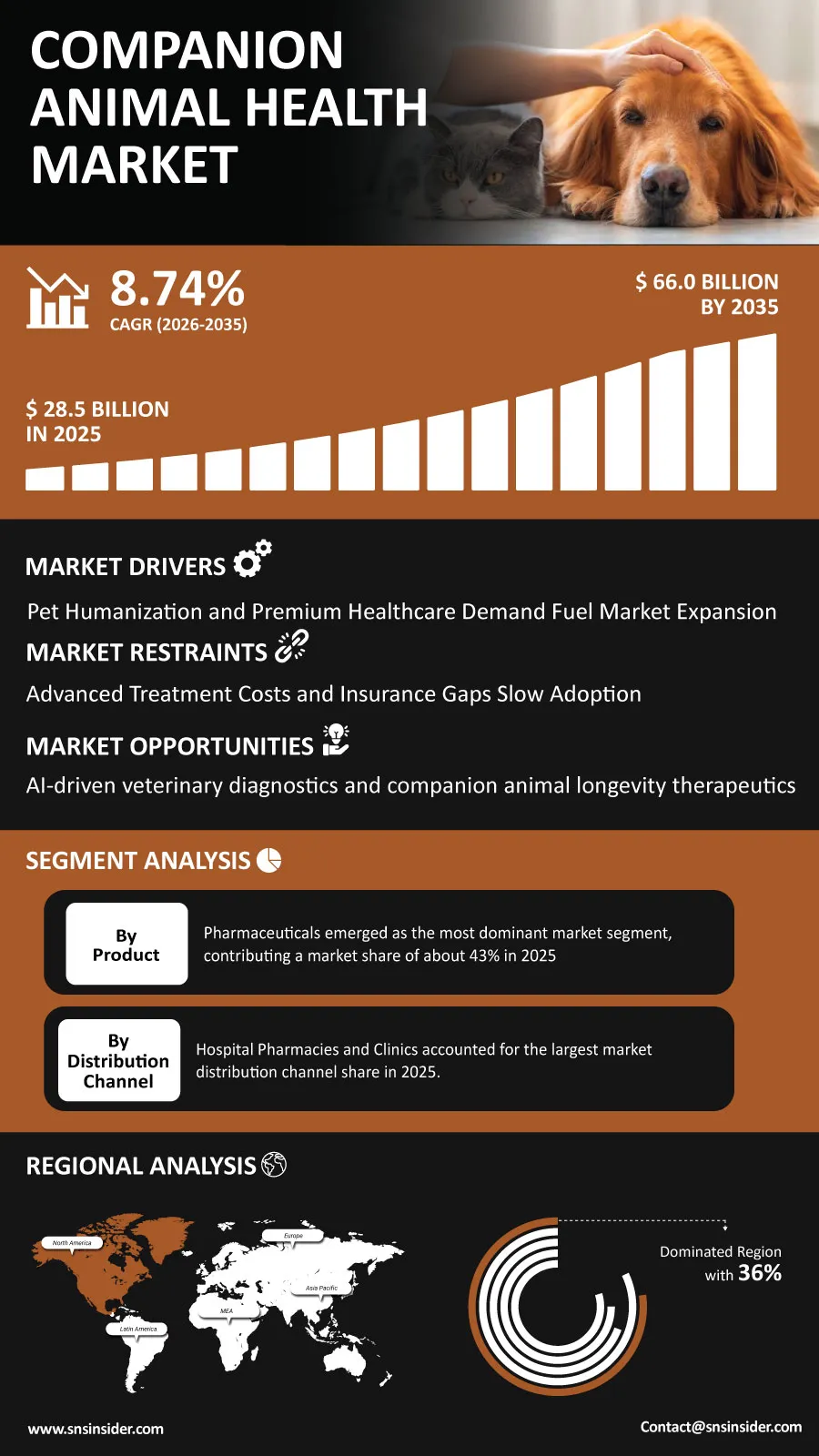
According to a recent study by SNS Insider, the global Companion Animal Health Market size valued at USD 28.5 billion in 2025, is anticipated to grow to USD 66.0 billion by 2035, registering a CAGR of 8.74% over the 2026–2035 forecast period. Market growth will be fueled by increasing demands for preventative care, increased pet ownership, increased access to veterinary care, and rapid developments in technology.
Veterinary Care Moves Toward More Advanced Treatment
There is an emerging necessity of developing new forms of treatment approaches capable of early diagnosis of diseases for animals belonging to pet owners. This development prompts veterinary clinics to adopt various molecular diagnostic techniques, imaging methods, artificial intelligence diagnosis, biologic therapy, and telemedicine.
In addition to that, the discovery of new targeted drug treatments broadens the scope of available treatment options for age-related diseases. In connection with this, the importance of pet longevity is becoming greater.
To Get Detailed Insights on the Companion Animal Health Market – Request a Sample Report
Pharmaceuticals Lead While Diagnostics Gain Momentum
Pharmaceuticals accounted for approximately 43% of market revenue in 2025, making them the largest product category. Demand spans anti-infective medicines, antiparasitic treatments, anti-inflammatory therapies, vaccines, and newer biologic products.
Diagnostics are expected to record the fastest growth through 2035. Veterinary clinics are increasingly adopting rapid testing, molecular analysis, advanced imaging, and AI-assisted clinical tools to support earlier and more precise diagnosis.
By animal type, dogs represented approximately 39% of the market in 2025, maintaining their position as the leading category. Cats are projected to experience the fastest growth as feline-specific medicines, diagnostics, and preventive services become more widely available.
Digital Distribution Changes the Pet Healthcare Landscape
In 2025, veterinary hospitals and clinics continued to hold a dominant market position since prescription drugs, vaccines, diagnostics, and treatments often necessitated expert intervention.
Nevertheless, e-commerce was forecasted to grow at the highest rate among the channels in the forecast period due to the increasing popularity of online purchases of supplements, anti-parasitic products, nutritionals, and other preventive health products recommended by veterinarians.
The growing trend towards digital purchase also helps to increase availability of the goods for pet owners preferring home delivery and price and product comparisons online.
United States Remains the Largest National Market
North America contributed around 36% of total revenue in 2025 and remained the dominating region. The United States contributed around 77% of revenue in North America and continues to benefit from high spending on veterinary care, advanced research for animal health, and a high number of households with pets.
The U.S. Companion Animal Health Market was valued at USD 8.1 billion in 2025 and is expected to reach USD 18.4 billion by 2035, witnessing a CAGR of 8.63% between 2026 and 2035.
Fastest growth is expected for Asia Pacific in the forecast period up until 2035. In this region, China accounted for about 42% of overall revenue. The increasing rate of pet ownership, urbanization, disposable income, and development in the field of veterinary have contributed to this revenue generation.
The United Kingdom contributed around 30% of total revenue in Europe. Brazil contributed around 52% of total revenue in Latin America. The United Arab Emirates contributed around 36% of total revenue in Middle East & Africa.
AI and Longevity Research Open New Opportunities
AI is increasingly becoming relevant in the practice of veterinary medicine in fields such as imaging diagnostics, biomarkers, and clinical decision-making tools. These technologies have the potential to enable veterinarians to diagnose illnesses effectively while making decisions on how to treat them.
The other opportunity that is rapidly developing in the field of veterinary medicine is that of companion animals' longevity. This involves investigating illnesses that occur due to aging as well as treatments that can increase healthy years in animals. Telemedicine is another area growing in the field.
Industry Players Increase Focus on Innovation
Competition is intensifying as animal-health companies expand pharmaceutical portfolios, diagnostics capabilities, preventive-care offerings, and technology partnerships. Zoetis, Merck Animal Health, Elanco Animal Health, Boehringer Ingelheim Animal Health, Virbac, Ceva Santé Animale, IDEXX Laboratories, Vetoquinol, Royal Canin, Hill’s Pet Nutrition, Nestlé Purina PetCare, Mars Petcare, Nutreco, Neogen Corporation, and Animalcare Group are among the notable companies operating across the global market.
Recent industry developments include Zoetis' 2025 introduction of AI-powered precision diagnostic technologies and Merck Animal Health's November 2024 launch of BRAVECTO TriUNO, which received European Commission approval for canine parasite protection.
An SNS Insider analyst Parry Kardani commented, "Companion animal healthcare is becoming increasingly sophisticated as owners seek earlier diagnosis, better disease management, and more personalized treatment for their pets. The combination of pharmaceutical innovation, advanced diagnostics, digital veterinary services, and preventive care is creating a broader and more technologically advanced market."
About the Author

Get in touch