
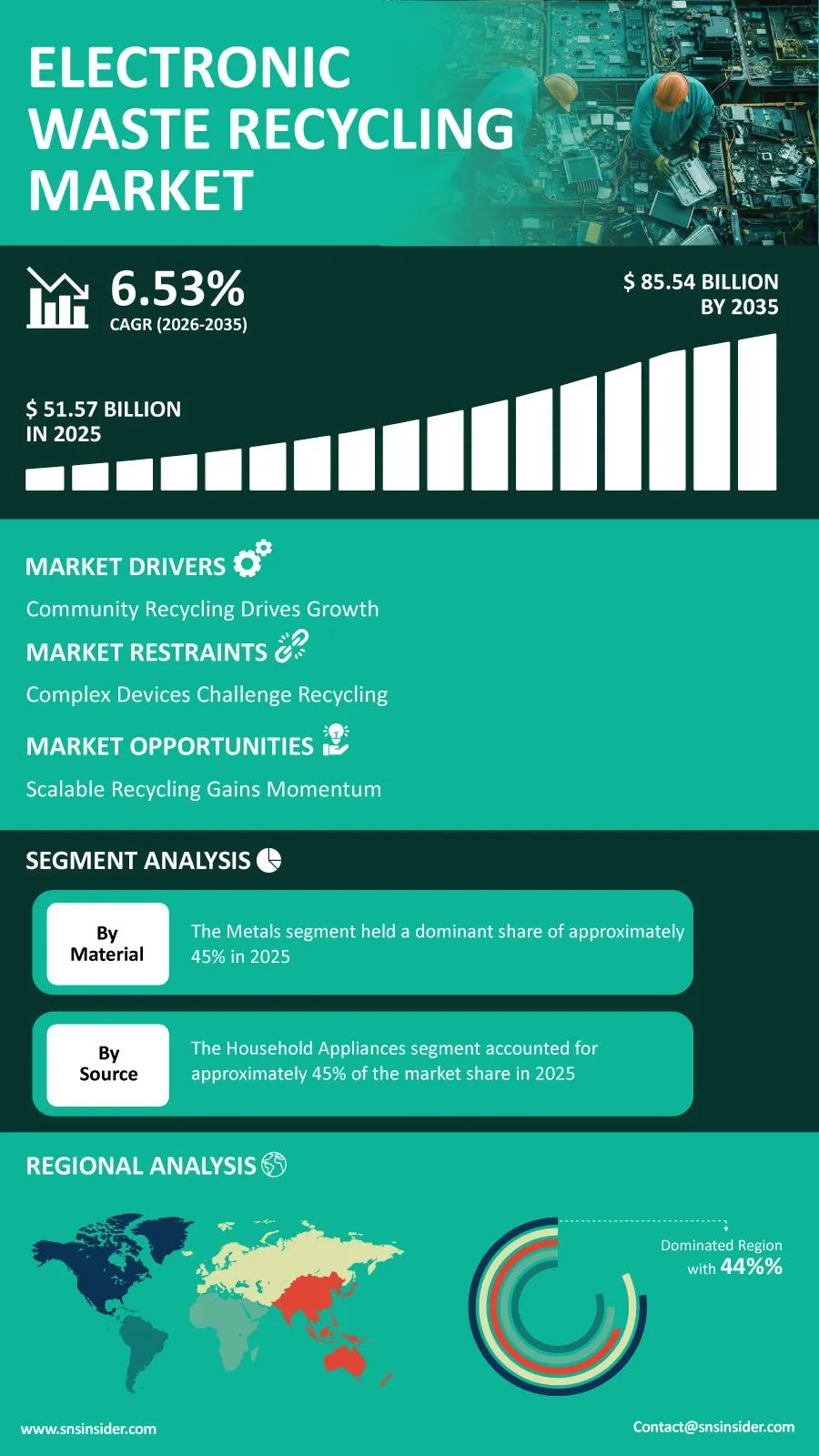
The global Electronic Waste Recycling Market is expected to witness steady expansion over the coming decade as governments, businesses, and consumers intensify efforts to reduce environmental impacts associated with discarded electronic products. According to a recent study by SNS Insider, the global Electronic Waste Recycling Market size valued at USD 51.57 billion in 2025, is anticipated to grow to USD 85.54 billion by 2035, registering a CAGR of 6.53% over the 2026–2035 forecast period.
Increased usage of electronic gadgets, rapid changes in replacement time frames, and awareness about sustainable waste management have created immense demand for a structured process for recycling. The public sector and businesses are showing increased cooperation with recyclers who are certified to offer proper recycling, safe destruction of data, and recovery of precious metals from electronic waste products.
Technological innovation is also reshaping the industry as recycling companies adopt artificial intelligence, automated sorting systems, and advanced material recovery technologies to improve processing efficiency while supporting circular economy objectives.
To Get Detailed Insights on the Electronic Waste Recycling Market – Request a Sample Report
Sustainability Initiatives Continue to Generate New Growth Opportunities
Governments around the world have initiated tighter regulations related to the environment along with the implementation of EPR programs that would facilitate better collection and recycling of electronics waste. All of these developments would create good prospects for investment in state-of-the-art recycling facilities that could cater to rising levels of e-waste.
Corporate commitment towards sustainability would contribute to the market as well because the companies would give priority to IT asset disposal, data destruction, and zero landfill solutions. Better cooperation between electronics makers, recyclers, and waste management agencies would lead to the expansion of collection networks and efficient recovery of resources throughout the world.
On top of that, the rising requirement for recycled metals, plastics, and batteries would stimulate the development of more effective recycling technologies.
Key Market Insights Highlight Shifting Demand Patterns
By material, the metals segment is expected to account for approximately 45% of global market revenue in 2025, supported by strong demand for the recovery of valuable resources including gold, copper, aluminum, and palladium. Plastics are projected to record the fastest growth through 2035, expanding at a CAGR of 9.29% as recycling technologies improve and sustainability initiatives accelerate worldwide.
Based on source, household appliances are anticipated to contribute approximately 45% of market revenue in 2025 due to high replacement rates for major consumer appliances. The IT & telecommunication segment is forecast to experience the fastest growth, registering a CAGR of 9.79% as rapid device turnover and increasing data security requirements drive greater recycling activity.
By technology, pyrometallurgical processes are expected to generate approximately 45% of market revenue in 2025 owing to their effectiveness in recovering precious metals from complex electronic waste streams. Lithium battery recycling is projected to emerge as the fastest-growing technology segment, expanding at a CAGR of 11.17% as electric vehicles, consumer electronics, and energy storage applications continue to increase global battery volumes.
In terms of end-use industry, the automotive sector is expected to account for approximately 31% of market revenue in 2025, reflecting growing electronic content in modern vehicles. Industrial equipment is anticipated to register the fastest growth through 2035 with a CAGR of 8.53%, driven by industrial automation, equipment modernization, and responsible disposal initiatives.
Advanced Recycling Technologies Improve Resource Recovery
Smart automation, artificial intelligence-enabled material recognition, and real-time tracking systems are being used more and more by industry players to increase efficiency and visibility in recycling. The technologies help in faster processing, proper separation of materials, and improved compliance with regulations, minimizing the environmental footprint.
A rising concern over the importance of data security and certification for recycling has led to the implementation of full-fledged electronic waste management initiatives in various industries including healthcare, financial, governmental, and IT sectors.
North America Leads with 44% Market Share as Asia Pacific Advances at an 8.19% CAGR
North America is likely to generate around 44% of the worldwide market revenue in 2025 on account of well-developed recycling systems, strict environmental laws, high consumer awareness levels, and the presence of accredited IT asset disposition service providers.
The Asia Pacific region is anticipated to witness the highest growth rate during the forecast period with a CAGR of 8.19% over 2035. High rates of urbanization, growing usage of electronics, government initiatives regarding recycling, and investment in advanced processing plants are factors that fuel demand in the region.
As countries continue strengthening circular economy strategies and investing in formal recycling systems, demand for advanced electronic waste recycling solutions is expected to accelerate globally.
Industry Participants Focus on Innovation and Circular Economy Solutions
Competition within the Electronic Waste Recycling Market remains active as companies invest in automated recycling technologies, advanced material recovery processes, secure IT asset disposition services, and sustainable resource management solutions. Industry participants are expanding processing capacity while strengthening partnerships that support responsible electronics lifecycle management.
Key companies operating in the global Electronic Waste Recycling Market include Sims Recycling Solutions, Veolia Environnement S.A., Waste Management, Inc., Umicore N.V., Stena Recycling, Electronic Recyclers International (ERI), GEEP (Global Electric Electronic Processing), MBA Polymers, Aurubis AG, Boliden Group, Attero Recycling, Clean Earth, Inc., Enviro-Hub Holdings Ltd., Cimelia Resource Recovery, Glencore, ATRenew, Gazelle (ecoATM Gazelle), Sircel, Electrocycling GmbH, and Dongjiang Environmental Company Ltd.
An SNS Insider analyst Sushant Kadam commented, “Growing environmental awareness, stronger regulatory frameworks, and increasing adoption of circular economy practices are creating long-term opportunities across the electronic waste recycling industry. Companies investing in advanced recovery technologies, secure recycling services, and operational efficiency will be well positioned to benefit as global e-waste volumes continue to rise.”
About the Author

Get in touch




