
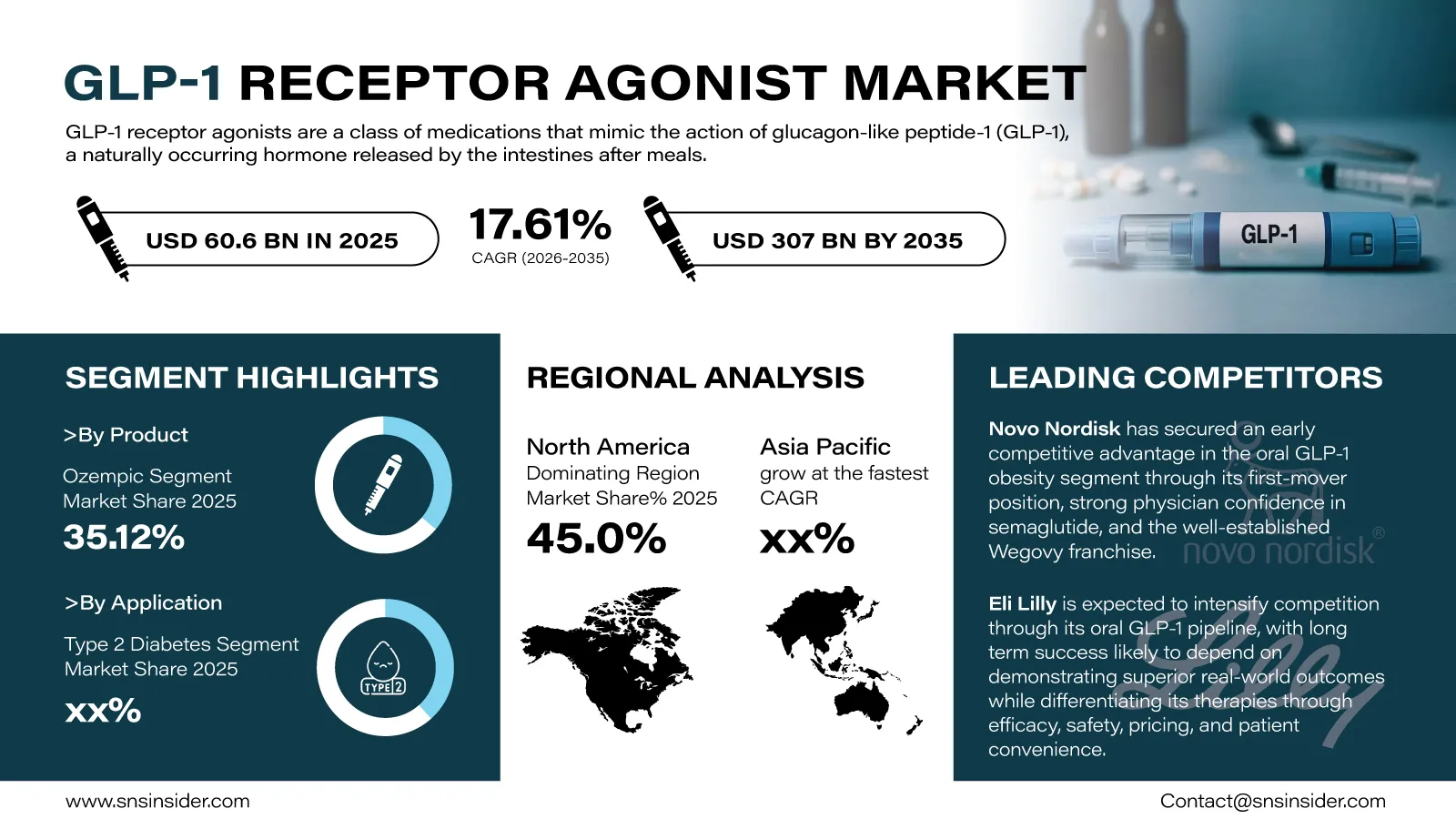
The global GLP-1 Receptor Agonists Market is set for an extraordinary growth in the coming years due to the increasing incidences of type 2 diabetes and obesity and high demand for the treatment of obesity, among others. “According to a recent study by SNS Insider, the global GLP-1 Receptor Agonist Market size valued at USD 60.6 billion in 2025, is anticipated to grow to USD 307 billion by 2035, registering a CAGR of 17.61% over the 2026–2035 forecast period.”
The increasing clinician acceptability of GLP-1 receptor agonists, the commercial success of blockbusters such as Ozempic and Wegovy, and new drug development are changing the face of diabetes and obesity treatment around the world. The market has been enjoying the increased confidence of physicians in GLP-1 drugs for cardiovascular protection and weight loss.
To Get Detailed Insights on the GLP-1 Receptor Agonist Market – Request a Free Sample Report
Expanding Clinical Applications and Rising Metabolic Disease Burden Fuel Market Growth
Growing incidences of obesity and Type 2 diabetes have been resulting in the continued creation of huge demand for new metabolic treatments on a global scale. As per the estimates from the International Diabetes Federation, there will be 783 million diabetic people worldwide by 2045, which provides for a robust future platform for the acceptance of GLP-1 receptor agonists.
Besides obesity management, there have been efforts by various drugmakers for the clinical use of GLP-1 medications for cardiovascular conditions, chronic kidney disease, obstructive sleep apnea, and neurodegenerative diseases. With the consistent investment by major players to enhance peptide manufacturing capabilities, there is resolution of supply issues.
Key Market Insights Highlight Strong Demand Across Products and Applications
By Product Type, Ozempic was the market leader with a market share of about 35.12% in 2025 based on proven clinical evidence, wide adoption by physicians, cardiovascular benefit, and strong commercial presence. Mounjaro and Zepbound (tirzepatide) segment is expected to grow rapidly during the forecasted period due to the rapid benefits of weight loss, dual action of GLP-1 and GIP receptors, and expanded manufacturing capacity.
On the Basis of Application, Type 2 Diabetes Mellitus represented the leading segment of the market with the largest market share in 2025 based on well-established treatment guidelines, high coverage by insurance companies, and familiarity among physicians. The obesity segment is expected to be the fastest-growing due to increased insurance coverage, favorable cardiovascular outcome and recognition of obesity as a chronic disease.
Based on the Route of Administration, Parenteral (injectable) medications represented the leading segment of the market in 2025 based on its proven efficacy and wide use in the treatment of obesity. Oral GLP-1 drugs segment is expected to record the highest CAGR during the forecast period due to overcoming challenges of injections.
By Distribution Channels, Hospital Pharmacies represented the most lucrative channel in 2025, whereas Retail and Online Pharmacies segment to grow with the fastest growth during the forecast period owing to the surging number of prescriptions and improved patient access globally.
An Infographic Representation of the Global GLP-1 Receptor Agonist Market
Oral GLP-1 Competition Signals the Next Phase of Market Expansion:
The competitive landscape of the GLP-1 receptor agonist market is entering a new phase as oral obesity therapies move closer to mainstream adoption. Novo Nordisk has secured an early competitive advantage in the oral GLP-1 obesity segment through its first-mover position, strong physician confidence in semaglutide, and the well-established Wegovy franchise. The company's brand recognition and extensive clinical experience continue to strengthen prescribing confidence across obesity and diabetes care.
Over the coming years, the global GLP-1 receptor agonist market is expected to become increasingly competitive as oral therapies gain wider acceptance. While Novo Nordisk currently benefits from its established market leadership, Eli Lilly is expected to intensify competition through its oral GLP-1 pipeline, with long-term success likely to depend on demonstrating superior real-world outcomes while differentiating its therapies through efficacy, safety, pricing, and patient convenience.
It is projected that the growing competitive trend amongst major pharma manufacturers will have a positive impact on the overall GLP-1 market as a whole by proving the significant level of demand from doctors for the oral treatment of obesity, faster adoption by patients, improved accessibility of the treatment, and investments in advanced metabolic treatment products.
Oral Therapies, Multi-Receptor Agonists, and Manufacturing Expansion Transform the Industry
There are significant advancements being made technologically within the GLP-1 receptor agonist field as pharmaceutical companies move forward to create next generation drugs that offer improved effectiveness and patient convenience.
Oral products, including Novo Nordisk’s Rybelsus and Eli Lilly’s development of orforglipron, are increasing availability through the elimination of injections. At the same time, dual and triple receptor agonists, which target GLP-1, GIP and glucagon receptors, show better metabolic benefits and weight loss results.
At the same time, there are major investments being made by companies to increase production capacity for peptides to overcome worldwide shortages, while semaglutide biosimilars programs are moving ahead towards future approval that could increase patient availability.
North America Maintains Leadership While Asia Pacific Emerges as the Fastest-Growing Market
North America held about 45% share of GLP-1 Receptor Agonists Market in 2025 on account of favorable reimbursement scenario in the US, high-cost drugs, high adoption rate of doctors, and heavy commercialization efforts of Novo Nordisk and Eli Lilly. Growth of the regional market will be driven by increase in expenditure on health care by employers and cardiovascular indications.
Asia Pacific region is expected to witness fastest growth during the forecast period due to increasing incidence of diabetes, better infrastructure, increased accessibility of drugs in China and India, improved reimbursement scenario, and high adoption rate among doctors in Japan. Programs run by the government for managing chronic diseases are likely to drive the regional market.
Leading Companies Intensify Innovation and Capacity Expansion:
Competition within the GLP-1 receptor agonist market is increasing with companies producing more product, getting more approvals, making an effort in the oral formulation, developing the next generation receptor agonist, and developing the pipeline for biosimilars. The widening of the indication from diabetes to cardiovascular diseases, obesity, sleep apnea, Alzheimer's, and kidney diseases is creating new opportunities for future growth.
Key companies operating in the global GLP-1 Receptor Agonist Market include Novo Nordisk, Eli Lilly and Company, AstraZeneca PLC, Sanofi S.A., Pfizer Inc., Boehringer Ingelheim, Amgen Inc., Biocon Biologics, Samsung Bioepis, Zealand Pharma A/S, Hanmi Pharmaceutical Co. Ltd., Viking Therapeutics Inc., Structure Therapeutics Inc., Roche Holding AG, AbbVie Inc., Regeneron Pharmaceuticals Inc., Merck & Co. Inc., Jiangsu Hengrui Pharmaceuticals Co. Ltd., Innovent Biologics Inc., and Sciwind Biosciences Co. Ltd.
About the Author

Get in touch




