
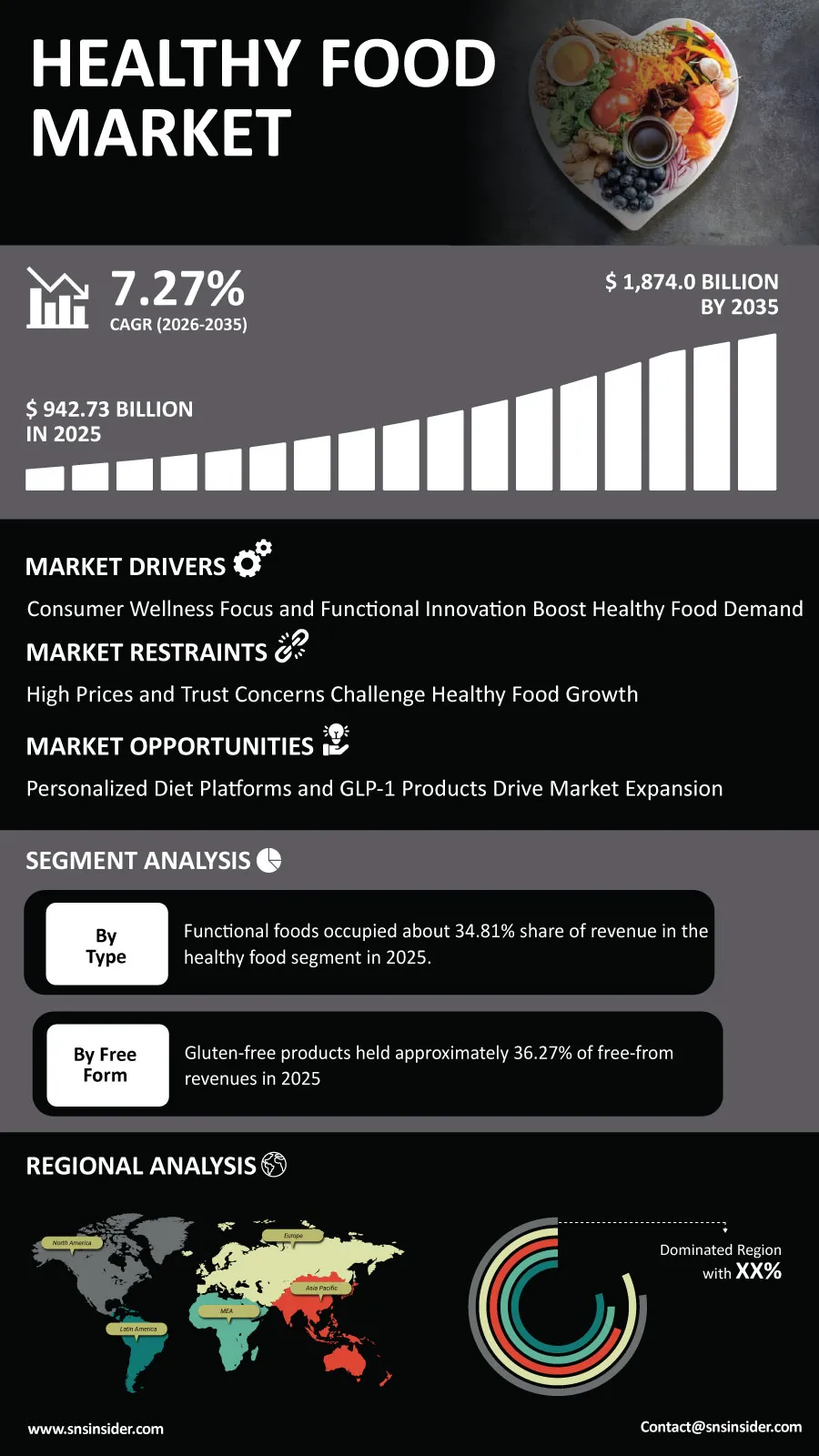
The global Healthy Food Market is about to step into the next stage of growth as customers focus more on nutrition, preventive health care, and transparency of ingredients while making daily food decisions. “According to a recent study by SNS Insider, the global Healthy Food Market size valued at USD 942.73 Billion in 2025, is anticipated to grow to USD 1,874.0 Billion by 2035, registering a CAGR of 7.27% over the 2026–2035 forecast period.”
The increasing awareness regarding lifestyle-based chronic disease and changing consumer dietary habits is leading manufacturers to launch nutritious food products that are convenient. Consumers are increasingly interested in foods that aid extended well-being, enhance daily nutrition and adhere to personalized food preferences. This change is pushing innovation in various categories including functional foods, healthy snacks, organic items and specialised nutrition products.
Meanwhile, retailers are also broadening the scope of shelf space to health-oriented items while food companies invest in research, sustainable sourcing and innovative formulations. Consumer health education, digital health innovations, and premium nutrition are transforming how people buy – in both developed and emerging economies.
To Get Detailed Insights on the Healthy Food Market – Request a Sample Report
Consumer Wellness Trends Create Long-Term Growth Opportunities
The increasing sensitivity towards health is turning food from being just a necessity into a critical aspect of preventive healthcare. Across the globe, rise in demand for products embedded with functional ingredients and natural proteins, probiotics, and plant-based nutrition continues to provide lucrative growth opportunities for food manufacturers across the world.
Another new growing opportunity is personalized nutrition. Consumers are making data-driven purchase decisions in line with their dietary goals thanks to digital wellness platforms, nutrition-tracking applications and connected health technologies. Food companies are therefore stepping up to the plate with dedicated product ranges meeting particular nutritional needs and lifestyles.
In addition, due to the increasing demand for sustainable food production, manufacturers are packaging their products in ecological wrappers and environmentally friendly containers made from responsibly sourced raw materials as well as implementing cleaner manufacturing processes that is appealing to conscious consumers.
Key Market Insights Highlight Shifting Consumer Preferences
Functional Foods owing to the rising consumer inclination towards products which offers additional health benefits apart from basic nutrition contributed nearly 34.81% of total market revenue in 2025, by type Conversely, based on product type Healthy Snacks is projected to experience the largest growth with 13.50% CAGR until 2035 as a result of growing demand for quick and nutritious meals.
It is expected that Gluten-Free products will account for nearly 36.27% of revenue by market share in free form in the year 2025 as consumers increasingly adopt selective diets. Over the next few years, the market for lactose-free products will grow at a faster CAGR, driven by rising awareness of digestive health and food sensitivities.
As per nature, Non-GMO products represented more than 60.57% of the total share by value in 2025 while GMO products are expected to grow at the fastest rate due to advances made through food technology to address nutritional enhancement.
Low-Calorie products held around 45.38% revenue share by calorie class in the market in 2025. The No-Calorie products are expected to experience the highest growth until 2035 due to more acceptance of healthier beverage alternatives and lower-sugar formulations.
Innovation in Functional Nutrition Reshapes the Food Industry
Food manufacturers need to ramp up development of science-backed products as consumer expectations continue to evolve. Ongoing innovation in protein enrichment, digestive well-being actives, botanicals and fortified foods is leading to differentiated product portfolios with the ability to deliver on varied health objectives.
Product development strategies are influenced as well by new technology like artificial intelligence, digital nutrition platforms and personalized dietary recommendations. These technologies help brands to get a clearer view of consumer purchasing behaviour, find out the upcoming nutrition trends and speed up product launches that meets the changing needs of consumers.
In parallel, manufacturers are also bolstering investments in sustainable sourcing, clean-label formulations and green manufacturing practices that improve brand trust while fueling long-term growth.
North America Accounted for the Largest Market Share in 2025; Asia Pacific Forecast to Expand at the Fastest CAGR by 2035
North America continued to dominate the regional market in 2025, owing largely to an already high level of consumer awareness, a broad network of health-focused retail networks, strong premium food purchasing behavior and frequent innovation from many large global food manufacturers. With growing offerings of grocery items in line with wellness guidelines, the US is still powering regional demand along with a strong focus on nutrition research and rising consumption of functional foods.
With increasing disposable income, urbanization, and middle-class population looking for healthier food options is expected to drive the fastest growth across Asia Pacific region over the forecast period. The functional foods are fast emerging and along with organic products as well as premium nutrition solutions increasingly being adopted by consumers in China, India, Japan and other Southeast Asian economies.
Strong consumer confidence in certified products, stringent regulations concerning food quality and a high penetration of clean-label foods also position Europe as an important market. Meanwhile, Latin America and the Middle East & Africa still should offer good growth prospects from a rising consciousness of nutrition among consumers ahead, maturing food retail formats and greater access to premium healthful food items.
Industry Participants Focus on Product Innovation and Consumer-Centric Nutrition
Innovation in terms of competition in the healthy food sector is high as there is diversification of the range of products through functional foods, superior nutrition, plant-based products, and acquisitions. Research and development in science and sustainability are still being invested in by companies to position themselves competitively in the market.
Key companies operating in the global Healthy Food Market include Nestlé S.A., Danone S.A., General Mills Inc., Kellogg Company, PepsiCo Inc., The Coca-Cola Company, Unilever plc, Conagra Brands Inc., Hain Celestial Group Inc., Amy's Kitchen, Nature's Path Foods Inc., Annie's Homegrown (General Mills), Whole Earth Brands Inc., Simple Mills Inc., Kind LLC, RxBar (Kellogg), Perfect Snacks, RXBAR, Larabar (General Mills), and Boulder Brands Inc.
An SNS Insider analyst Santosh Bhul commented, "Consumers are increasingly viewing nutrition as a long-term investment in overall wellbeing rather than simply a purchasing decision. Companies that successfully combine scientific innovation, ingredient transparency, sustainable practices, and personalized nutrition solutions are expected to remain well positioned as global demand for healthier food products continues to accelerate."
About the Author

Get in touch




