
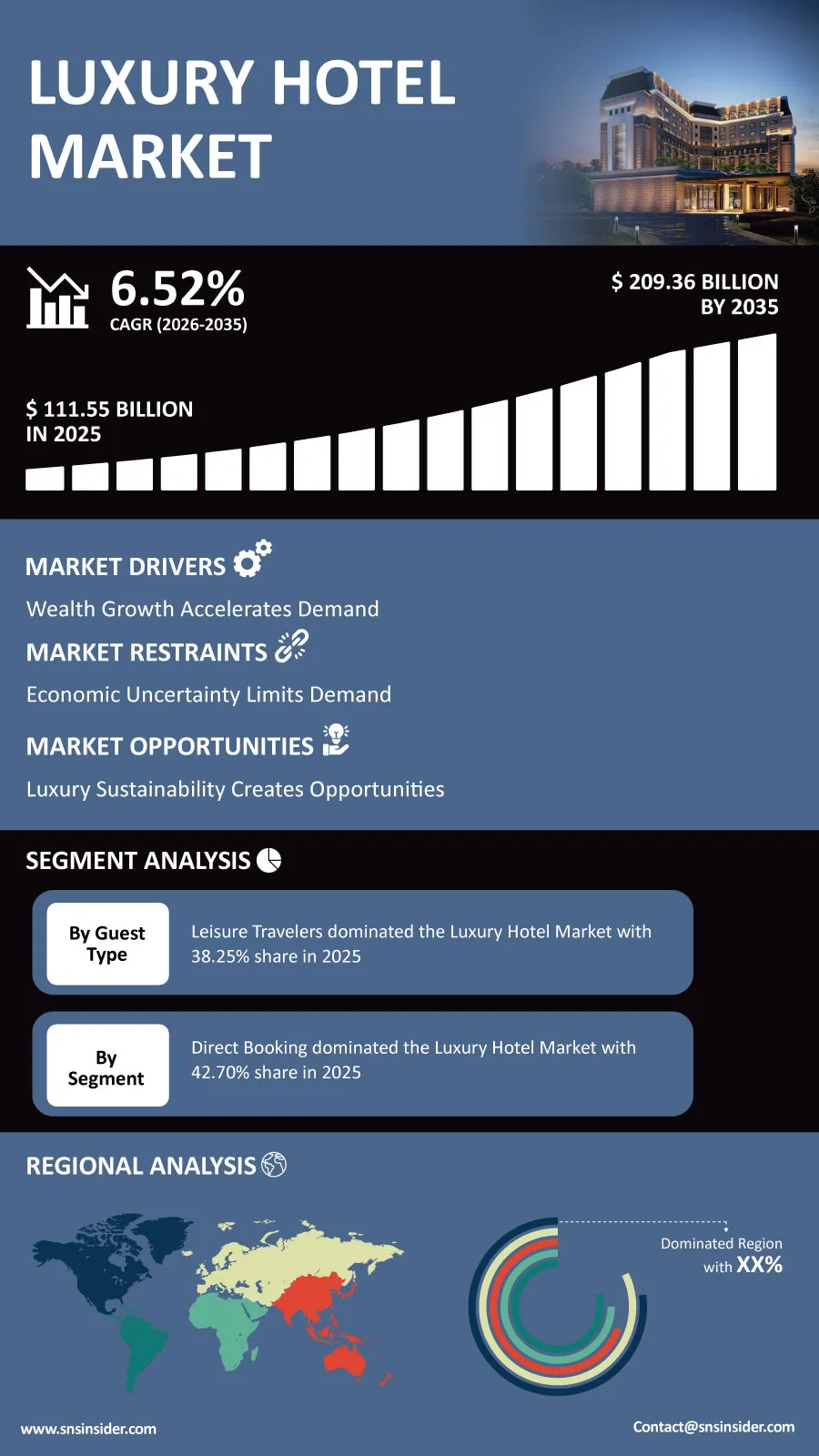
Luxury hospitality sector in the world is experiencing continued growth owing to the growing preference by affluent travelers for personalized experiences, high-end lodging, and technology-powered services. “According to a recent study by SNS Insider, the global Luxury Hotel Market size valued at USD 111.55 billion in 2025, is anticipated to grow to USD 209.36 billion by 2035, registering a CAGR of 6.52% over the 2026–2035 forecast period.”
Demand for luxury travel shows continued strength as disposable incomes rise, international tourism grows and consumer tastes shift towards spending more on upscale hospitality. Hotel operators invest heavily in innovation and premium guest engagement as travelers crave a carefully curated mix of service, wellness, culture, and connectivity.
The luxury hotel brand is also recognizing and accommodating of changing needs by incorporating new technology, services and AI into its day-to-day operations involving smart concept room. Combined, these advances are allowing hotels to not only enhance guest satisfaction but also with regard to optimizing operational efficiencies and customer experience personalization through the value chain.
To Get Detailed Insights on the Luxury Hotel Market – Request a Sample Report
Premium Travel Experiences and Sustainable Hospitality Create New Opportunities
Growth in demand for experiential tourism, wellness vacations and luxury stays are driving the hospitality sector. Luxury travellers have become more concerned with privacy, bespoke trips and exciting accommodation which offers memories beyond the average bed for the night.
Simultaneously sustainability has been an important differentiator/competitive advantage. Luxury hotel operators are increasingly investing in green building construction, renewable energy, water efficiency and waste reduction programmes to satisfy the needs of eco-sensitive visitors.
The massive proliferation of luxury hotel projects within developing economies, alongside the travel bursts in business and blended "bleisure" journeys across these markets are forecasted to unlock considerable growth potential for international hospitality flags over the longer term.
Key Market Insights Highlight Changing Consumer Preferences
Luxury Hotels held the largest market revenue share in 2025 and it was valued at Axios, driven by global demand for premium accommodations that combine comfort, accessibility and world-class amenities due to service level accounting for 28.40%. The Ultra-Luxury Hotels Segment is Anticipated to Grow at a Faster Rate through 2035 as High-Net-Worth Travelers Look for Exclusive Experiences and Personalized Services.
In 2025, by guest type, the total UAE market revenue contributed by Leisure Travelers was 38.25%, due to almost entirely recovering international tourism and increased discretionary travel spending. At the same time, High-Net-Worth Individuals (HNWIs) are expected to provide the most prospect of growth in future as more global wealth creation expands the pool of luxury consumers.
Branded Chain Hotels are expected to continue dominating the market with a high market share of 63.40% in 2025 among operating models through strong global recognition, consistent service standards, and established loyalty programs available for frequent guests. Direct Booking 42.70% Revenue generated through booking channels, there is a growing tendency regarding customers opting for more personalized packages and digital platforms operated by the brands rather than traveling agents or intermediaries
Digital Innovation Reshapes the Luxury Hospitality Experience
Intelligent Solutions for luxury hotels as Technology transforming the Global Hospitality landscape AI is powering personalized recommendations, predictive customer service, and dynamic pricing while the smart room concept powered by IoT provides enhanced convenience comfort and energy efficiency.
The digital transformation is not a novelty for hotels that are currently launching innovative solutions including mobile check-in services, biometric access, data-driven revenue management systems among other things aimed to improve operational performance and increase customer loyalty.
They enable hospitality providers to offer seamless, highly personalized experiences while sustaining premium level of service in an ever more competitive global market.
North America Accounted for the Largest Luxury Hotels Market Share in 2025; Asia Pacific Forecast to Register the Fastest Growth Throughout the Forecast Period
North America emerged as the largest regional market in 2025 owing largely to its matured hospitality infrastructure, robust domestic and international tourism activities coupled with higher concentration of global luxury hotel brands. Ongoing investment in leading-edge hospitality experience and digital transformation reinforce regional leadership.
With that said, Asia Pacific is expected to experience the fastest growth during the forecast. Increasing disposable income, urbanization, developing tourism infrastructure and rising affluent travelers are some of the factors driving growth in this promising situation across countries like China, India, Japan and Thailand is creating an attractive environment. Even more robust regional expansion is propelled through growing investments into luxury resorts and boutique hospitality.
On the other hand, Europe remains a big market player in heritage tourism and luxury destinations, albeit with hotel brand and chain presence gradually declining over time; while investments in premium resorts and destination-based tourism continues to rise steadily in the Middle East & Latin America.
Industry Participants Focus on Personalized Luxury and Sustainable Growth
The competition in the global Luxury Hotel Market remains fierce as hospitality companies continue to grow their premium portfolios, roll out tech-enabled guest services, and strengthen sustainability efforts. Operators are placing more focus on branded residences, wellness-oriented destinations and luxury lifestyle offerings that create the foundations for long-term customer loyalty.
Key companies operating in the global Luxury Hotel Market include Marriott International, Hilton Worldwide Holdings, Hyatt Hotels Corporation, Accor S.A., InterContinental Hotels Group (IHG), Four Seasons Hotels and Resorts, Mandarin Oriental Hotel Group, Rosewood Hotel Group, Aman Resorts, Oetker Collection, Belmond (LVMH), Kempinski Hotels, Shangri-La Group, Six Senses Hotels Resorts Spas, The Peninsula Hotels, Jumeirah Group, Bulgari Hotels & Resorts, Dorchester Collection, Minor Hotels (Anantara), and Taj Hotels (IHCL – Indian Hotels Company Limited).
An SNS Insider analyst Santosh Bhul commented, "Luxury hospitality is evolving beyond premium accommodation toward highly personalized, technology-enabled, and sustainable guest experiences. Companies investing in digital innovation, wellness-focused services, and environmentally responsible operations are expected to strengthen their competitive position as global demand for premium travel continues to expand."
About the Author

Get in touch




