
Medical Spa Market is entering a new phase of global expansion as patients are demanding cosmetic procedures performed under medical supervision due to their emphasis on both cosmetic and health aspects of care. This market has gained from the increased acceptance of minimally invasive treatments, developments in skin diagnostics techniques, and increasing demands for non-surgical beauty treatments.
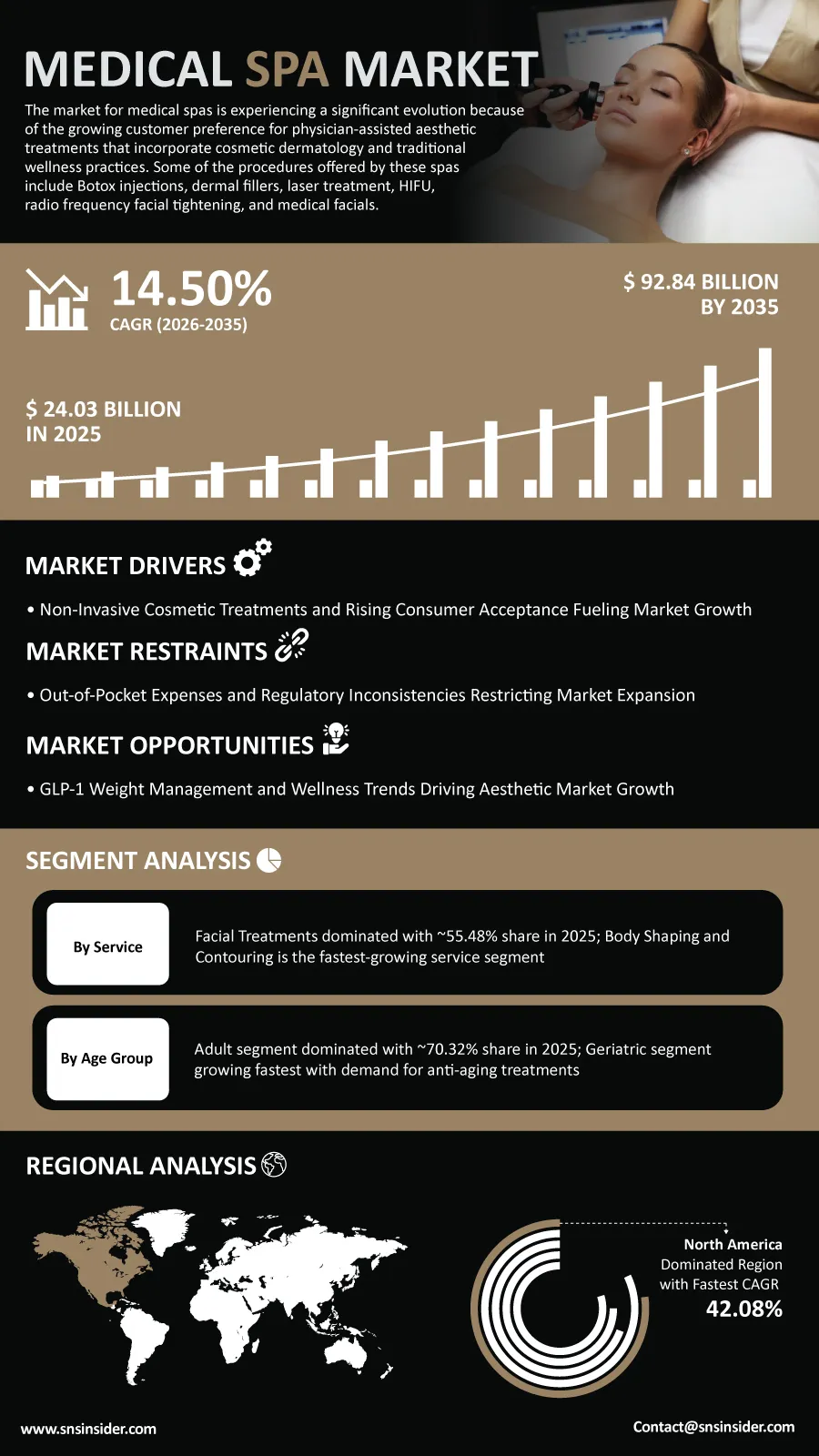
According to a recent study by SNS Insider, the global Medical Spa Market size valued at USD 24.03 Billion in 2025, is anticipated to grow to USD 92.84 Billion by 2035, registering a CAGR of 14.50% over the 2026–2035 forecast period. Continued innovation in aesthetic devices, expanding physician-led service offerings, and increasing consumer spending on preventive beauty treatments are expected to support sustained market growth throughout the forecast period.
Spa owners are increasingly expanding their range of services from the usual cosmetic treatments to include wellness services, skin analysis using advanced technology, weight loss programs, and customized treatment plans. This strategy is proving successful in drawing more customers and ensuring their loyalty.
To Get Detailed Insights on the Medical Spa Market – Request a Sample Report
Technology and Wellness Redefine Modern Medical Spa Services
The world of digital innovation is changing the experience of patients within the realm of medical aesthetics. AI-assisted skin evaluations, tailored solutions and data-driven skincare are some of the ways through which medical aesthetics businesses can offer personalized services and track results.
Medical spas are now offering wellness-based treatments including hormonal optimization, weight loss and preventive skincare. The growing influence of social media, celebs as well as consumer knowledge has resulted in increased interest in nonsurgical cosmetics among young people and men are increasingly becoming a popular customer base for medical aesthetics practices.
Consumer Preferences Continue to Shape Service Demand
Facial treatments segment continued to dominate as the top service category in 2025, with about 55.48% of total industry revenue generated from the high demand for rejuvenation procedures such as laser resurfacing, microneedling, chemical peeling, and other medical face procedures. Body shaping and contouring is projected to grow at the highest rate up until 2035, due to rising interest in body sculpting procedures.
By age group, adults were estimated to account for around 70.32% of the market share in 2025 as the requirement for preventive aesthetics was high. It has been forecasted that the fastest growth would be exhibited by the geriatrics as consumers would opt for anti-aging solutions to look young.
Women continued to dominate the industry with approximately 86.37% market share in 2025. However, the male segment is forecast to expand at the highest pace as aesthetic procedures gain broader social acceptance across urban populations.
Among service providers, single-ownership medical spas accounted for nearly 38.21% of market revenue in 2025, while group-owned operators are expected to register the strongest future growth through network expansion, standardized services, and increased private investment.
Regional Markets Create Long-Term Expansion Opportunities
North America continued to be the top market in terms of regional share in 2025, recording 42.08% of worldwide sales. Factors that favor the region include high disposable income of consumers for optional aesthetic procedures, developed healthcare infrastructure, and availability of physician-based medical spas.
The U.S., accounting for about 85% of regional sales, achieved sales worth USD 8.39 billion in 2025 and is expected to rise to USD 31.10 billion by 2035, exhibiting a CAGR of 14.01%. Key factors aiding industry growth are the rising acceptance of minimally invasive procedures and a growing base of more than 10,500 medical spas across the country.
Asia Pacific will be the fastest growing market, growing at a CAGR of 15.27% through 2035. South Korea, contributing to around 28% of regional sales, was aided by its globally renowned aesthetic medicine industry and flourishing medical tourism industry. Germany constituted about 22% of regional sales in Europe, while Brazil contributed approximately 45% to regional sales in Latin America and the UAE accounted for approximately 32% of regional sales in the Middle East & Africa.
Industry Investment Accelerates Innovation
Competition is rising due to the advancement of treatment technologies and the implementation of digital patient engagement solutions offered by companies in medical aesthetics. For instance, in 2025, Allergan Aesthetics (AbbVie) added to their Botox Cosmetic Loyalty program an AI-powered treatment management solution for doctors, with 45,000+ medical spa physicians in the U.S. joining in just six months. The CoolSculpting Elite Pro treatment platform was also launched, which provided 35% more efficient fat reduction and shorter procedure duration via a dual-applicator solution.
Leading participants operating across the global Medical Spa Market include Allergan Aesthetics (AbbVie), Galderma, Revance Therapeutics, Solta Medical (Bausch Health), Cynosure (Hologic), Lumenis, Cutera, Inc., InMode Ltd., Hydrafacial (BeautyHealth), Candela Medical, Sciton Inc., Syneron Candela, Barbara Sturm Molecular Cosmetics, SEV Laser Aesthetics, Ideal Image, Biovital Medspa, Chic La Vie Med Spa, LaserAway, Skin Laundry, and Ever/Body.
An SNS Insider analyst Parry Kardani commented, "Medical spas are evolving beyond cosmetic treatment centers into integrated wellness destinations that combine advanced technology, physician expertise, and personalized care. Businesses that continue investing in innovative devices, digital consultation tools, and comprehensive aesthetic services are expected to strengthen their competitive position as global demand for minimally invasive procedures continues to rise."
About the Author

Get in touch




