
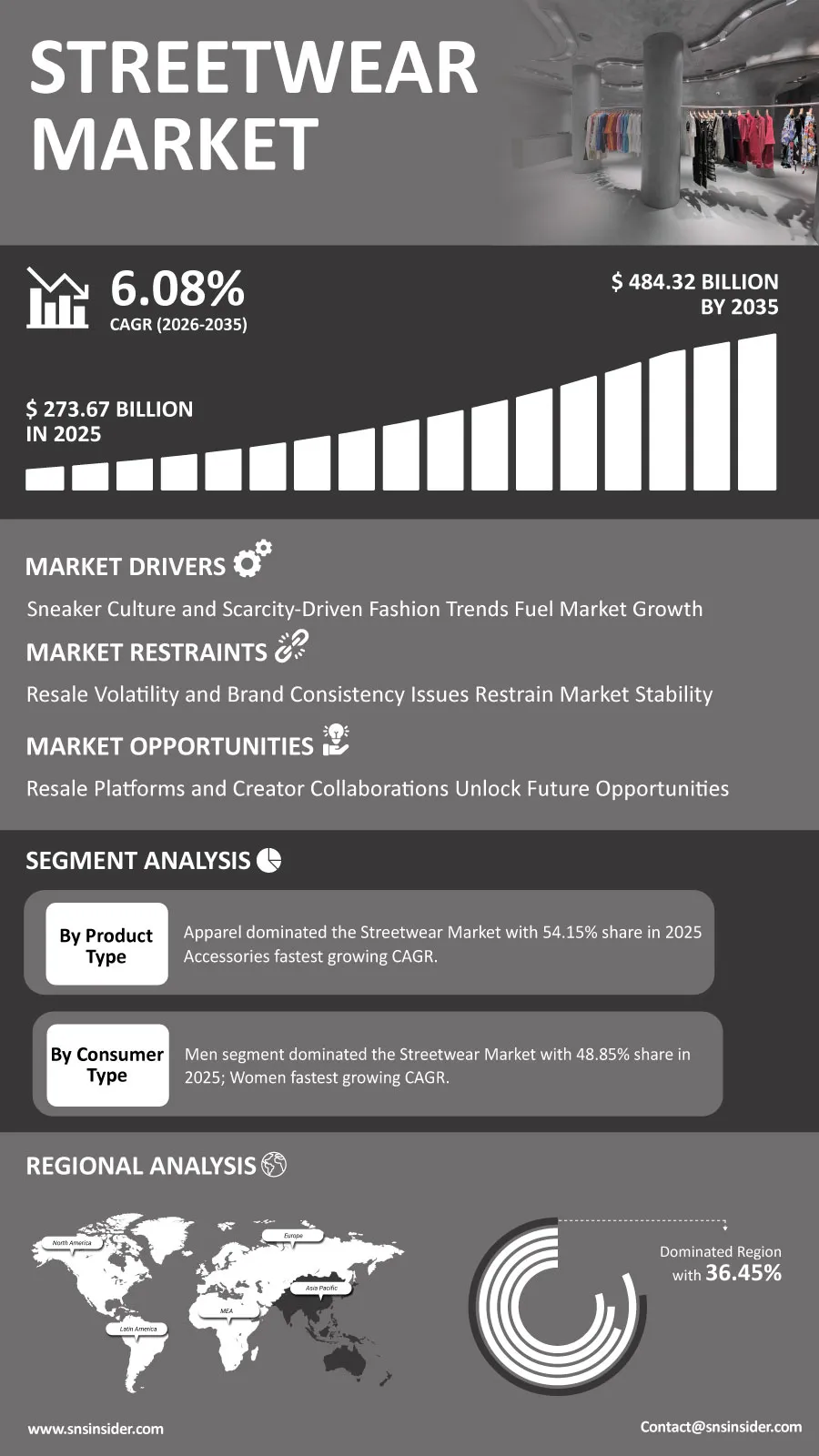
The Streetwear Market on a Global scale is set for a new growth stage, where fashion brands are using exclusivity, digitization, and cultural influence to reach out to the younger generation. “According to a recent study by SNS Insider, the global Streetwear Market size valued at USD 273.67 Billion in 2025, is anticipated to grow to USD 484.32 Billion by 2035, registering a CAGR of 6.08% over the 2026–2035 forecast period.”
Consumers' taste is now moving towards casual and creative style of fashion clothing that is inspired by music, sports, games, and online communities on social media. Limited product releases, celebrity endorsements, and influencer marketing efforts have helped in increasing customer loyalty and in generating a continuous need for high-end clothing, footwear, and accessories. On the other hand, online platforms are facilitating brands to engage with their global customers directly through exclusive product drops.
To Get Detailed Insights on the Streetwear Market – Request a Sample Report
Digital Commerce and Limited Releases Unlock Long-Term Growth Opportunities
The involution of e-commerce has rapidly transformed the streetwear industry into a highly integrated global marketplace characterized centrally by product scarcity and community engagement. By launching collections in a shorter schedule, brands using direct-to-consumer business models can build stronger ties with consumers while remaining agile to fast-an-evolving trends.
Luxury fashion houses are also looking to deepen their collaborations with legacy streetwear brands to reach a burgeoning consumer demographic aged 18–24 that is seeking upwardly-mobile lifestyle products. The growth of authenticated resale platforms, AI-based recommendation engines and digital shopping events is extending the value of products beyond traditional retail channels whilst creating new revenue streams for brands and collectors.
Key Market Insights Reflect Changing Consumer Preferences
Based on product type, Apparel dominated the global market share in 2025 with an overall share of 54.15% supported by a high demand for hoodies, oversized T-shirts, jackets and denim/sweatshirt products. The latter is projected to witness the fastest growth through 2035, as consumers increasingly finish their streetwear looks with caps, bags, jewelry, socks and lifestyle accessories.
By distribution channel, Online Retail/E-commerce accounted for 42.15% of revenue share in 2025 due to increasing penetration of digital shopping, social commerce as well as direct brand website. Over the forecast period, Resale Platforms is anticipated to capture highest growth rate as more authenticated sneakers marketplaces attract sneaker enthusiasts and collectors looking for limited release sneakers.
On the basis of consumer type, the Men segment may hold 48.85% of market revenue in 2025 and the Women segment is expected to grow at a fastest pace as brands expand collections focused on female consumers and gender-neutral theories of fashion. For price positioning, Mass Market Streetwear grew 0.29% share to 33.87%, while Luxury Streetwear is expected to see the most growth driven by high-end collaborations. At the same time, Skateboarding Culture dominated style influence, generating 20.54% of revenue, while the high-fashion fusion continues its march forward in reputation all over the world.
Technology and Community-Driven Innovation Transform Fashion Retail
Tech is starting to become an ever more important structure from the streetwear ecosystem. Artificial intelligence is revolutionizing peopleˈs personalized product recommendations, customer engagement and inventory optimization while data analytics are enabling brands to better understand buying behavior and emerging fashion trends.
Digital transformation also prioritises product launches by means of livestream shopping and virtual fashion experiences, NFT-enabled collectibles and exclusive online drops. Such increases are deepening consumer bonding while building hybrid retail strategies that fuse physical merchandise and digital communities.
Regional Markets Continue Expanding Through Youth Culture and Digital Fashion
In 2025, Asia Pacific held the largest share in the global Streetwear Market at 36.45% revenue, and will continue to maintain its dominance during the forecast period owing highest regional growth through 2035. Japan and South Korea, as well as India's increasingly connected population, has meant rising urbanization, a growing middle class, a bustling digital commerce ecosystem and a powerful spillover of K-fashion, J-fashion and street culture have continued to propel regional demand.
The North American market is one of the largest power players in global streetwear, established sneaker culture, celebrity-led branding initiatives, premium consumer spending habits and sophisticated resale channels. This approach has shaped Europe in several ways, from the integration of luxury fashion to high-street collabs to the world's leading fashion capitals. At the same time, in Latin America and the Middle East & Africa booming youth demographics, urban ways of living, and social media uptake are all contributing to increasing demand as market penetration is ramped up there.
Industry Participants Invest in Exclusivity, Innovation, and Brand Collaborations
The global Streetwear Market is becoming increasingly competitive, with top brands focusing on limited-edition launches, collaborations with designers, digital engagement strategies and high-end collections of their products. To enhance customer loyalty and broaden their international footprint, companies are making large investments in direct-to-consumer platforms, AI-enabled personalization, sustainable product development, and exclusive capsule collections.
Key companies operating in the global Streetwear Market include Nike, Adidas, Supreme (VF Corporation), Off-White (LVMH), BAPE (A Bathing Ape), Stüssy, Puma, New Balance, Vans (VF Corporation), Converse (Nike Inc.), Under Armour, Balenciaga (Kering), Louis Vuitton (LVMH), Gucci (Kering), Palace Skateboards, Fear of God, Anti-Social Social Club, Carhartt WIP, Billionaire Boys Club, and HUF Worldwide.
An SNS Insider analyst Himanshu Sharma commented, "Streetwear has evolved beyond apparel into a global lifestyle ecosystem where culture, technology, and exclusivity shape purchasing decisions. Brands that successfully combine creative collaborations, digital engagement, sustainable innovation, and data-driven retail strategies will be best positioned to capitalize on the next generation of consumer demand."
About the Author

Get in touch




