
Anesthesia Mask for Neonatus Market Report Scope & Overview:
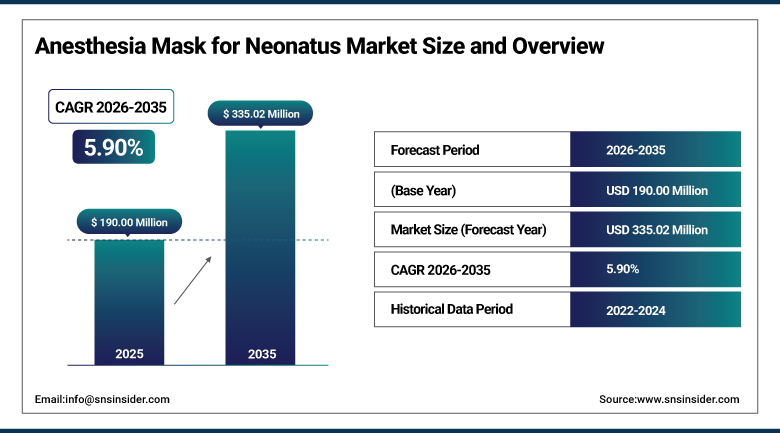
The Anesthesia Mask for Neonatus Market was valued at USD 190.00 million in 2025 and is expected to reach USD 335.02 million by 2035, growing at a CAGR of 5.90% from 2026-2035.
The Anesthesia Mask for Neonatus Market is witnessing steady growth owing to high demand for specialized ventilator support in neonatal procedures and the occurrence of increased cases of premature birth and neonatal respiratory ailments. Masks that are used in anesthesia administration among neonates offer efficient ventilation and oxygen administration despite the delicate nature of their facial structure. The increased availability of neonatal intensive care facilities and innovations in mask design, material use, and sealing methods are adding impetus to market growth. Moreover, increasing spending on healthcare, higher availability of neonatal care, and awareness regarding advanced ventilatory support are contributing to growth.
WHO and UNICEF emphasize access to quality newborn care and resuscitation equipment as essential components of reducing preventable neonatal mortality.
To Get more information Anesthesia Mask for Neonatus Market - Request Free Sample Report
Anesthesia Mask for Neonatus Market Trends
-
Rising neonatal surgeries and respiratory procedures are driving demand for specialized anesthesia masks offering safe, comfortable, and effective ventilation.
-
Increasing premature births and neonatal complications are expanding demand for reliable anesthesia delivery devices across neonatal intensive care and surgical settings.
-
Growing adoption of non-invasive respiratory support is encouraging development of lightweight, flexible, and anatomically designed neonatal anesthesia masks.
-
Advancements in mask materials and ergonomic designs are improving comfort, sealing performance, oxygen delivery, and overall safety for neonates.
-
Increasing investments in neonatal healthcare infrastructure are supporting adoption of specialized anesthesia equipment across hospitals, clinics, and pediatric surgical centers.
U.S. Anesthesia Mask for Neonatus Market Outlook
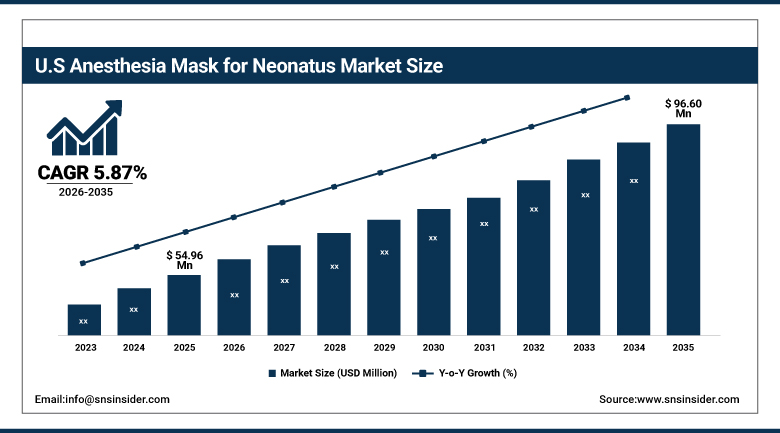
U.S. Anesthesia Mask for Neonatus Market was valued at USD 54.96 million in 2025 and is expected to reach USD 96.60 million by 2035, growing at a CAGR of 5.87% from 2026-2035.
The U.S. Anesthesia Mask for Neonatus Market is witnessing steady growth This has been necessitated by the growing need for special respiratory and anesthesia support equipment when dealing with infants. Premature births are increasing and there is a need for proper airway management, which has increased the uptake of special neonatal anesthesia masks. Investments in the intensive care units for newborns and improvements in the materials used in the construction of masks have continued to aid in market growth. Other factors that are promoting market growth include the increasing cost of healthcare, better access to neonatal care, and a focus on patient safety.
The U.S. recorded approximately 3.63 million live births in 2024, creating a substantial population requiring maternity, neonatal, and pediatric healthcare services.
Anesthesia Mask for Neonatus Market Segment Analysis
-
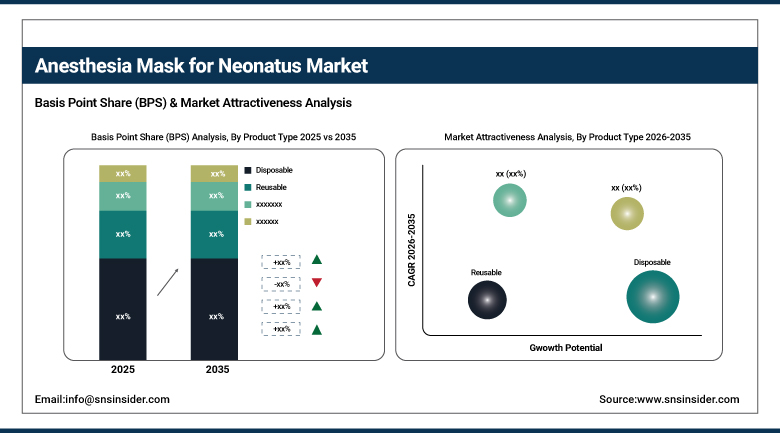
By Product Type, Disposable dominated the Anesthesia Mask for Neonatus Market with 72% share in 2025; Disposable is expected to grow at the fastest CAGR of 6.27% from 2026–2035.
-
By Material, Silicone dominated the Anesthesia Mask for Neonatus Market with 56% share in 2025; Silicone is expected to grow at the fastest CAGR of 6.31% from 2026–2035.
-
By End-User, Hospitals dominated the Anesthesia Mask for Neonatus Market with 64% share in 2025; Ambulatory Surgical Centers are expected to grow at the fastest CAGR of 7.93% from 2026–2035.
By Product Type, Disposable dominates the anesthesia mask for neonatus market, Disposable grows fastest.
Disposable segment dominated the Anesthesia Mask for Neonatus Market with the highest revenue share of about 72% in 2025 because of its one-time use nature, low risk of cross contamination, convenience, and applicability in neonate procedures. Disposables are preferred by hospitals owing to the fact that no cleaning or sterilization is required for them. Moreover, an increasing number of neonate procedures add to their popularity.
Disposable segment is expected to grow at the fastest CAGR of 6.27% from 2026-2035 due to the increasing need for proper infection control measures, rising number of neonatal procedures, and preference for single-use disposable medical equipment. Disposable masks minimize the need for sterilization and risk of cross contamination between patients. The increased capacity of neonatal intensive care units and awareness about preventing hospital acquired infections are likely to drive the market.
By Material, Silicone dominates the anesthesia mask for neonatus market and grows fastest.
Silicone segment dominated the Anesthesia Mask for Neonatus Market with the highest revenue share of about 56% in 2025 Silicone mask is preferred because of the softness, flexibility, biocompatibility, and its ability to provide a comfortable fit around the tender face of an infant. These masks facilitate ventilation without pressure problems. Increased demand for safe, efficient, and baby-friendly anesthesia equipment enhances the application worldwide.
Silicone segment is expected to grow at the fastest CAGR of 6.31% from 2026-2035 because of increasing demand for biocompatibility, flexibility, and durability in the neonatal respiration treatment. With better flexibility and sealing as well as easy handling capabilities in clinical situations, silicone is an important material. Increase in neonatal surgeries, developments in the design of masks, and greater emphasis on patient comfort and safety will fuel the use of silicone worldwide.
By End User, Hospitals dominates the anesthesia mask for neonatus market, Ambulatory Surgical Centers grows fastest.
Hospitals segment dominated the Anesthesia Mask for Neonatus Market with the highest revenue share of about 64% in 2025 This is because of the high number of neonatal surgeries and intensive care treatment that takes place in hospitals. The hospitals are well equipped for neonates and have highly skilled health care practitioners. There is also an increase in the number of premature babies born.
Ambulatory Surgical Centers segment is expected to grow at the fastest CAGR of 7.93% from 2026-2035 because of an increasing inclination towards cost-effective and less-invasive surgeries that also require a shorter period of stay in hospitals. Technological advancements in pediatric anesthesia and surgery are facilitating better surgeries in ambulatory settings. Increased ASC capacity and demand for efficient neonatal and pediatric surgeries will propel its global adoption.
Regional Analysis
|
Region |
Major Country |
Share within Region, 2025 (%) |
|---|---|---|
|
North America |
United States |
89.5% |
|
Europe |
Germany |
21.5% |
|
Asia Pacific |
China |
39.0% |
|
Middle East & Africa |
UAE |
14.0% |
|
Latin America |
Brazil |
34.0% |
North America Anesthesia Mask for Neonatus Market Insights
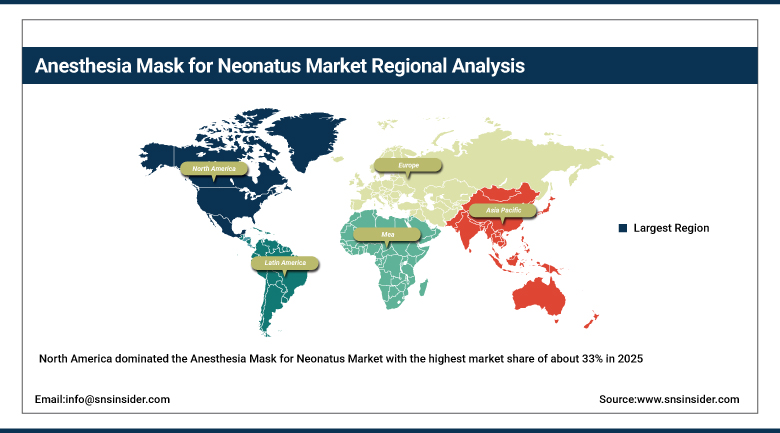
North America dominated the Anesthesia Mask for Neonatus Market with the highest market share of about 33% in 2025, The factors driving the growth include the presence of a state-of-the-art neonatal healthcare infrastructure, availability of neonatal intensive care units, and rising demand for specialized respiratory services. Preterm deliveries, well-developed medical device industry, advancements in neonatal anesthesia devices, and healthcare expenditure also fuel regional market domination.
The U.S. Anesthesia Mask for Neonatus Market accounted for a market share of 89.5%, facilitated by the presence of advanced neonatal healthcare infrastructure, a large number of NICUs, and a significant demand for respiratory support. Rising incidences of preterm deliveries, availability of advanced medical devices, advancements in neonatal anesthesia instruments, and high healthcare spending are also fueling market growth in the country.
Get Customized Report as per Your Business Requirement - Enquiry Now
Europe Anesthesia Mask for Neonatus Market Insights
Europe Anesthesia Mask for Neonatus Market is witnessing steady growth, Enabled by the development of neonatal healthcare systems, well-developed intensive care units, and increased demand for respiratory devices. Increased incidences of pre-term delivery and respiratory diseases among neonates have prompted the use of dedicated anesthesia masks. Increased healthcare spending and developments in technology used in neonatal care equipment, together with developed medical devices, have been driving market growth in Europe.
The Germany Anesthesia Mask for Neonatus Market accounted for a market share of 21.5%, supported by the existing infrastructure of neonatal care, established intensive care units, and high demand for specialized respiratory therapy. Premature births, increased investments in healthcare, and technological innovations in neonatal medical devices are contributing to adoption. The capability of hospitals and focus on enhanced neonatal treatment outcomes are additional factors that will contribute to growth in Germany.
Asia Pacific Anesthesia Mask for Neonatus Market Insights
Asia Pacific is expected to grow at the fastest CAGR of about 6.73% from 2026–2035, backed up by the increase in premature births, the rise in neonatal respiratory diseases, and the development of healthcare infrastructures. The development of facilities for neonatal intensive care, the rise in spending on health care, awareness about advanced respiratory assistance, and development in advanced medical devices in countries such as China, India, Japan, and South Korea have also contributed to this regional growth.
The China Anesthesia Mask for Neonatus Market accounted for a market share of 39.0%, fueled by enhanced neonatal healthcare infrastructure, increase in preterm births, and increasing need for specific respiratory assistance. The factors which are fueling the growth of the market include increased healthcare spending along with development of neonatal intensive care units. Another factor contributing to market growth is government healthcare programs and availability of advanced medical equipment.
Middle East & Africa and Latin America Anesthesia Mask for Neonatus Market Insights
The Middle East & Africa and Latin America Anesthesia Mask for Neonatus Market is continuously expanding due to developments in neonatal health care infrastructure, increased premature deliveries, and increased demand for respiratory support devices. There are opportunities arising from increased number of neonatal intensive care units and increased healthcare spending. Other factors that are driving the regional market include government health care programs, increased awareness, and use of advanced devices.
The UAE Anesthesia Mask for Neonatus Market accounted for a market share of 14.0%, backed by improvement in neonatal health care infrastructure, development of specialized care centers, and increased spending on high-end medical equipment. High demand for respiratory care for premature and critically ill infants is driving market growth. Modernization of health care sector through government initiatives, high-end hospital development, and easy availability of specialized neonatal care is further fueling market growth.
Market Dynamics
Growth Drivers: Rising neonatal surgical procedures and growing demand for specialized anesthesia delivery are accelerating adoption of neonatal anesthesia masks globally
Increasing neonatal surgical procedures and the expansion of specialized neonatal care are driving demand for anesthesia masks designed specifically for newborns. Anatomical features of the newborn babies are very small; therefore, appropriate airway management devices are crucial in ensuring proper mask fitting and ventilation. More attention is being paid by hospitals and NICUs towards safe airway management for their patients undergoing treatment. Proper pediatric anesthesia environment should ensure that appropriate airway management devices such as infant ventilation masks are present to cater to the needs of the patients with different sizes. More investments in healthcare facilities of neonates, especially in developing economies, are contributing to the growth of the market.
Restraints: Strict regulatory requirements and stringent safety standards can increase development costs and slow commercialization of neonatal anesthesia masks
Stringent regulatory requirements represent a significant challenge for manufacturers of neonatal anesthesia masks. Products aimed at babies have high expectations in terms of materials, biocompatibility, and performance because infants are highly susceptible to problems related to the respiratory system. Manufacturers should test the products in question in terms of performance, fit, materials, and manufacturing before bringing them into commercial use. Pediatric-specific airway equipment should be available in proper sizes depending on the ages of the patients as well. All these factors might increase expenses associated with testing, certification, and quality control. Small companies might experience extra difficulties while introducing their new products to regulated markets.
Opportunities: Expansion of neonatal intensive care infrastructure creates significant opportunities for specialized anesthesia mask manufacturers globally
Growing investments in neonatal intensive care units and specialized pediatric healthcare facilities are creating substantial opportunities for anesthesia mask manufacturers. The growing infrastructure of health care facilities in the emerging markets, especially in the Asia Pacific region, has led to increased availability of high-end neonatal therapy and surgical facilities. Hospital facilities will need properly sized devices for airway and ventilation of the neonate patients who are going through surgical or emergency procedures. There is a good opportunity for manufacturers to develop cost-effective products that have reliable sealing properties along with soft materials and proper size for the neonates. The rising concerns about the safety of neonatal anesthesia are making hospitals opt for specialty anesthesia masks instead of general pediatric equipment.
Recent Developments:
-
2026 : Ambu continued advancing neonatal airway management solutions with specialized face masks and ventilation products designed to provide effective respiratory support while improving fit, comfort, and handling for newborn patients.
-
2026 : Fisher & Paykel Healthcare continued expanding neonatal respiratory-care solutions, focusing on optimized interfaces and non-invasive respiratory support technologies designed to improve ventilation and minimize pressure and skin-related complications in neonates.
-
2026 : Dräger continued strengthening its neonatal respiratory-care portfolio with anesthesia and ventilation solutions integrated into neonatal care systems, supporting safe airway management and respiratory support for premature and critically ill newborns.
-
2026 : Intersurgical continued developing neonatal breathing and airway-management products, including appropriately sized masks and respiratory interfaces designed to improve patient comfort, ventilation efficiency, and safe respiratory support during neonatal procedures.
Anesthesia Mask for Neonatus Market key players are:
-
Ambu A/S
-
Intersurgical Ltd.
-
Drägerwerk AG & Co. KGaA
-
Fisher & Paykel Healthcare Corporation Limited
-
Teleflex Incorporated
-
Vyaire Medical
-
Medline Industries, LP
-
Cardinal Health, Inc.
-
Shenzhen Mindray Bio-Medical Electronics Co., Ltd.
-
Nihon Kohden Corporation
-
Penlon Limited
-
GE HealthCare Technologies Inc.
-
Koninklijke Philips N.V.
-
B. Braun SE
-
Smiths Medical
-
Armstrong Medical Ltd.
-
Flexicare Medical Limited
-
Timesco Healthcare Ltd.
-
Besmed Health Business Corp.
-
Medtronic plc
Anesthesia Mask for Neonatus Market Report Scope:
| Report Attributes | Details |
|---|---|
| Market Size in 2025 | USD 190.00 Million |
| Market Size by 2035 | USD 335.02 Million |
| CAGR | CAGR of 5.90% From 2026 to 2035 |
| Base Year | 2025 |
| Forecast Period | 2026-2035 |
| Historical Data | 2022-2024 |
| Report Scope & Coverage | Market Size, Segments Analysis, Competitive Landscape, Regional Analysis, DROC & SWOT Analysis, Forecast Outlook |
| Key Segments | • By Product Type (Disposable, Reusable) • By Material (Silicone, PVC, Others) • By End-User (Hospitals, Clinics, Ambulatory Surgical Centers, Others) |
| Regional Analysis/Coverage | North America (US, Canada), Europe (Germany, UK, France, Italy, Spain, Russia, Poland, Rest of Europe), Asia Pacific (China, India, Japan, South Korea, Australia, ASEAN Countries, Rest of Asia Pacific), Middle East & Africa (UAE, Saudi Arabia, Qatar, South Africa, Rest of Middle East & Africa), Latin America (Brazil, Argentina, Mexico, Colombia, Rest of Latin America). |
| Company Profiles | Ambu A/S, Intersurgical Ltd., Drägerwerk AG & Co. KGaA, Fisher & Paykel Healthcare Corporation Limited, Teleflex Incorporated, Vyaire Medical, Medline Industries, LP, Cardinal Health, Inc., Shenzhen Mindray Bio-Medical Electronics Co., Ltd., Nihon Kohden Corporation, Penlon Limited, GE HealthCare Technologies Inc., Koninklijke Philips N.V., B. Braun SE, Smiths Medical, Armstrong Medical Ltd., Flexicare Medical Limited, Timesco Healthcare Ltd., Besmed Health Business Corp., and Medtronic plc. |

Frequently Asked Questions
The Anesthesia Mask for Neonatus Market is expected to grow at a CAGR of 5.90% from 2026 to 2035.
The Anesthesia Mask for Neonatus Market was valued at USD 190.00 million in 2025.
The major growth factor is rising neonatal surgical procedures and demand for safe airway management, increasing the need for specialized anesthesia masks that provide effective oxygenation and ventilation during neonatal anesthesia.
The Disposable segment dominated the Anesthesia Mask for Neonatus Market in 2025.
North America dominated the Anesthesia Mask for Neonatus Market in 2025.
