
Herbal Tea Market Report Scope & Overview:
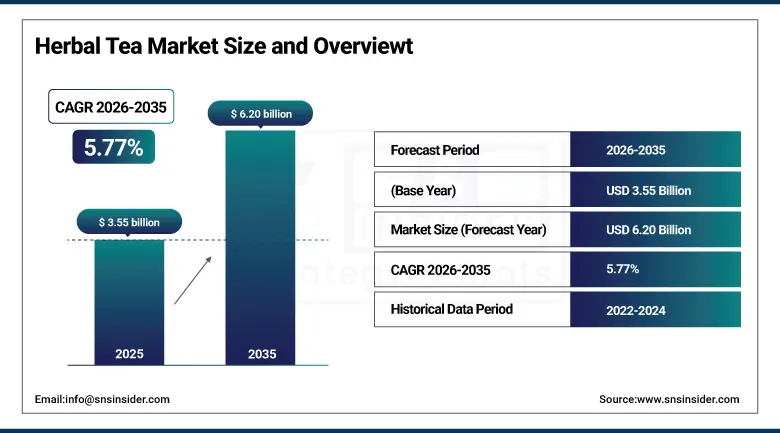
The Herbal Tea Market was valued at USD 3.55 billion in 2025 and is expected to reach USD 6.20 billion by 2035, growing at a CAGR of 5.77% from 2026–2035.
The growth in the herbal tea market can be attributed to the rise in consumers’ liking towards health and wellness drinks that are made using natural elements, growing consciousness about their digestion and immunity, and increased demand for functional and caffeine-free beverages. Herbal tea market is gaining rapid acceptance among consumers as they prefer plant-based drinks having ingredients such as chamomile, ginger, peppermint, turmeric, and green herbs. Investments being made in organic herbal cultivation, sustainable tea packing, and ready-to-drink herbal infusions are largely driving market growth during the forecast period from 2025 to 2026. Growth in online wellness stores, tea cafes, and functional drinks launches is also adding momentum to herbal tea consumption.
India exported more than 254 million kilograms of tea during 2025, with rising global demand for herbal and wellness beverages significantly increasing production of ginger, tulsi, chamomile, and green herbal tea products. Expansion of organic tea cultivation, wellness-focused beverage consumption, and premium herbal tea exports accelerated growth across international retail and health beverage markets during 2025–2026.
To Get more information on Herbal Tea Market - Request Free Sample Report
Herbal Tea Market Trends
-
Rising consumer preference for wellness and immunity-supporting herbal beverages is accelerating global herbal tea consumption.
-
Increasing demand for caffeine-free and plant-based functional drinks is driving innovation in herbal tea products.
-
Growing investments in organic herbal cultivation and sustainable tea packaging are strengthening market expansion worldwide.
-
Expansion of digital wellness retail platforms and online herbal tea subscription services is increasing product accessibility globally.
-
Premium loose-leaf herbal blends and ready-to-drink wellness beverages are gaining strong popularity among health-conscious consumers.
The U.S. Herbal Tea Market Outlook
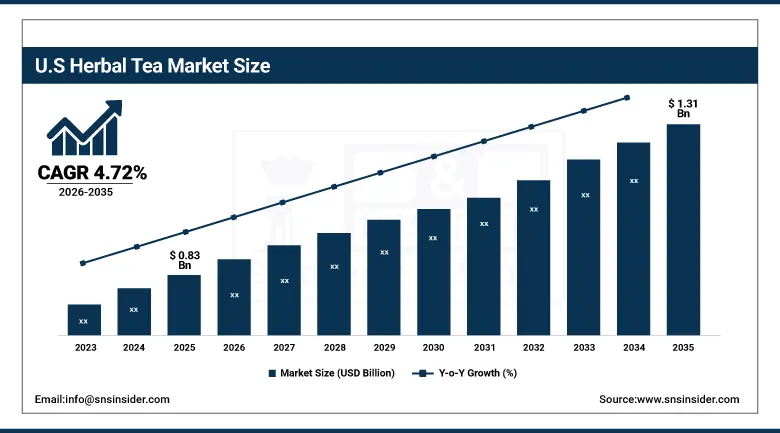
The U.S. Herbal Tea Market was valued at USD 0.83 billion in 2025 and is expected to reach USD 1.31 billion by 2035 at a CAGR of 4.72%.
The U.S. herbal tea market sales are growing due to the increasing preference for natural wellness beverages, rising awareness about digestive and immune systems, and the increasing demand for caffeine-free functional beverages in the U.S. The U.S. herbal tea market is experiencing high adoption rates owing to the increasing preference for various types of herbal teas, including chamomile, ginger, peppermint, turmeric, and green herbal tea products. Increasing investment in organic farming of herbs, sustainability in tea packaging, and development of ready-to-drink wellness beverages are significantly driving the growth of the market from 2025 to 2026. Growth in e-commerce wellness beverages, wellness cafes, and plant-based functional beverages is further boosting the consumption rate of herbal teas in the United States.
More than 87% of U.S. households consumed tea beverages during 2025, significantly increasing demand for herbal wellness teas, caffeine-free drinks, and functional herbal infusions across retail and online sales channels. Rising consumer preference for chamomile, ginger, turmeric, and immunity-supporting herbal beverages accelerated expansion of wellness-focused tea products across supermarkets, cafés, and digital beverage platforms nationwide.
Herbal Tea Market Segment Analysis
-
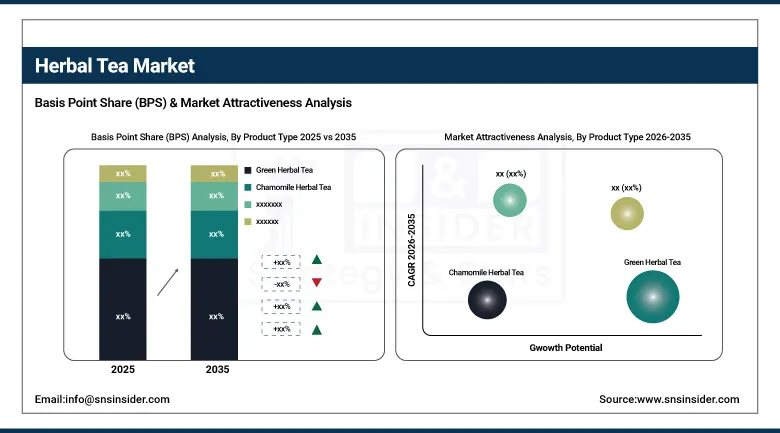
By Product Type, green herbal tea dominated with approximately 46.18% revenue share in 2025; ginger herbal tea is expected to be the fastest-growing type segment at approximately 7.63% CAGR from 2026 to 2035.
-
By Form, tea bags dominated with approximately 54.42% revenue share in 2025; instant herbal tea is expected to be the fastest-growing type segment at approximately 7.50% CAGR from 2026 to 2035.
-
By Distribution Channel, supermarkets & hypermarkets dominated with approximately 48.26% revenue share in 2025; online retail is expected to be the fastest-growing type segment at approximately 8.46% CAGR from 2026 to 2035.
By Product Type, green herbal tea dominating while ginger herbal tea emerging as the fastest-growing
The revenue share of the green herbal tea sector was estimated to be around 46.18% in 2025 due to consumer preference towards drinks rich in antioxidants and well-being. This was because of the increased awareness about natural detox drinks that enhance immune systems, aid digestion, and promote wellness. The herbal tea market experienced significant use of premium green herbal tea beverages among supermarkets, cafes, specialized wellness shops, and e-commerce retailers in 2025. Increased organic tea cultivation, new product offerings of wellness drinks, and sustainable packaging solutions were responsible for dominating this segment within global health beverages markets.
The ginger herbal tea market is projected to register the highest growth at a CAGR of approximately 7.63% from 2026 to 2035 due to rising consumer demand for health-supporting immunity beverages. Consumers are adopting ginger herbal tea products as a means of managing their stress and treating common colds. Rising investments in innovations of functional drinks, pre-bottled herbal infusions, and organic ginger farming have been playing a crucial role in boosting the demand for ginger herbal tea products.
By Form, tea bags dominating while instant herbal tea emerging as the fastest-growing
The revenue contribution of the tea bags category stood at around 54.42% in 2025 due to the growing trend among consumers of choosing easy-to-use and convenient herbal beverage options for domestic, office, and on-the-go consumption. Tea bags became highly demanded owing to their easy brewing process and extensive availability through retail chains as well as the introduction of flavored wellness tea mixes across the world. The growth of the herbal tea market was driven by the increasing adoption of eco-friendly tea bag solutions and premium quality herbal infusions available across supermarket stores, cafes, and wellness e-retailers in 2025.
The instant herbal tea segment is projected to record the highest growth rate at a CAGR of around 7.50% from 2026 to 2035, due to rising demand for fast consumption wellness drinks and health drinks with portability. There has been considerable adoption of instant herbal teas through e-commerce portals, convenient stores, and fitness beverages due to their convenience and shelf-life benefits. Rising investments into powdered herbal blends, ready to mix wellness beverages, and innovative health beverages have greatly boosted the growth of this segment worldwide.
By Distribution Channel, supermarkets & hypermarkets dominating while online retail emerging as the fastest-growing distribution
The segment supermarkets & hypermarkets had a revenue share of about 48.26% in 2025, due to the increase in customer interest in buying herbal tea products from retail stores providing a wide range of products along with discounts and healthy beverage options. There was an increased demand for the segment owing to increased customer inclination towards shopping from retail stores with extended shelves featuring organic herbal beverages. The herbal tea market saw extensive usage of private label wellness teas, sustainable packaging, and specialty herbal beverages section at retail stores during 2025.
The growth in the online retail category is expected to register the highest CAGR of approximately 8.46% from 2026 to 2035 due to rising consumer demand for digitally-based wellness retail sites and direct consumer purchasing of their beverages. There is an increasing trend of retailers providing consumers with higher quality herbal teas, subscription services for wellness items, and personalized beverage recommendations via their digital portals, thus aiding the convenience and ease of access for consumers. The growing popularity of e-commerce wellness marketplaces and digital marketing of health beverages drives rapid growth.
Regional Insights
|
Region |
Major Country |
Share within Region,2025 (%) |
|---|---|---|
|
North America |
United States |
81% |
|
Europe |
Germany |
24% |
|
Asia Pacific |
China |
51% |
|
Middle East & Africa |
UAE |
19% |
|
Latin America |
Brazil |
38% |
North America Herbal Tea Market Insights
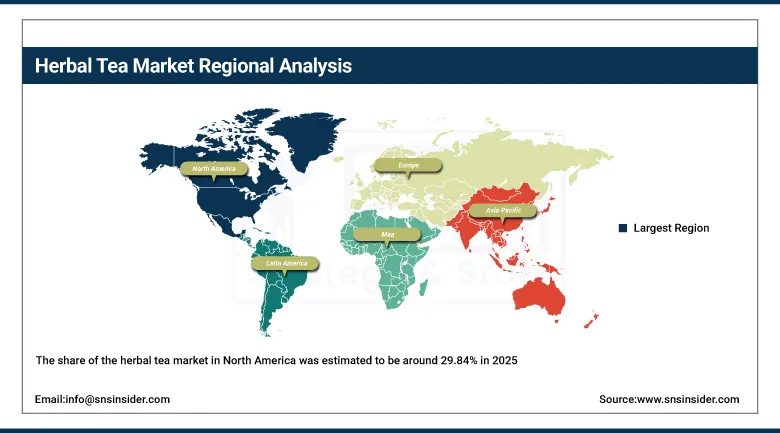
The share of the herbal tea market in North America was estimated to be around 29.84% in 2025, mainly due to the rising preference for wellness beverages, increasing supply of organic tea products, and rising demand for functional, non-caffeinated drinks in the U.S. and Canada. Over 87% of households in the U.S. were consuming tea beverages in 2025, resulting in an increase in the demand for chamomile, ginger, turmeric, and green herbal teas from grocery stores and online channels. Wellness beverage companies in the U.S. have also witnessed a growth of over 14% in their herbal tea product offerings during 2025, including those that boost immunity and digestive systems.
Get Customized Report as per Your Business Requirement - Enquiry Now
Europe Herbal Tea Market Insights
The share of the herbal tea market in Europe was 20.18% in 2025 due to growing demand for organic wellness beverages, rise in the presence of specialty tea cafes, and increased preference for natural digestive and relaxing beverages in Germany, France, Italy, and the UK. The sales of organic herbal beverages registered more than 11% growth rate in Europe during 2025, contributing largely to the adoption of chamomile, peppermint, and green herbal tea products in retail stores and wellness centers. More than 18,000 specialty tea cafes and wellness beverage stores were operational in Europe during 2025, thereby escalating the demand for premium and functional herbal teas.
Asia Pacific Herbal Tea Market Insights
The herbal tea market in Asia Pacific held the major market share of 35.46% in the global market in 2025, and the region is also likely to register the highest growth rate in terms of CAGR of 6.82% during 2026 to 2035. The high rate of growth can be attributed to high levels of awareness regarding health and wellness, increase in the consumption of herbal drinks, and expansion of production of ingredients such as ginger, tulsi, chamomile, and green tea among countries such as China, India, Japan, and Southeast Asia. In 2025, more than 254 million kg of tea was exported from India, which aided in increased production of herbal tea products.
Middle East & Africa and Latin America Herbal Tea Market Insights
The Latin American herbal tea market captured about 8.24% market share in 2025, whereas the Middle East and Africa held more than 6.28% market share due to consumer awareness about natural beverage options and the growing acceptance of herbal beverages in urban retail stores. Brazilian consumers have increased their intake of herbal beverages in 2025, which witnessed wellness tea sales rise by around 10% in supermarkets as well as specialized stores selling healthy beverages. The Gulf countries were also experiencing an increase in the establishment of tea cafes as well as beverage retail chains to cater to the growing demand for chamomile, mint, and ginger teas.
Market Dynamics
Growth Drivers: Rising consumer preference for wellness beverages and functional herbal infusions accelerating industry growth
The demand for herbal teas is on the rise owing to rising preference for health beverages that are all-natural, increasing awareness about health of digestion systems and the immune system, and increasing demand for healthy beverages without caffeine in them across the globe. Herbal tea market is becoming more popular because consumers are favoring chamomile, ginger, peppermint, turmeric, and green herbal teas because of their health benefits such as detoxification. Growth in the investment of organic herbs cultivation, sustainable herbal tea packaging, and ready-to-drink wellness beverages will drive the growth in the market during the forecast period from 2025-2026.
More than 87% of U.S. households consumed tea beverages during 2025, significantly accelerating demand for herbal wellness teas, caffeine-free drinks, and functional herbal infusion products across supermarkets and online retail platforms. Rising consumer preference for chamomile, ginger, turmeric, and immunity-supporting herbal beverages strengthened expansion of wellness-focused tea brands and specialty herbal beverage offerings nationwide.
Restraints: Fluctuations in raw material supply and increasing product competition limiting market expansion
The industry is bound to face difficulties because of the variations in availability of herbal ingredients, high costs associated with organic farming, and stiff competition posed by other functional beverages like kombucha. Disturbances that are brought about by weather changes to tea and medicinal herb production could affect availability and stability in prices. Moreover, increasing saturation of products within online health stores, coupled with stringent labeling rules regarding foods, may limit profitability among smaller manufacturers of herbal teas. Higher transport costs as well as changing consumer preferences to other beverage options could act as barriers to growth in the period between 2025 and 2026.
Opportunities: Expansion of organic herbal cultivation and digital wellness retail platforms creating new opportunities
The herbal tea market is facing many growth prospects on account of the rising investments in the production of organic herbal tea, the increasing reach of wellness beverages via retail channels, and growing demand for herbal functional beverages across the globe. The herbal tea industry is gaining momentum on the back of innovations in the production of premium herbal loose tea leaves, wellness RTD beverages, and sustainable packaging technology, which has been combined with digital retail solutions. Growing demand for immunity boosting and detox beverages is fueling product innovations during 2025–2026.
Online wellness subscription platforms recorded approximately 20% growth in herbal beverage orders during 2025, with more than 35 million plant-based wellness drink orders processed globally across digital health and beverage platforms. Rising consumer preference for personalized herbal tea blends, immunity-supporting beverages, and caffeine-free wellness drinks significantly accelerated expansion of online herbal tea subscription services worldwide.
Recent Developments:
-
March 2025: Unilever PLC expanded its wellness beverage portfolio by increasing investments in herbal and functional tea products focused on immunity, relaxation, and sustainable packaging solutions across global markets.
-
July 2025: Tata Consumer Products Limited strengthened its herbal tea business through expansion of premium wellness tea variants and enhanced distribution of green tea and ayurvedic infusion products across India and international markets.
-
2026: Celestial Seasonings, Inc. expanded production of caffeine-free herbal tea blends and sustainable packaging initiatives to support rising consumer demand for natural wellness beverages and functional herbal infusions globally.
Herbal Tea Market Key Players are:
-
Unilever PLC
-
Tata Consumer Products Limited
-
Celestial Seasonings, Inc.
-
Traditional Medicinals, Inc.
-
Bigelow Tea Company
-
Yogi Tea GmbH
-
The Republic of Tea, Inc.
-
Dilmah Ceylon Tea Company PLC
-
Harney & Sons Fine Teas
-
Associated British Foods plc
-
Twinings & Co.
-
Pukka Herbs Ltd.
-
Numi Organic Tea
-
Davidson’s Organics
-
Organic India Pvt. Ltd.
-
Teavana Corporation
-
Ito En, Ltd.
-
Hain Celestial Group, Inc.
-
Bettys & Taylors Group Ltd.
-
Vahdam Teas Pvt. Ltd.
Herbal Tea Market Report Scope:
| Report Attributes | Details |
|---|---|
| Market Size in 2025 | USD 3.55 Billion |
| Market Size by 2035 | USD 6.20 Billion |
| CAGR | CAGR of 5.77% From 2026 to 2035 |
| Base Year | 2025 |
| Forecast Period | 2026-2035 |
| Historical Data | 2022-2024 |
| Report Scope & Coverage | Market Size, Segments Analysis, Competitive Landscape, Regional Analysis, DROC & SWOT Analysis, Forecast Outlook |
| Key Segments | • By Product Type (Green Herbal Tea, Chamomile Herbal Tea, Ginger Herbal Tea) • By Form (Tea Bags, Loose Leaf Tea, Instant Herbal Tea) • By Distribution Channel (Supermarkets & Hypermarkets, Online Retail, Specialty Stores) |
| Regional Analysis/Coverage | North America (US, Canada), Europe (Germany, UK, France, Italy, Spain, Russia, Poland, Rest of Europe), Asia Pacific (China, India, Japan, South Korea, Australia, ASEAN Countries, Rest of Asia Pacific), Middle East & Africa (UAE, Saudi Arabia, Qatar, South Africa, Rest of Middle East & Africa), Latin America (Brazil, Argentina, Mexico, Colombia, Rest of Latin America). |
| Company Profiles | Unilever PLC, Tata Consumer Products Limited, Celestial Seasonings, Inc., Traditional Medicinals, Inc., Bigelow Tea Company, Yogi Tea GmbH, The Republic of Tea, Inc., Dilmah Ceylon Tea Company PLC, Harney & Sons Fine Teas, Associated British Foods plc, Twinings & Co., Pukka Herbs Ltd., Numi Organic Tea, Davidson’s Organics, Organic India Pvt. Ltd., Teavana Corporation, Ito En, Ltd., Hain Celestial Group, Inc., Bettys & Taylors Group Ltd., Vahdam Teas Pvt. Ltd. |

Frequently Asked Questions
The Herbal Tea Market is expected to grow at a CAGR of 5.77% from 2026 to 2035.
The Herbal Tea Market was valued at USD 3.55 billion in 2025.
Tea Bags dominated the market in 2025 with approximately 54.42% of revenues.
Green Herbal Tea dominated the market in 2025 with approximately 46.18% of revenues.
Asia Pacific dominated the Herbal Tea Market in 2025 with approximately 35.46% of global revenues.
