
Interstitial Cystitis & Bladder Pain Syndrome (IC/BPS) Treatment Market Report Scope & Overview:
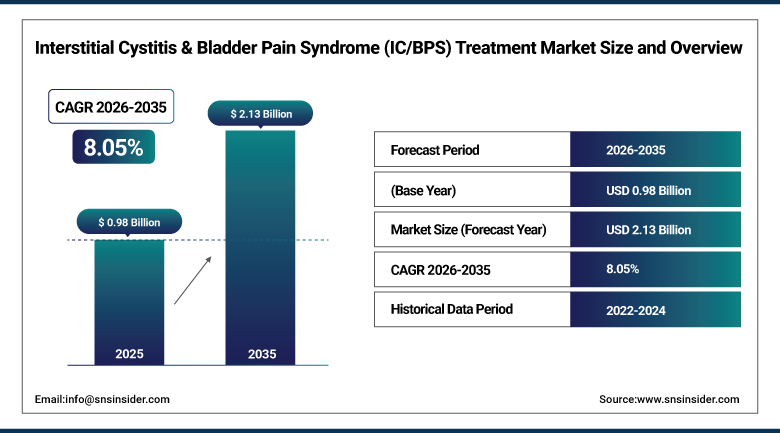
The Interstitial Cystitis & Bladder Pain Syndrome (IC/BPS) Treatment Market was valued at USD 0.98 Billion in 2025 and is projected to reach USD 2.13 Billion by 2035, expanding at a CAGR of 8.05% during the forecast period 2026–2035.
The global Interstitial Cystitis and Bladder Pain Syndrome treatment market is observing steady growth driven by the rising incidence of chronic pelvic pain conditions, increased awareness of patients and clinicians, and the consistent progress in developing specific therapy options. Pharmaceutical firms are exploring new oral treatments, intravesical drug delivery devices, neuromodulation technologies, and biologics to enhance the effectiveness of symptom management and the quality of patient lives.
Progress in diagnosing procedures, the growth in the number of clinical studies, increase in health care spending, and an abundance of specialized urological care help drive the demand for modern treatment options. Continued focus on personalized medicine, minimally-invasive solutions, and multidisciplinary approaches in disease management creates further commercial opportunities within both mature and emerging health care markets. Throughout late 2025, a number of pharmaceutical and medical device companies have launched expanded clinical development projects related to new IC/BPS treatments, neuromodulation technology, and biologic drug candidates.
To Get more information Interstitial Cystitis & Bladder Pain Syndrome Treatment Market - Request Free Sample Report
Interstitial Cystitis & Bladder Pain Syndrome (IC/BPS) Treatment Market Trends
-
Increasing diagnosis and awareness of chronic bladder pain syndrome worldwide.
-
Growing adoption of neuromodulation therapies for refractory IC/BPS patients.
-
Rising clinical development of biologics and targeted therapeutic candidates.
-
Expanding utilization of minimally invasive intravesical treatment approaches.
-
Increasing investment in personalized treatment strategies and specialty urology care.
The U.S. Interstitial Cystitis & Bladder Pain Syndrome (IC/BPS) Treatment Market Size Outlook
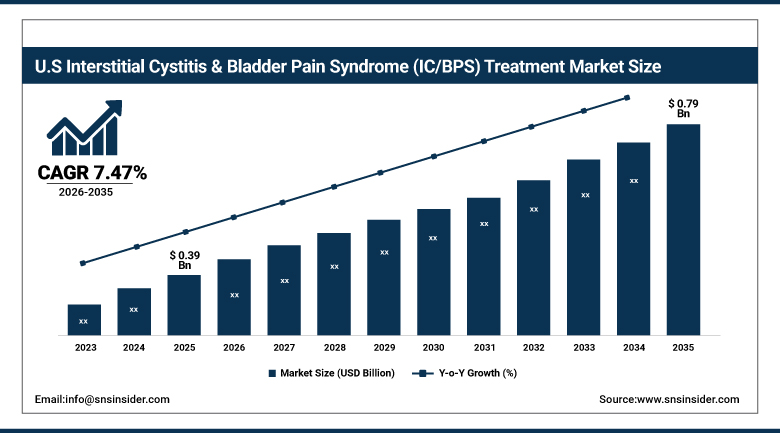
The U.S. Interstitial Cystitis & Bladder Pain Syndrome (IC/BPS) Treatment Market was valued at USD 0.39 billion in 2025 and is expected to reach approximately USD 0.79 billion by 2035, expanding at a CAGR of 7.47% during 2026–2035.
The United States will continue to account for the largest domestic market owing to robust specialty urology network, growing disease awareness, high rates of disease detection, and availability of advanced pharmacologic and neuromodulation drugs. Multimodal treatment approaches combining oral medications, bladder instillations, behavioral therapy, and implantable neuromodulation devices are being increasingly used by academic medical centers, specialty urology clinics, and integrated care facilities. Continued clinical research, reimbursement of approved treatments, development of patient advocacy programs, and investments by pharmaceutical firms will drive sustained market expansion in the country.
June 2025, several U.S.-based pharmaceutical firms were involved in conducting clinical trials on novel biological, next generation neuromodulation devices, and advanced drug delivery systems for chronic bladder pain and inflammation.
Interstitial Cystitis & Bladder Pain Syndrome (IC/BPS) Treatment Market Segment Analysis
-
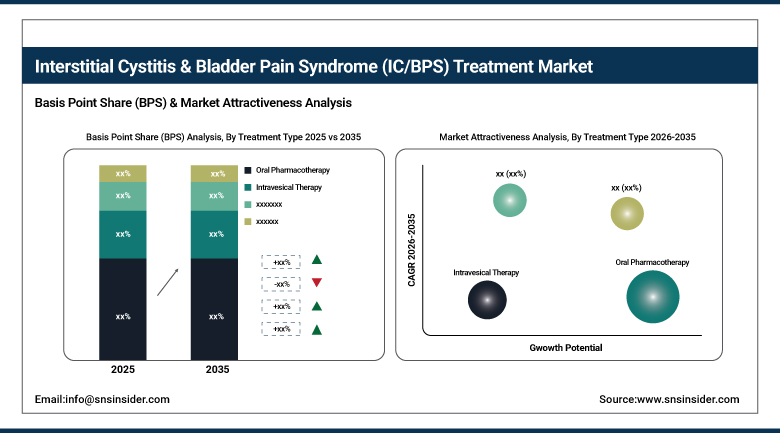
By Treatment Type, oral pharmacotherapy dominated the market with 34.00% share in 2025, while biologics & emerging therapies are projected to witness the fastest growth with 12.93% CAGR during the forecast period.
-
By Disease Type, non-hunner IC/BPS dominated the market with 63.00% share in 2025, while refractory IC/BPS is projected to witness the fastest growth with 9.56% CAGR during the forecast period.
-
By Route of Administration, oral administration dominated the market with 46.00% share in 2025, while implantable / neuromodulation is projected to witness the fastest growth with 10.33% CAGR during the forecast period.
-
By End User, hospitals dominated the market with 38.00% share in 2025, while specialty urology clinics are projected to witness the fastest growth with 9.05% CAGR during the forecast period.
By Treatment Type, oral pharmacotherapy dominated, while biologics & emerging therapies fastest-growing.
The oral pharmacotherapy category represented the largest market share of 34.00% in 2025, which can be attributed to the fact that this modality represents the initial line of therapy for almost all IC/BPS patients. Doctors usually administer oral drugs to ease the symptoms of inflammation, chronic pelvic pain, improve bladder health, and increase patients' quality of life. Consistent supply of approved pharmacological products, easy drug administration, good patient adherence, and treatment protocols have allowed extensive use of oral therapies in both hospitals and urological clinics. Over 2025, various pharmaceutical companies conducted further trials of oral drugs aimed at improving chronic pain control and reducing chronic inflammation of the bladder in IC/BPS patients.
The biologics & emerging therapies category is estimated to demonstrate the highest CAGR of 12.93% during the forecast period due to ongoing developments in the field of precision medicine, regenerative treatments, immunomodulatory drugs, stem cell technology, and next-generation biologics. Scientists and biotechnological companies develop new approaches to treatment of chronic inflammation, neurogenic pain signaling, and urothelial dysfunction in IC/BPS. In January 2026, a number of biotechnology companies developed their biological and regenerative medicines up to mid-clinical trials in chronic bladder pain syndromes.
By Disease Type, non-hunner IC/BPS dominated, while refractory IC/BPS fastest-growing.
The non-hunner IC/BPS segment accounted for the leading market share of 63.00% in 2025 as the condition is common amongst many interstitial cystitis patients globally. Most patients exhibit chronic pelvic pain, urinary urgency, frequency, and bladder pain without any presence of Hunner lesions. Conservative pharmacological management and multimodal therapy form the mainstay of the treatment modality in such cases. Higher awareness levels amongst healthcare providers and better diagnosis criteria, coupled with greater availability of specialty urology practices, have contributed to the growth of the segment. In 2025, various international urology societies continued to promote clinical guidelines for the individualized treatment of Non-Hunner IC/BPS patients.
The refractory IC/BPS segment is projected to grow at the fastest CAGR of 9.56% during the forecast period due to rising preference for novel treatment options amongst the patients suffering from refractory interstitial cystitis and painful bladder syndrome. The rising adoption of neuromodulation devices, biologics, minimally invasive therapies, and multimodal therapy options in the segment will help in the creation of many opportunities. Several clinical studies are being conducted in 2026 for advanced neuromodulation therapies and investigative biologic therapies for the treatment of refractory IC/BPS patients.
By Route of Administration, oral administration dominated, while implantable / neuromodulation is the fastest-growing.
Oral represented the highest market share of 46.00% in 2025 due to wide adoption as the preferred therapy for treatment of mild to moderate interstitial cystitis and bladder pain syndrome cases. Oral therapy drugs provide convenience in administration, compliance improvement and symptom management by alleviating inflammation, pelvic pain, urge and frequency of urination. Physicians prefer prescribing oral pharmacotherapy as the first-line therapy based on established clinical guidelines, wider availability of products, excellent safety profile and ease of implementation in the treatment regime. During 2025, the development of new generation of oral drugs treating inflammation and chronic pelvic pain in the case of interstitial cystitis progressed to achieve better symptoms management.
Implantable / neuromodulation is expected to experience the fastest growth rate of 10.33% during the forecast period due to growing usage of sacral neuromodulation and implantable nerve stimulators in the case of refractory IC/BPS patients non-responding to pharmacotherapy treatment. Providers are increasingly using minimally invasive neuromodulation devices to enhance bladder function, manage chronic pelvic pain and achieve long-term symptoms relief. In June 2026, major medical device manufacturers generated more data in support of next-generation implantable neuromodulation devices used to manage bladder dysfunction and refractory interstitial cystitis.
Regional Analysis
|
Region |
Major Country |
Share within Region, 2025 (%) |
|---|---|---|
|
North America |
United States |
93.00% |
|
Europe |
Germany |
28.00% |
|
Asia Pacific |
China |
20.00% |
|
Middle East & Africa |
UAE |
5.00% |
|
Latin America |
Brazil |
4.00% |
North America Interstitial Cystitis & Bladder Pain Syndrome (IC/BPS) Treatment Market Insights
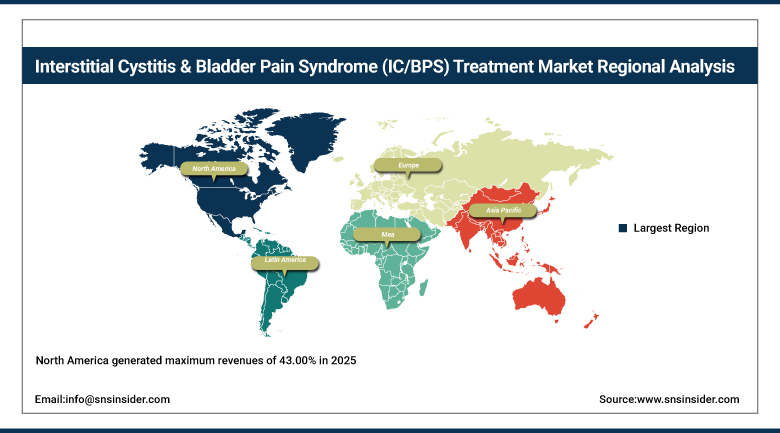
North America generated maximum revenues of 43.00% in 2025 owing to its advanced healthcare system, increased awareness about diseases, improved reimbursement mechanisms, and availability of advanced urological treatment facilities in the United States and Canada. The pharmaceutical industry continues to invest in novel oral medications, neuromodulation devices, intravesical therapies, and biologic drugs to enhance the treatment results. Increasing diagnosis rates, high clinical research activities, and partnerships among academic medical institutions and biotech companies are further driving the growth of innovative treatment options for IC/BPS in the region. January 2026, some healthcare organizations from North America have broadened their clinical programs for advanced neuromodulation therapies and targeted drugs for chronic bladder pain conditions.
Get Customized Report as per Your Business Requirement - Enquiry Now
Europe Interstitial Cystitis & Bladder Pain Syndrome (IC/BPS) Treatment Market Insights
In the year 2025, Europe had to rising incidences of chronic pelvic pain syndromes, increasing specialty urology practice, and constant development in the field of pharmaceutical innovations. Some of the countries in Europe that are increasingly adopting the approach of multimodal IC/BPS therapy involving oral medication, intravesical treatments, neuromodulation, and behavioral therapy include Germany, UK, France, Italy, and Spain. The support of government-funded healthcare system, growing research activities, and rising awareness campaigns are contributing to market growth in the European region. In March 2025, European urology associations kept on promoting evidence-based treatment practices in the management of IC/BPS patients.
Asia Pacific Interstitial Cystitis & Bladder Pain Syndrome (IC/BPS) Treatment Market Insights
The fastest CAGR growth rate of 10.49% is anticipated in the Asia Pacific region due to enhanced health care accessibilities, increased detection rates, rising health care spending, and heightened knowledge about chronic urological conditions in China, Japan, South Korea, India, and Australia. Increased pharmaceutical production, improved availability of specialized urology clinics, and government initiatives for modernizing health care systems are helping in adopting advanced IC/BPS treatments. The involvement of biotechnological research and participation in international clinical trials is further driving healthy market growth. In January 2026, several Asia-Pacific pharmaceutical firms entered into collaborations regarding research on advanced biologics and minimally invasive treatments for chronic bladder pain syndrome.
Middle East & Africa and Latin America Interstitial Cystitis & Bladder Pain Syndrome (IC/BPS) Treatment Market Insights
The market in the Middle East & Africa region is showing steady growth with the help of improvements in healthcare infrastructure, increased investments in specialty urology procedures and advancements in technology in the countries of Saudi Arabia, UAE, and South Africa. Improvements in healthcare modernization and increased awareness amongst health practitioners are resulting in early diagnosis and better disease management. Increased availability of pharmaceuticals and increasing use of minimally invasive treatments will contribute towards the growth of the regional market in future years.
Latin America market is seeing growth due to increased availability of specialty healthcare services, pharmaceuticals distribution channels and increasing awareness about chronic bladder pain diseases in Brazil, Mexico, Argentina, and Chile. The government and health practitioners are continuing with investments in modern urology care facilities and diagnostic systems as well as patient education programs. Increased healthcare infrastructure and availability of innovative treatment methods will drive the growth of the market in the forecast period. In 2025, many healthcare organizations in emerging regions made significant improvements in their specialty urology programs and access to advanced treatment options for chronic pelvic pain and bladder disorders.
Market Dynamics
Growth Drivers: Higher incidence rates of chronic pain conditions affecting bladders along with rising usage of cutting-edge treatments.
Higher incidence rates of interstitial cystitis/bladder pain syndrome conditions along with increased awareness amongst medical experts and patients are significantly contributing to the growth of this market. Healthcare practitioners are opting for effective therapeutic solutions involving oral medicines, intravesical medicine administration, neuromodulation techniques, behavioral therapy, and multi-disciplinary approach to effectively manage symptoms for a prolonged period. Diagnosis is becoming more effective owing to better clinical practices, higher availability of specialized urology centers, and innovative pharmaceutical practices which are resulting in early intervention and proper management of this disease.
Moreover, advancements in clinical studies and investments in personalized medicine are improving commercialization prospects of IC/BPS solutions in the coming years. In 2025, numerous clinical studies have been conducted by various companies on advanced IC/BPS treatments.
Restraints: Lack of disease awareness, late diagnosis, and lack of curative medicines.
While constant improvements in therapies have not been a problem, market expansion is hindered by underdiagnoses, symptoms similar to other urological conditions, and lack of universal curative medicines. Patients usually get diagnosed late since they do not have specific diagnostic markers, causing the disease to develop for a long time before treatment begins. In addition, variability of reactions to different treatments, expensive neuromodulation procedures, and limited insurance coverage for innovative drugs remain restraining factors for development. They pose serious problems for medical service providers and pharmaceutical companies trying to achieve better results. In 2025, international organizations working in the field of urology highlighted the importance of early diagnosis and standardized guidelines for treatment of chronic bladder pain syndrome.
Opportunities: Development of biologics, regenerative medicine, and precision urological therapeutics.
There are some promising developments in the market as pharmaceuticals and biotechnological organizations continue to develop new therapeutic options in the field of biologics, regenerative medicine, stem cell treatments, gene therapy, and precision immune system modulation aimed at IC/BPS. Significant investments in developing novel drugs that will tackle the inflammatory and pain pathways as well as biomarkers, advances in personalized medicine, patient stratification with AI technologies, and precision treatment planning are expected to boost market growth in the coming years. In April 2026, biotechnology organizations started to test new therapies of biologics and regenerative medicine for chronic inflammatory disorders of the bladder.
Recent Developments
-
2026: UroGen Pharma Ltd. announced continued advancement of its urology pipeline focused on novel localized drug delivery technologies for chronic bladder disorders, supporting long-term innovation in bladder disease therapeutics.
-
2026: Boston Scientific Corporation expanded clinical evidence supporting its sacral neuromodulation technologies for patients with refractory bladder dysfunction and chronic lower urinary tract disorders, reinforcing adoption of implantable neuromodulation therapies.
-
2025: Viatris Inc. strengthened its urology portfolio through continued commercialization of therapies supporting chronic urinary tract disorder management and expanded patient access initiatives across major healthcare markets.
-
2025: Medtronic plc reported additional clinical data demonstrating long-term effectiveness of InterStim neuromodulation therapy for patients suffering from chronic bladder dysfunction and associated urinary disorders.
Interstitial Cystitis & Bladder Pain Syndrome (IC/BPS) Treatment Market Key Players are:
-
Viatris Inc.
-
Pfizer Inc.
-
Johnson & Johnson
-
AbbVie Inc.
-
UroGen Pharma Ltd.
-
Medtronic plc
-
Boston Scientific Corporation
-
Coloplast A/S
-
Laborie Medical Technologies
-
Teva Pharmaceutical Industries Ltd.
-
Sun Pharmaceutical Industries Ltd.
-
Hikma Pharmaceuticals PLC
-
Eli Lilly and Company
-
Bristol Myers Squibb
-
Merck & Co., Inc.
-
AstraZeneca PLC
-
GSK plc
-
Seikagaku Corporation
-
Astellas Pharma Inc.
-
Ironwood Pharmaceuticals, Inc.
Interstitial Cystitis & Bladder Pain Syndrome (IC/BPS) Treatment Market Report Scope:
| Report Attributes | Details |
|---|---|
| Market Size in 2025 | USD 0.98 Billion |
| Market Size by 2035 | USD 2.13 Billion |
| CAGR | CAGR of 8.05% From 2026 to 2035 |
| Base Year | 2025 |
| Forecast Period | 2026-2035 |
| Historical Data | 2022-2024 |
| Report Scope & Coverage | Market Size, Segments Analysis, Competitive Landscape, Regional Analysis, DROC & SWOT Analysis, Forecast Outlook |
| Key Segments | • By Treatment Type (Oral Pharmacotherapy, Intravesical Therapy, Neuromodulation Devices, Biologics & Emerging Therapies, Others) • By Disease Type (Non-Hunner IC/BPS, Hunner Lesion IC/BPS, Refractory IC/BPS) • By Route of Administration (Oral, Intravesical, Injectable, Implantable / Neuromodulation) • By End User (Hospitals, Specialty Urology Clinics, Ambulatory Surgical Centers, Research Institutes, Others) |
| Regional Analysis/Coverage | North America (US, Canada), Europe (Germany, UK, France, Italy, Spain, Russia, Poland, Rest of Europe), Asia Pacific (China, India, Japan, South Korea, Australia, ASEAN Countries, Rest of Asia Pacific), Middle East & Africa (UAE, Saudi Arabia, Qatar, South Africa, Rest of Middle East & Africa), Latin America (Brazil, Argentina, Mexico, Colombia, Rest of Latin America). |
| Company Profiles | Viatris Inc., Pfizer Inc., Johnson & Johnson, AbbVie Inc., UroGen Pharma Ltd., Medtronic plc, Boston Scientific Corporation, Coloplast A/S, Laborie Medical Technologies, Teva Pharmaceutical Industries Ltd., Sun Pharmaceutical Industries Ltd., Hikma Pharmaceuticals PLC, Eli Lilly and Company, Bristol Myers Squibb, Merck & Co., Inc., AstraZeneca PLC, GSK plc, Seikagaku Corporation, Astellas Pharma Inc., Ironwood Pharmaceuticals, Inc. |

Frequently Asked Questions
The Interstitial Cystitis & Bladder Pain Syndrome (IC/BPS) Treatment Market was valued at USD 0.98 Billion in 2025.
The market is projected to reach USD 2.13 Billion by 2035.The market is projected to reach USD 2.13 Billion by 2035.
Oral Pharmacotherapy accounted for the largest revenue share of 34.00% in 2025.
North America dominated the global market.
The market is expected to expand at a CAGR of 8.05% during the forecast period.
