
Moving Bed Bioreactor Market Report Scope & Overview:
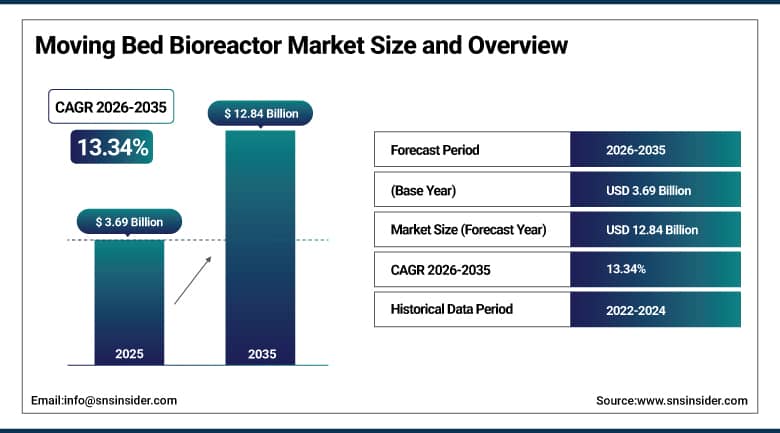
The Moving Bed Bioreactor Market was valued at USD 3.69 billion in 2025 and is expected to reach USD 12.84 billion by 2035, growing at a CAGR of 13.34% from 2026–2035.
Moving Bed Bioreactor Market is witnessing strong growth owing to rising demands for effective wastewater treatment solutions from municipal, industrial, and aquaculture segments around the world. The increasing awareness about water pollution, strict environmental laws, and the need for sustainable water management are driving market growth. Moving bed bioreactors are gaining widespread popularity among industries as they are highly efficient in treatment, produce less sludge, and have lower operating costs. Urbanization, industrialization, and advancements in wastewater treatment infrastructure are rapidly fueling the use of both aerobic and anaerobic bioreactors worldwide between 2025 and 2026.
During 2025–2026, hospitals increasingly shifted from privacy curtains to easy-to-clean solid privacy screens to reduce hospital-acquired infection risks
To Get More Information On Moving Bed Bioreactor Market - Request Free Sample Report
Moving Bed Bioreactor Market Trends
-
Rising concerns regarding water pollution and industrial wastewater discharge are increasing demand for advanced biological treatment systems globally.
-
Governments are implementing stricter wastewater treatment and water reuse regulations, accelerating adoption of sustainable treatment technologies.
-
Municipalities are increasingly investing in sewage treatment modernization and smart wastewater management infrastructure.
-
Industrial water recycling and circular water economy initiatives are becoming major trends across manufacturing sectors.
-
AI-based automation and smart process control technologies are improving wastewater treatment efficiency and operational performance.
-
Expansion of aquaculture farming and food processing industries is boosting demand for efficient biological water treatment systems.
-
Decentralized wastewater treatment plants and intelligent sewage management solutions are gaining popularity for sustainable urban water management.
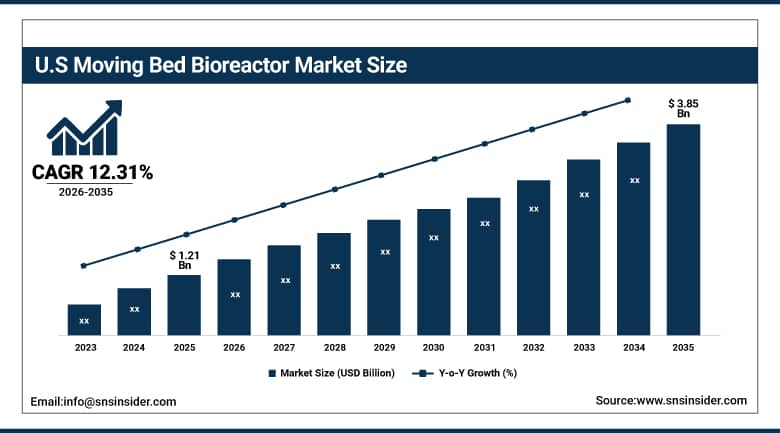
The U.S. Moving Bed Bioreactor Market was valued at USD 1.21 billion in 2025 and is expected to reach USD 3.85 billion by 2035 at a CAGR of 12.31%, driven by its dominant position in hyperscale data center infrastructure and Automatic Screens innovation.
The U.S. Moving Bed Bioreactor Market is expected to grow owing to increasing investments in advanced wastewater treatment infrastructure, increasing need for water recycling in industrial operations, and stringent government policies related to water pollution control. The adoption of moving bed bioreactor technology is expected to increase owing to their advantages like efficient biological treatment process, lesser sludge formation, and cost-effectiveness. Increasing awareness about water scarcity issues, increasing number of industrial manufacturing operations, and upgradation of existing wastewater treatment facilities are expected to drive the market growth in the coming years. Adoption of sustainable water management techniques is also driving demand in the country.
Moving Bed Bioreactor Market Segment Insights
-
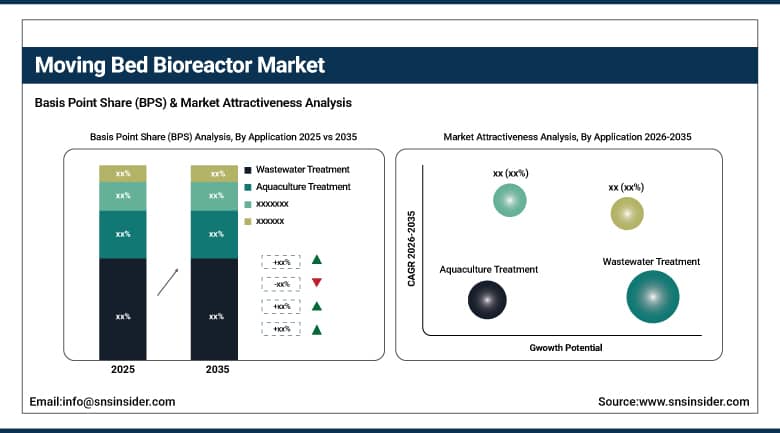
By Application, Wastewater Treatment dominated with approximately 67.45% revenue share in 2025; Aquaculture Treatment is expected to grow at the fastest CAGR of approximately 12.05% from 2026 to 2035.
-
By Technology, Aerobic Process held the highest revenue share of approximately 58.89% in 2025; Anaerobic Process is expected to grow at the fastest CAGR of approximately 12.82% from 2026 to 2035.
-
By End Use, Municipal held the highest revenue share of approximately 76.54% in 2025; Commercial is expected to grow at the fastest CAGR of approximately 12.55% from 2026 to 2035.
-
By Material, Polypropylene held the highest revenue share of approximately 72.47% in 2025; Polyethylene is expected to grow at the fastest CAGR of approximately 12.70% from 2026 to 2035.
Moving Bed Bioreactor Market Segment Analysis
By Application, Wastewater Treatment Applications Continue Leading Industry Expansion
Wastewater Treatment was dominant with revenue share of around 67.45% in 2025 as municipalities and industries have started focusing on biological treatment technology owing to stringent environmental policies. Rising issues pertaining to industrial wastewater disposal and urban sewage were one of the major factors responsible for the adoption of moving bed bioreactor system. The Aquaculture Treatment segment is projected to record fastest growth rate in coming years from 2026 to 2035 due to increasing demands for sustainable aquaculture operations.
By Technology Aerobic Treatment Technologies Maintain Strong Market Position
The Aerobic Process is responsible for generating a revenue share of around 58.89% in 2025 owing to its high efficiency in the removal of organic contaminants, lowering the biological oxygen demand, and facilitating wastewater treatment. The municipal and industrial wastewater treatment plants have been opting for the aerobic process owing to their efficient performance and easier handling. The Anaerobic Process is projected to grow at the highest owing to the rising focus towards energy-efficient wastewater treatment processes and biogas technology.
By End Use, Municipal Sector Drives Large-Scale Adoption of Bioreactor Systems
In 2025, municipal accounted for nearly 76.54% of revenue shares because there was a significant increase in investments made by government bodies and city administrations to upgrade their wastewater treatment facilities and improve sewage management infrastructure. Rapid urbanization, population growth, and escalating environmental issues have helped to drive the adoption of biological wastewater treatment technologies at municipal facilities. Applications in commercial settings will experience the highest growth from 2026 to 2035 owing to growing wastewater treatment needs in hotels, hospitals, food processing plants, and industries.
By Material, Polypropylene Materials Lead While Polyethylene Gains Rapid Momentum
The market share revenue of polypropylene was around 72.47% in 2025 due to its better durability, chemical resistance, lightweight nature, and longevity when used in the wastewater treatment process. Polypropylene carriers and components were more preferable by manufacturers in order to have efficient biological treatment performance and minimal maintenance needs. The polyethylene segment will experience the highest growth rate from 2026 to 2035 due to the high demands for flexible and economical treatment materials. Technological developments in lightweight carrier material are driving the use of polyethylene.
Moving Bed Bioreactor Market Regional Analysis:
|
Region |
Major Country |
Share within Region (%) |
|---|---|---|
|
North America |
United States |
~83% |
|
Europe |
Germany |
~32% |
|
Asia Pacific |
China |
~46% |
|
Middle East & Africa |
UAE |
~24% |
|
Latin America |
Brazil |
~45% |
North America Moving Bed Bioreactor Market Insights
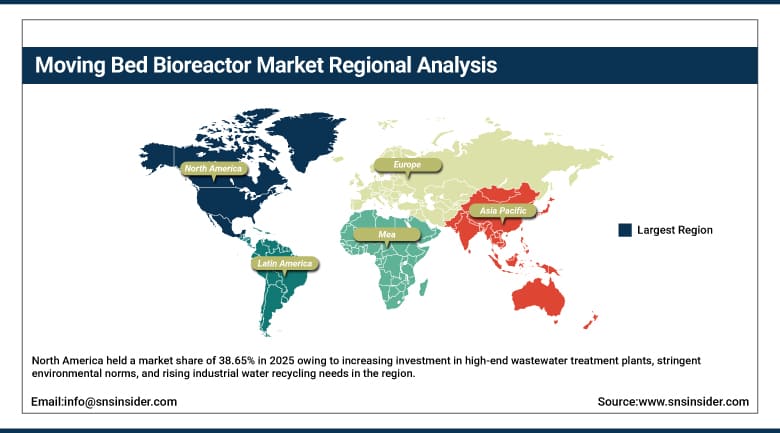
North America held a market share of 38.65% in 2025 owing to increasing investment in high-end wastewater treatment plants, stringent environmental norms, and rising industrial water recycling needs in the region. The US emerged as the main contributor due to increasing use of efficient biological treatment methods by municipalities and industries for effective water management. Increasing modernization of old sewage treatment plants and deployment of intelligent water treatment systems played a significant role in market growth. Increasing efforts to minimize industrial pollution and wastewater re-use efficiency led to increasing adoption of MBBR systems in North America.
Get Customized Report as Per Your Business Requirement - Enquiry Now
Asia Pacific Moving Bed Bioreactor Market Insights
The market share held by the Asia Pacific region was estimated at 20.87% owing to the rapid industrialization, urban population increase, and growing investments in municipal wastewater treatment plants in nations like China, India, Japan, and South Korea. Growing awareness about the pollution of water and discharge of industrial wastewater greatly increased the use of biological treatment processes. Governments became increasingly involved in initiatives for sustainable water management and modernization of sewage treatment plants to tackle the growing environmental issues. Growth in the aquaculture industry and need for better water recycling systems also propelled the adoption of moving bed bioreactors in Asia Pacific.
Europe Moving Bed Bioreactor Market Insights
The market share of Europe was estimated at 22.45% in 2025 due to strict environmental regulations, rising number of initiatives for recycling of waste water, and heavy investment in sustainable technologies for water treatment in the region. The countries contributing towards the market growth included Germany, France, and United Kingdom owing to the modernization of municipal sewage and industrial waste water management facilities. There has been growing emphasis on curbing water pollution and resource utilization leading to high adoption of aerobic and anaerobic technologies. Rising investments in circular economy and smart waste water treatment system also boosted market growth.
Middle East & Africa and Latin America Moving Bed Bioreactor Market Insights
Market shares for Middle East & Africa and Latin America were estimated at 6.00% and 12.03%, respectively, in 2025 owing to the growing investments made towards developing infrastructure for water recycling, wastewater treatment, and sustainable urban development projects. The UAE and Brazil were some of the major contributors to regional market growth in terms of increasing adoption of modern biological treatment systems for various applications including municipal and industrial segments. Increasing concerns over water scarcity, environmental pollution, and reuse of wastewater played an important role in fueling the demand for treatment technologies.
Moving Bed Bioreactor Market Growth Drivers:
-
Rising Demand for Advanced Wastewater Treatment Accelerating Industry Growth
The rise in concerns over water pollution, industrial wastewater, and sustainable water management practices is playing a major role in boosting the growth of the industry globally. Municipalities and industries are making use of advanced biological wastewater treatment plants due to their high efficiency, lesser sludge formation, and low operating costs. Urbanization, growth in the industries, and investment in sewage treatment facilities are also contributing to the rising demand for moving bed bioreactors. The governments of many nations have tightened their environmental regulations regarding wastewater treatment and reuse, which is also promoting the adoption of advanced treatment methods.
Moving Bed Bioreactor Market Restraints:
-
High Installation Costs and Complex Operation Limiting Industry Expansion
There are a number of issues that have been associated with this industry because of the high installation costs and complex operation needs of the modern wastewater treatment systems. There might be some economic challenges for small municipalities and industries installing large biological plants as a result of high costs. Maintenance of carrier media, energy consumption and skilled labor might increase operational costs in the future. Fluctuations in the prices of raw materials like polypropylene and polyethylene used in the production of carriers can also affect production costs. Technological limitations associated with efficiency and optimization of the system can also limit its application.
Moving Bed Bioreactor Market Opportunities:
-
Smart Water Management and Industrial Recycling Creating New Opportunities
The growing trend of investing in intelligent water treatment systems, industrial water recycling, and sustainable wastewater management is providing excellent growth opportunities around the world. Increasing emphasis on the circular water economy and advanced biological treatments is helping to increase the efficiency of water reuse. The rise in aqua culture farming, food processing units, and industrial manufacturing operations is boosting the demand for efficient wastewater treatment systems. Technological innovations in the field of automation and artificial intelligence-based process control are adding to the list of innovations in the wastewater treatment market. The increased use of decentralized wastewater treatment plants and smart sewage management systems is expected to create new opportunities during 2025-26.
Recent Developments:
-
January 8, 2026: Veolia secured a €28.5 million wastewater treatment upgrade project in Norway to improve Oslo Fjord water quality using advanced biological treatment technologies and high-efficiency wastewater systems.
-
March 17, 2026: Xylem highlighted increasing global investments in AI-driven smart water infrastructure and wastewater reuse technologies to address growing industrial water demand.
-
2025–2026: Evoqua expanded advanced wastewater treatment solutions for municipal and industrial applications, focusing on efficient biological treatment and water reuse systems.
Moving Bed Bioreactor Market Key Players:
-
Veolia Water Technologies
-
Xylem Inc.
-
Evoqua Water Technologies LLC
-
Aquatech International LLC
-
SUEZ Water Technologies & Solutions
-
Pentair plc
-
BioWater Technology AS
-
Headworks International Inc.
-
Aqwise Wise Water Technologies Ltd.
-
World Water Works Inc.
-
Evoqua Water Technologies
-
WesTech Engineering LLC
-
Ovivo Inc.
-
Samco Technologies Inc.
-
Toshiba Infrastructure Systems & Solutions Corporation
-
Fluence Corporation Limited
-
Mitsubishi Chemical Aqua Solutions Company Ltd.
-
Organica Water Inc.
-
EnviroMix Inc.
-
SSI Aeration Inc.
Moving Bed Bioreactor Market Report Scope:
| Report Attributes | Details |
|---|---|
| Market Size in 2025 | USD 3.69 Billion |
| Market Size by 2035 | USD 12.84 Billion |
| CAGR | CAGR of 13.34% From 2026 to 2035 |
| Base Year | 2025 |
| Forecast Period | 2026-2035 |
| Historical Data | 2022-2024 |
| Report Scope & Coverage | Market Size, Segments Analysis, Competitive Landscape, Regional Analysis, DROC & SWOT Analysis, Forecast Outlook |
| Key Segments | • By Application (Wastewater Treatment, Aquaculture Treatment) • By Technology (Aerobic Process, Anaerobic Process) • By End Use (Municipal, Commercial) • By Material (Polypropylene, Polyethylene) |
| Regional Analysis/Coverage | North America (US, Canada), Europe (Germany, UK, France, Italy, Spain, Russia, Poland, Rest of Europe), Asia Pacific (China, India, Japan, South Korea, Australia, ASEAN Countries, Rest of Asia Pacific), Middle East & Africa (UAE, Saudi Arabia, Qatar, South Africa, Rest of Middle East & Africa), Latin America (Brazil, Argentina, Mexico, Colombia, Rest of Latin America). |
| Company Profiles | Veolia Water Technologies, Xylem Inc., Evoqua Water Technologies LLC, Aquatech International LLC, SUEZ Water Technologies & Solutions, Pentair plc, BioWater Technology AS, Headworks International Inc., Aqwise Wise Water Technologies Ltd., World Water Works Inc., Evoqua Water Technologies, WesTech Engineering LLC, Ovivo Inc., Samco Technologies Inc., Toshiba Infrastructure Systems & Solutions Corporation, Fluence Corporation Limited, Mitsubishi Chemical Aqua Solutions Company Ltd., Organica Water Inc., EnviroMix Inc., SSI Aeration Inc. |

Frequently Asked Questions
North America dominated the Moving Bed Bioreactor Market in 2025 with approximately 38.65% of global revenues.
Polypropylene dominated the market in 2025 with approximately 42% of revenues.
Wastewater Treatment dominated the market in 2025 with approximately 67.45% of revenues.
The Moving Bed Bioreactor Market was valued at USD 3.69 billion in 2025.
The Moving Bed Bioreactor Market is expected to grow at a CAGR of 13.34% from 2026 to 2035.
