
Nasal Splints Market Report Scope & Overview:
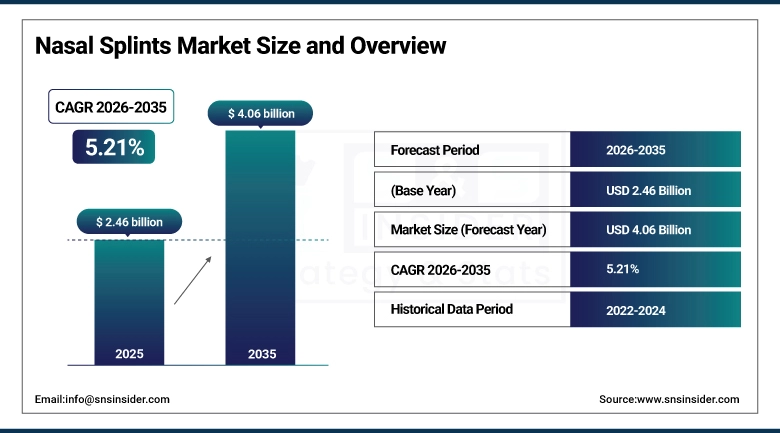
The Nasal Splints Market size is valued at USD 2.46 Billion in 2025 and is projected to reach USD 4.06 Billion by 2035, growing at a CAGR of 5.21% during the forecast period 2026–2035.
The Nasal Splints Market analysis report offers a comprehensive overview of market dynamics, device advancements, and therapeutic uses. The increasing number of nasal surgeries, growing need for post-operative care, increasing use of advanced biocompatible materials, and expanding healthcare infrastructure are contributing to robust market growth during 2026-2035.
Nasal splints have been used in more than 70% of nasal surgery procedures in 2025, driven by increasing cosmetic rhinoplasty, functional corrections in septoplasty, and ENT surgery.
To Get more information on Nasal Splints Market - Request Free Sample Report
Nasal Splints Market Trends:
-
Rising demand for nasal splints due to increased volumes of procedures such as rhinoplasty, septoplasty, and other ENT procedures.
-
Rise in the use of malleable and silicone-based nasal splints for enhanced patient comfort.
-
Increasing ambulatory surgical centers, thereby fueling the use of nasal splints in these centers.
-
Rise in the volume of cosmetic procedures, thus fueling the demand for nasal splints in both developed and developing countries.
-
Rise in the use of bioabsorbable materials for the manufacture of nasal splints.
-
Hospitals and clinics remain the major end-users of nasal splints, though there is growth in homecare and telemedicine-based recovery kits.
-
Online channels are showing rapid growth in the nasal splint market due to e-commerce platforms.
-
Rise in competition due to innovation in the design of nasal splints for patient comfort.
U.S. Nasal Splints Market Insights:
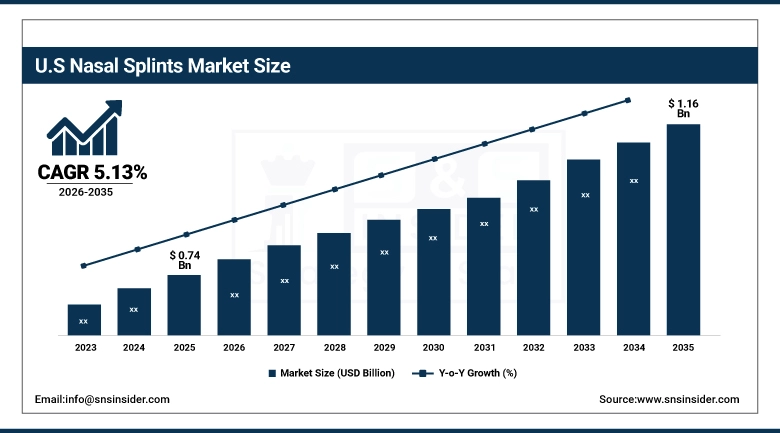
The U.S. Nasal Splints Market is expected to grow from USD 0.74 billion in 2025 to USD 1.16 billion in 2035, growing at a CAGR of around 5.13% during the forecast period. The market is growing due to increasing volumes of rhinoplasty and septoplasty surgeries, increasing demand for advanced post-surgery care devices, strong acceptance of silicone and bioabsorbable splints, and increasing acceptance of ambulatory surgery centers.
Nasal Splints Market Growth Drivers:
- The increasing prevalence of nasal injuries, chronic nasal obstruction disorders, and a growing number of cosmetic and reconstructive surgeries are key growth drivers for the Nasal Splints Market.
Rising demand for advanced ENT surgical care, particularly septoplasty and rhinoplasty procedures, is further accelerating the adoption of nasal splints across hospitals, ENT specialty clinics, and ambulatory surgical centers. Continuous innovation in bioabsorbable, silicone-based, and patient-friendly splint designs is improving post-operative comfort, reducing complications, and enhancing surgical outcomes. Additionally, the expansion of minimally invasive ENT procedures and increasing healthcare access in emerging economies are strengthening overall market penetration.
Over 55% of hospitals and ENT specialty clinics globally are now utilizing advanced nasal splints in 2025 to support post-operative stabilization and improve recovery outcomes, highlighting their growing importance in modern ENT surgical care and reconstructive treatments.
Nasal Splints Market Restraints:
- Limited awareness in certain developing regions regarding advanced ENT post-operative care solutions is restraining the adoption of nasal splints, particularly in low-resource healthcare settings.
The high cost of advanced bioabsorbable and customized splints compared to conventional alternatives also limits widespread usage, especially in price-sensitive markets. In addition, patient discomfort, including nasal irritation, breathing difficulty, and infection risks associated with improper placement, can discourage adoption and reduce compliance in post-surgical care. Variability in reimbursement policies for ENT procedures across regions further restricts market penetration in some healthcare systems.
Nearly 31% of healthcare providers in emerging economies report cost and limited access to advanced nasal splint technologies as key barriers in 2025, highlighting ongoing challenges in achieving broader market adoption.
Nasal Splints Market Opportunities:
- The increasing shift toward bioabsorbable and patient-friendly nasal splints presents significant growth opportunities in the Nasal Splints Market, reducing the need for secondary removal procedures and improving post-operative comfort.
Rising demand for minimally invasive ENT surgeries and outpatient procedures is further creating opportunities for compact, easy-to-use, and cost-effective splint solutions. Expanding healthcare infrastructure in emerging economies, along with growing awareness of advanced post-operative care, is accelerating market penetration. Additionally, technological advancements such as 3D-printed customized nasal splints and antimicrobial-coated materials are opening new avenues for product innovation and differentiation.
Nearly 51% of ENT device manufacturers are investing in bioabsorbable materials, customization technologies, and next-generation splint designs in 2025, reflecting strong momentum toward innovation-driven expansion in the global Nasal Splints Market.
Nasal Splints Market Segmentation Analysis:
-
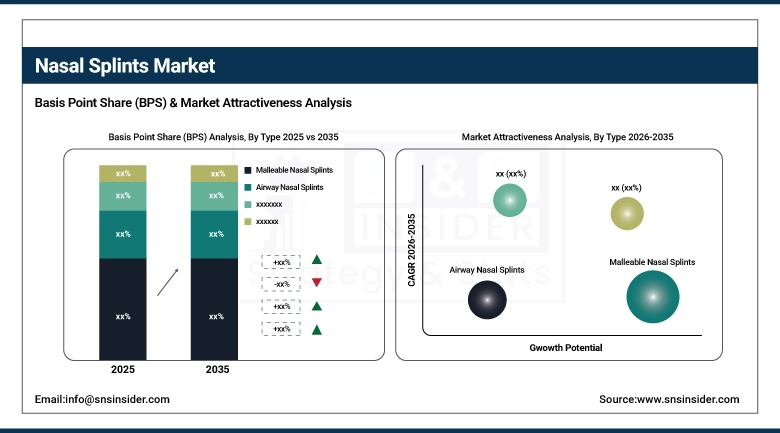
By Type, Malleable Nasal Splints held the largest market share of 42.49% in 2025, while Airway Nasal Splints are expected to grow at the fastest CAGR of 4.56% during 2026–2035.
-
By Application, Plastic Surgery dominated with 38.54% market share in 2025, whereas they are also projected to record the fastest CAGR of 4.98% through 2026–2035.
-
By Material, Silicon accounted for the highest market share of 42.82% in 2025, while plastic/polymer are expected to grow at the fastest CAGR of 4.19% during the forecast period.
-
By Distribution Channel, Hospital/Clinic Procurement dominated with a 67.71% share in 2025, while Online Platforms are anticipated to expand at the fastest CAGR of 5.56% through 2026–2035.
-
By End User, Hospital & Clinics held the largest share of 71.61% in 2025, while S Academic & Research Institutions are expected to grow at the fastest CAGR of 5.03% during the forecast period.
By Type, Malleable Nasal Splints Lead While Airway Nasal Splints Accelerate Rapidly:
Malleable nasal splints have emerged as dominant and the most popular segment of these splints due to their flexibility and ease of use in different patient anatomies. Their effectiveness in maintaining nasal structure post-surgery has made them a popular choice among surgeons in various medical facilities. In 2025, airway nasal splints dominated a majority of medical procedures due to high confidence in their reliability and comfort.
Airway nasal splints are witnessing fastest growth in the market as a new segment of nasal splints. Their unique design in maintaining airflow during nasal surgery is becoming popular in complex rhinological and ENT cases. The growing need for less invasive procedures and faster patient recovery is driving their increased use.
By Application, Plastic Surgery Dominates While Also Emerging as the Fastest-Growing Segment:
Plastic Surgery has emerged as a dominant application area for nasal splints, primarily due to the increased number of cosmetic rhinoplasty surgeries and the emphasis on facial beauty. Surgeons at various hospitals and specialty clinics heavily depend on nasal splints to maintain nasal structures, avoid complications, and achieve optimal healing results for cosmetic rhinoplasty surgeries.
Plastic Surgery has also emerged as a fastest growing application area for nasal splints. This is due to increased awareness of cosmetic enhancements, affordability, and accessibility to advanced surgical techniques. The trend toward minimally invasive surgeries and outpatient cosmetic surgeries has increased the need for nasal splints, making plastic surgery not only a leading application area for nasal splints but also a growing application area.
By Material, Silicone Dominates While Plastic/Polymer Gains Fastest-Growing Segment:
Silicone nasal splints segment is dominant and have been the most widely used material thus far, owing to the fact that they are flexible, compatible, and can offer patient comfort. Their proven use in reducing complications and offering effective patient stabilization has made them the most preferred choice among surgeons in hospitals and clinics.
Plastic/Polymer nasal splints have shown fastest growth in becoming the most rapidly expanding material type. Their affordability, ease of mass production, and ongoing improvements in durability and patient tolerance have made these splints more acceptable.
By Distribution Channel, Hospital & Clinic Procurement Dominates While Online Platforms Expand Rapidly:
Hospital and clinic procurement is the dominant distribution channel for nasal splints, driven by the purchasing habits of these institutions. Nasal splints are required in large quantities to ensure smooth and standardized processes. Moreover, the requirement for these splints is high to ensure the proper care of patients.
Online distribution is the fastest-growing distribution channel for nasal splints. With the advent of e-commerce, the demand for this product is growing rapidly. Moreover, the shift toward patient-centric care is also driving the demand for this product.
By End User, Hospitals & Clinics Dominate While Academic & Research Institutions Show Strong Growth:
Hospitals and clinics remain the dominant end-users of nasal splints due to the sheer volume of operations, established procurement routes, and the need for standardized post-surgery care. Their dependence on nasal splints for aesthetic and functional procedures reinforces the importance of these institutions in the provision of patient safety.
Academic and research institutions are also becoming key players in the nasal splint market, specifically in terms of fastest growth. Their emphasis on innovation, clinical trials, and training programs has helped create a surge in demand for advanced nasal splint technology. Universities and research institutions are becoming key players in the provision of nasal splints.
Regional Analysis:
North America Nasal Splints Market Insights:
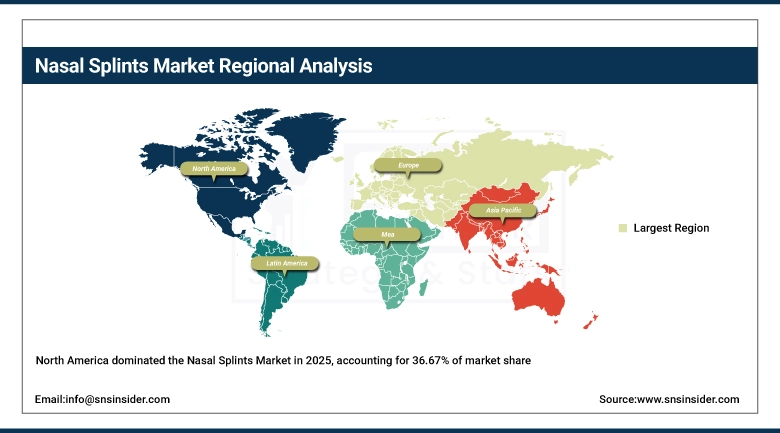
The nasal splints market in North America has the largest market share of 36.67% due to the presence of a strong healthcare infrastructure and high volume of surgeries carried out in the U.S. and Canada. The high acceptance of silicone and bioabsorbable splints in hospitals and clinics is also driving the market for nasal splints in this region. The increasing number of cosmetic and functional nose surgeries is also contributing to the growth of the market. Additionally, supportive reimbursement policies and clinician expertise further strengthen adoption, ensuring consistent demand and reinforcing North America’s leadership in the nasal splints market.
Get Customized Report as per Your Business Requirement - Enquiry Now
U.S. Market Insights:
The United States holds the largest market share in the nasal splint market in the North American region. This is due to the United States is characterized by a high volume of cosmetic and ENT surgeries, well-developed hospital infrastructure, and the presence of established players in the medical devices sector. Additionally, the demand for minimally invasive procedures is high in the United States, which is expected to drive the growth of the nasal splint market.
Asia-Pacific Nasal Splints Market Insights:
Asia-Pacific is the fastest-growing market with CAGR of 6.81%, with increasing surgical procedures in India, China, and South Korea. Improving healthcare infrastructure, the cost-effectiveness of cosmetic procedures, and awareness about the importance of post-surgical care contribute to growth. Hospitals and ambulatory surgical centers are the main drivers, with online distribution channels increasingly making the product accessible. Ongoing investments in healthcare and medical tourism activities ensure the Asia-Pacific market remains a growth driver through 2035.
China Market Insights:
The market for China nasal splints is growing significantly, driven by the increasing demand for cosmetic rhinoplasty and functional ENT procedures. The affordability of medical procedures, coupled with increased awareness of facial beauty among members of the middle class, is further contributing to this growth. Hospitals and clinics are the major end-users, while ambulatory surgical centers are witnessing increased demand with the rise in outpatient procedures.
Europe Nasal Splints Market Insights:
The nasal splint market in Europe is fueled by a rise in demand for cosmetic surgery, especially in countries such as Germany, France, and the U.K. Hospitals are found to be the major end-users of nasal splints, with a rise in demand for advanced silicone and polymer-based nasal splints. The government healthcare system in these countries helps in boosting growth, although there are certain challenges associated with prices and competition from cheap alternatives.
Germany Market Insights:
Germany is a key market in terms of a mature nasal splint market, with high surgical rates and well-developed healthcare facilities. High demand for cosmetic and reconstructive nasal procedures, along with high usage rates of silicone and bioabsorbable nasal splints, will contribute to market leadership in this region. Hospital and clinic usage are high, with a focus on patient comfort and minimally invasive procedures.
Latin America Nasal Splints Market Insights:
The nasal splints market in Latin America is growing at a steady pace, driven by an increase in cosmetic surgery procedures in Brazil and Mexico. Hospitals and specialty clinics form the major end-user segment, with an increase in the usage of advanced splints to enhance patient recovery. Healthcare investments and an increase in private healthcare infrastructure are also driving growth in the region.
Middle East & Africa Nasal Splints Market Insights:
The Middle East & Africa market is in the development stage, where the demand for nasal splints is fueled by the growth of healthcare infrastructure and surgical procedures in countries such as Saudi Arabia, the UAE, and South Africa. Hospitals and clinics are the major end-users of nasal splints, and medical tourism in the Middle East is helping to increase the use of advanced nasal splints.
Competitive Landscape:
Novartis AG is a leading healthcare company, based in Switzerland. It is known for its strong portfolio of innovative therapies and advanced medical technology. The company has a significant strategy in place for surgical care solutions and patient-centric devices. It has introduced several products that have helped in improving patient recovery in ENT and plastic surgeries. With a wide range of clinical programs in place, significant R&D investments, and a wide geographical footprint in hospitals and clinics, Novartis is expanding its reach in both developed and developing countries.
-
In September 2025, Novartis announced the launch of a next-generation nasal splint design with improved biocompatibility, reinforcing its commitment to patient comfort and surgical efficiency.
Roche Holding AG is a major health care company based in Switzerland and is recognized for its expertise in biologics and personalized health care solutions. Roche is leveraging its diagnostic and device know-how in the nasal splints sector, developing advanced solutions for post-operative care. The company’s focus on personalized health care and the use of new materials are key drivers for better post-operative care solutions and outcomes. The company’s extensive clinical relationships and strong distribution network have helped it maintain a strong position in the post-operative care market.
-
In October 2025, Roche introduced a bioabsorbable nasal splint prototype in Europe, aimed at reducing patient discomfort and eliminating the need for removal procedures, strengthening its role in next-generation surgical devices.
Pfizer Inc., an American pharmaceutical and healthcare company, has been expanding its presence in the world of surgical and supportive care devices. Pfizer, with its emphasis on innovation, safety, and accessibility, has emerged as a major player in the development and delivery of advanced nasal splint technologies. Their extensive clinical research capabilities, partnerships with hospitals and specialty clinics, and dedication to affordability have given them a distinct edge. Pfizer, with an established sales network and a focus on continuous improvement, is driving the future of nasal splints in healthcare.
-
In November 2025, Pfizer announced a collaboration with U.S. surgical centers to pilot digitally monitored nasal splints, integrating recovery tracking tools to enhance patient adherence and outcomes.
Nasal Splints Market Key Players:
-
Novartis AG
-
Roche Holding AG
-
Pfizer Inc.
-
AbbVie Inc.
-
Bristol‑Myers Squibb
-
GlaxoSmithKline plc
-
Astellas Pharma Inc.
-
Sanofi S.A.
-
Johnson & Johnson
-
Merck & Co., Inc.
-
Teva Pharmaceutical Industries Ltd.
-
Amgen Inc.
-
Eli Lilly and Company
-
Biogen
-
UCB S.A.
-
Zydus Cadila
-
Intas Pharmaceuticals Ltd.
-
Mylan N.V.
-
Takeda Pharmaceutical Company Limited
-
Sun Pharmaceutical Industries Ltd.
| Report Attributes | Details |
|---|---|
| Market Size in 2025 | USD 2.46 Billion |
| Market Size by 2035 | USD 4.06 Billion |
| CAGR | CAGR of 5.21% From 2026 to 2035 |
| Base Year | 2025 |
| Forecast Period | 2026-2035 |
| Historical Data | 2022-2024 |
| Report Scope & Coverage | Market Size, Segments Analysis, Competitive Landscape, Regional Analysis, DROC & SWOT Analysis, Forecast Outlook |
| Key Segments | • By Type (Malleable Nasal Splints, Airway Nasal Splints, Bivalve Nasal Splints, Others), • By Application (Plastic Surgery, Rhinological Operations, ENT Surgery, Others), • By Material (Silicone, Plastic/Polymer, Metal, Composites, Others), • By Distribution Channel (Hospital/Clinic Procurement, Retail Pharmacies, Online Platforms, Others), • By End User (Hospitals & Clinics, Homecare, Academic & Research Institutes, Others) |
| Regional Analysis/Coverage | North America (US, Canada), Europe (Germany, UK, France, Italy, Spain, Russia, Poland, Rest of Europe), Asia Pacific (China, India, Japan, South Korea, Australia, ASEAN Countries, Rest of Asia Pacific), Middle East & Africa (UAE, Saudi Arabia, Qatar, South Africa, Rest of Middle East & Africa), Latin America (Brazil, Argentina, Mexico, Colombia, Rest of Latin America). |
| Company Profiles | Novartis AG, Roche Holding AG, Pfizer Inc., AbbVie Inc., Bristol Myers Squibb, GlaxoSmithKline plc, Astellas Pharma Inc., Sanofi S.A., Johnson & Johnson, Merck & Co., Inc., Teva Pharmaceutical Industries Ltd., Amgen Inc., Eli Lilly and Company, Biogen, UCB S.A., Zydus Cadila, Intas Pharmaceuticals Ltd., Mylan N.V., Takeda Pharmaceutical Company Limited, Sun Pharmaceutical Industries Ltd. |
Frequently Asked Questions
Asia-Pacific, particularly China and India, shows the strongest growth potential with market share of 22.86% and CAGR of 6.81%, fueled by rising surgical volumes, expanding healthcare infrastructure, and increasing affordability of cosmetic procedures.
Online platforms are expanding the fastest with CAGR of 5.56%, supported by e-commerce growth, telemedicine integration, and patient preference for convenient access to recovery kits.
Plastic surgery is the leading application with market share of 38.54% and CAGR pf 4.98%, with widespread adoption in cosmetic rhinoplasty and reconstructive procedures, reflecting strong patient demand.
Airway nasal splints are the fastest-growing segment with CAGR of 4.56%, driven by their ability to maintain airflow while supporting nasal structures during recovery.
Malleable nasal splints dominate market with 42.49%, due to their flexibility, ease of use, and strong clinical preference in hospitals and specialty clinics.
