
Pain Management Devices Market Report Scope & Overview:
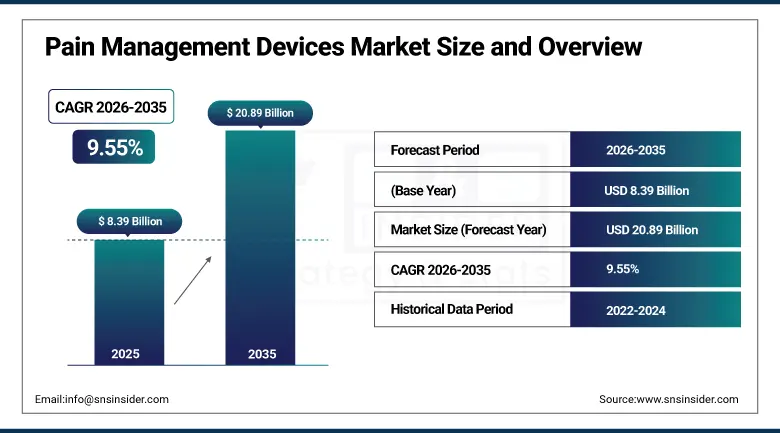
The Pain Management Devices Market was valued at USD 8.39 Billion in 2025 and is projected to reach USD 20.89 Billion by 2035, expanding at a CAGR of 9.55% during the forecast period 2026–2035.
The market is witnessing considerable growth due to the rising incidences of chronic pain disorders, preference for non-opioid treatment options, and fast-paced developments in neuromodulation technologies. There has been a growing adoption of implantable stimulation devices, radio frequency ablation, pain management devices, and targeted drug delivery systems by healthcare providers to enhance the treatment efficacy and lower dependency on opioids. Innovations in minimally invasive treatments, supportive reimbursements, and investment in pain management infrastructure have provided considerable commercialization opportunities in the developed and developing healthcare markets around the world.
In 2026, numerous leading medical devices companies launched commercialization of Neuromodulation platforms based on artificial intelligence technology and equipped with adaptive stimulation and remote patient monitoring capabilities for chronic pain.
To Get more information On Pain Management Devices Market - Request Free Sample Report
Pain Management Devices Market Trends
-
Increasing adoption of implantable neurostimulation technologies for chronic pain treatment.
-
Rising demand for opioid-free and minimally invasive pain management solutions.
-
Growing utilization of radiofrequency ablation systems across pain treatment centers.
-
Expansion of wearable and home-based pain management technologies.
-
Increasing integration of AI-enabled therapy optimization and patient monitoring systems.
The U.S. Pain Management Devices Market Size Outlook
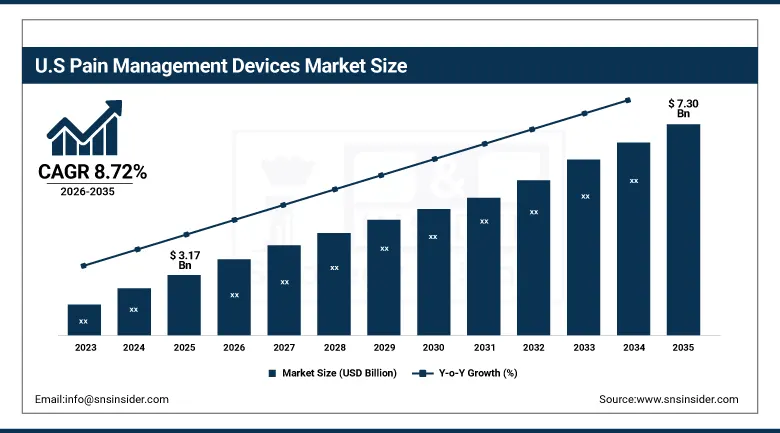
The U.S. Pain Management Devices Market was valued at USD 3.17 billion in 2025 and is expected to reach approximately USD 7.30 billion by 2035, expanding at a CAGR of 8.72% during 2026–2035.
The United States continues to maintain its dominance in the global market for pain management devices on account of robust healthcare infrastructure, efficient reimbursement mechanisms, and widespread use of novel neuromodulation technologies. Spinal cord stimulation, radiofrequency ablation, and implantable drug delivery technologies have been widely adopted by health care facilities in order to manage chronic pain disorders and limit dependence on opioids. Increased prevalence of neuropathies, musculoskeletal disorders, and age-associated chronic pain disorders is expected to drive the market forward. Increased investment in specialty clinics for pain management, innovations in technology, and focus on patient-oriented solutions are expected to drive future growth in the country.
Several U.S. healthcare systems have increased the adoption of advanced spinal cord stimulation systems equipped with AI-enabled programming and remote patient monitoring.
Pain Management Devices Market Segment Analysis
-
By Device Type, spinal cord stimulation (SCS) devices dominated the market with 30.00% share in 2025, while intrathecal infusion pumps are projected to witness the fastest growth with 11.23% CAGR during the forecast period.
-
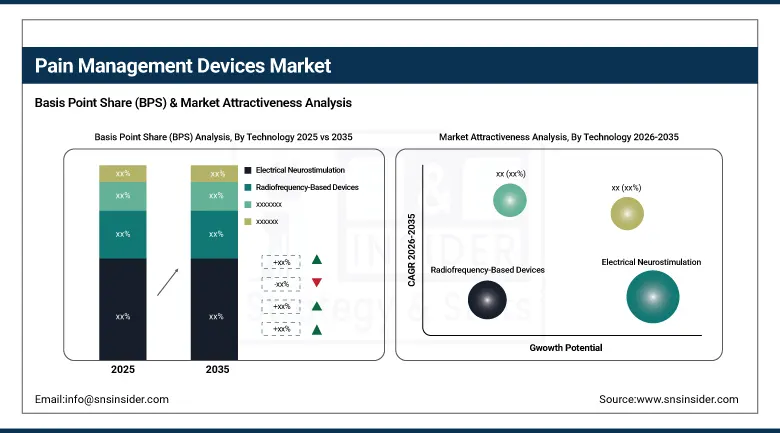
By Technology, electrical neurostimulation dominated the market with 38.00% share in 2025, while wearable pain management devices are projected to witness the fastest growth with 12.03% CAGR during the forecast period.
-
By Application, neuropathic pain dominated the market with 28.00% share in 2025, while cancer pain management is projected to witness the fastest growth with 10.56% CAGR during the forecast period.
-
By End User, hospitals dominated the market with 34.00% share in 2025, while home care settings are projected to witness the fastest growth with 12.03% CAGR during the forecast period.
By Device Type, spinal cord stimulation (SCS) devices dominated the market, while intrathecal infusion pumps are the fastest-growing segment.
The spinal cord stimulation (SCS) devices market segment held the highest revenue share of 30.00% in 2025 due to the growing adoption of implantable neuromodulation devices for neuropathic pain, failed back surgery syndrome, and refractory pain disorders. There is an increasing preference for spinal cord stimulation solutions among healthcare providers since they help in providing localized pain relief and reducing the dependency on opioids and improving the overall outcome of patients. The continued advancements in technology such as rechargeable implantable pulse generator, closed-loop system, wireless programming, and minimally invasive implantation process are propelling the adoption of these products in the commercial sector.
The intrathecal infusion pumps market segment is expected to witness the fastest CAGR of 11.23% during the forecast period due to rising demand for targeted delivery devices that offer sustained pain relief along with low exposure to systemic medications. These devices ensure that therapeutic drugs are delivered directly to the intrathecal space in order to increase the efficacy of the treatment and lowering side-effects. These devices are gaining increased use by the healthcare providers for the treatment of severe cancer pain, neuropathic pain, and treatment-resistant chronic pain conditions.
By Technology, Electrical Neurostimulation dominated the market, while Wearable Pain Management Devices are the fastest-growing segment.
Electrical neurostimulation had the highest market share of 38.00% in 2025 owing to widespread use of spinal cord stimulation, peripheral nerve stimulation, and transcutaneous electrical nerve stimulation devices. The rising preference for neurostimulation devices is driven by the availability of non-pharmacological treatment options for various chronic pain conditions while avoiding the use of opioids in such conditions. Advancements in stimulation algorithms, battery technologies, and design of implants have improved the outcomes for patients. Growing acceptance from physicians, favorable reimbursement scenario, and increased awareness about neuromodulation therapies are driving the dominance of this segment globally.
Wearable pain management devices is anticipated to be the fastest growing at a CAGR of 12.03% during the forecast period driven by high demand for portable, non-invasive, and home-based pain management devices. Patients' preference towards wearable devices is driven by their convenience, portability, and treatment through non-invasive methods. Innovation in technology which includes wireless connectivity, mobile app integration, and other technologies is driving the adoption rate of these devices. Increasing focus on remote patient management and rising prevalence of musculoskeletal conditions. In 2026, various medical technology companies have introduced new generation wearable pain management solutions integrating smartphone connectivity and AI-powered personalization.
Regional Analysis
|
Region |
Major Country |
Share within Region, 2025 (%) |
|---|---|---|
|
North America |
United States |
92.00% |
|
Europe |
Germany |
28.00% |
|
Asia Pacific |
China |
22.00% |
|
Middle East & Africa |
UAE |
5.00% |
|
Latin America |
Brazil |
4.00% |
North America Pain Management Devices Market Insights
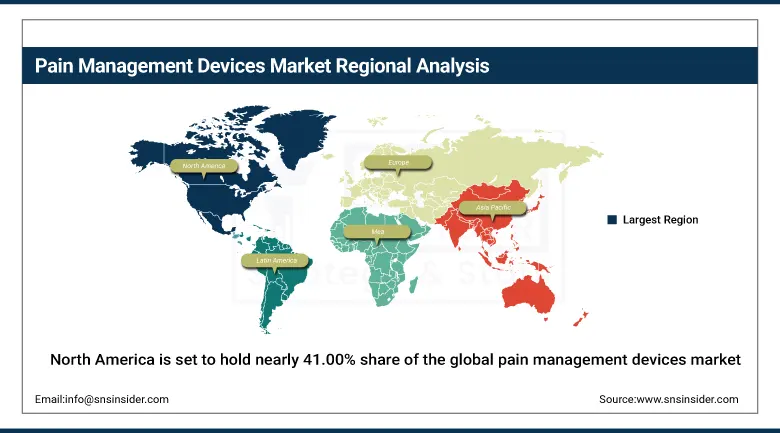
In 2025, North America is set to hold nearly 41.00% share of the global pain management devices market, becoming the largest regional segment in terms of value. There is a highly advanced healthcare infrastructure, usage of neuromodulation technologies and favorable reimbursement scenario for chronic pain treatment procedures in North America. Increasing adoption of spinal cord stimulation systems, peripheral nerve stimulation devices, radiofrequency ablation technologies and implantable drug delivery systems will help the market gain further momentum. A number of North American healthcare organizations have started using AI-based neurostimulation technologies to enhance treatment accuracy and patient outcomes.
Get Customized Report as per Your Business Requirement - Enquiry Now
Europe Pain Management Devices Market Insights
Europe will hold nearly 28.00% share of the global pain management devices market in 2025 driven by the increasing incidence of chronic pain disorders, aging population and growing preference for minimally-invasive treatment. Adoption of neuromodulation systems, radiofrequency ablation devices and wearable pain management devices by various healthcare providers in Germany, the UK, France, Italy and others will help the market grow during the forecast period. Favorable regulations, patient awareness and investment in pain treatment infrastructure will help the market grow. Several European pain treatment centers have begun to implement advanced spinal cord stimulation and peripheral nerve stimulation technologies in their pain management programs.
Asia Pacific Pain Management Devices Market Insights
The fastest CAGR of 13.01% is estimated to be recorded by the Asia Pacific region over the forecast period due to developing healthcare infrastructure, rising healthcare spending, and increased awareness about pain management technologies. The countries like China, Japan, India, South Korea, and Australia are witnessing a rise in the demand for neuromodulation systems, wearable pain management technology, and minimally invasive procedures. Urbanization, aging population, and rising prevalence of chronic pain conditions have been fueling the adoption rate in this region. The ongoing investment in specialty healthcare services and advanced medical technologies have been offering tremendous business opportunities in this region.
Numerous healthcare service providers in Asia Pacific have been providing access to advanced neuromodulation therapies and pain management devices at homes to chronic pain patients.
Middle East & Africa and Latin America Pain Management Devices Market Insights
The Mideast & Africa market experiences stable growth attributable to improving healthcare infrastructure, growing awareness on chronic pain treatments, and increased use of advanced medical technology. The healthcare facilities have made efforts to adopt advanced pain management technologies such as pain treatment services, neuromodulation technologies, and minimally invasive pain management procedures. Government efforts towards health care modernization and increased investments in specialty medical service delivery continue to drive the regional market growth.
Latin America represented about 4.00% of total revenues generated globally in 2025 as a result of the rising prevalence of chronic pain disorders and growing availability of specialty medical treatments. Increased use of neurostimulation devices, radiofrequency ablation treatments, and wearable pain management technology by healthcare providers continues to drive the market growth within the region. Increased healthcare expenditure, rising awareness among physicians, and advanced pain management infrastructure continue to drive market growth in the region. Healthcare providers in both regions have made efforts to expand chronic pain treatment programs using advanced pain management technologies.
Market Dynamics
Growth Drivers: Increasing usage of non-opioid pain management devices.
Increasing demand for pain management devices that do not use opioids is an important reason for the growth of the global market for pain management devices. Medical professionals are increasingly employing neurostimulators, radiofrequency ablation devices, wearable pain management devices, and targeted drug delivery devices for the reduction of dependence on opioid drugs. Concerns about opioid addiction, side effects of the drug, and complications arising from prolonged treatment are driving the adoption of pain management devices.
Developments in technology leading to increased efficacy and improved patient experience contribute to the commercialization of the technology. The increasing prevalence of chronic pain disorders and demand for minimally invasive treatments drive the future growth potential in the market. In 2026, some medical device companies have launched innovative neuromodulation devices incorporating AI-driven therapy and remote patient monitoring functionalities.
Restraints: High costs of devices and limited access to reimbursement.
While the clinical utility of pain management devices is quite high, their high price poses a problem for their market expansion. Implantable neurostimulators, radiofrequency ablation solutions, and specialized drug delivery devices require considerable upfront costs. The limited availability of reimbursement in certain healthcare markets, along with the cost factor in some developing countries, might limit access to these devices for patients. Furthermore, the procedure of implanting such devices usually requires special clinical skills and healthcare infrastructure.
This might impede the adoption of such devices by small providers of healthcare services and newly created healthcare systems. Such issues are a serious restraint to the further development of pain management devices. Industry participants noted the importance of gaining more reimbursement opportunities to increase the accessibility of advanced pain management devices.
Opportunities: Growth of pain management solutions using wearable and at home settings.
The increasing use of wearables in the medical industry and the home healthcare delivery paradigm provides ample opportunities to all the players. People are now opting for portable, non-invasive pain management systems that allow them to be treated away from clinical sites. Innovations in wearable neurostimulators, tele-monitoring, treatment using smartphones, and remote treatment management technologies have increased the range of possibilities of home-based pain treatment.
The use of remote monitoring facilities is helping healthcare providers increase patient engagement and adherence to treatment. Increasing digital health infrastructure, increasing acceptance of digital health technologies among consumers, and increasing emphasis on personalized medicine are some of the opportunities in the global marketplace. A number of healthcare technology firms came up with the connected wearable’s for pain management solutions.
Recent Developments
-
2026: Medtronic expanded commercialization of next-generation spinal cord stimulation systems featuring adaptive closed-loop technology designed to optimize chronic pain treatment outcomes and improve patient-specific therapy delivery.
-
2026: Abbott strengthened its neuromodulation portfolio through advanced remote programming capabilities integrated into implantable neurostimulation platforms, enhancing physician monitoring and patient management efficiency.
-
2025: Boston Scientific introduced upgraded pain management technologies supporting personalized stimulation programming and expanded treatment capabilities for neuropathic and chronic pain conditions.
-
2025: Nevro Corp. expanded deployment of high-frequency spinal cord stimulation systems across specialized pain treatment centers to address growing demand for non-opioid chronic pain management solutions.
Pain Management Devices Market Key Players are:
-
Medtronic plc
-
Abbott Laboratories
-
Boston Scientific Corporation
-
Nevro Corp.
-
Stryker Corporation
-
B. Braun Melsungen AG
-
Baxter International Inc.
-
Integer Holdings Corporation
-
Biotronik SE & Co. KG
-
Synapse Biomedical Inc.
-
NeuroSigma, Inc.
-
Nalu Medical, Inc.
-
SPR Therapeutics, Inc.
-
Mainstay Medical Holdings plc
-
NeuroPace, Inc.
-
Curonix LLC
-
Theranica Bio-Electronics Ltd.
-
Stimwave Technologies Incorporated
-
ElectroCore, Inc.
-
Omron Healthcare, Inc.
Pain Management Devices Market Report Scope:
| Report Attributes | Details |
|---|---|
| Market Size in 2025 | USD 8.39 Billion |
| Market Size by 2035 | USD 20.89 Billion |
| CAGR | CAGR of 9.55% From 2026 to 2035 |
| Base Year | 2025 |
| Forecast Period | 2026-2035 |
| Historical Data | 2022-2024 |
| Report Scope & Coverage | Market Size, Segments Analysis, Competitive Landscape, Regional Analysis, DROC & SWOT Analysis, Forecast Outlook |
| Key Segments | • By Device Type (Spinal Cord Stimulation (SCS) Devices, Transcutaneous Electrical Nerve Stimulation (TENS) Devices, Radiofrequency Ablation (RFA) Devices, Peripheral Nerve Stimulation (PNS) Devices, Intrathecal Infusion Pumps) • By Technology (Electrical Neurostimulation, Radiofrequency-Based Devices, Drug Delivery Systems, Wearable Pain Management Devices, Laser & Ultrasound-Based Devices) • By Application (Neuropathic Pain, Musculoskeletal Pain, Cancer Pain Management, Failed Back Surgery Syndrome (FBSS), Others) • By End User (Hospitals, Pain Management Clinics, Ambulatory Surgical Centers, Rehabilitation Centers, Home Care Settings, Others) |
| Regional Analysis/Coverage | North America (US, Canada), Europe (Germany, UK, France, Italy, Spain, Russia, Poland, Rest of Europe), Asia Pacific (China, India, Japan, South Korea, Australia, ASEAN Countries, Rest of Asia Pacific), Middle East & Africa (UAE, Saudi Arabia, Qatar, South Africa, Rest of Middle East & Africa), Latin America (Brazil, Argentina, Mexico, Colombia, Rest of Latin America). |
| Company Profiles | Medtronic plc, Abbott Laboratories, Boston Scientific Corporation, Nevro Corp., Stryker Corporation, B. Braun Melsungen AG, Baxter International Inc., Integer Holdings Corporation, Biotronik SE & Co. KG, Synapse Biomedical Inc., NeuroSigma, Inc., Nalu Medical, Inc., SPR Therapeutics, Inc., Mainstay Medical Holdings plc, NeuroPace, Inc., Curonix LLC, Theranica Bio-Electronics Ltd., Stimwave Technologies Incorporated, ElectroCore, Inc., Omron Healthcare, Inc. |
Frequently Asked Questions
The Pain Management Devices Market was valued at USD 8.39 billion in 2025.
The market is projected to reach USD 20.89 billion by 2035.
The market is expected to expand at a CAGR of 9.55% during the forecast period.
North America dominated the global market in 2025.
Asia Pacific is projected to register the fastest CAGR during the forecast period.
