
Wearable Heart Rate Sensors Market Size Analysis:
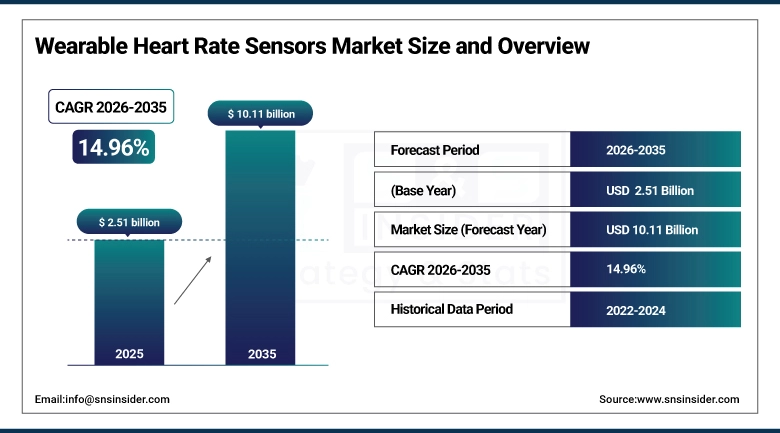
The Wearable Heart Rate Sensors Market size was valued at USD 2.51 Billion in 2025E and is projected to reach USD 10.11 Billion by 2035, growing at a CAGR of 14.96% during 2026-2035.
The Wearable Heart Rate Sensors Market is growing due to the rising adoption of wearable devices for fitness, health monitoring, and medical applications. Increasing health awareness, preventive healthcare trends, and the popularity of smartwatches and fitness trackers are key drivers. Technological advancements, such as optical and ECG sensors, miniaturization, and enhanced connectivity, boost device accuracy and usability. Additionally, growing demand from clinical, sports, and elderly care sectors, along with the expansion of telehealth and remote patient monitoring, supports market growth.
Market Size and Growth Projection:
-
Market Size in 2025E: USD 2.51 Billion
-
Market Size by 2035: USD 10.11 Billion
-
CAGR of 14.96% From 2026 to 2035
-
Base Year 2025E
-
Forecast Period 2026-2035
-
Historical Data 2021-2024
To Get More Information On Wearable Heart Rate Sensors Market - Request Free Sample Report
Key Wearable Heart Rate Sensors Market Trends
-
Increasing adoption of smartwatches, fitness bands, and medical-grade devices for real-time health monitoring and preventive care.
-
Technological advancements in optical and ECG sensors, miniaturization, and enhanced connectivity improving accuracy and usability.
-
Growing integration with digital health platforms, mobile apps, and telehealth services for personalized health management.
-
Expansion in emerging regions like Asia Pacific and Latin America driven by rising disposable income and health awareness.
-
Development of innovative form factors such as clothing-embedded, ear-worn, and hybrid wearable devices for continuous monitoring.
U.S. Wearable Heart Rate Sensor Market Size Outlook
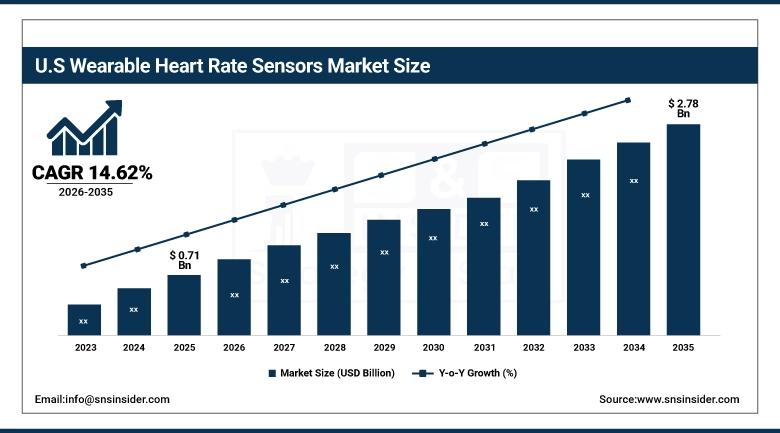
The U.S. Wearable Heart Rate Sensor Market was valued at USD 0.71 Billion in 2025 and is projected to reach USD 2.78 Billion by 2035, growing at a CAGR of 14.62% during 2026-2035. The U.S. Market is growing due to increasing health consciousness, widespread adoption of smartwatches and fitness trackers, and demand for preventive healthcare. Advancements in sensor technology, integration with mobile apps, and rising use in clinical monitoring and remote patient care further drive market expansion.
Market Growth Drivers: Rising Health Awareness and Advanced Wearables Drive Global Wearable Heart Rate Sensors Market Growth
The global Wearable Heart Rate Sensors Market is primarily driven by rising health awareness and the growing adoption of wearable devices for fitness and medical monitoring. Increasing consumer focus on preventive healthcare and real-time health tracking is boosting demand for smartwatches, fitness bands, and medical-grade devices. Technological advancements, such as high-precision optical and ECG sensors, miniaturization, and enhanced connectivity (Bluetooth, Wi-Fi, and cellular), are improving accuracy and usability, encouraging broader adoption. Additionally, the expansion of digital health platforms, integration with mobile apps, and rising popularity of telehealth services are further supporting market growth. The increasing demand from sports professionals, elite athletes, and fitness enthusiasts also contributes to market expansion globally.
98% of smartwatches sold in 2025 come equipped with heart rate monitoring as a standard feature, underscoring its central role in consumer wearables
Market Restraints: Data Privacy Accuracy and Technical Limitations Pose Challenges in Wearable Heart Rate Sensors Market Growth
Key restraints in the Wearable Heart Rate Sensors Industry include data privacy and security concerns, as sensitive health information is transmitted and stored digitally. Limited accuracy in certain conditions, such as during high-intensity workouts or irregular heart rhythms, can reduce reliability. Additionally, device compatibility issues, battery limitations, and the need for continuous technological updates may hinder user experience and adoption, particularly in medical-grade and remote monitoring applications.
Market Opportunities: Emerging Regions and Elderly Care Drive Wearable Heart Rate Sensor Market Creating Global Growth Opportunities
Significant opportunities exist in emerging regions like Asia Pacific and Latin America due to increasing disposable income, growing health awareness, and urbanization. The elderly care and remote patient monitoring segment is expected to witness high growth as aging populations seek continuous health monitoring solutions. Furthermore, innovations in clothing-embedded sensors, ear-worn devices, and hybrid wearable technologies offer potential for new product development. Partnerships between wearable manufacturers and healthcare providers, along with regulatory support for digital health, provide additional avenues for market expansion. Growing demand for integrated health management solutions and personalized healthcare creates a promising landscape for global wearable heart rate sensor adoption.
LifeQ and Bluezone launched advanced wearable health tech in China in 2025, offering continuous real‑time monitoring of heart rate and other vitals
Wearable Heart Rate Sensors Market Segment Analysis
-
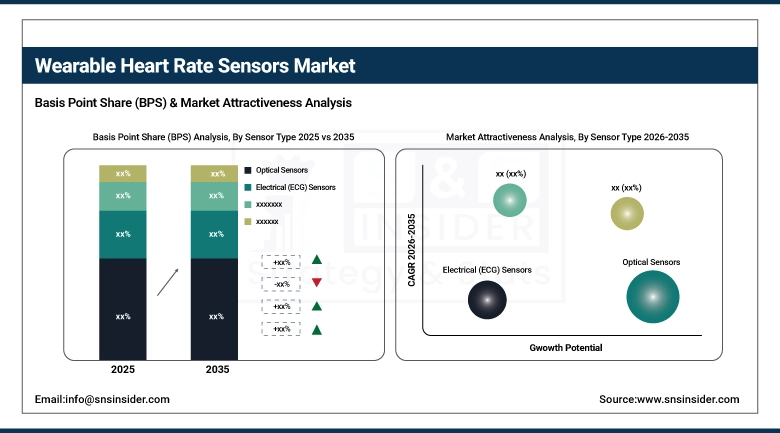
By Sensor Type, Optical Sensors dominated with 48.47% in 2025E, and it is expected to grow at the fastest CAGR of 15.33% from 2026 to 2035.
-
By Wearable Form Factor, Wrist-Worn Devices dominated with 54.35% in 2025E, and Clothing-Embedded Devices is expected to grow at the fastest CAGR of 16.49% from 2026 to 2035.
-
By Connectivity Technology, Bluetooth dominated with 58.97% in 2025E, and Cellular is expected to grow at the fastest CAGR of 16.27% from 2026 to 2035.
-
By End User, Consumer Fitness & Wellness dominated with 49.36% in 2025E, and Elderly Care & Remote Monitoring is expected to grow at the fastest CAGR of 16.44% from 2026 to 2035.
By Sensor Type, Optical Sensors Lead Wearable Heart Rate Sensors Market While Advancements Drive Rapid Global Growth Future
In 2025, Optical Sensors dominate the Wearable Heart Rate Sensors Industry due to their widespread use in smartwatches, fitness bands, and consumer wearables for accurate and non-invasive heart rate monitoring. From 2026 to 2035, they are expected to grow at the fastest CAGR, driven by continuous technological advancements, miniaturization, enhanced accuracy, integration with mobile apps, and rising demand across consumer, clinical, and sports applications globally.
By Wearable Form Factor, Wrist-Worn Devices Lead Wearable Heart Rate Sensor Market While Clothing-Embedded Devices Drive Future Growth Globally
In 2025, Wrist-Worn Devices dominate the Wearable Heart Rate Sensors Market due to their popularity, convenience, and integration in smartwatches and fitness bands. Clothing-Embedded Devices are expected to grow at the fastest CAGR from 2026 to 2035, driven by innovations in smart textiles, continuous health monitoring, adoption in elderly care and clinical applications, and increasing interest in seamless, non-intrusive wearable solutions for sports, fitness, and remote patient monitoring.
By Connectivity Technology, Bluetooth Leads Wearable Heart Rate Sensors Market While Cellular Connectivity Powers Rapid Future Growth Worldwide
In 2025, Bluetooth dominates the Wearable Heart Rate Sensors Industry due to its low power consumption, wide compatibility, and integration in most smartwatches and fitness wearables. From 2026 to 2035, Cellular connectivity is expected to grow at the fastest CAGR, driven by standalone smartwatches and medical-grade devices that require independent data transmission, real-time monitoring, and seamless cloud integration, enabling enhanced remote health tracking and continuous patient monitoring globally.
By End User, Consumer Fitness Leads Wearable Heart Rate Sensors Market While Elderly Care Drives Future Growth Globally
In 2025, Consumer Fitness & Wellness dominates the Wearable Heart Rate Sensors Industry due to widespread adoption of smartwatches and fitness trackers for health and activity monitoring. From 2026 to 2035, Elderly Care & Remote Monitoring is expected to grow at the fastest CAGR, driven by aging populations, increasing demand for continuous health monitoring, telehealth adoption, and the integration of wearable sensors into home healthcare and remote patient management solutions globally.
North America Wearable Heart Rate Sensors Market Insights
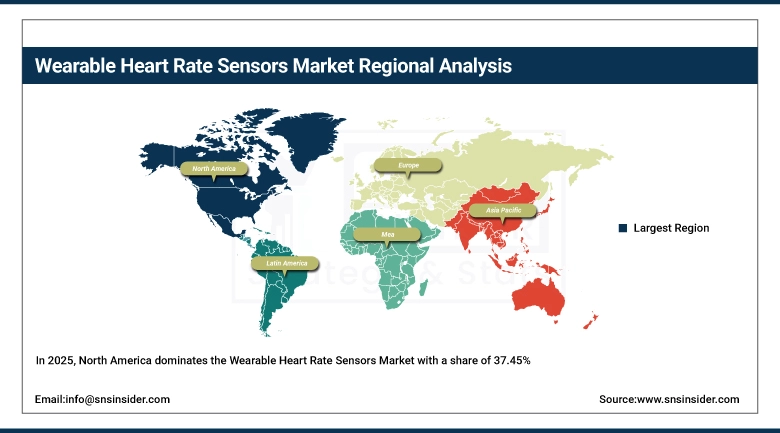
In 2025, North America dominates the Wearable Heart Rate Sensors Market with a share of 37.45%, led primarily by the United States. High adoption of smartwatches, fitness bands, and medical-grade wearables, coupled with growing health awareness and preventive healthcare trends, drives market growth. Advanced healthcare infrastructure, widespread digital health integration, and rising interest in fitness and remote monitoring contribute to the region’s leadership. Strong consumer acceptance and continuous technological innovation further reinforce North America’s market dominance.
Get Customized Report as Per Your Business Requirement - Enquiry Now
U.S. Wearable Heart Rate Sensors Market Insights
In North America, the United States dominates the Wearable Heart Rate Sensors Market due to high consumer adoption of smartwatches and fitness devices, advanced healthcare infrastructure, strong digital health integration, and growing demand for preventive healthcare and remote patient monitoring, making it the largest contributor in the region.
Europe Wearable Heart Rate Sensors Market Insights
In 2025, Europe holds a 22.37% share of the Wearable Heart Rate Sensor Market. Growth is driven by increasing health awareness, rising adoption of fitness trackers and smartwatches, and supportive healthcare infrastructure across key countries like Germany, the UK, and France. Integration of wearable devices into preventive healthcare, sports, and medical monitoring, coupled with technological advancements in sensors and connectivity, further strengthens the market. Strong consumer interest and regulatory support for digital health contribute to Europe’s steady growth.
Germany Wearable Heart Rate Sensors Market Insights
In Europe, Germany dominates the Wearable Heart Rate Sensors Market due to high consumer adoption of smartwatches and fitness trackers, advanced healthcare infrastructure, strong focus on preventive healthcare, and integration of wearable technology into medical and sports applications, making it the largest contributor in the region.
Asia Pacific Wearable Heart Rate Sensors Market Insights
The Asia Pacific Wearable Heart Rate Sensors Market is expected to grow at the fastest CAGR of 15.71% from 2026 to 2035, driven by rising disposable incomes, increasing health awareness, and rapid urbanization. Strong adoption of smartwatches and fitness devices in countries like China, India, and Japan, along with growing telehealth initiatives and wearable integration in preventive healthcare, sports, and elderly care, fuels market expansion. Technological advancements and expanding digital health infrastructure further support this rapid growth trajectory.
China Wearable Heart Rate Sensors Market Insights
In Asia Pacific, China dominates the Wearable Heart Rate Sensors Industry due to its large population, rapid adoption of smartwatches and fitness wearables, growing health awareness, rising disposable income, and strong digital health initiatives. The country leads regional demand, driven by both consumer and healthcare applications.
Latin America (LATAM) and Middle East & Africa (MEA) Wearable Heart Rate Sensors Market Insights
The Latin America and Middle East & Africa (MEA) Wearable Heart Rate Sensors Industry is witnessing steady growth driven by rising health awareness, increasing adoption of fitness wearables, and expanding digital healthcare initiatives. Urbanization, improving healthcare infrastructure, and growing demand for remote patient monitoring contribute to market expansion. Brazil, Mexico, the UAE, and Saudi Arabia are key contributors, while emerging innovations and telehealth integration offer additional growth opportunities across these regions.
Competitive Landscape for Wearable Heart Rate Sensors Market:
Apple is a global leader in the wearable heart rate sensors industry, primarily through its Apple Watch lineup. Its devices feature advanced optical and ECG sensors for real-time heart monitoring, fitness tracking, and preventive healthcare. Integration with iOS, health apps, and telehealth services enhances personalized wellness management and strengthens Apple’s position in consumer and medical wearable segments.
-
In September 2025, Apple debuted the Apple Watch Series 11 with enhanced health insights, including hypertension notifications that use optical heart sensor data to detect signs of chronic high blood pressure, along with improved sleep tracking features.
Google, through its Fitbit brand, is a leading player in the wearable heart rate sensors industry, offering smartwatches and fitness trackers with advanced optical and ECG sensors. The company focuses on health monitoring, preventive care, and personalized fitness solutions, integrating AI and cloud connectivity to enhance real-time heart rate tracking and overall wellness management.
-
In October 2025, Fitbit rolled out the public preview of its Gemini AI‑powered personal health coach for Premium users, offering personalized fitness, sleep, and health guidance based on wearable data.
Wearable Heart Rate Sensors Companies are:
-
Apple Inc.
-
Google (Fitbit)
-
Samsung Electronics Co., Ltd.
-
Huawei Technologies Co., Ltd.
-
Xiaomi Corporation
-
Suunto Oy
-
Withings SA
-
Amazfit (Zepp Health)
-
BioTelemetry, Inc. (Philips)
-
Philips Healthcare
-
Omron Healthcare, Inc.
-
AliveCor, Inc.
-
Wahoo Fitness
-
Whoop, Inc.
-
Moov Inc.
-
Hexoskin (Carré Technologies Inc.)
-
Zephyr Technology (Medtronic)
-
Shenzhen Lifesense Technology Co., Ltd.
| Report Attributes | Details |
|---|---|
| Market Size in 2025E | USD 2.51 Billion |
| Market Size by 2035 | USD 10.11 Billion |
| CAGR | CAGR of 14.96% From 2026 to 2035 |
| Base Year | 2025E |
| Forecast Period | 2026-2035 |
| Historical Data | 2021-2024 |
| Report Scope & Coverage | Market Size, Segments Analysis, Competitive Landscape, Regional Analysis, DROC & SWOT Analysis, Forecast Outlook |
| Key Segments | • By Sensor Type (Optical Sensors, Electrical (ECG) Sensors, Piezoelectric Sensors, Capacitive Sensors, and Others) • By Wearable Form Factor (Wrist-Worn Devices, Chest-Strap Devices, Ear-Worn Devices, Clothing-Embedded Devices, and Others) • By Connectivity Technology (Bluetooth, Wi-Fi, NFC, Cellular, and Others) • By End User (Consumer Fitness & Wellness, Clinical & Medical, Sports & Elite Athletes, Elderly Care & Remote Monitoring, and Others) |
| Regional Analysis/Coverage | North America (US, Canada), Europe (Germany, UK, France, Italy, Spain, Russia, Poland, Rest of Europe), Asia Pacific (China, India, Japan, South Korea, Australia, ASEAN Countries, Rest of Asia Pacific), Middle East & Africa (UAE, Saudi Arabia, Qatar, South Africa, Rest of Middle East & Africa), Latin America (Brazil, Argentina, Mexico, Colombia, Rest of Latin America). |
| Company Profiles | Apple Inc., Google (Fitbit), Garmin Ltd., Samsung Electronics Co., Ltd., Huawei Technologies Co., Ltd., Xiaomi Corporation, Polar Electro Oy, Suunto Oy, Withings SA, Amazfit (Zepp Health), BioTelemetry, Inc. (Philips), Philips Healthcare, Omron Healthcare, Inc., AliveCor, Inc., Wahoo Fitness, Whoop, Inc., Moov Inc., Hexoskin (Carré Technologies Inc.), Zephyr Technology (Medtronic), Shenzhen Lifesense Technology Co., Ltd. |
Frequently Asked Questions
North America dominated the Wearable Heart Rate Sensors Market in 2025E.
Optical Sensors dominated the Wearable Heart Rate Sensors Market.
Rising health awareness, growing adoption of wearable devices, and technological advancements in heart rate monitoring are the key drivers of the Wearable Heart Rate Sensors Market.
The Wearable Heart Rate Sensors Market size was USD 2.51 Billion in 2025E and is expected to reach USD 10.11 Billion by 2035.
The Wearable Heart Rate Sensors Market is expected to grow at a CAGR of 14.96% from 2026-2035.
