
The latest SNS Insider Bio-Based Leather Market report finds that demand is rising quickly. Fashion houses, footwear makers and car brands want materials that cut animal use and lower environmental impact. Bio-based leather is moving out of small pilot collections and into regular product lines.
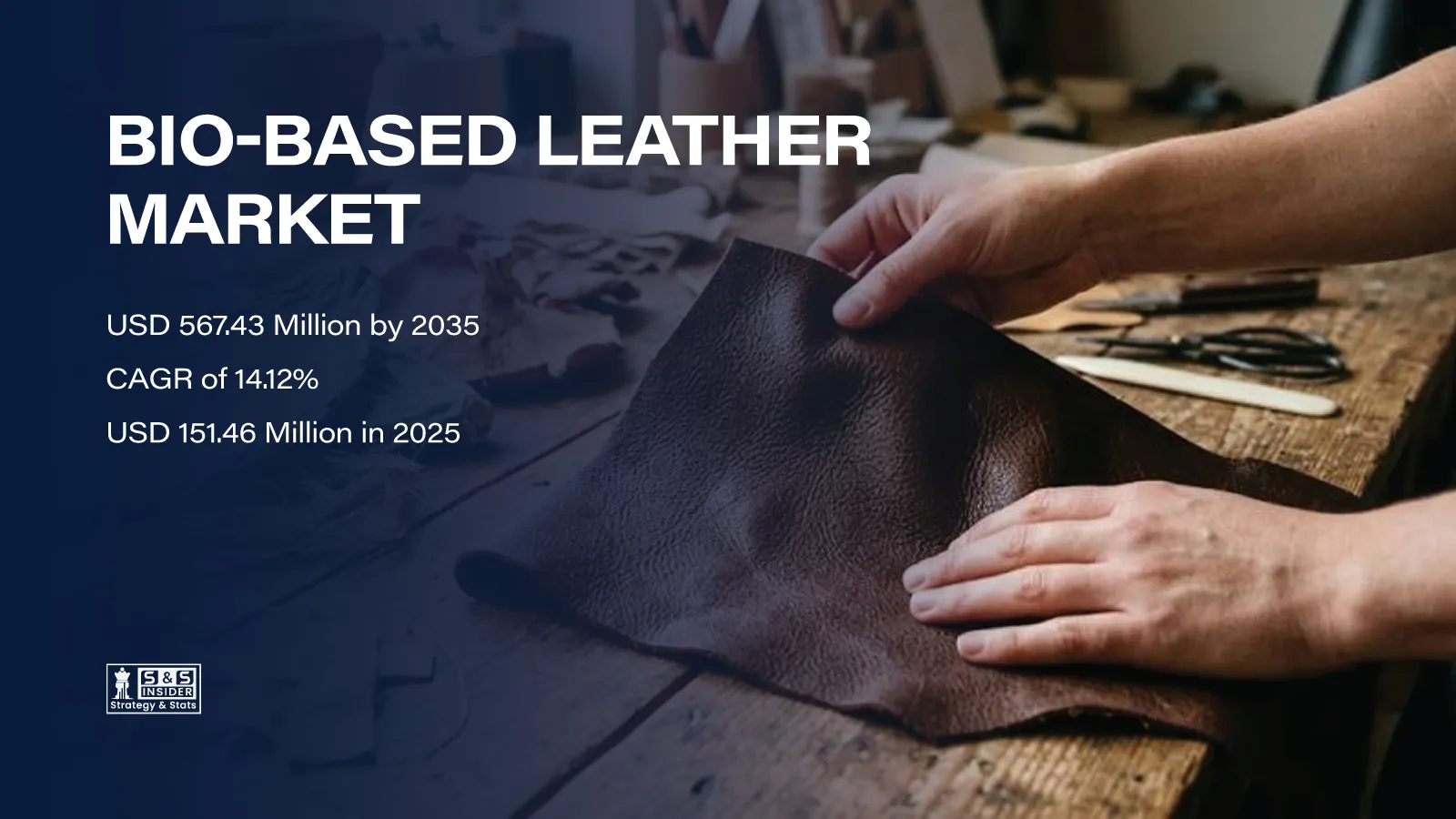
The global bio-based leather market was valued at USD 151.46 Million in 2025 and is estimated at USD 172.85 Million in 2026. It is projected to reach USD 567.43 Million by 2035, growing at a CAGR of 14.12% during 2026–2035.
Plant-based materials make up most of supply today. Microbial and fermentation-based materials are growing faster because producers can control how they grow and get more consistent quality.
Footwear is still the largest use. Car interiors are growing fastest as automakers look for animal-free seats and trim. New European rules on green claims also push brands to back their sustainability statements with real materials.
Europe is the largest regional market. Asia Pacific is growing fastest as production capacity expands in China, India and Indonesia.
Market Size and Forecast
|
Market Indicator |
Value |
|
Market Size, 2025 |
USD 151.46 Million |
|
Market Size, 2026 |
USD 172.85 Million |
|
Market Forecast, 2035 |
USD 567.43 Million |
|
CAGR, 2026–2035 |
14.12% |
|
Leading Region, 2025 |
Europe (36.84%) |
|
Fastest-Growing Region |
Asia Pacific (16.52% CAGR) |
Demand Drivers and Constraints
Primary Demand Drivers
-
Brand sustainability targets: Fashion and footwear brands have set animal-free and lower-carbon material goals, which creates steady orders for alternatives.
-
Consumer demand for vegan products: More shoppers look for products made without animal inputs and with lower environmental impact.
-
Material innovation: Better mycelium and fruit-waste grades are getting closer to the look, feel and strength of hide leather.
-
Regulation on green claims: EU Directive 2024/825 and the Ecodesign rules require brands to prove sustainability claims, which favors verified materials.
-
Large addressable market: Global raw hide output of about 13.8 million tonnes shows how much room there is for substitution.
Potential Growth Constraints
-
High costs and small production runs.
-
Uneven batch consistency in color, thickness and finish.
-
Durability concerns under flexing, water and heat.
-
Debate over the true bio-based content of composite materials.
-
Developer failures and funding gaps that make buyers cautious.
Demand Structure by Type
Plant-Based (2025 Market Share: 54.37%)
Plant-based leather held 54.37% of the market in 2025. It is made from cactus, pineapple leaf fiber, apple pomace, grape waste and other crop residues. These raw materials are widely available and cost little. Production lines are also more mature than for newer methods, so brands can order larger volumes on a predictable schedule. Many fashion and accessory labels began their animal-free programs with plant-based grades and those supply relationships still hold. Steady improvements in coating and backing layers keep this type in wide use.
Current trend: Wider use of agricultural waste streams as low-cost feedstock.
Major trends: Fruit-waste materials, cactus-based sheets, lower-plastic coatings and recycled textile backings.
Microbial and Fermentation-Based (Forecast CAGR: 16.12%)
Microbial and fermentation-based leather is projected to grow at a CAGR of 16.12% through 2035. These materials are grown from mycelium or engineered microbes under controlled conditions. That control lets producers set thickness, texture and strength more precisely than with crop-based inputs. Luxury brands are investing directly in these developers to secure early supply. As growing facilities scale up and costs fall, these materials are expected to move from limited collections into broader product ranges.
Current trend: Luxury brand investment in mycelium material developers.
Major trends: Mycelium sheets, precision fermentation, controlled-growth facilities and plastic-free finishes.
Demand Structure by Source
Mushroom (2025 Market Share: 38.27%)
Mushroom-based material accounted for 38.27% of the market in 2025 and is also the fastest-growing source. Mycelium grows quickly on low-cost organic waste and can be shaped into large, even sheets. Its natural texture is close to that of hide leather, which appeals to premium brands. Several developers have opened dedicated growing centers to raise output. Recent funding rounds and new product launches show that buyers see mycelium as the most promising long-term source.
Current trend: Expansion of mycelium growing and finishing capacity.
Major trends: Large-format mycelium sheets, luxury brand partnerships, waste-based growing media and natural tanning methods.
Apple and Leftover Fruits (Forecast CAGR: 15.02%)
Apple and leftover fruit materials are projected to grow at a CAGR of 15.02% through 2035. Juice and food processors produce large volumes of pomace and peel that would otherwise go to waste. Turning this waste into leather substitutes gives producers a cheap input and gives brands a clear circular-economy story. Accessory and footwear makers use these materials for bags, straps and shoe uppers. Better binding methods are expected to improve durability and widen their use.
Current trend: Rising use of food-processing waste as a leather input.
Major trends: Apple pomace sheets, grape and mango waste materials, circular sourcing and lower synthetic content.
Demand Structure by Application
Footwear (2025 Market Share: 41.38%)
Footwear represented 41.38% of the market in 2025. Sneaker and casual shoe brands were among the first to adopt animal-free materials and many now offer vegan lines as standard. Shoe uppers need flexible, light and attractive materials and current bio-based grades meet many of those needs. Large footwear makers also buy in high volumes, which helps suppliers scale up. Ongoing tests on flexing and wear resistance will decide how far these materials spread into performance shoes.
Current trend: Vegan sneaker lines becoming a permanent part of brand ranges.
Major trends: Bio-based uppers, plant-based linings, durability testing and recyclable shoe designs.
Automotive (Forecast CAGR: 16.34%)
Automotive is projected to grow at a CAGR of 16.34% through 2035. Car makers are replacing hide leather in seats, steering wheels and door panels to meet sustainability goals and buyer expectations. Electric vehicle brands in particular want interiors that match their environmental message. Car interiors must pass strict heat, light and wear tests, so suppliers that achieve certified grades can win long contracts. Growth will depend on how quickly materials clear these standards.
Current trend: Car makers testing animal-free materials for premium interiors.
Major trends: Certified seat materials, EV interior programs, heat-resistant finishes and low-emission coatings.
Demand Structure by Sales Channel
Direct B2B (2025 Market Share: 68.14%)
Direct B2B sales accounted for 68.14% of the market in 2025. Most bio-based leather is sold straight from material developers to brands and manufacturers. These buyers often co-develop grades and need technical support on color, thickness and finish. Long-term supply agreements give developers predictable revenue and help them plan capacity. Close partnerships also let brands secure limited supply ahead of competitors.
Current trend: Brand and developer co-development agreements.
Major trends: Long-term supply contracts, custom material grades, joint testing programs and exclusive launches.
Online (Forecast CAGR: 16.88%)
Online sales are projected to grow at a CAGR of 16.88% through 2035. Small designers, makers and independent brands buy material in smaller amounts through web platforms. Online channels give them access to materials that were once sold only to large brands. Developers also use these channels to test new grades and reach a wider set of buyers.
Current trend: Material sales to small designers and craft makers through web platforms.
Major trends: Sample ordering, small-batch sales, direct-to-maker platforms and digital material libraries.
Key Market Participants
The bio-based leather market includes material startups, established leather and textile companies and specialty coated-fabric makers.
Key participants include MycoWorks, Modern Meadow, Natural Fiber Welding, Bolt Threads, Ecovative Design, VEGEA, Fruitleather Rotterdam, Desserto, Ultrafabrics, Toray Industries, ECCO Leather, Beyond Leather Materials, Nat-2, Hzcork, Leap Materials, SQIM and Bharat Biomaterials.
Competition centers on cost, consistency at scale, durability and verified bio-based content. Suppliers that can deliver certified grades in reliable volumes are best placed to win long-term brand contracts.
Regional Market Dynamics
Europe (2025 Market Share: 36.84%)
Europe led the global bio-based leather market with a 36.84% share in 2025. Italy, Germany, France, Spain and Portugal have strong fashion, footwear and leather goods industries that are early adopters of new materials. Many developers are based in the region, close to luxury brand buyers. EU rules on green claims and product design push brands to use materials that can back their sustainability statements.
Direction: Continued leadership supported by luxury demand and strict sustainability rules.
North America (2025 Market Share: 31.17%)
North America held a 31.17% share in 2025. The U.S. market was valued at USD 39.61 Million in 2025 and is projected to grow at a CAGR of 14.38%. The country hosts several leading mycelium and plant-based developers, backed by venture capital and brand partnerships. Demand comes from footwear, fashion and car makers seeking animal-free materials.
Direction: Steady growth supported by material innovation and brand investment.
Asia Pacific (Forecast CAGR: 16.52%)
Asia Pacific is expected to grow fastest, with a CAGR of 16.52% through 2035. China, India, Japan, South Korea and Indonesia are building production capacity, often using local farm waste as feedstock. The region already makes much of the world’s footwear and leather goods, so suppliers can sit close to factories. Rising local demand for sustainable products adds further support.
Direction: Fastest regional expansion driven by new capacity and nearby manufacturing.
Middle East & Africa
The Middle East and Africa held a 4.14% share in 2025. The UAE and Saudi Arabia lead demand through luxury retail and premium interiors. Turkey adds demand through its leather goods and textile industries and South Africa is a smaller but growing market. Higher costs and limited local supply slow wider adoption.
Direction: Gradual growth supported by luxury retail and premium interior projects.
Latin America
Latin America held a 5.12% share in 2025. Brazil leads the region, supported by its large footwear industry and plentiful farm residues. Mexico, Colombia and Argentina add demand. Mexico is also home to cactus-based leather production. Price sensitivity remains a barrier, but local feedstock gives the region room to expand production.
Direction: Moderate growth supported by local feedstock and footwear manufacturing.
Market Outlook (2026–2035)
The global bio-based leather market is forecast to reach USD 567.43 Million by 2035 as brands continue to replace animal and synthetic materials.
Sustainability targets, better materials and stricter green-claims rules will remain the main growth drivers. Microbial and mushroom-based materials are expected to gain share as production scales up.
Car interiors and luxury accessories will widen demand beyond footwear. Durability testing and certification will decide how quickly these markets open.
Europe will keep its lead, while Asia Pacific offers the fastest growth as new capacity comes online.
Overall, the bio-based leather market is set for strong growth through 2035. Success will depend on cost reduction, consistent quality at scale, proven durability and verified bio-based content.



