
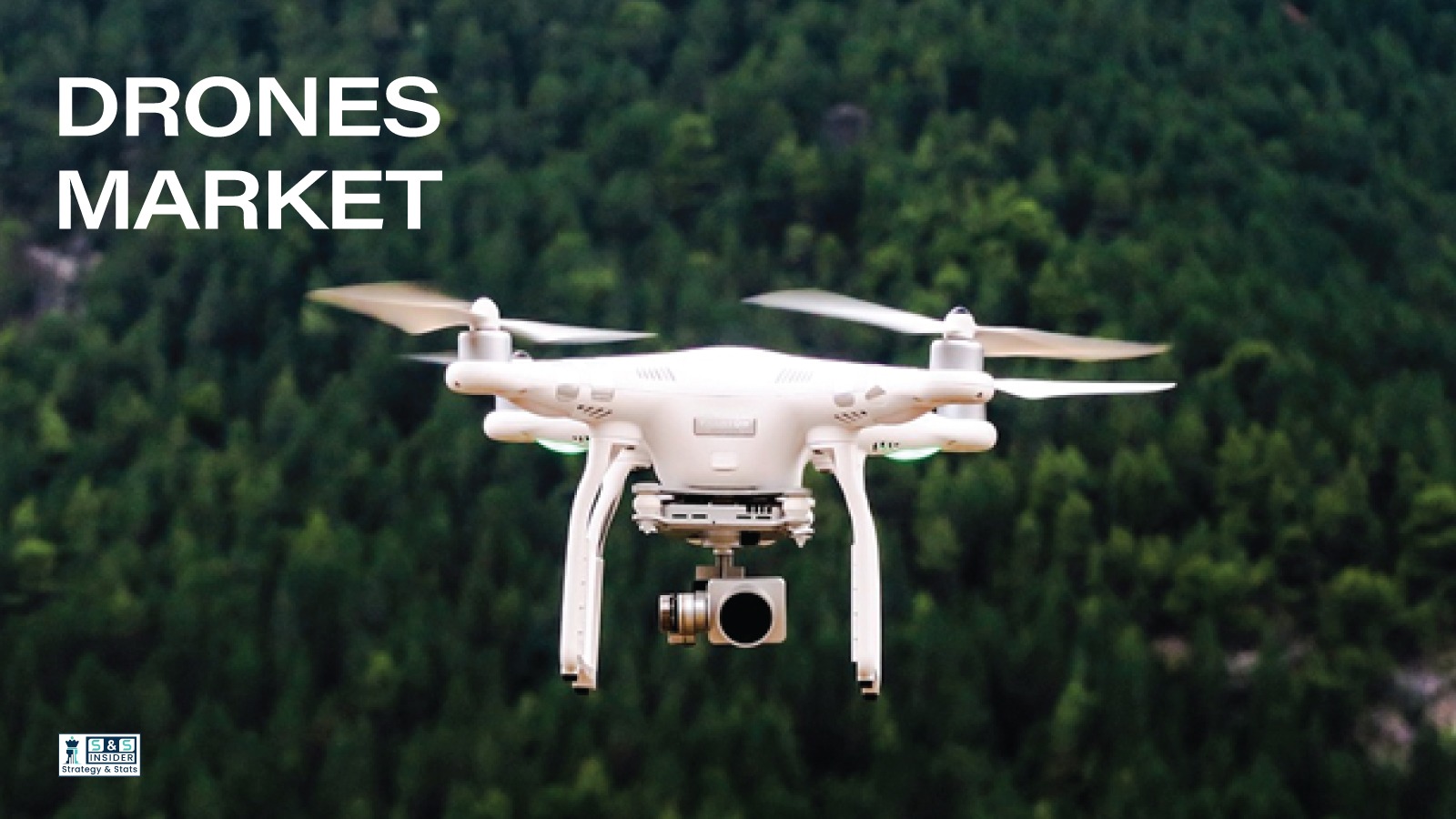
The Drones Market is seeing some serious growth as more industries use unmanned systems to boost efficiency, cut costs, and upgrade their data collection. Drones now play a big role in logistics, farming, infrastructure checks, surveillance, mapping, emergency responses, and keeping tabs on the environment. They can get to hard-to-reach spots, gather real-time info, and operate on their own, which is why many sectors consider them essential.
Urban expansion, the push for speedier transport, and the requirement for better aerial views mean advanced drone tech is getting more popular around the world. Companies are sinking money into new drone setups that feature AI, self-driving tech, electric engines, and top-of-the-line cameras. As tech keeps getting better, drones become even more dependable, precise, and affordable for commercial and governmental uses.
Estimated at USD 25.70 billion in 2025, the Drones Market is anticipated to achieve a valuation of USD 74.15 billion by 2035, supported by a CAGR of 11.20% between 2026 and 2035.
Key Players
The leading companies operating in the Drones Market include DJI, Northrop Grumman, Boeing, General Atomics, AeroVironment, Lockheed Martin, BAE Systems, Israel Aerospace Industries, Parrot, Skydio, Autel Robotics, Teledyne FLIR, Delair, AgEagle Aerial Systems, PrecisionHawk, Yuneec, Airbus, Kratos Defense & Security Solutions, and Insitu.
Strategic Developments & Industry Innovations
The drone industry is moving super fast thanks to new tech like AI, electric vehicles motors, and longer-lasting batteries. Because of this, drones can now work more accurately, fly longer, and handle tougher missions for both business and defense purposes.
Companies are using drones more and more for things like delivering packages, surveying land, checking on farmland health, inspecting buildings, helping after disasters, and ensuring security. With the help of smart navigation systems, light materials, and real-time data analysis, these flying gadgets are getting even better at their jobs, making them way more useful for businesses.
Leading Companies in the Global Drones Industry
1. Northrop Grumman: Expanding Advanced Unmanned Aerial Systems
 Northrop Grumman is a big player in aerospace and defense. They make really advanced drones and other autonomous flying tech. Their stuff is used a lot for spying, keeping an eye on things, figuring out what's going on, and for defense work. Because they pour money into next-gen drone tech, they keep coming up with cool new ways to do these tasks better.
2. Boeing: Driving Innovation in Autonomous Aerospace Systems
 Boeing's getting into autonomous aircraft too. They want to use AI, super-smart navigation, and awesome flight systems in their drones. Boeing's robots fly for defense, to haul goods, and more. With all this, they're helping shape the future of clever flying machines that can think for themselves.
3. General Atomics: Advancing Long-Endurance Drone Operations
 General Atomics is a huge name when it comes to long-lasting spy drones. They create systems that let these planes stay up way longer than others, perfect for gathering info and keeping tabs on folks. Thanks to how reliable and automated their ops are, militaries around the world trust and use their gear. And they're still pushing the envelope, inventing new stuff to stay ahead.
Data-Backed Trends Guiding Future Business Opportunities
The rising demand for aerial delivery and logistics is hugely affecting the Drones Market. More companies are looking into drone-based delivery systems to enhance transportation, cut down delivery times, and access distant spots. It's making a big difference for commercial drone makers and service providers, opening up new chances for them.
Infrastructure inspection and monitoring are driving the market too. Lots of firms, like utilities, construction companies, and government groups, use drones. They do this to gather precise data safely and to save on costs compared to older ways of doing things. Also, the agricultural sector's increased involvement adds to the growing market size.
On top of that, tech developments in AI, autonomous navigation, stronger batteries, and lighter materials, continue to revamp what drones can do. Because of these advances, we see longer flights, safer ops, better navigation, and less need for human control. As industries catch onto these benefits, they'll keep investing in drones, leading to steady growth over the next ten years or so.



