Farmers have to grow more food on land that is not expanding, and fertilizers are one of the most direct ways to raise yield per hectare. That keeps demand steady even when crop prices move up and down. For producers, distributors and service providers, the business is shifting from selling large volumes of basic products toward selling better results for each field.
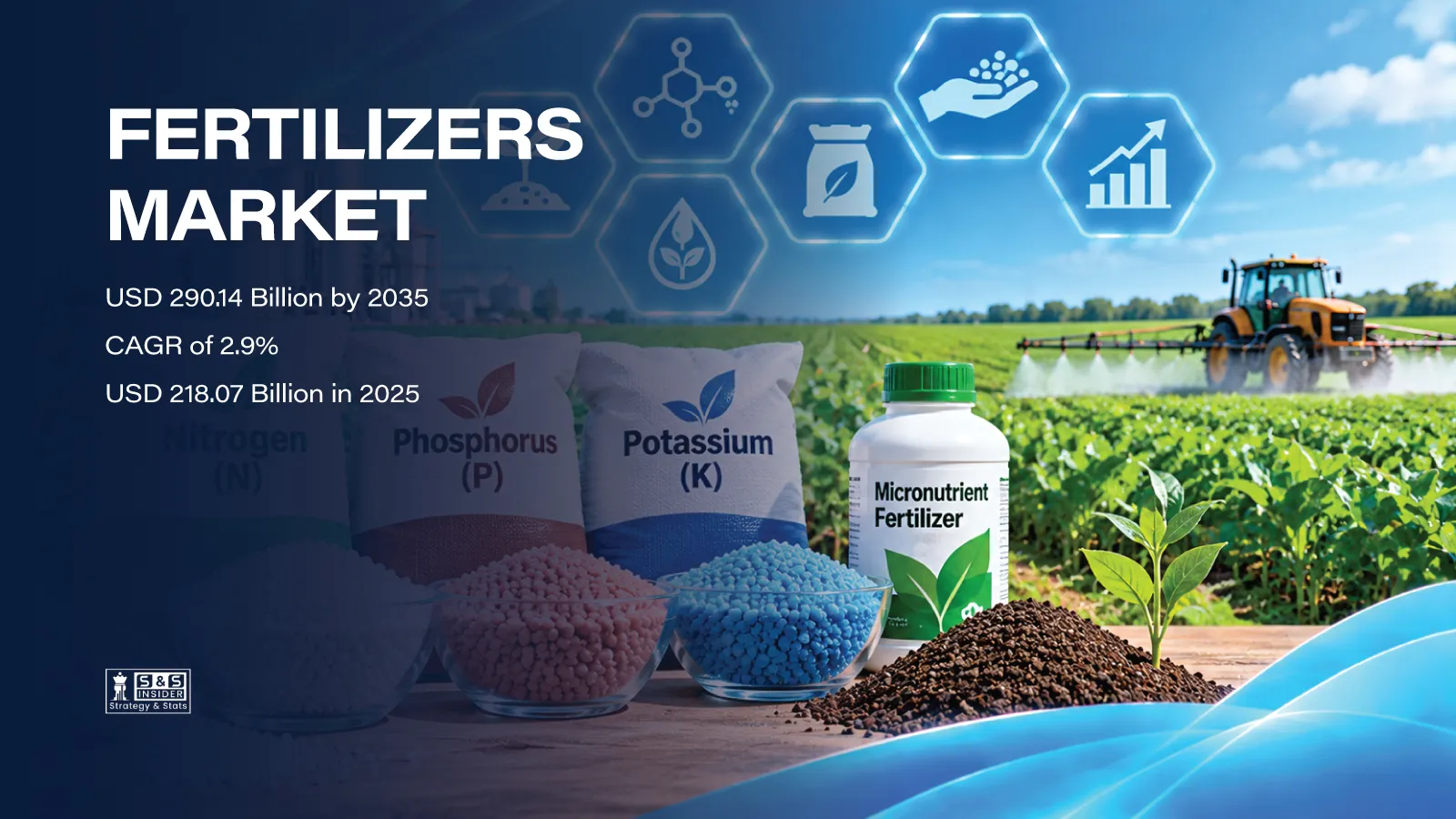
According to a recent study by SNS Insider, the global Fertilizers Market was valued at USD 218.07 Billion in 2025 and is expected to reach USD 290.14 Billion by 2035, growing at a CAGR of 2.9% over 2026–2035. The market is estimated at USD 224.32 Billion in 2026.
Gain Actionable Intelligence on the Fertilizers Market - Request a Sample Report
Input Costs Are Changing How Farmers Buy
Fertilizer is one of the largest costs on most farms. When prices rise, farmers do not stop buying, but they buy more carefully. They want to know which product, in what amount and at what time will give a return on the money spent.
Sellers that can answer those questions gain an edge. Advice on soil and crops is becoming part of the sale, not an extra.
This favors companies with field agronomy teams and local dealer networks. Trust built at the farm level often matters more than a small difference in price.
Precision Farming Opens a Data-Led Opportunity
Soil testing, sensors and farm software let growers apply nutrients only where crops need them. This reduces waste and helps farms meet rules on runoff and emissions.
The change does not reduce fertilizer use so much as change what is bought. Demand shifts toward specialty blends, micronutrients and products made for controlled delivery.
Companies that link their products to digital advice tools can follow a farm's needs season after season. That turns a single purchase into a lasting relationship.
Fertilizers Market Segmentation Highlights
By Type: Nitrogenous fertilizers held more than 38% of the market in 2025. Micronutrients are the fastest-growing type, at a 6.6% CAGR, as soils lose trace elements.
By Form: Conventional products accounted for 68.4% in 2025. Specialty fertilizers are growing fastest, at a 6.3% CAGR, which supports higher-margin product lines.
By Application Mode: Soil application held 72.0% in 2025. Fertigation is expanding fastest, at a 6.0% CAGR, as more farms install irrigation systems.
By Crop Type: Cereals and grains held 42.5% in 2025. Horticultural crops are growing fastest, at a 7.2% CAGR, because growers of fruit and vegetables pay for quality inputs.
Asia Pacific Leads with 48.1% Market Share as Middle East & Africa Records the Fastest Growth
Asia Pacific held up to 48.1% of the market in 2025, and China made up 39.85% of the region. Large farm populations and food security goals keep demand high and steady.
North America accounted for about 17.41% of global demand. The U.S. held 80.40% of the region and is expected to grow from USD 37.95 Billion in 2025 to USD 47.64 Billion by 2035, at a CAGR of about 2.3%.
The Middle East & Africa is the fastest-growing region, and Nigeria held 22.60% of Africa's revenue. Germany led Europe with 23.75%, and Brazil led Latin America with 44.30%. Efforts to raise farm output support demand in all three regions.
Local Blending and Distribution Could Unlock New Value
Large plants make the base products, but much of the value is created closer to the farm. Local blending lets suppliers match nutrient mixes to the soil and crops of each area.
This model suits fast-growing markets where farms are small and transport costs are high. Smaller bags, nearby warehouses and mobile advice services can reach growers that large suppliers often miss.
Partnerships with cooperatives, lenders and governments can also help farmers buy on credit. This removes one of the main barriers to regular fertilizer use.
Competitive Outlook: Scale Meets Specialization
Large producers compete on raw material access, plant size and logistics, which keeps them strong in nitrogen, phosphate and potash. Their main concerns are cost control and secure supply.
Specialists are winning ground in micronutrients, water-soluble products and crop-specific blends. As buyers focus on results per acre, the ability to pair products with agronomic advice is becoming a key point of difference.
Fertilizers Market Outlook Through 2035
The market is set to grow from USD 218.07 Billion in 2025 to USD 290.14 Billion by 2035. Base products will remain the largest part of sales, while specialty, micronutrient and fertigation products grow faster. Companies that help farmers get more from each input are best placed to gain share.