
Plants, utilities and storage sites need to know how much material sits in their tanks, silos and pipes at all times. A missed reading can stop a production line, waste stock or cause a spill. As more sites run with fewer people and more automation, accurate level data becomes a basic operating need.
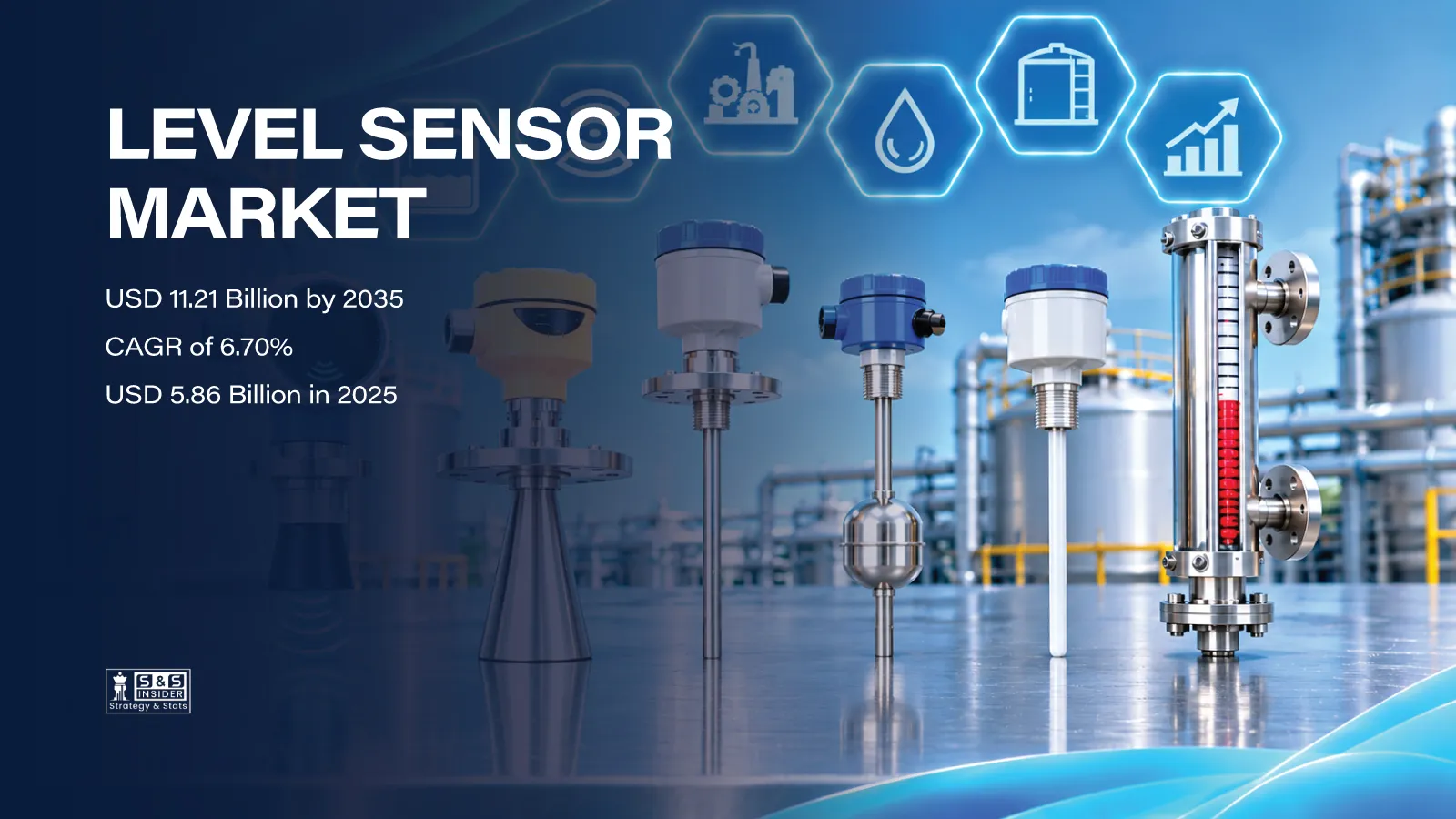
According to a recent study by SNS Insider, the global Level Sensor Market was valued at USD 5.86 Billion in 2025 and is expected to reach USD 11.21 Billion by 2035, growing at a CAGR of 6.70% over 2026–2035. The market is estimated at USD 6.25 Billion in 2026.
Gain Actionable Intelligence on the Level Sensor Market - Request a Sample Report
Level Data Is Becoming a Tool for Managing Risk
An overfilled tank or an empty feed line costs money quickly. Operators now see level sensing as a way to prevent losses, not only as a measuring task. Each reliable reading lowers the chance of downtime, product waste and safety incidents.
Insurers and regulators look closely at how sites control their storage. Plants with proven monitoring and alarm systems are better placed to pass audits and keep coverage costs under control.
Suppliers can turn this concern into steady demand. Packages that combine sensors, alarms and regular testing are easier to justify to buyers than a single device.
Remote Monitoring Opens a Service Opportunity
Many tanks and reservoirs sit at remote or unstaffed sites. Sending a technician to check them is slow and expensive. Connected sensors let operators see levels from a central screen and plan deliveries or maintenance only when needed.
This shift adds value beyond the hardware. Data on usage patterns helps customers cut fuel trips, reduce stockouts and plan purchases better.
Water utilities, fuel distributors and chemical suppliers are strong candidates for these services. They manage many storage points and gain the most from reducing site visits.
Level Sensor Market Segmentation Highlights
By Technology: Non-contact sensors held 56.40% of the market in 2025 and are also the fastest-growing technology, at a 7.60% CAGR. They suit hygienic and harsh process conditions.
By Monitoring Type: Continuous monitoring accounted for 58.60% in 2025. Point level sensing is growing fastest, at a 7.30% CAGR, supported by demand for overfill and dry-run protection.
By Type: Ultrasonic sensors held 20.80% in 2025. Microwave and radar sensors are expanding fastest, at an 8.90% CAGR, as buyers seek higher accuracy.
By Application: Industrial process held 26.80% in 2025. Automotive is the fastest-growing application, at an 8.40% CAGR.
Asia Pacific Leads with 38.40% Market Share and Advances at 9.20% CAGR
Asia Pacific held 38.40% of the market in 2025 and is also the fastest-growing region, at a 9.20% CAGR. New factories, water projects and storage capacity in China, India, Japan and South Korea give suppliers a wide base of new customers.
North America held 28.80% in 2025. The U.S. was valued at USD 1.45 Billion and is growing at a 6.40% CAGR, with demand coming mainly from upgrades and replacement of existing sensors.
Europe held 22.60%, Latin America 5.60% and the Middle East & Africa 4.60%. Plant upgrades and new water and energy projects support steady demand in these regions.
Sensing-as-a-Service Could Unlock New Commercial Opportunities
Level sensors often stay in service for many years, which slows replacement sales. A service model gives suppliers a way to earn income across that long life rather than only at the point of sale.
Under this model, customers pay a regular fee for sensors, connectivity, calibration and support. They avoid large upfront costs and the need for skilled in-house technicians, who are in short supply.
Smaller plants and municipal utilities are likely early adopters. They need dependable monitoring but often lack the budget and staff to buy and maintain systems on their own.
Competitive Outlook: Accuracy, Reliability and Total Cost
Competition centers on measurement accuracy under difficult conditions such as foam, buildup and extreme temperatures. Buyers are willing to pay more for sensors that keep working where cheaper devices fail.
Low-cost products put pressure on prices for mature sensor types. Suppliers that offer strong support, safety certification and lower total cost of ownership are better placed to protect margins.
Level Sensor Market Outlook Through 2035
The market is expected to nearly double, from USD 5.86 Billion in 2025 to USD 11.21 Billion by 2035. Demand will come from automation, water infrastructure and stricter safety needs. Suppliers that pair accurate non-contact sensing with connected services and dependable support are best placed to grow



