The Europe Metal-Organic Framework (MOF) Market is witnessing growth owing to the adoption of advanced materials that can be used in carbon capture, clean energy, gas separation, catalysis, environmental remediation, and pharmaceuticals. The increase in sustainability initiatives, efforts towards reduction in carbon, and advanced materials research is driving new opportunities in MOF technology in some of the leading European economies. Germany, the U.K., France, and Italy are some of the major contributors to the market in this region.
Europe Metal-Organic Framework (MOF) Market was valued at USD 0.17 billion in 2025 and expected to grow at a CAGR of 21.50% to reach USD 1.19 billion by 2035. Europe held around 27.0% of the global MOF market in 2025. Globally, the market valued at USD 0.63 billion in 2025 and anticipated to reach USD 4.71 billion by 2035, growing at a CAGR of 22.28% due to increasing demand for gas storage and separation, carbon capture, catalysis, drug delivery, and sensing applications.
Gain Actionable Intelligence on This Market - Request a Sample Report
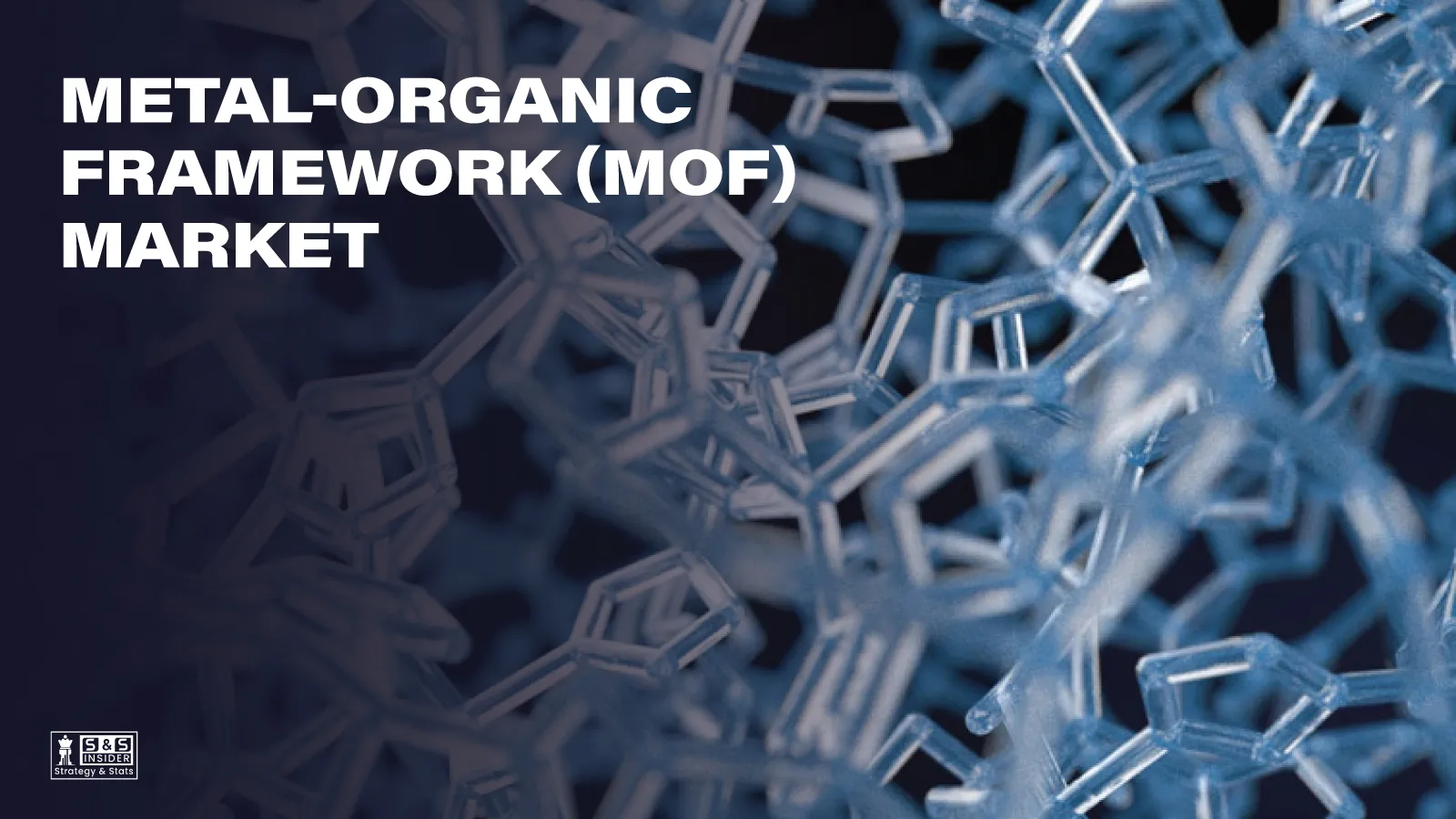
Europe Metal-Organic Framework (MOF) Market Analysis
The European MOFs market is getting benefited due to the presence of the focus of the European market on clean technology, carbon reduction, and advanced materials research. As MOFs have high surface area and tunability, they can be used for various purposes, including carbon capture, hydrogen storage, and gas separation. This is also because of the increased focus of the Europeans on enhancing energy efficiency.
Expanding applications of the material in various industrial and scientific domains are also driving the growth of the regional MOFs market. Researchers are now exploring various applications of MOFs, which include gas separation, catalysis, environmental applications, and pharmaceuticals.
Germany is a significant player in the MOFs world in Europe because of the presence of industries in clean energy and advanced material applications, as well as its industrial capabilities. Examples of applications in the region include carbon capture, gas separation, catalysis, and drug discovery applications. However, high cost of manufacture, complex synthesis processes, and low mass production are some of the issues facing MOFs.
Top 5 Leading Metal-Organic Framework (MOF) Companies
1. BASF SE
 BASF SE is another key player in the MOF market with technologies designed to cater to industrial uses like gas separation and carbon capture. The company’s Basolite and BasoTrap CCS products have helped enable the use of MOFs in applications involving advanced separation and carbon management. In October 2025, BASF introduced industrial-grade CALF-20 MOFs for carbon capture and water separation purposes.
2. Merck KGaA
 Merck KGaA engages in the fields of life sciences analytics and materials science and produces high purity MOFs for research as well as specialized applications. The company's product range consists of MIL-series, SyntaPure MIL-101, and Parteck MOF-X. In June 2025, Merck expanded its Basolite MOF portfolio to cater to gas separation, adsorption, and energy-based technologies.
3. MOF Technologies Ltd.
 MOF Technologies Ltd. is among the companies regarded as part of the important players within the Metal-Organic Framework industry worldwide. This is an indication of the ongoing development of MOF technology to meet growing demands within the energy, environment, and industry sectors.
4. Promethean Particles
 Promethean Particles forms one of the most prominent firms involved in the Metal Organic Framework market. The involvement of Promethean Particles is representative of the overall competitive landscape that exists in the Metal Organic Framework market due to increased research and business interests in it.
5. ZeoChem
 ZeoChem is also mentioned as one of the key players in the Metal-Organic Framework industry. Companies like ZeoChem are becoming part of a highly competitive environment that works towards developing and implementing advanced porous materials.
What the Future of Metal-Organic Frameworks Holds in Europe
Future prospects of MOFs in Europe are highly dependent on the region's transition into cleaner and low-carbon energy systems. While carbon capture and hydrogen energy storage can be seen as the main fields for future development, gas separation and environmental uses could provide further opportunities for making the use of MOFs profitable in business. Moreover, ongoing activities in research and industrial spheres in Europe will favor increased usage of MOFs in the pharmaceutical industry, catalysis, and environmental protection due to sustainability and advanced material science regulations that will create a fertile ground for innovation.
Considering the efforts of European industries in finding scalable solutions related to clean energy and carbon management, reducing production costs and improving the ability to scale up manufacturing will continue to play an important role. Further development of synthesis techniques and ability to produce MOFs on a large scale may become a key to the shift from research application of MOFs to more industrial usages. According to the forecast, Europe's MOFs industry is expected to increase from USD 0.17 billion in 2025 to USD 1.19 billion by 2035.