
Mexico is becoming one of the most practical places for multinational companies to run shared business, technology, and engineering work. Parent firms want teams that work in the same hours, sit close to their main markets, and cost less to run than teams at home. Mexico gives them all three. For investors, landlords, staffing firms, and service providers, this creates a steady and growing base of corporate demand.
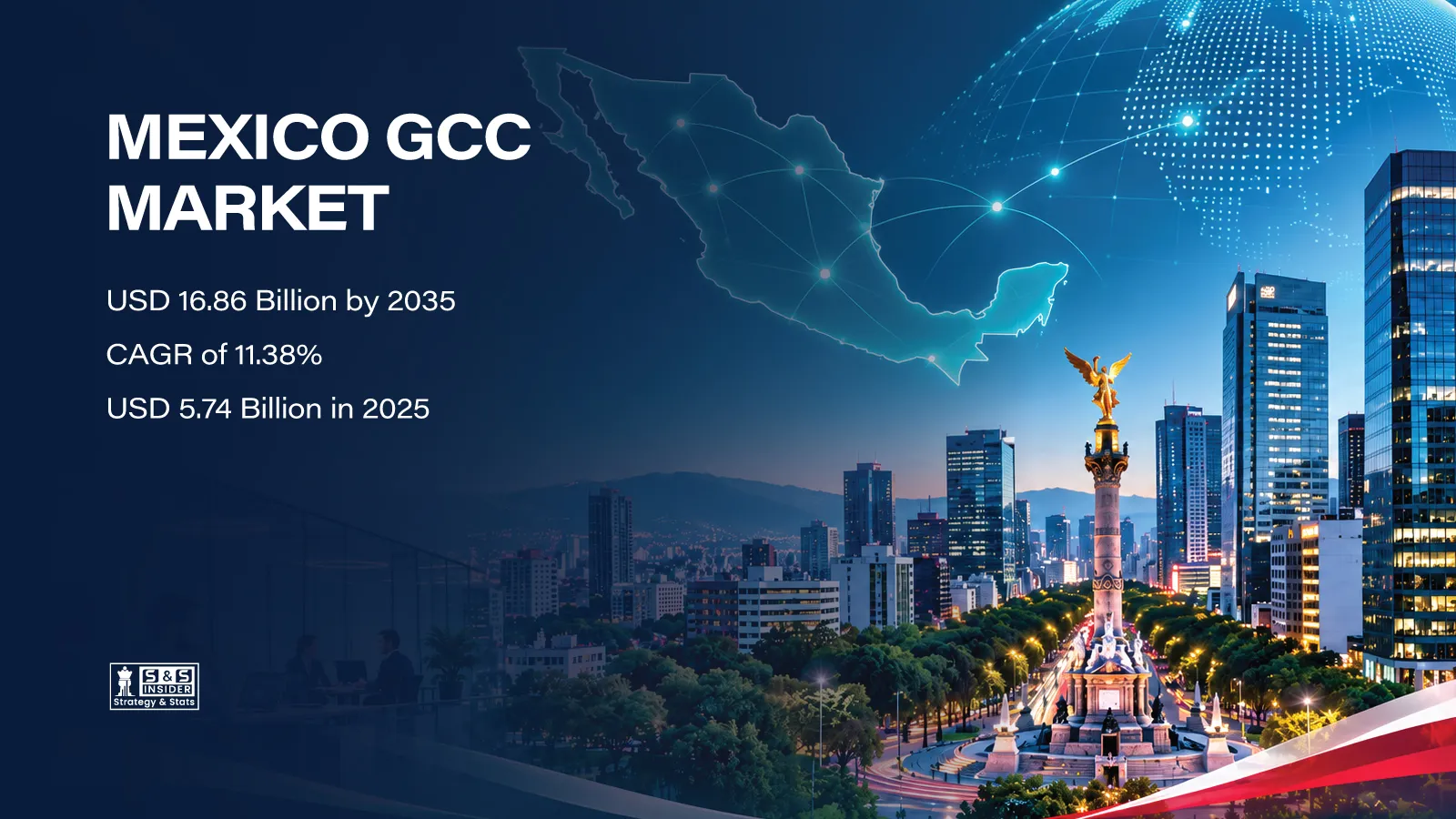
According to a recent study by SNS Insider, the Mexico GCC Market size was valued at USD 5.74 Billion in 2025 and is anticipated to reach USD 16.86 Billion by 2035, registering a CAGR of 11.38% over the forecast period 2026–2035. The market is estimated at USD 6.39 Billion in 2026.
Gain Actionable Intelligence on the Mexico GCC Market - Request a Sample Report
From Cost Savings to Business Ownership
Many companies first came to Mexico to cut the cost of routine tasks. That reason still matters, but it no longer explains the whole market. Parent firms now give their Mexican centers ownership of complete processes, not just single tasks. A center that once handled invoices may now run the full finance cycle for a region.
This shift changes what buyers spend money on. Centers need senior managers, analytics tools, and training programs, not only desks and headcount. Suppliers that can help a center take on more responsibility will find longer and larger contracts.
It also changes how parent firms measure success. The question is less about how much money a center saves and more about how much value it adds. Centers that can show better speed, quality, or new ideas tend to win more work from headquarters.
Talent Is the Real Constraint
Demand for skilled staff is rising faster than supply in the largest cities. Pay is going up, and good candidates often receive several offers. Companies that plan their hiring early and build their own training paths keep their teams longer.
This creates room for universities, training firms, and recruitment partners. Programs that prepare graduates for data, cloud, and engineering roles can feed centers directly. Companies that help with retention, such as through career paths and flexible work, also become valuable partners.
Location choices are also changing because of talent. Firms are looking past the biggest cities toward places where skilled workers are available and costs are lower. This spreads demand for offices, housing, and services to new parts of the country.
Mexico GCC Market Segmentation Highlights
By Function
Business Process Management held the largest share at 42.37% in 2025. IT and Digital Services is the fastest-growing function, with a CAGR of 12.94%. This creates opportunities for providers of software development, cloud support, and cybersecurity.
By Engagement Model
Captive centers led with a 58.46% share in 2025, because parent firms want direct control over their data and teams. Build-Operate-Transfer and Hybrid models are growing fastest, at a CAGR of 12.67%. That growth favors partners who can set up a center and then hand it over.
By Industry Vertical
Manufacturing, Automotive and Industrial accounted for 37.92% of the market in 2025. Healthcare and Life Sciences is the fastest-growing vertical, at a CAGR of 13.08%. This opens space for specialists in regulatory, clinical data, and quality support.
Mexico City and Central Mexico Lead with 33.48% Share as Bajío Advances at 13.12% CAGR
Mexico City and Central Mexico held the largest share at 33.48% in 2025. The area offers deep talent pools, corporate headquarters, and strong transport links. It remains the first choice for finance, legal, and leadership functions.
Monterrey and the Northeast held 22.17%, and Guadalajara and the West held 19.64%. Together with Mexico City, these three hubs made up 75.29% of the market. The Bajío region, which includes Querétaro, Guanajuato and Aguascalientes, held 12.73% and is growing fastest, at a CAGR of 13.12%. Its engineering base and lower costs make it attractive.
The rest of Mexico held 11.98%. Second-tier cities are good options for companies that want to avoid rising costs in the major hubs.
Build-Operate-Transfer Could Open the Door for Mid-Sized Firms
Large multinationals can afford to build their own centers. Mid-sized firms often cannot, because of the time, legal work, and hiring involved. A partner who builds and runs the center first lowers that barrier.
Under this model, the client gets a working team quickly and takes ownership later, once the center is stable. This reduces risk for companies new to Mexico. It also gives service providers steady income during the setup years.
As more mid-sized firms look for nearby talent, demand for this model is likely to rise. Providers that offer clear handover terms and local legal support will stand out.
Competitive Outlook: Scale Versus Specialization
The market includes global consulting and technology firms, local center operators, and specialist setup partners. Large firms compete on scale, client relationships, and broad service lists. Smaller firms compete on speed, local knowledge, and flexible terms.
Over time, buyers are likely to value proven skills in specific industries and functions. Providers that build deep expertise in healthcare, engineering, or digital services will be better placed to win higher-value work.
Mexico GCC Market Outlook Through 2035
The Mexico GCC market is expected to grow steadily as parent firms move more complex work closer to home. Talent supply, location strategy, and flexible setup models will decide which providers and regions capture the most value through 2035.



