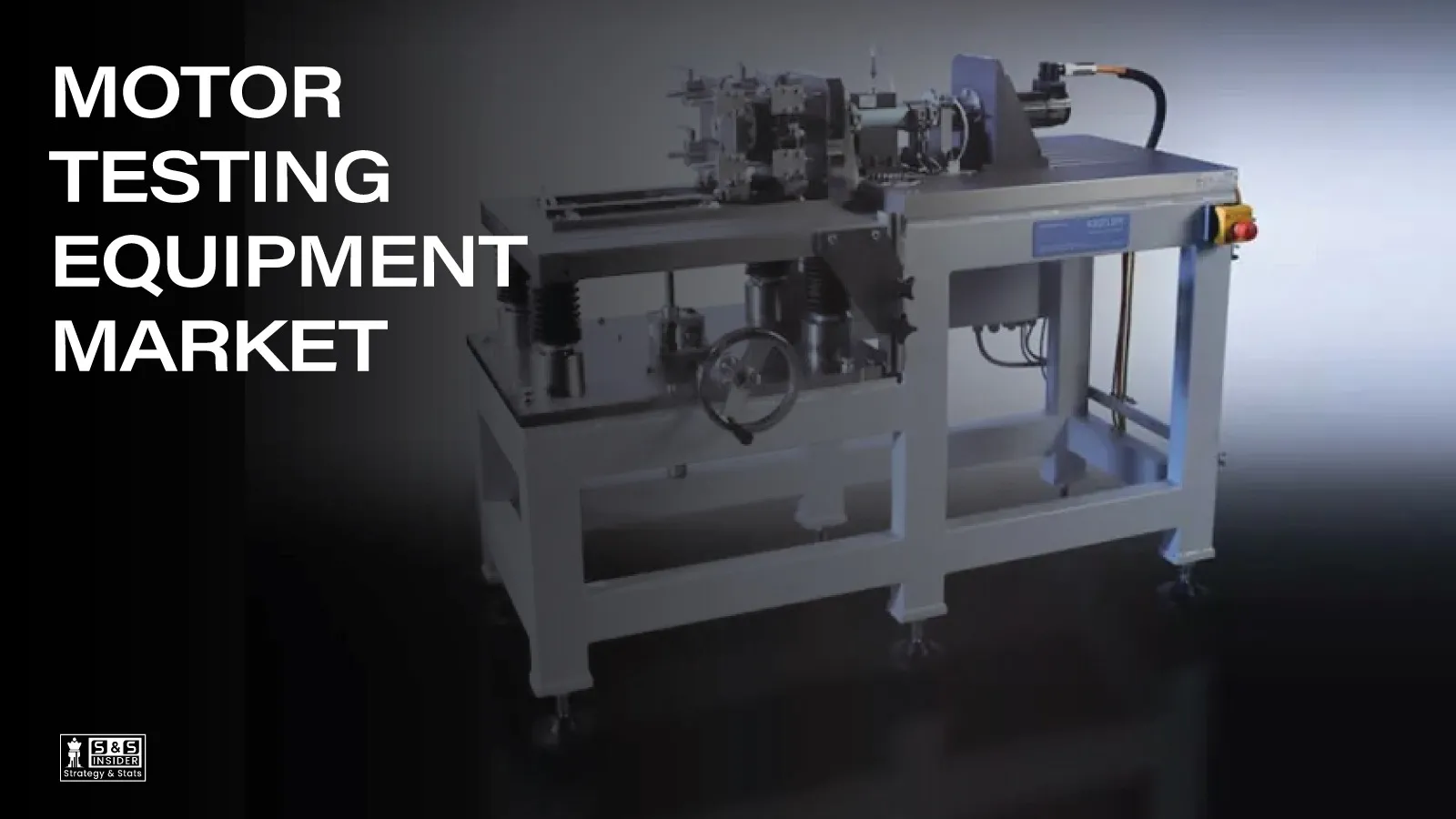
The Motor Testing Equipment Market is experiencing sustained growth as the emphasis is being placed on predictive maintenance, industrial automation, energy efficiency, and electric mobility in various industries. With the growing uptake of electric/hybrid vehicles, increasing development of smart manufacturing plants, and high demand for highly performing motors in industrial, automotive, energy, and transportation industries, the testing equipment market is changing globally. AI, IoT-based monitoring, cloud computing, digital twin simulation, and real-time performance testing solutions help organizations to ensure motor reliability and minimize downtime in order to optimize the operation process.
According to SNS Insider, the Global Motor Testing Equipment Market size was worth USD 2.85 Billion in 2025 and is expected to grow and reach USD 4.94 Billion by 2035, recording a CAGR of 5.64% over 2026-2035. The growth in the market is attributed to increased use of electric motors, rising investment in renewable energy systems, increased adoption of predictive maintenance practices, and growing industrial automation activities. In addition, the vendors are making heavy investments in advanced testing systems which are integrated with AI, IoT, and cloud solutions.
Key Players:
Some of the major companies operating in the Motor Testing Equipment Market are AVL List GmbH, Horiba Ltd., Bosch Automotive Service Solutions, General Electric, ABB Ltd., Siemens AG, Emerson Electric Co., Honeywell International Inc., Schneider Electric, Rockwell Automation, Chauvin Arnoux, HIOKI E.E. Corporation, Doble Engineering Company, OMICRON electronics GmbH, Schenck Process Holding GmbH, SKF Group, Magtrol Inc., Extech Instruments, Ametek Inc., Yokogawa Electric Corporation, and others.
Strategic Developments & Industry Innovations:
-
The AVL List GmbH introduced an advanced electric vehicle powertrain testing facility that is capable of performing simulations, regeneration load balancing, and supporting multi-voltage architecture in March 2025.
-
In March 2025, the Horiba Ltd. company introduced the C05-LT 100W PEM benchtop fuel cell test station. This fuel cell test station is intended to be used for the development of next-generation fuel cells and motor systems and provides excellent testing performance.
-
Siemens AG acquired the industrial drive technology business from the ebm-papst company in April 2025. This acquisition allowed incorporating advanced mechatronic systems and intelligent drive systems into the automation product range. This merger is beneficial for the motor testing and industrial automation businesses.
Leading Companies in the Global Motor Testing Equipment Market:
1. AVL List GmbH: Leading Innovation in Electric Powertrain and Motor Testing

AVL List GmbH is considered to be one of the largest companies providing motor and powertrain testing solutions in the world, covering the automotive industry, industries in general and the energy sector. It supplies innovative equipment for performance evaluation, endurance testing and efficiency improvement such as dynamometers, testing stands, emission testing systems, and simulations technologies.
Its ongoing innovations in digital testing environments, analytics powered by the Internet of Things, and electric vehicle testing facilities allow manufacturers to develop products faster and meet the latest requirements in the field.
2. Horiba Ltd.: Advancing High-Precision Testing for Future Mobility Systems

Horiba Ltd. has gained a significant competitive advantage in the global market of motor testing equipment, due to the wide range of testing and measuring solutions offered by the company for electric motors, fuel cells, batteries, and internal combustion engines. Horiba focuses on testing and measuring systems that are characterized by high accuracy and precision.
The innovations introduced by Horiba in testing technologies for e-mobility platforms, fuel cell validation techniques, and test environment modularity enable manufacturers to enhance the reliability of their products and speed up innovation processes in the automotive and industrial sectors.
3. Siemens AG: Driving Intelligent Motor Testing Through Automation and Digitalization
Siemens AG is one of the leaders in the field of industrial automation, digital engineering, and testing of motors technologies. The company develops sophisticated testing equipment, drive technologies, and digital monitoring solutions that help evaluate motor performance accurately and carry out end-of-line and predictive maintenance operations within industrial facilities.
Using Siemens’ automation software, digital twins, AI-driven analysis, and intelligent drive systems, users can improve the performance of their motors and increase efficiency of the operation process.
Future Growth Prospects for the Global Motor Testing Equipment Market:
There are chances that the Motor Testing Equipment Market is going to witness constant growth because the focus on energy savings and maintenance and intelligence will continue. There will be a need for advanced testing systems which can provide real-time diagnostic features and highly precise evaluation capabilities because of increasing demands for electric cars, renewable energy solutions, robots, and other innovations.
Some of the companies, such as AVL List GmbH, Horiba Ltd., and Siemens AG are revolutionizing the market with advanced testing solutions, digital monitoring systems, and AI-based solutions for analysis. Advanced motor testing equipment will prove to be extremely important in terms of efficiency and reliability of motors in the modern infrastructure of industries and transport.