
The worldwide ophthalmic eye dropper market is growing because more people have dry eye, glaucoma, eye allergies, and age-related vision problems. Longer screen time, an aging population, and better access to eye care are leading more patients to use eye drops every day. Patients and doctors are also asking for preservative-free formulas and easier-to-use bottles, which is pushing manufacturers to improve both the drug and the dispenser. New treatments for presbyopia and myopia are adding fresh demand to the market.
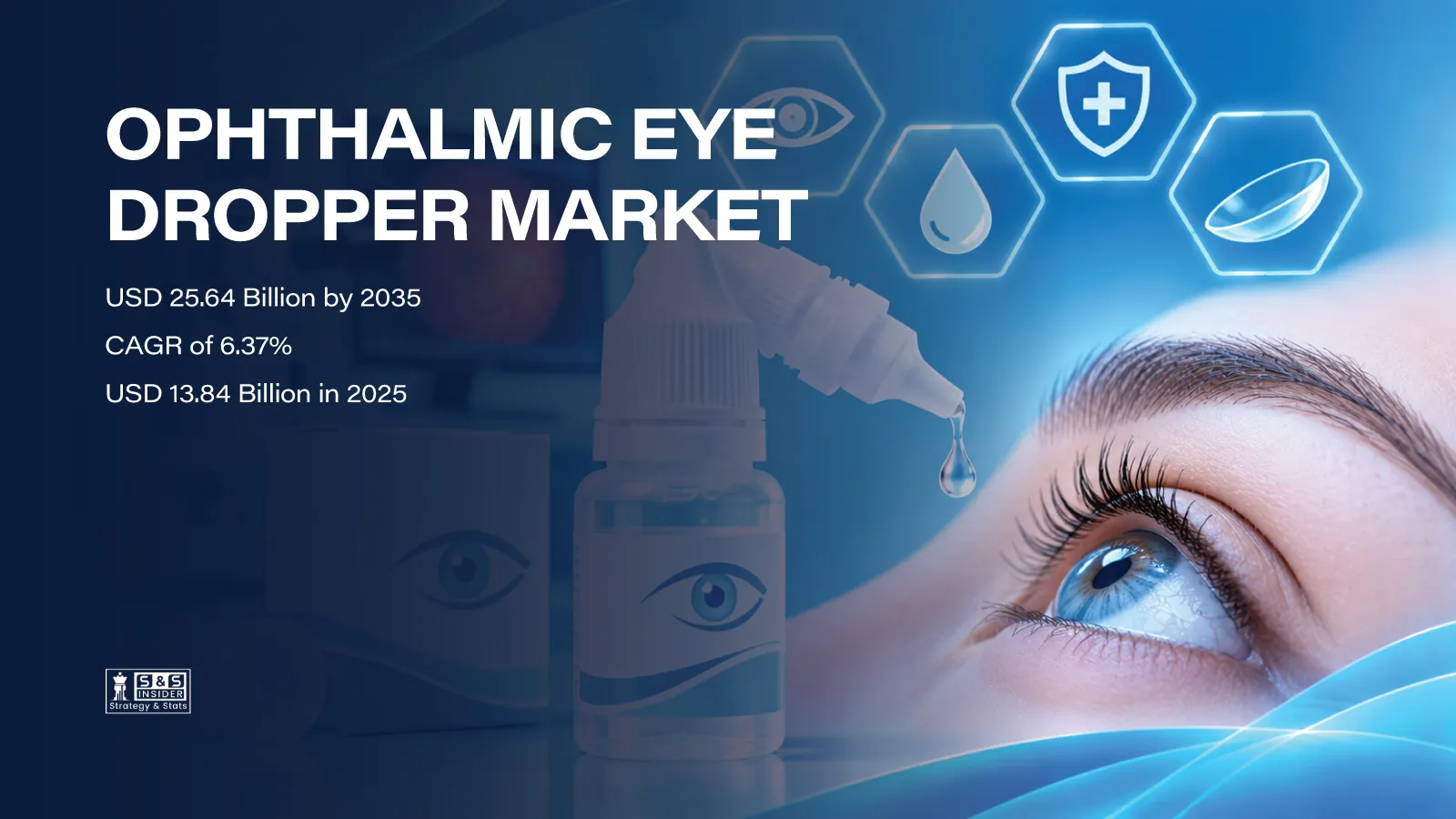
The Ophthalmic Eye Dropper Market value stood at USD 13.84 billion in 2025 and is anticipated to grow to USD 25.64 billion by 2035, growing at a CAGR of 6.37% in the forecast period of 2026-2035. Dry eye disease accounted for around 34.28% of the market by application, while solutions held about 58.74% by formulation in 2025.
Unlock exclusive market insights download the brochure to explore global Ophthalmic Eye Dropper Market trends, emerging opportunities, competitive developments, and forecasts through 2035.
Regional Analysis of the Ophthalmic Eye Dropper Market
The ophthalmic eye dropper market is expanding across North America, Europe, Asia-Pacific, Latin America, and Middle East & Africa. North America dominated the market with around 36.82% share in 2025 owing to the high rate of diagnosed eye conditions, strong spending on prescription and over-the-counter eye care, and a well-developed pharmacy network. North America is dominated by the US, which had a market valuation of USD 4.27 billion in 2025 and is forecasted to grow to USD 7.32 billion by 2035 at a CAGR of 5.58%. Europe ranked third, and Germany led the region with about 24.38% of European demand.
Asia-Pacific is expected to grow at the highest CAGR of 7.94% due to rising myopia among children and young adults, a large aging population, and better access to eye clinics. The leading countries in Asia-Pacific include Japan, which held about 33.41% of the regional market, along with China and India. Latin America and Middle East & Africa are witnessing stable growth due to expanding healthcare access and more retail pharmacies, with Brazil and the GCC countries leading their regions.
Top 10 Trends in the Ophthalmic Eye Dropper Market
-
Rising demand for preservative-free eye drops among frequent users and patients with sensitive eyes.
-
Fast growth of preservative-free multi-dose dispensers, at a CAGR of about 9.03%.
-
New drop-based treatments for myopia and presbyopia, the fastest-growing application at a CAGR of about 9.46%.
-
Growing use of emulsions and gels for longer-lasting relief.
-
Shift of eye drop purchases to online pharmacies.
-
Continued leadership of multi-dose bottles, which held about 52.36% of the market.
-
New dispenser designs that improve dosing accuracy and reduce wasted drops.
-
More over-the-counter launches for dry eye and eye redness.
-
Expansion of generic eye drops as branded products lose patent protection.
-
Higher use of eye drops linked to longer screen time and digital eye strain.
Ophthalmic Eye Dropper Market Growth Drivers and Opportunities
Growth prospects for the market are due to the rising number of patients with dry eye, glaucoma, and age-related vision loss. Patients often use eye drops for many years, which keeps demand steady. Drug makers are also bringing new treatment classes to the market. For example, in July 2025, LENZ Therapeutics received U.S. FDA approval for VIZZ (aceclidine ophthalmic solution) 1.44%, the first aceclidine-based eye drop for presbyopia.
There is clear room for growth in preservative-free products, better dispensers, and online sales. For example, in June 2026, Bausch + Lomb launched Blink Triple Care Preservative Free in the U.S. in a multi-dose bottle that provides up to 10 hours of dry eye relief. Strict regulatory approval rules, product recalls tied to contamination, generic price competition, and poor patient compliance with dosing are some challenges in this market.
Top 10 Companies in the Ophthalmic Eye Dropper Market
The ophthalmic eye dropper industry is made up of eye care pharmaceutical companies, generic drug makers, and drug delivery packaging suppliers. These companies compete on strong eye care portfolios, safe and sterile manufacturing, dispenser technology, and wide reach through doctors and pharmacies.
-
Alcon Inc.
-
Bausch + Lomb Corporation
-
Aptar Pharma (AptarGroup, Inc.)
-
Harrow, Inc.
-
Viatris Inc.
-
Santen Pharmaceutical Co., Ltd.
-
AbbVie Inc. (Allergan)
-
Senju Pharmaceutical Co., Ltd.
-
Rohto Pharmaceutical Co., Ltd.
-
Laboratoires Théa
-
Alcon Inc.
Alcon Inc. is a Swiss eye care company with surgical and vision care businesses. It sells prescription and over-the-counter eye drops, including the Systane line for dry eye. In May 2025, Alcon received U.S. FDA approval for Tryptyr (acoltremon ophthalmic solution) 0.003% to treat the signs and symptoms of dry eye disease.
-
Bausch + Lomb Corporation
Bausch + Lomb Corporation is a global eye health company headquartered in Canada. It offers prescription eye drops, over-the-counter lubricants, contact lens care, and surgical products. In June 2026, the company launched Blink Triple Care Preservative Free lubricant eye drops in the United States.
-
Aptar Pharma (AptarGroup, Inc.)
Aptar Pharma is the drug delivery division of AptarGroup, Inc., a U.S.-based packaging and dispensing company. It supplies ophthalmic squeeze dispensers and preservative-free multi-dose systems to eye care brands. In January 2026, Aptar introduced Beat the Blink, a horizontal drop delivery technology developed under an exclusive partnership with Bausch + Lomb.
-
Harrow, Inc.
Harrow, Inc. is a U.S.-based eye care pharmaceutical company focused on ophthalmic disease management in North America. Its portfolio includes VEVYE for dry eye and FreshKote Preservative Free lubricant eye drops. In October 2026, Harrow closed its acquisition of TYRVAYA (varenicline solution) nasal spray 0.03 mg from Viatris, adding a second branded dry eye therapy.
-
Viatris Inc.
Viatris Inc. is a U.S.-based global healthcare company that sells branded and generic medicines, including eye care products. It runs an eye care unit that serves both prescription and generic markets. In August 2026, Viatris agreed to sell its global rights to TYRVAYA, except for Japan, to Harrow.
Company Profile
A detailed company profile can cover:
-
Business overview and company snapshot
-
Product portfolio and application coverage
-
Market position and competitive analysis
-
Financial performance, where available
-
Recent developments, mergers, and acquisitions
-
SWOT analysis
The remaining companies can be assessed using the same framework in a comprehensive market research report.
Future Outlook of the Ophthalmic Eye Dropper Market
The ophthalmic eye dropper market should keep growing as more people develop dry eye, glaucoma, myopia, and presbyopia. Preservative-free formulas, multi-dose dispensers, and more accurate delivery systems will shape how new products are designed. Online pharmacies and fast-growing markets in Asia-Pacific will reach more patients. Companies that pair effective formulas with safe, easy-to-use dispensers may gain a stronger position over the forecast period.



