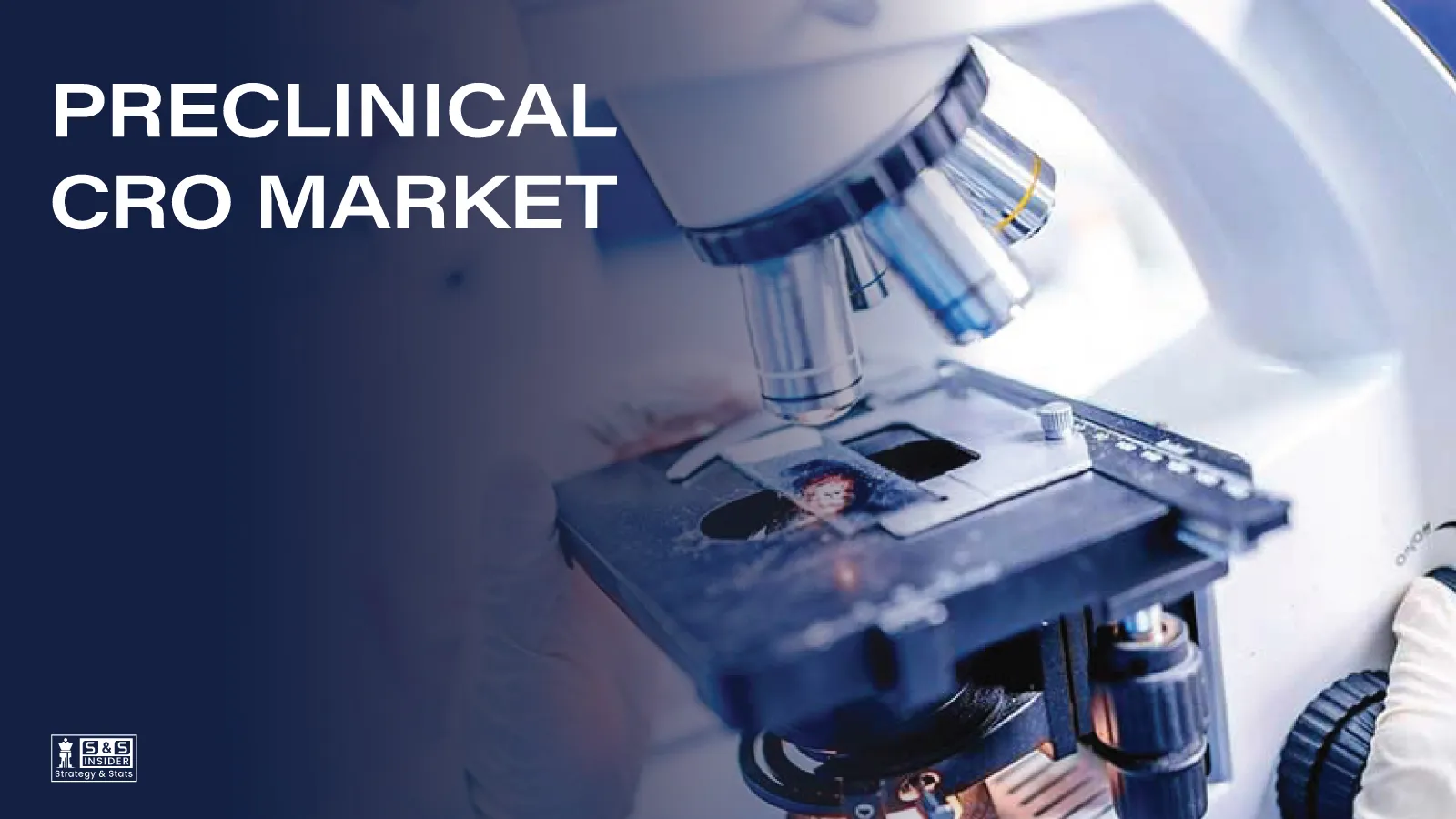
The preclinical contract research organisation (CRO) industry has become an integral part of modern drug development, enabling pharmaceutical and biotechnology companies to accelerate research and help reduce operational costs. The growing complexity of drug pipelines such as biologics, cell and gene therapies and precision medicines has made outsourcing of preclinical studies a strategic decision in order to improve the efficiency and reduce timelines of development. Today, specialised CROs provide vital services from toxicology and bioanalysis to advanced disease models, improving predictability of clinical outcomes.
The Preclinical CRO Market was USD 6.24 billion in 2025 and will reach USD 11.54 billion in 2033, growing at a CAGR of 8.01% during the analysis period, as per the Preclinical CRO Market report. The growth is attributed to the increasing pharmaceutical outsourcing, rising investments in drug discovery, and the utilisation of advanced research platforms such as Patient-Derived Organoid (PDO) and Patient-Derived Xenograft (PDX) models mainly in oncology and neurological research.
Top 3 Companies Leading the Preclinical Contract Organisation Industry
1.Charles River Laboratories
 About Charles River Laboratories Charles River Laboratories is a leading provider of preclinical and clinical laboratory services to the pharmaceutical, medical device and biotechnology industries. The company is a preferred outsourcing partner for pharmaceutical and biotechnology companies, with broad expertise in discovery, toxicology, bioanalysis and safety assessment. Charles River has significantly expanded its capabilities in advanced preclinical models, including PDO and PDX platforms, to enhance translational research outcomes. Strategic collaborations, sustained investment in oncology research, cell and gene therapy and others continue to cement its position in the fast-changing world of preclinical research.
2. Eurofins Scientific
 Eurofins Scientific has built a strong reputation in the preclinical CRO space, offering a broad spectrum of laboratory testing, bioanalytical services and regulatory support. The company provides high quality research solutions to pharmaceutical, biotechnology and medical device companies to speed product development. Eurofins continues to invest in the latest analytical technologies, laboratory automation and global laboratory networks in order to improve efficiency while ensuring compliance with international quality standards.
3. Parexel International Corporation

Parexel International offers integrated research solutions from preclinical development through clinical trials. Its experience in regulatory consulting, oncology research and AI-enabled data management makes it easy for pharmaceutical companies to navigate complex drug development programmes. The company is also improving its digital capabilities and collaborative partnerships to speed regulatory timelines and improve development efficiency. Its innovation focus has strengthened its position as a strategic partner to global life sciences organisations.
What’s in store for the Preclinical CRO industry?
The main growth driver of the preclinical CRO market is outsourcing as pharmaceutical and biotechnology companies are looking to reduce development costs, access specialised scientific expertise and accelerate drug discovery. The increasing demand for biologics, gene therapies and precision medicines has created a need for advanced testing capabilities, which many organisations prefer to source from experienced CRO partners, rather than build out their internal infrastructure. Studies have shown that outsourcing can shorten the preclinical development timeline by 20-25%, thus improving the efficiency of research.
Another major trend is the rapid uptake of advanced research models such as Patient-Derived Organoids (PDOs) and Patient-Derived Xenograft (PDX) models, which are being used today in a large proportion of oncology research. These models are more accurate than traditional lab systems, allowing researchers to identify good drug candidates earlier in the development process. “Artificial intelligence, laboratory automation and integrated bioanalytical platforms are also enhancing data quality, accelerating decision making and enabling more efficient regulatory submissions.
Looking Ahead
The future of the preclinical CRO industry will be driven by continued growth in pharmaceutical outsourcing, technological innovation and growing demand for advanced disease models. The complexity of drug development is increasing, and contract research organisations (CROs) that can provide integrated research services, AI-driven data management and quality regulatory-compliant testing will remain well-placed for sustained long-term growth. With greater investment in oncology, neurology, biologics and precision medicine, the global preclinical CRO market is expected to take on greater importance in helping to accelerate the development of safer and more effective therapies.