According to the latest SNS Insider report on the global Aroma Chemicals Market, the industry is entering a period of sustained expansion as fragrance premiumization, rising personal care consumption, and biotechnology-driven ingredient development reshape global demand.
The global aroma chemicals market is undergoing a structural transition from predominantly cost-driven synthetic ingredient manufacturing toward a more differentiated industry where fragrance performance, renewable feedstocks, and regulatory compliance influence purchasing decisions. Aroma chemicals continue to be important ingredients in perfumes, cosmetics, toiletries, household cleaning products and selected flavor applications. Demand is splitting between high volume commodity molecules and premium specialty ingredients with unique scent characteristics and better sustainability profiles.
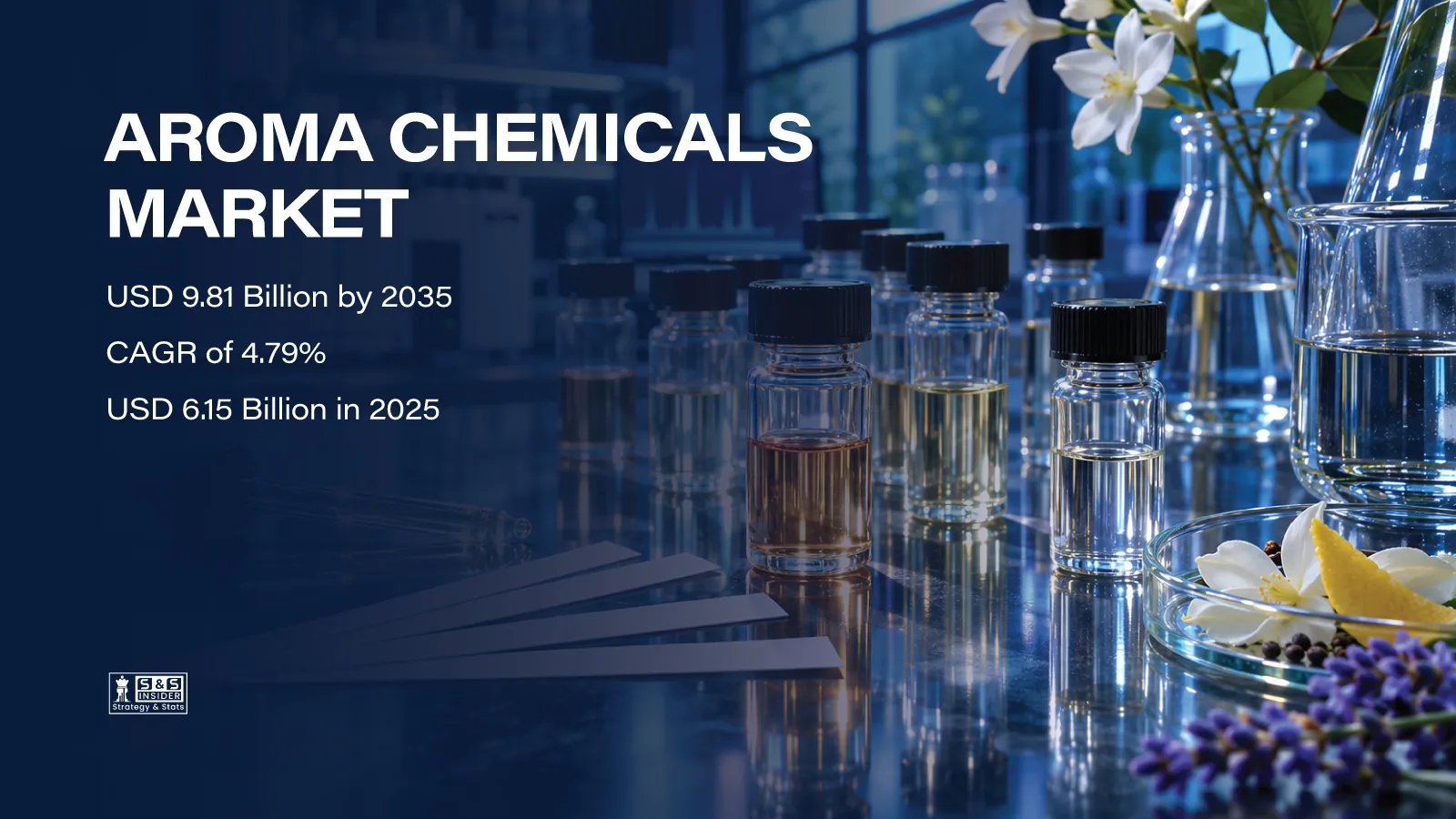
The global market was valued at USD 6.15 billion in 2025, is estimated to reach USD 6.44 billion in 2026, and is forecast to expand to USD 9.81 billion by 2035, representing a compound annual growth rate (CAGR) of 4.79% during 2026–2035.
To Get Detailed Insights on the Aroma Chemicals Market – Request a Sample Report
Synthetic ingredients remain the dominant revenue contributor in the industry, thanks to their consistent quality, existing production infrastructure and low production costs. But natural and bio-tech alternatives are attracting commercial interest as fragrance manufacturers seek renewable ingredients and greater supply-chain transparency.
Competition is more and more about access to terpene intermediates, proprietary fragrance molecules, manufacturing integration, and long-term relationships with multinational consumer goods companies. Asia Pacific is the industry’s largest production and consumption region, while Europe continues to dominate premium fragrance creation and specialty ingredient innovation.”
The base case outlook to 2035 sees consistent value growth, supported by increasing cosmetics consumption, premium perfume launches, substitution with sustainable ingredients and regional manufacturing investments. The most attractive opportunities will be best exploited by manufacturers who can combine cost efficiency with differentiated chemistry.
Demand Drivers and Constraints
Primary Demand Drivers
-
Expanding personal care consumption: Increasing demand for shampoos, soaps, deodorants, skincare products, and toiletries supports recurring purchases of fragrance ingredients across developed and emerging markets.
-
Premiumization of fine fragrances: Luxury perfumes, independent fragrance brands, and personalized scent collections create opportunities for high-value specialty molecules.
-
Bio-based ingredient innovation: Fermentation, biocatalysis, and renewable feedstocks support the development of alternative fragrance ingredients with improved sourcing flexibility.
-
Rising household fragrance demand: Fabric softeners, detergents, air fresheners, and scented home products generate consistent demand for long-lasting aroma compounds.
-
Manufacturing capacity expansion: Investments in integrated chemical facilities improve intermediate availability, production efficiency, and regional supply reliability.
-
Growth in flavor applications: Selected aroma molecules used in food and beverage formulations provide additional demand beyond conventional fragrance manufacturing.
Potential Growth Constraints
-
Volatility in petrochemical, citrus, pine-derived, and other natural raw material prices affects manufacturing costs and supplier margins.
-
Fragrance ingredient restrictions, allergen labeling requirements, and environmental compliance obligations increase formulation complexity.
-
Agricultural supply limitations and climatic variability constrain the availability of selected natural extracts.
-
Intense competition among commodity ingredient manufacturers creates pricing pressure, particularly for standardized synthetic molecules.
-
Customer concentration among major fragrance houses and consumer goods manufacturers strengthens buyer negotiating power.
Demand Structure by End-Use Industry
Cosmetics and Toiletries (Market Share: 34.20% in 2025)
Aroma chemicals find their greatest application in cosmetics and toiletries. Fragrance is an important field of product differentiation in the areas of skincare, haircare, deodorants, shower gels and oral care formulations. Manufacturers use scent profiles to make their products more recognizable and to encourage repeat purchases. Demand is driven by rising personal care spending, product innovation and growing retail distribution in emerging economies. Brands are also introducing formulations that highlight ingredient transparency and unique sensory experiences. The segment is expected to continue to lead through 2035, but suppliers will face mounting pressure to balance formulation costs with regulatory compliance and sustainability requirements.
Major trends: Premium personal care, renewable fragrance ingredients, specialized scent profiles, and ingredient traceability.
Representative participants: Givaudan, Symrise, dsm-firmenich, and International Flavors & Fragrances.
Fine Fragrances (Forecast CAGR: 5.35%)
Fine fragrances is the fastest growing application segment fueled by premium perfume consumption, independent fragrance houses and increasing interest in personalized scents. Consumers are purchasing more fragrances for different occasions, which is prompting brands to develop differentiated collections and limited-edition products The trend is in support of demand for proprietary aroma molecules, sophisticated musk compounds and specialty floral ingredients. For premium fragrance makers, originality, longevity and consistency in ingredients are priorities, making formulation expertise a key competitive advantage. Launch of premium products, growing fragrance consumption in emerging markets and innovation in unique fragrance compositions will drive growth through 2035.
Major trends: Luxury perfume expansion, niche fragrance development, proprietary molecules, and sustainable perfumery.
Representative participants: Givaudan, dsm-firmenich, Symrise, and Takasago International.
Household and Fabric Care
Household cleaning and fabric care products form an important recurring-demand category for aroma chemicals. Laundry detergents, fabric conditioners, surface cleaners, and air fresheners rely on fragrance to create recognizable sensory benefits. Unlike discretionary luxury perfumes, these products generate relatively consistent ingredient requirements because they are purchased frequently by households. Manufacturers are increasingly seeking ingredients that remain perceptible after washing, withstand demanding formulation conditions and perform well at low concentrations. Long-lasting fragrance delivery and cost optimization will continue to be important factors in purchasing decisions throughout the forecast period.
Major trends: Long-lasting freshness, fragrance encapsulation, efficient formulation, and cost-effective specialty molecules.
Representative participants: BASF, Kao Corporation, Symrise, and International Flavors & Fragrances.
Food and Flavor Applications
Aroma chemicals also serve selected food and beverage applications where individual molecules contribute recognizable flavor and aroma characteristics. Demand is driven by processed food production, beverage innovation and the need for consistent quality of ingredients across manufacturing runs. Natural-origin claims and ingredient traceability are gaining traction, particularly in premium and specialty food formulations. However, food applications need separate regulatory assessments and specifications distinct from fragrance-only ingredients.
Major trends: Natural flavor preferences, consistent ingredient quality, renewable sourcing, and formulation innovation.
Representative participants: Takasago International, dsm-firmenich, Givaudan, and International Flavors & Fragrances.
Key Market Participants
The competitive landscape includes integrated chemical producers, international fragrance and flavor companies, and specialized aroma ingredient manufacturers.
| Company | Competitive Focus |
|---|---|
| BASF SE | Integrated aroma chemical production and intermediates |
| Givaudan | Specialty fragrance ingredients and innovation |
| Symrise | Fragrance molecules and natural ingredients |
| dsm-firmenich | Perfumery ingredients and biotechnology |
| International Flavors & Fragrances | Fragrance and flavor ingredient development |
| Kao Corporation | Specialty chemicals and fragrance materials |
| Privi Speciality Chemicals | Terpene-based aroma chemical manufacturing |
| S H Kelkar and Company | Fragrance development and aroma ingredients |
| Takasago International | Fragrance and flavor ingredient innovation |
Competition increasingly depends on proprietary molecules, production scale, technical support, and supply security. Large manufacturers benefit from integrated production networks, while specialty companies compete through differentiated ingredients and flexible manufacturing capabilities.
Regional Dynamics
Asia Pacific (Market Share: 38.60%)
Asia Pacific is the largest and fastest-growing regional market, with an anticipated CAGR of 5.89% during 2026–2035. China and India have significant aroma chemical production capabilities and growing demand from cosmetics, personal care and household products. Manufacturing integration and access to chemical feedstocks make the region more competitive.
Direction: Growing rapidly.
Europe (Market Share: 27.43%)
Europe is a major center for the development of premium fragrances, specialty chemicals and sustainable ingredient development. France, Germany and Switzerland back demand through established fragrance businesses and chemical manufacturing expertise. Rules and regulations are spurring investment in ingredient safety, traceability and alternative production technologies.
Direction: Stable growth with premiumization.
North America (Market Share: 23.12%)
North America benefits from established personal care manufacturers, demand for premium perfumes, and innovation in specialty ingredients. U.S. is the largest market in the region, driven by consumption in cosmetics, household care and fragrance. Sustainable sourcing and differentiated fragrance performance continue to be key commercial priorities.”
Direction: Steady growth.
Middle East and Africa (Market Share: 5.84%)
The Middle East is a market that is conducive to demand for premium fragrances, especially in markets with established perfume consumption traditions. Meanwhile, Africa offers longer-term growth opportunities in distribution of personal care and household products. The challenges of import dependence and currency volatility remain.
Direction: Growing.
Latin America (Market Share: 5.01%)
Brazil remains the region's leading market, supported by established cosmetics manufacturing and access to citrus-derived ingredients. Mexico and other regional economies provide opportunities through household care consumption and localized fragrance production.
Direction: Gradual expansion.
Market Outlook (2026–2035)
The global aroma chemicals market is anticipated to expand from USD 6.44 billion in 2026 to USD 9.81 billion by 2035, registering a CAGR of 4.79%, according to the baseline forecast.
Synthetic aroma chemicals, which will continue to be the basis for large-scale manufacturing (69.20% of revenue in 2025). Natural ingredients are expected to grow at a faster 5.62% CAGR as renewable sourcing gains importance.
Terpenes will still be a key player after their 38.05% market share in 2025, while musk chemicals are projected to grow at a CAGR of 5.19%.
Key commercial growth opportunities will be differentiated fragrance ingredients, integrated supply chains and growing consumer demand in Asia Pacific.
These include volatility in the feedstock, regulatory constraints and cost pressures in the sourcing of natural ingredients.
Overall, the market is positioned for sustained expansion, with competitive advantage increasingly shifting toward manufacturers capable of delivering consistent quality, differentiated scent performance, reliable supply, and credible sustainability credentials.
About the Author

Get in touch