
According to the latest SNS Insider Crop Protection Chemicals Market report, the global industry is positioned for sustained expansion as agricultural producers seek effective solutions to protect crop yields, manage resistant pests, and improve farming productivity. Increasing food consumption, unpredictable climatic conditions, and the commercialization of advanced pesticide formulations are influencing market development.
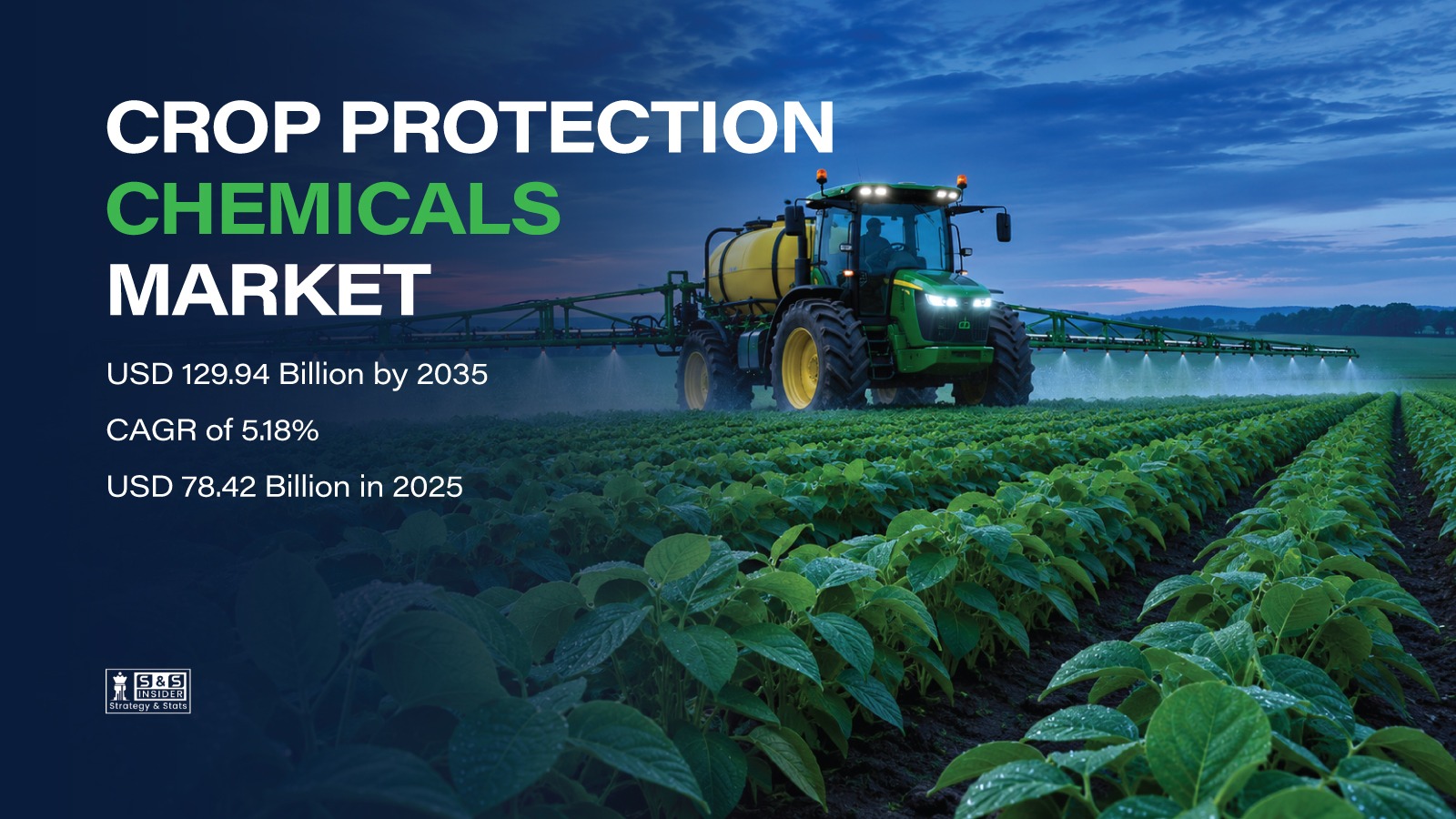
The global crop protection chemicals market was valued at USD 78.42 billion in 2025 and is expected to reach USD 82.48 billion in 2026, climbing to USD 129.94 billion by 2035, registering a CAGR of 5.18% during 2026–2035.
Agricultural producers are facing increasing pressure to maximize output from existing farmland while addressing weed infestations, insect outbreaks, and crop diseases. These challenges are sustaining demand for herbicides, fungicides, insecticides, and specialized crop treatment products.
Meanwhile, biological crop protection technologies, precision spraying equipment, and integrated pest management practices are creating new opportunities for manufacturers. Farmers are increasingly evaluating products based on treatment effectiveness, environmental compatibility, application efficiency, and overall production economics.
Geographically, Latin America represents the largest market, supported by extensive commercial agriculture, while Asia-Pacific is anticipated to experience the fastest growth through 2035.
To Get Detailed Insights on the Crop Protection Chemicals Market – Request a Sample Report
Market Size and Forecast
|
Market Indicator |
Value |
|---|---|
|
Global Market Size, 2025 |
USD 78.42 Billion |
|
Global Market Size, 2026 |
USD 82.48 Billion |
|
Global Market Forecast, 2035 |
USD 129.94 Billion |
|
CAGR, 2026–2035 |
5.18% |
|
Leading Region, 2025 |
Latin America (33.58%) |
|
Fastest-Growing Region |
Asia-Pacific (5.76% CAGR) |
|
Leading Product |
Herbicides (42.17%) |
|
Leading Origin |
Synthetic (83.27%) |
Demand Drivers and Market Constraints
Primary Demand Drivers
- Increasing global food requirements: Population growth and changing dietary patterns are encouraging agricultural producers to improve harvest reliability and productivity.
- Growing pest and disease pressure: Invasive insects, changing rainfall patterns, and resistant weeds are increasing the importance of effective crop management.
- Expansion of commercial farming: Large-scale cultivation of soybeans, corn, rice, cotton, and other commercial crops supports recurring demand for agricultural chemicals.
- Advancement in pesticide formulations: Manufacturers are developing improved active ingredients and application technologies to enhance treatment performance.
- Rising adoption of precision agriculture: Targeted spraying, agricultural drones, and digital crop monitoring can reduce unnecessary applications and improve input efficiency.
- Increasing demand for biological alternatives: Sustainability requirements and residue management concerns are creating opportunities for biological crop protection products.
Potential Growth Constraints
Market expansion faces several challenges, including stricter pesticide registration requirements, environmental concerns, and increasing resistance to established active ingredients.
Raw material price fluctuations, international trade disruptions, and competition from generic agrochemical manufacturers can also affect supplier profitability.
Additionally, the development of new crop protection technologies involves substantial research investment, field testing, and regulatory evaluation. These factors may delay product commercialization and influence market competition.
Market Segmentation and Demand Structure
Herbicides Lead with 42.17% Share; Insecticides to Grow at 6.04% CAGR
Herbicides accounted for approximately 42.17% of global crop protection chemicals revenue in 2025, making them the largest product category.
Weed management remains essential for commercial agriculture because uncontrolled vegetation competes with cultivated crops for water, nutrients, and sunlight. Extensive soybean, corn, wheat, and rice production supports consistent herbicide consumption across major agricultural economies.
Insecticides are projected to grow at the fastest rate, registering a CAGR of 6.04% during 2026–2035.
Expanding pest populations, invasive insect species, and changing climatic conditions are encouraging farmers to strengthen insect management programs.
Manufacturers developing targeted formulations and new modes of action may benefit from increasing demand for effective insect control solutions.
Current trend: Greater emphasis on selective crop protection, resistance management, and precision application.
Synthetic Products Dominate with 83.27% Share; Biological Products Expand at 9.87% CAGR
Synthetic crop protection chemicals represented approximately 83.27% of global market revenue in 2025.
Their established distribution networks, widespread availability, predictable performance, and application versatility support continued demand among commercial farmers.
However, biological crop protection products are projected to register the fastest growth, at a CAGR of 9.87% through 2035.
Increasing demand for sustainable agricultural practices is encouraging interest in microbial pesticides, botanical formulations, and other biologically derived pest management solutions.
These products offer opportunities for manufacturers serving organic farming, export-oriented horticulture, and integrated pest management programs.
Biological formulations are also being incorporated into conventional treatment strategies, creating opportunities for complementary rather than exclusively competing products.
Current trend: Expanding commercialization of biological crop protection alongside established synthetic solutions.
Cereals and Grains Hold 42.38% Share; Fruits and Vegetables Show Stronger Growth
Cereals and grains accounted for approximately 42.38% of global crop protection chemicals demand in 2025.
Wheat, rice, corn, and other staple crops require reliable protection against weeds, fungal infections, and insect damage. Their extensive cultivation supports substantial recurring demand.
The fruits and vegetables segment is expected to grow faster, recording a CAGR of 6.31% during 2026–2035.
High-value horticultural crops frequently require carefully managed protection programs to maintain product appearance, quality, and marketability.
Increasing fresh produce consumption, export standards, and investment in commercial horticulture are supporting demand for specialized crop protection products.
Current trend: Increasing use of crop-specific formulations and integrated protection programs for high-value agricultural produce.
Foliar Spray Leads with 44.86% Share; Seed Treatment to Grow at 6.88% CAGR
Foliar spray represented approximately 44.86% of the market in 2025, remaining the leading application method.
Its versatility, established equipment availability, and suitability for multiple crop protection categories support widespread adoption.
Seed treatment is projected to register the fastest growth, at a CAGR of 6.88% through 2035.
Treating seeds before planting allows growers to protect developing crops against selected early-stage pests and soilborne diseases.
The increasing commercialization of premium seeds, advanced coating technologies, and integrated seed protection systems is creating additional demand.
Current trend: Growing preference for preventive crop protection and application methods that improve treatment efficiency.
Regional Market Dynamics
Latin America Leads with 33.58% Market Share
Latin America accounted for approximately 33.58% of global revenue in 2025, establishing its position as the largest regional crop protection chemicals market.
Brazil represents 61.39% of regional demand, supported by extensive soybean, corn, sugarcane, and cotton cultivation.
Large commercial farms, multiple cropping cycles, and export-oriented agriculture create substantial requirements for herbicides, fungicides, and insecticides.
Argentina, Mexico, and other agricultural economies contribute additional demand through grain cultivation and high-value crop production.
The region is expected to remain a major consumption center through 2035.
Asia-Pacific: Fastest-Growing Region at 5.76% CAGR
Asia-Pacific accounted for 28.34% of the global market in 2025 and is projected to grow at a CAGR of 5.76% during 2026–2035.
China represents 33.81% of regional demand, supported by its agricultural production and agrochemical manufacturing capabilities.
India, Indonesia, Vietnam, and Thailand present additional growth opportunities as farmers adopt improved crop management products.
Increasing agricultural productivity requirements, expanding commercial horticulture, and improved access to farming technologies are supporting regional market development.
Europe: Focus on Advanced and Sustainable Crop Protection
Europe represented approximately 18.93% of the global market in 2025.
The regional market is shaped by established agricultural production, strict regulatory requirements, and increasing attention to pesticide-related environmental impacts.
Germany accounts for 16.43% of European demand, while France, Spain, Italy, and Poland also contribute through cereals, orchards, vineyards, and specialty crops.
Manufacturers are emphasizing lower-dose formulations, biological alternatives, and improved application technologies to address changing regulatory and agricultural requirements.
North America: Precision Agriculture Supports Demand
North America accounted for approximately 16.58% of the global market in 2025.
The United States crop protection chemicals market was valued at USD 9.93 billion in 2025 and is forecast to grow at a CAGR of 5.64% during 2026–2035.
Large-scale corn, soybean, wheat, and cotton cultivation supports significant demand for chemical crop protection.
Precision agriculture, resistance management, and advanced seed treatments are increasingly influencing purchasing decisions.
Middle East & Africa: Emerging Agricultural Opportunities
The Middle East & Africa accounted for approximately 2.57% of global market revenue in 2025.
South Africa represents 27.40% of regional demand, supported by commercial agriculture and export-oriented horticulture.
Investment in agricultural infrastructure, irrigation, and improved crop management practices may create opportunities for manufacturers.
However, limited farmer financing, distribution constraints, and uneven access to modern agricultural inputs remain important challenges.
Competitive Landscape
The global crop protection chemicals market includes established multinational agrochemical manufacturers and regional formulation specialists.
Major participants include Bayer AG, Syngenta Group, BASF SE, Corteva, Inc., FMC Corporation, UPL Limited, ADAMA Ltd., and American Vanguard Corporation.
Competition increasingly centers on research and development capabilities, differentiated active ingredients, regulatory approvals, biological product portfolios, and distribution strength.
Manufacturers are also expanding collaborations involving precision agriculture, digital advisory platforms, and advanced formulation technologies.
Companies offering effective resistance management solutions and crop-specific products are positioned to address evolving agricultural requirements.
Market Outlook (2026–2035)
The SNS Insider baseline forecast indicates that the global crop protection chemicals market will expand to USD 129.94 billion by 2035, supported by increasing agricultural productivity requirements and continued investment in crop health management.
Conventional herbicides and other synthetic products are expected to remain central to commercial farming, while biological solutions offer stronger growth potential as sustainability considerations influence purchasing decisions.
Precision application technologies, digital monitoring systems, and preventive seed treatments may further reshape product development and distribution strategies.
Regional growth will remain uneven, with Latin America maintaining a substantial market presence and Asia-Pacific providing attractive expansion opportunities.
Regulatory scrutiny, pesticide resistance, production costs, and environmental considerations will continue to influence industry investment.
Overall, the crop protection chemicals market is positioned for sustained expansion through 2035, with long-term competitiveness increasingly dependent on product innovation, effective pest management, sustainable agricultural practices, and reliable distribution capabilities.
About the Author

Get in touch




