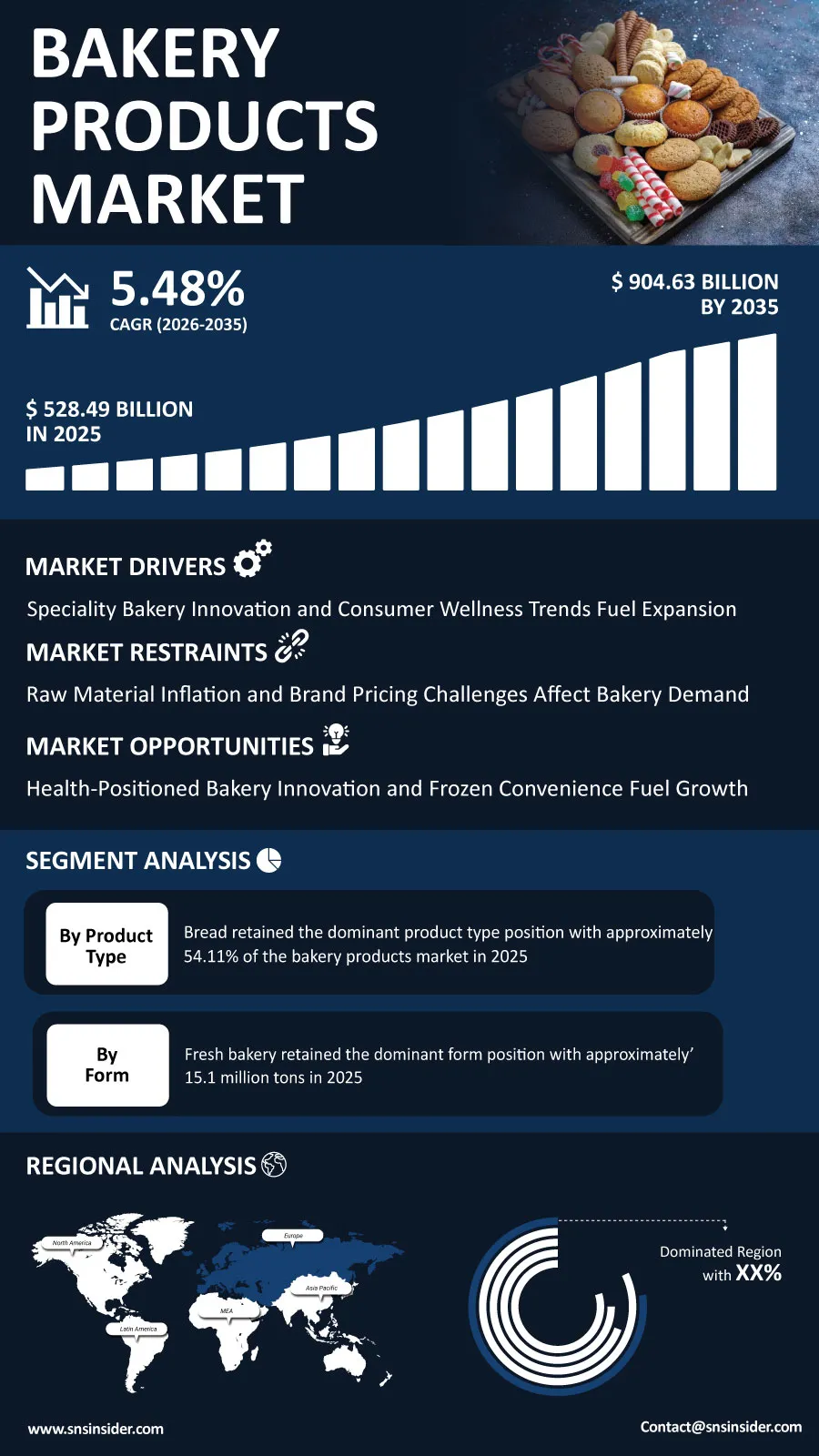
The global market for bakery products is set to enter another cycle of growth driven by changing consumer eating trends, preference for premium food products, and consistent innovations in product development. “According to a recent study by SNS Insider, the global Bakery Products Market size valued at USD 528.49 Billion in 2025, is anticipated to grow to USD 904.63 Billion by 2035, registering a CAGR of 5.48% over the 2026–2035 forecast period.”
The continuing influence of changing lifestyles, rapid urbanization and the growing consumer emphasis on convenient meal solutions continues to drive bakery consumption across the globe. An increase in the preference of consumers towards products which offer taste, nutrition and convenience is compelling manufacturers to launch healthier formulations, premium ingredients and innovative flavors especially through bread, cakes, pastries, biscuits and specialty baked goods.
They are also investing in on-automated production innovations, sustainable packaging and digital supply chain capabilities to boost operational efficiencies while responding to evolving consumer preferences. Such all developments will likely establish a sustainable length know-how which allow him/her to boost market boom inside retail, foodservice and on-line distribution channels.
To Get Detailed Insights on the Bakery Products Market – Request a Sample Report
Consumer Wellness and Premium Food Trends Create New Growth Opportunities
The bakery market has undergone a rapid transformation through new consumer preferences for health-related purchasing behavior, especially if they include whole grains, high fiber ingredients and reduced sugar and/or clean-label products. Meanwhile, global consumers are eating fewer calories from sugars but still fat and wheat flour intake is high Figure 1, through the increase in gluten-free, plant-based,and fortified bakery products.
Premium bakery goods are also gaining ground as consumers seek better scoring for artisanal quality, authentic ingredients and differentiated taste experiences. The expanding café culture, burgeoning specialty bakeries and premium retail formats are furnishing manufacturers new possibilities to launch value-added products with higher gross margins.
These include digital grocery platforms and direct-to-consumer delivery solutions, which enhance product accessibility and allow brands to penetrate wider customer bases outside of traditional retail channels.
Key Market Insights Reflect Changing Consumer Preferences
By product, in 2025, Bread accounted for 54.11% of market revenue due to its daily use in the various households around the world on the backs of its ubiquitous nature. Cakes & Pastries are projected to register the highest growth until 2035 as premium bakery experiences and café culture continue their global expansion.
In terms of ingredient by type, Wheat Flour continues to steer as the leading ingredient since most baked products rely on it because of its functional importance, and in the future OATS are projected to achieve the most growth driven by increasing awareness among consumers about nutritious and functional food options.
Consistent with its category, Fresh Bakery continued to be a market leader in 2025, driven by strong demand for fresh-prepared products. Due to convenience, longer shelf life and increasing demand for ready-to-bake solutions, packaged and frozen bakery products are anticipated to expand at the fastest pace.
The largest share of Market demand for Olive oil was accounted by Retail, followed by Household Consumption end use segment; acceleration in growth will be through Foodservice and HoReCa as hospitality, cafés and quick-service restaurants expand globally.
The main channel of distribution, Supermarkets and Hypermarkets generated the biggest revenue among the others, by forming 54.61% share in total market revenue in 2025. The Online Retail segment is forecast to experience the fastest growth during the period analysis, primarily due to increased adoption of e-commerce and digital grocery platforms.
Technology and Product Innovation Continue Transforming the Bakery Industry
Innovation continues to be a major trend in the bakery products sector, with manufacturers striving for an appropriate balance between providing nutritional benefits whilst maintaining acceptable product quality and ease of preparation. Producers are using it to gain consistency and reduce production waste through investments in intelligent manufacturing systems, precision baking technologies, and automated quality monitoring solutions.
Meanwhile, however, sustainability initiatives like responsible sourcing, sustainable packaging and transparency around ingredients have become increasingly itemized purchase criteria. Several companies have not only increased their research and development activities but are also launching products to meet consumer preferences in health and nutrition according to the changing dietary patterns, keeping taste, texture, and freshness intact.
With the incorporation of digital technologies into production and distribution, this is enabling better inventory management, supply chain visibility and product availability supporting even more visible operational performance across the value chain.
Europe Accounted for the Largest Market Share in 2025; Asia Pacific Forecast to Expand at the Fastest CAGR by 2035
In 2025, Europe continued to be the leading regional market, thanks to its deep-rooted bakery traditions and well-developed food industry infrastructure alongside high consumer demand for premium baked goods. Artisan baking, healthier product formulation, and premium retail across Germany, France, Italy and the UK perpetuate innovation in this category.
With rising per capita income, growing urban population and changing food consumption pattern raising the demand for bakery in countries such as China, India, Southeast Asia and other developing economies of the region is expected to record fastest growth in terms of revenue generated from the bakery over the forecasted period 2023-2035. There has further support of regional market development by the expanding café culture and growing organized retail infrastructure.
North America still remains a key revenue region, benefited from product innovativeness and high consumer interest in healthy bakery products. On the other hand, steady growth is happening in Latin America and the Middle East & Africa primarily driven by retail modernization/urbanization and premium food consumption.
Industry Participants Expand Innovation and Global Market Presence
The competition within the bakery products industry is constantly growing as producers try to enhance their product range and become more efficient in production, as well as develop healthier products according to the changing consumer trends. At the same time, firms aim to engage in sustainability projects, digitalization, and launch new premium products.
Key companies operating in the global Bakery Products Market include Grupo Bimbo S.A.B. de C.V., Mondelez International Inc., General Mills Inc., Flowers Foods Inc., Britannia Industries Ltd., Parle Products Pvt. Ltd., ITC Limited, Campbell Soup Company (Pepperidge Farm), Hostess Brands Inc., Puratos Group, Associated British Foods plc (Allied Bakeries), Kellogg Company, Aryzta AG, Dawn Food Products Inc., Rich Products Corporation, Harry Brot GmbH, Mestemacher GmbH, Finsbury Food Group plc, Lantmännen Unibake, and Barilla Group.
An SNS Insider analyst Santosh Bhul commented, “The bakery products industry continues to evolve beyond traditional staple foods as consumers increasingly value nutrition, premium quality, convenience, and sustainability. Manufacturers investing in product innovation, smart manufacturing technologies, and diversified distribution strategies will be well positioned to capitalize on long-term growth opportunities across global markets.”
About the Author

Get in touch