
The global compounding pharmacies industry is moving into a new phase of commercial growth. More healthcare providers now see custom medicines as a practical answer when standard products fall short. Some patients need a dose that is not sold commercially. Others cannot tolerate certain ingredients, and some need a medicine that is in short supply. For pharmacies, hospitals, and outsourcing firms, these gaps create a steady and growing source of demand.
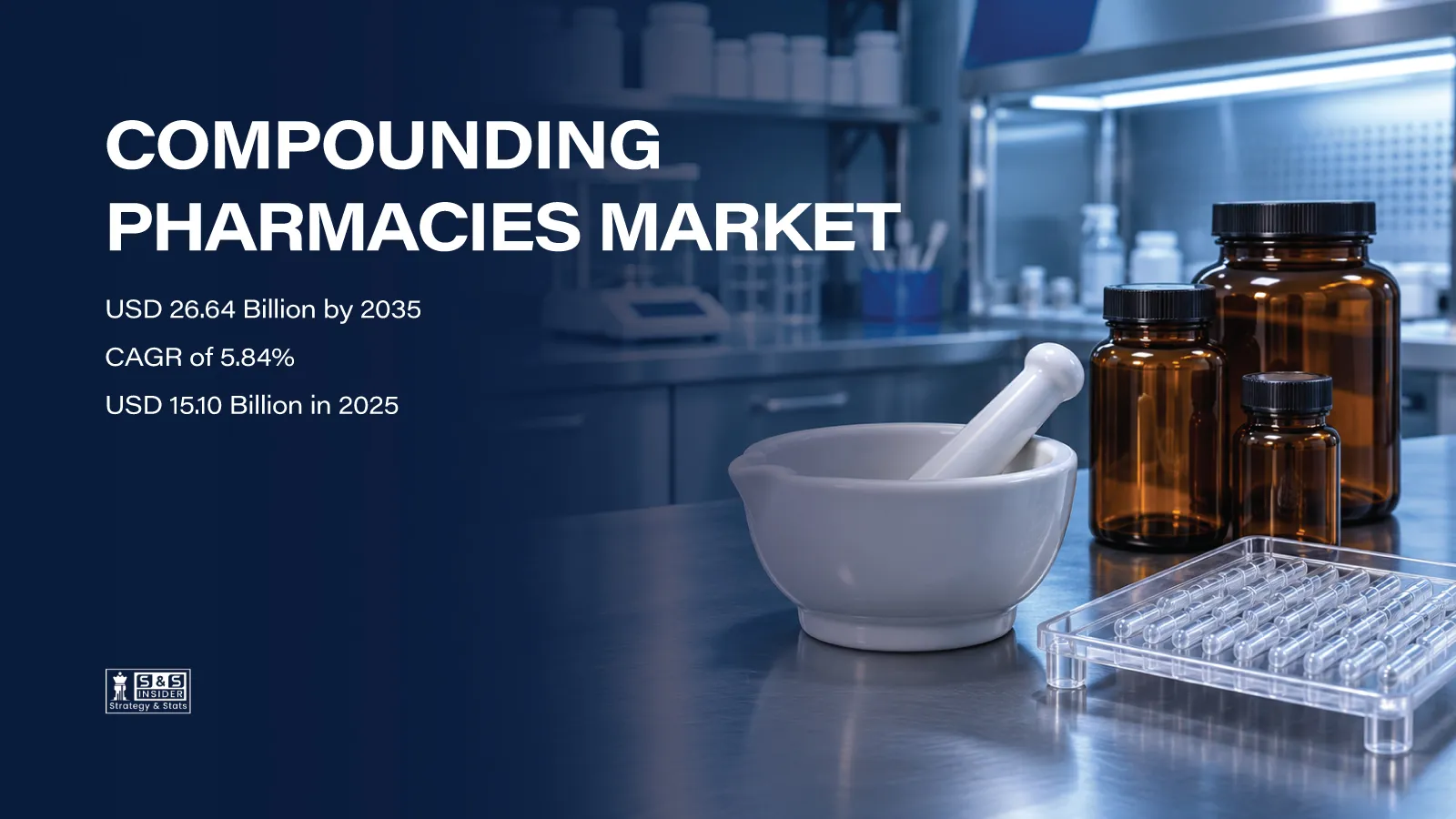
According to a recent study by SNS Insider, the global Compounding Pharmacies Market size was valued at USD 15.10 Billion in 2025 and is anticipated to reach USD 26.64 Billion by 2035, registering a CAGR of 5.84% over the forecast period 2026–2035. The market is estimated at USD 15.98 Billion in 2026.
Supply Gaps Are Turning Compounding into a Continuity Service for Healthcare Providers
When a commercial drug goes out of stock, hospitals and clinics risk delayed treatment and disrupted care schedules. A shortage also adds work for procurement teams, which must find substitutes quickly. Compounding pharmacies can fill these gaps by preparing an equivalent product close to the point of care.
Therefore, providers are looking to compounding partners as part of their supply planning, rather than a last-minute option. Reliable availability of prepared medicines helps protect treatment timelines and patient outcomes.
To Get Detailed Insights on the Compounding Pharmacies Market – Request a Sample Report
Patient-Specific Care Opens Doors Beyond Standard Dispensing
Pharmacies are going beyond dispensing as demand for customized therapy grows. Prescribers want doses, strengths and delivery formats that are suitable for individual patients including children, older adults and people with allergies.
It helps pharmacies develop stronger relationships with doctors and specialty clinics. Pharmacies that provide formulation advice and have close working relationships with prescribers can become a regular component of the care plan.
Recurring revenue can be created, and patients retained, through prescriber partnerships, repeat-prescription programs and specialty care services.
Compounding Pharmacies Market Segmentation Highlights
By Therapeutic Area
Pain management held the largest market share of 33.60% in 2025, reflecting steady demand for custom analgesic preparations. Hormone replacement therapy is expected to register the fastest CAGR of 7.52%. This growth creates opportunities for pharmacies that can serve patients on individualized hormone regimens.
By Sterility
Sterile preparations held 58.40% market share in 2025, owing to demand for ready to administer products in hospitals. The non-sterile formulation is expected to register a CAGR of 6.38% and opportunities exist in community pharmacy and outpatient care.
By Dosage Form
The oral segment accounted for the largest market share of 37.60% in 2025. The parenteral segment is expected to register the fastest CAGR of 7.28%, driven by growth in hospital outsourcing and infusion services.
North America Leads with 42.30% Market Share as Asia Pacific Advances at 7.24% CAGR
North America, in 2025, held the highest revenue share of 42.30% in the Compounding Pharmacies Market. The U.S. market is valued at USD 5.49 Billion in 2025 and is projected to grow at a 5.46% CAGR. The area has good opportunities for compounders serving hospital networks, specialty clinics and long term care facilities. These purchasing decisions are based on some important factors such as regulatory compliance, quality assurance and reliable delivery.
Europe held a 26.60% share of the global market in 2025, followed by Latin America at 4.60% and Middle East & Africa at 3.80%. Opportunities in these regions will depend on pharmacy regulations, hospital procurement practices, and access to specialist compounding skills.
Outsourced Sterile Preparation Could Unlock New Commercial Opportunities
Many hospitals that make sterile products in-house are struggling with staff shortages, high facility costs and strict cleanroom regulations. They can outsource these preparations to licensed facilities to manage costs and reduce compliance risk.
Compounders can expand their customer base by offering batch preparation, ready-to-use syringes, and scheduled delivery programs for hospital pharmacies and ambulatory surgery centers.
These models can also generate recurring revenue through service contracts, inventory management support, and preferred supplier agreements.
Competitive Outlook: Quality and Compliance to Become Key Differentiators
In the compounding pharmacies industry, trust as well as price will likely drive future competition. Providers seeking partners will increasingly look for quality systems, clean inspection records and clear testing documentation.
Pharmacies that combine strong compliance with responsive service, broad formulation capabilities, and dependable logistics may hold a stronger market position. Partnerships with health systems, specialty clinics, and telehealth platforms can also help expand commercial reach.
Compounding Pharmacies Market Outlook Through 2035
Compounding pharmacies have the opportunity to play a greater role in drug supply continuity, personalized treatment and hospital pharmacy operations over the next decade. The compounders that can demonstrate consistent quality, regulatory readiness and measurable value to providers will be best positioned to capture the new demand.
About the Author

Get in touch




