
The global Sanger sequencing industry is entering a phase of steady commercial growth. Clinical and research teams need fast, reliable answers on specific genes. They often do not need a full genome to get them. For targeted questions, a single accurate read gives labs a clear result without the cost and data load of large-scale methods. This keeps Sanger sequencing central to daily lab budgets, even as other sequencing technologies grow.
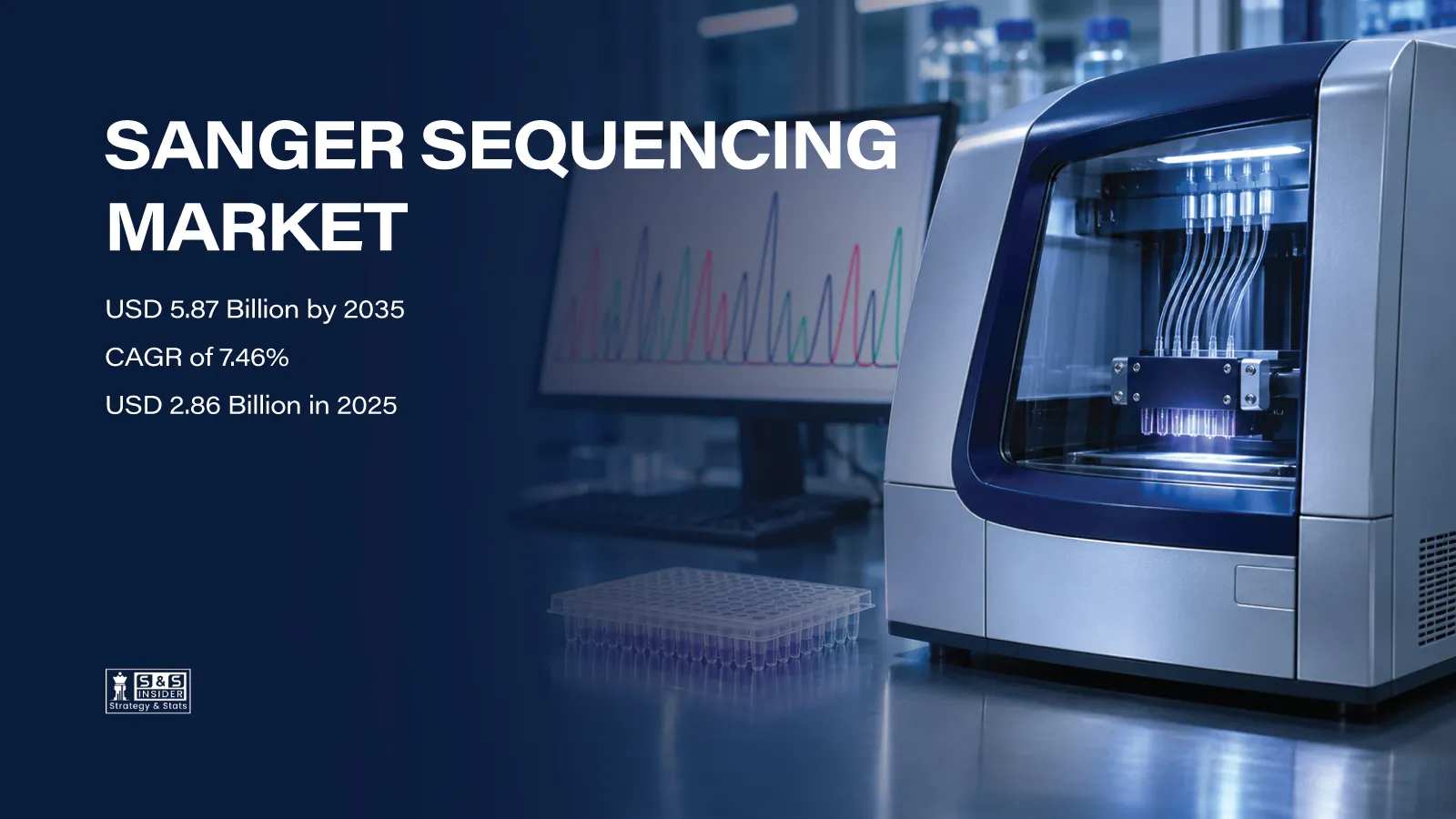
According to a recent study by SNS Insider, the global Sanger Sequencing Market size was valued at USD 2.86 Billion in 2025 and is anticipated to reach USD 5.87 Billion by 2035, registering a CAGR of 7.46% over the forecast period 2026–2035. The market is estimated at USD 3.07 Billion in 2026.
Result Confidence Is Becoming a Purchasing Priority
A wrong genetic result can lead to repeat testing, delayed treatment decisions, and liability for the lab that reported it. For this reason, many labs add a second, independent check before they release important findings. Sanger sequencing fills this role because its results are simple to read and easy to defend.
Hospital labs, reference labs, and research cores treat this confirmation step as a form of quality insurance. Each confirmed result lowers the chance of costly errors later in the care or research process.
Suppliers that position their products as tools for result confidence, rather than as basic lab supplies, can strengthen their case with lab directors and procurement teams.
To Get Detailed Insights on the Sanger Sequencing Market – Request a Sample Report
In-House Testing Creates Room for Workflow-Based Offerings
More labs want to perform routine genetic testing in-house instead of sending out specimens. In-house testing allows them to control turnaround time, sample handling and cost per test. This also means labs need complete, ready-to-go workflows.
This shift opens doors for suppliers that can bundle instruments, validated reagent kits, analysis software, and staff training into a single package. Labs gain faster setup, and suppliers gain a longer and deeper customer relationship.
Service contracts, reagent supply agreements, software updates, and method validation support can add recurring revenue beyond the first instrument sale.
Sanger Sequencing Market Segmentation Highlights
By Product
The largest share of the market was held by reagents and consumables accounting for 43.12% in 2025 due to repeat purchases associated with each sequencing run. The instruments segment is expected to witness the highest CAGR of 8.37%. It presents opportunities for suppliers who provide compact and easy-to-run systems for labs that are building in-house capacity.
By Application
Clinical diagnostics accounted for 39.84% of the market in 2025, as labs depend on targeted sequencing for confirmation work. The pharmaceuticals segment is anticipated to grow at the highest CAGR of 8.93%, with opportunities in drug response testing, cell line checks, and therapy quality control.
By End User
In 2025, academic and research institutes held the largest market share of 38.21%. The clinical laboratories are expected to register a CAGR of 8.64% fueled by commercial opportunities like on-site testing, quicker reporting, and increased test volumes.
North America Leads with 41.27% Market Share as Asia Pacific Advances at 9.12% CAGR
North America dominated the Sanger Sequencing Market accounting for the highest revenue share of 41.27% in 2025. The U.S. market is valued at USD 992.06 million in 2025 and is projected to grow at a CAGR of 7.18%. The area provides good opportunities for suppliers to hospital networks, reference labs and drug developers. In this region, buyers say proven performance, service responsiveness and regulatory readiness are the most important factors.
Asia Pacific contributed 22.36% revenue share in 2025 and is expected to witness the fastest CAGR of 9.12% during 2026-2035. Increasing demand for affordable instruments, local reagent supply and regional technical support is being driven by increasing clinical testing capacity and wider research funding.
Europe held a 26.84% share of the global market in 2025, followed by Latin America at 4.93% and the Middle East & Africa at 4.60%. Opportunities in these regions will depend on healthcare budgets, laboratory regulation, and the growth of local genetic testing programs.
Sequencing-as-a-Service Could Widen the Customer Base
Many small labs, startups, and academic groups do not run enough samples to justify buying their own instruments. Outsourced sequencing services, overnight sample processing, and pay-per-sample pricing give these users access to reliable results without capital spending.
Instrument makers can reach this group indirectly by supplying service providers and core facilities. This extends market reach while keeping steady demand for reagents and consumables.
These models also support recurring revenue through bulk reagent contracts, instrument maintenance, and data analysis tools.
Competitive Outlook: Workflow Simplicity to Become a Key Differentiator
The future of competition in the Sanger sequencing business will probably rely on more than just read accuracy. Customers are looking for systems that are easy to set up, require little hands-on time, and interface easily with lab information systems.
Suppliers that combine dependable hardware with validated kits, simple software, and responsive support may hold a stronger position. Partnerships with service labs, distributors, and clinical networks can also help expand commercial reach.
Sanger Sequencing Market Outlook Through 2035
Sanger sequencing will continue to be an integral part of clinical confirmation, quality control in drug development, and targeted research for the next decade. Those suppliers who can demonstrate clear improvements in confidence in results, turnaround time and cost per test will be best placed to win new business in clinical, pharmaceutical and academic settings.
About the Author

Get in touch




