
The global endoscopes industry is gaining momentum as hospitals and surgical centers rethink how they spend money on diagnosis and treatment. Healthcare providers are pressured to see more patients, shorten hospital stays and prevent costly complications. Endoscopic procedures accomplish these goals. As a result, endoscopy equipment is moving from a specialist department purchase to a strategic investment that affects the finances of the whole facility.
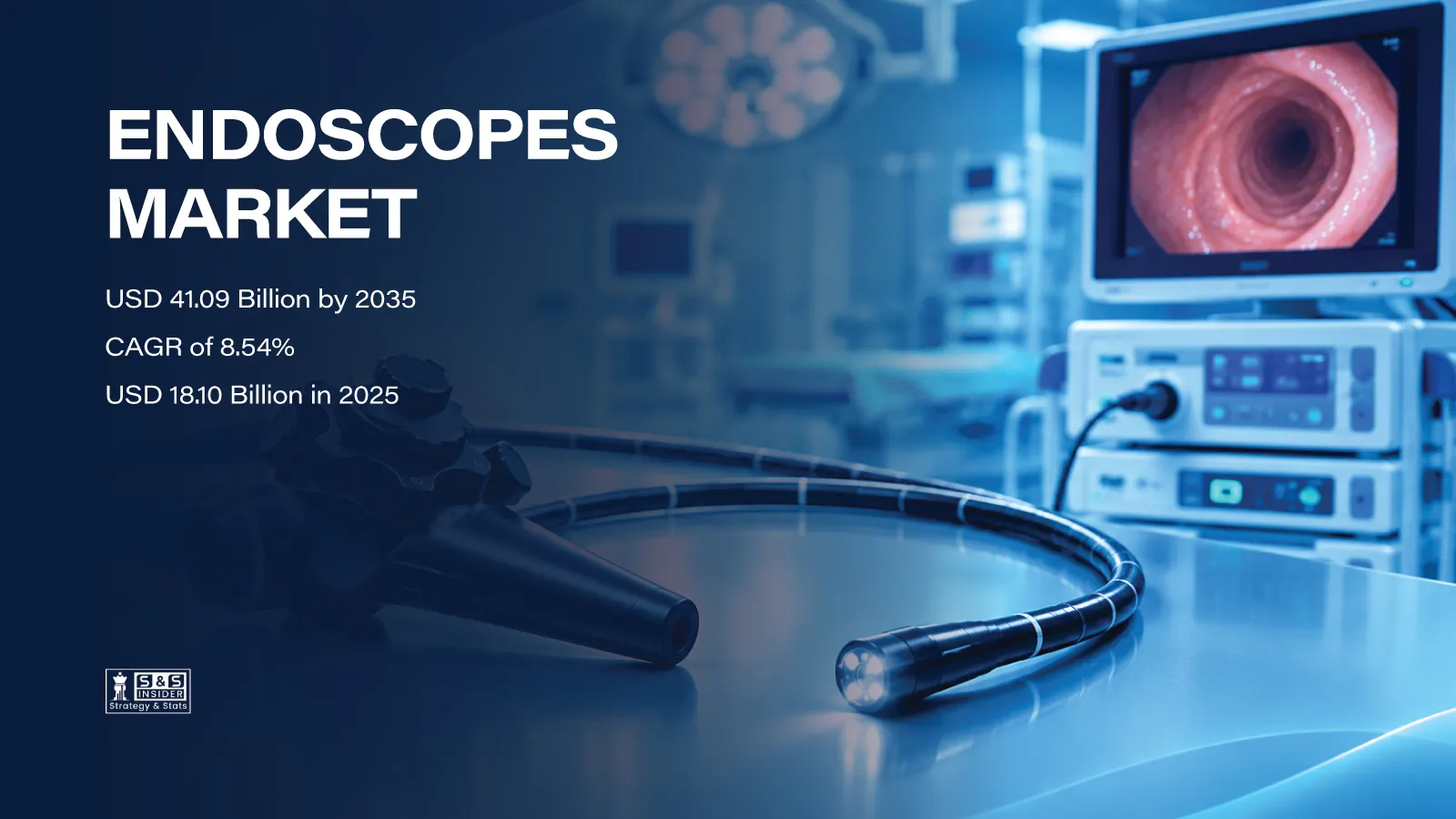
According to a recent study by SNS Insider, the global Endoscopes Market size was valued at USD 18.10 Billion in 2025 and is anticipated to reach USD 41.09 Billion by 2035, registering a CAGR of 8.54% over the forecast period 2026–2035. The market is estimated at USD 19.65 Billion in 2026.
Bed-Day Economics Is Strengthening the Case for Endoscopic Care
Every extra night a patient spends in the hospital adds staffing, bed and support costs. Procedures that let patients go home sooner free up capacity and improve the revenue each bed can earn. Endoscopy supports this shift because many diagnostic and surgical tasks can be done without large incisions.
Hospital finance teams now look at endoscopy systems in terms of the patients processed and the follow-up care avoided. The ability to move cases into same-day settings improves the return on each unit purchased.
Suppliers can present their systems as tools that improve procedure throughput, not just as clinical devices. This puts the purchase discussion in terms of lifetime value rather than the upfront price.
To Get Detailed Insights on the Endoscopes Market – Request a Sample Report
Infection Liability Is Opening a Market for Single-Use Alternatives
Reusable scopes need careful cleaning and tracking after every procedure. Reprocessing failures can lead to patient harm, regulatory scrutiny and legal costs. These risks give providers a financial reason to reconsider how they manage their scope fleets.
Single-use endoscopes remove the reprocessing step for certain procedures. They also reduce repair costs and downtime when a reusable scope is out for service. This opens a recurring-sale model for manufacturers, since each procedure needs a new unit.
Suppliers can build long-term supply agreements, inventory programs and usage-based pricing around single-use products. These arrangements bring steady, predictable revenue.
Endoscopes Market Segmentation Highlights
By Product
Flexible endoscopes held the largest market share of 47.00% in 2025, reflecting their wide use in routine diagnostic work across many specialties. Disposable endoscopes are expected to register the fastest CAGR of about 19.30%, creating opportunities for suppliers that offer cost-effective single-use designs and reliable supply.
By Application
GI endoscopy accounted for 51.00% of the market in 2025, as screening and diagnosis of digestive conditions make up a large share of procedure volume. Urology is expected to be the fastest-growing application, with opportunities in kidney stone treatment, bladder examination and outpatient urology services.
By End User
Hospitals accounted for the largest market share of 48.10% in 2025. Ambulatory surgical centers are expected to be the fastest-growing end user, supported by the shift of planned procedures into lower-cost, same-day settings.
North America Leads with 41.00% Market Share as Asia Pacific Records the Fastest Growth
North America dominated the Endoscopes Market with about 41.00% of revenue in 2025. The U.S. accounted for 84.90% of the regional market, with a value of USD 5.19 Billion in 2025, and is projected to reach USD 12.09 Billion by 2035 at a CAGR of 8.82%. The region offers strong prospects for suppliers that can support large hospital networks with service contracts, training and integration with existing imaging systems.
Asia Pacific is projected to be the fastest-growing region over 2026–2035 and Japan held 36.40% of the regional market in 2025. Expanding hospital capacity and growing procedure volumes are creating demand for affordable systems, local service networks and flexible financing options.
In Europe, Germany accounted for 27.20% of the regional market in 2025. Brazil held 37.10% of Latin America and the UAE contributed 26.30% of the Middle East & Africa. Opportunities in these regions will vary with public health budgets, procurement rules and private hospital growth.
Procedure-Based Pricing Could Widen Access to Advanced Systems
Advanced endoscopy platforms require a large upfront investment, which can slow purchases at smaller hospitals and clinics. Leasing, managed equipment services and pay-per-procedure plans give these buyers a way to adopt new systems without heavy capital spending.
Manufacturers can reach more customers by working with group purchasing organizations, financing partners and independent service providers. This reduces the dependence on traditional capital budget cycles.
These models also support recurring revenue through maintenance contracts, software updates, staff training and consumables.
Competitive Outlook: Workflow Value to Become a Key Differentiator
Future competition in the endoscopes industry is likely to depend on more than image quality. Buyers increasingly want systems that cut procedure time, simplify reprocessing and add AI support to diagnostic decisions.
Suppliers that combine reliable devices with digital tools, responsive service and flexible buying options may hold a stronger position. Partnerships with hospital groups, outpatient center operators and software developers can also help expand market reach.
Endoscopes Market Outlook Through 2035
Over the next decade, endoscopes are set to play a larger role in hospital capacity planning, outpatient care growth and infection control strategy. Suppliers that can show clear gains in patient throughput, cost per procedure and clinical efficiency will be best placed to capture new demand.
About the Author

Get in touch




