
The global in vivo contract research industry is growing steadily as drug developers rethink how they spend on early-stage research. Animal studies take a lot of capital, specialized staff, and regulated facilities. Many sponsors now see these fixed costs as a burden rather than an advantage. Handing in vivo work to specialist partners lets them turn fixed spending into flexible, project-based spending and put more money into the development programs that matter most.
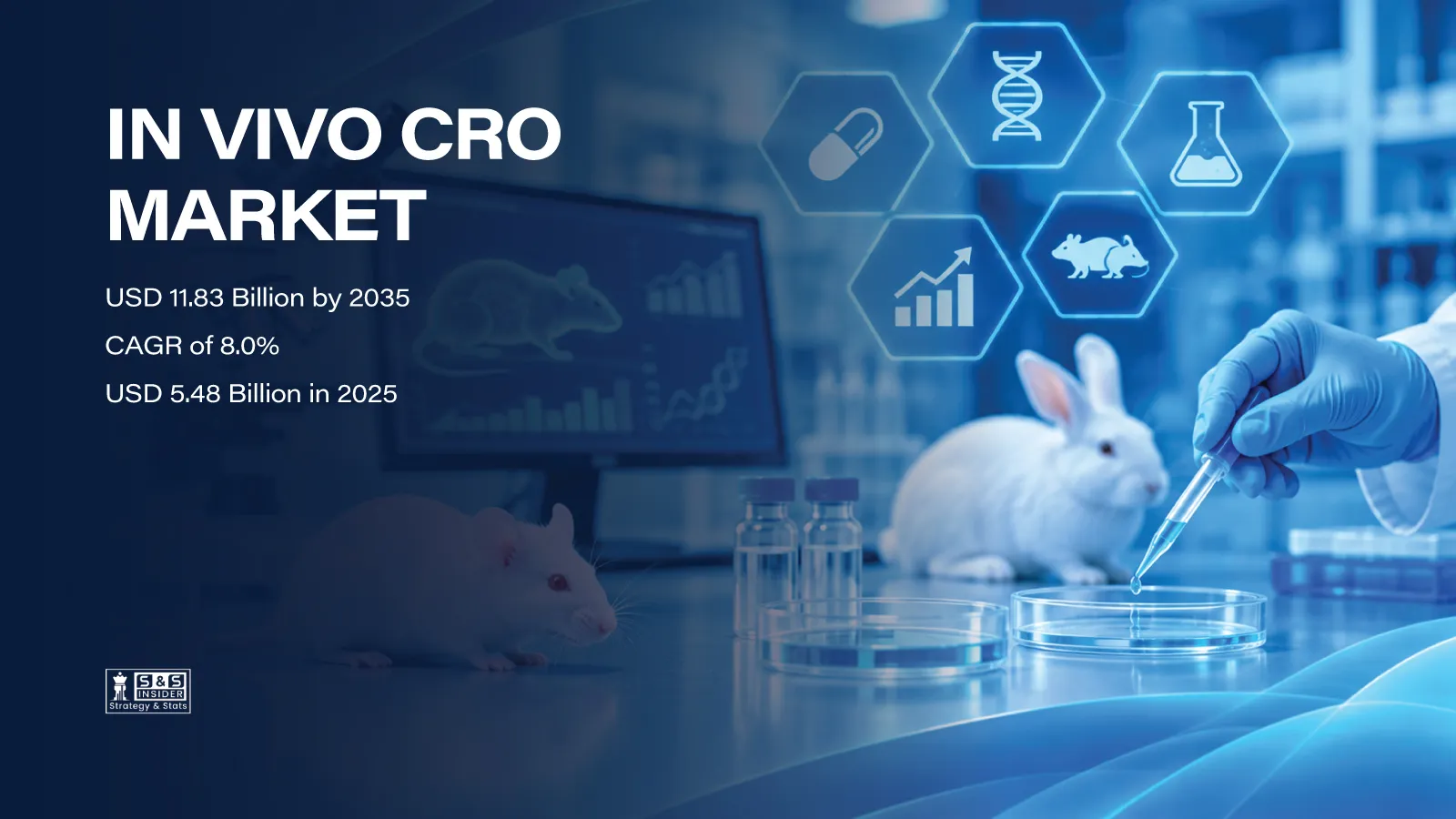
According to a recent study by SNS Insider, the global In Vivo CRO Market size was valued at USD 5.48 Billion in 2025 and is anticipated to reach USD 11.83 Billion by 2035, registering a CAGR of 8.0% over the forecast period 2026–2035. The market is estimated at USD 5.92 Billion in 2026.
Pipeline Risk Management Is Strengthening the Case for Outsourced Studies
Each drug candidate that fails late in development costs the sponsor far more than one dropped at the preclinical stage. Sponsors therefore want early studies that give clear, decision-ready data. Good in vivo data helps them stop weak candidates early and move strong ones forward with more confidence.
Specialist research organizations run many studies across different sponsors, so they build deep experience with models, protocols, and regulatory expectations. Smaller biotech firms in particular gain from this experience, because they cannot afford to build it in-house.
As sponsors judge partners by the quality of decisions their data supports, CROs can position themselves as risk-reduction partners rather than simple service vendors.
To Get Detailed Insights on the In Vivo CRO Market – Request a Sample Report
Study Data Is Becoming a Long-Term Strategic Asset
The value of an in vivo study does not end with a single regulatory filing. When results are stored in structured, searchable formats, sponsors can reuse them to compare candidates, refine dosing plans, and design later programs.
This creates room for CROs to offer data platforms, digital pathology tools, and integrated reporting systems alongside their study services. These tools help sponsors get more value from each study they fund.
Data hosting, analysis subscriptions, and long-term program partnerships can bring in repeat revenue and deepen client relationships beyond single contracts.
In Vivo CRO Market Segmentation Highlights
By Model Type
Rodent-based models held the largest market share of about 80% in 2025, reflecting their established role in early safety and efficacy testing. Non-rodent models are gaining ground, creating opportunities for providers with specialized facilities and trained staff for larger animal studies.
By Modality
Small molecules accounted for the largest share in 2025, supported by the large number of conventional drug programs in development. Cell and gene therapy is the fastest-growing modality, opening opportunities for CROs that can handle complex biodistribution, persistence and long-term safety studies.
By Indication
Oncology led the market in 2025 and accounts for about 25% of in vivo CRO study volume. Central nervous system and autoimmune or inflammatory conditions are growing segments, with opportunities in specialized disease models and behavioral testing capabilities.
By GLP Type
GLP toxicology studies held the leading position in 2025, as regulatory submissions still require compliant safety data. Non-GLP studies are expanding, driven by sponsors who want quick, lower-cost screening data before committing to full regulatory programs.
North America Leads with About 49% Market Share as Asia Pacific Emerges as the Fastest-Growing Region
North America dominated the In Vivo CRO Market with a revenue share of about 49% in 2025. The U.S. market was valued at USD 2.69 Billion in 2025 and is projected to reach USD 5.80 Billion by 2035, growing at a CAGR of 8.0%. The U.S. accounted for about 91% of regional revenue. The region offers strong prospects for providers that serve large pharmaceutical sponsors and venture-backed biotech firms. In this region, regulatory track record, study turnaround time, and scientific depth shape partner selection.
Asia Pacific is projected to record the fastest growth over the forecast period. China held about 42% of the regional market, while India is expected to post the highest country-level growth rate. Lower operating costs and growing research capacity are creating demand for cost-efficient study services and regional partnership models.
Europe held a significant share of the global market in 2025, with the United Kingdom contributing about 28% of regional revenue. In Latin America, Brazil accounted for about 50% of regional revenue, while Israel held about 40% of the Middle East & Africa market. Opportunities in these regions will depend on research funding, regulatory alignment and the growth of local biotech activity.
Flexible Engagement Models Could Unlock New Client Segments
Many early-stage biotech companies run on limited funding and uncertain timelines. Long, fixed-scope contracts do not always suit their needs. Milestone-based pricing, modular study packages and capacity reservation agreements give these clients a more flexible way to access in vivo services.
CROs can widen their client base by working with venture investors, biotech incubators, and academic spin-out programs. These channels give access to new sponsors at an early stage of their growth.
Such models can also support recurring income through multi-study agreements, program-level partnerships, and follow-on regulatory work.
Competitive Outlook: Scientific Depth and Speed to Become Key Differentiators
Future competition in the in vivo CRO industry is likely to depend on more than facility size and price. Sponsors increasingly want partners who can design better studies, deliver results faster and help interpret data for development decisions.
Providers that combine strong scientific expertise with reliable timelines, transparent communication, and flexible contracts may hold a stronger competitive position. Partnerships with biotech investors, academic centers and technology providers can also support commercial growth.
In Vivo CRO Market Outlook Through 2035
Over the next decade, in vivo CROs are set to play a larger role in drug development planning, pipeline risk control, and regulatory readiness. Providers that can show clear gains in data quality, study speed, and development efficiency will be best placed to capture new demand across oncology, CNS, autoimmune, and advanced therapy programs.
About the Author

Get in touch




