
The global personalized retail nutrition and wellness Industry is about to experience substantial business growth. People now want products which suit their body and lifestyle and not generalized recommendations which apply to all. The retailers, healthcare providers, and brands realize that this is an opportunity for them to create long-term connections with their customers rather than sell them one-off products.
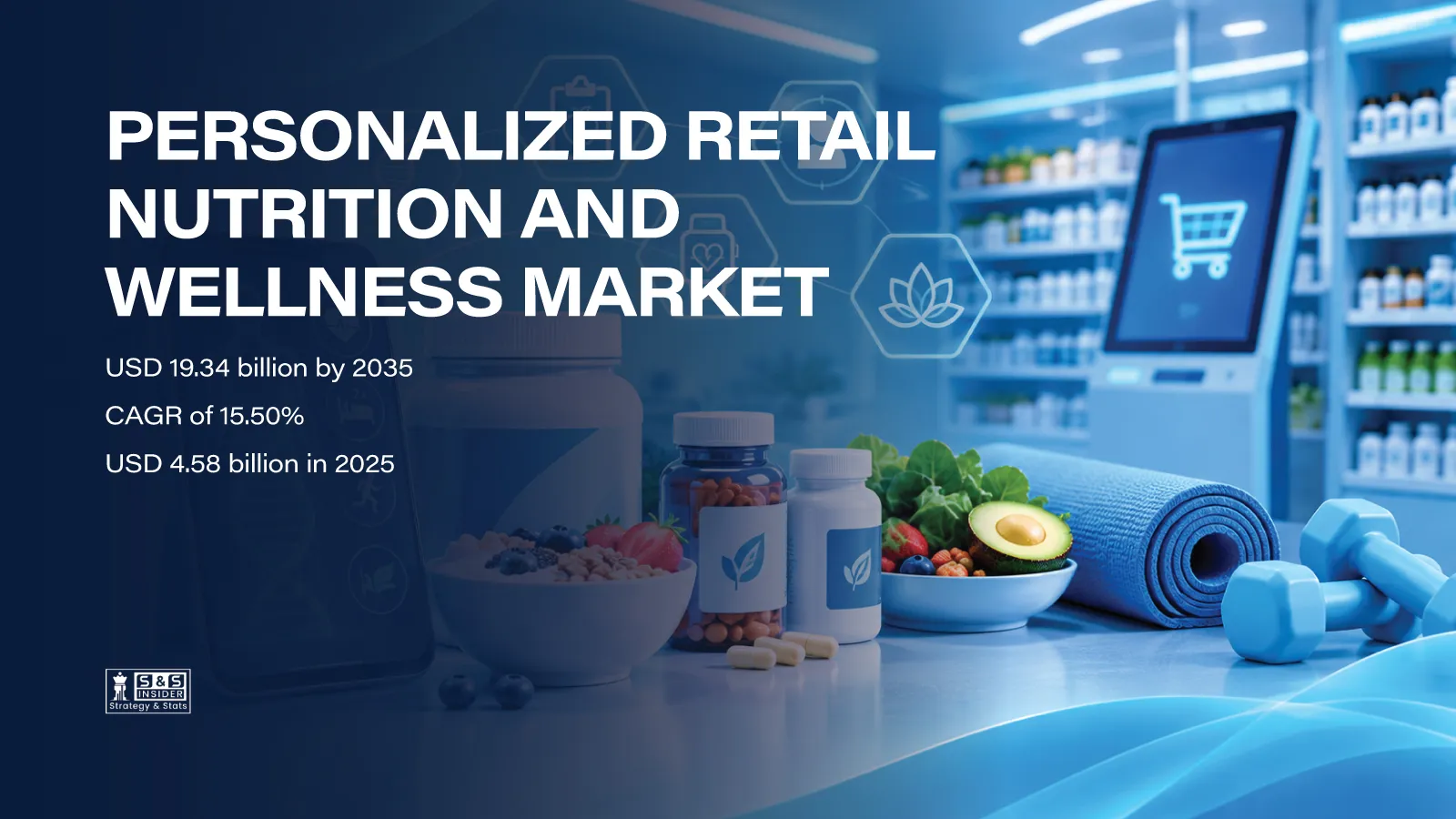
According to a recent study by SNS Insider, the global Personalized Retail Nutrition and Wellness Market size was valued at USD 4.58 Billion in 2025 and is anticipated to reach USD 19.34 Billion by 2035, registering a CAGR of 15.50% over the forecast period 2026–2035. The market is estimated at USD 5.29 Billion in 2026.
Customer Retention Is Becoming the Core Business Case
Personalized nutrition changes how retailers earn revenue. A standard product sale ends at checkout. A personal plan, by contrast, gives the customer a reason to come back for refills, progress checks, and plan updates.
This repeat contact raises the lifetime value of each customer. It also lowers the cost of winning new buyers, since satisfied users tend to stay with a service that already knows their needs.
Brands that can show steady retention and higher basket sizes are in a stronger position to win retail partnerships and investor support.
To Get Detailed Insights on the Personalized Retail Nutrition and Wellness Market – Request a Sample Report
Health Data Opens Revenue Streams Beyond Product Sales
Each assessment, test result, and purchase record adds to a clearer picture of what a customer needs. When it is handled with consent and strong privacy controls, this information becomes a valuable business asset.
Companies can use it to improve product development, adjust inventory to local demand, and design targeted wellness programs. This gives technology providers room to offer analytics tools, recommendation engines and data platforms to retailers that lack in-house capability.
Subscription plans, coaching services, app memberships and partner programs with insurers or employers could add further sources of recurring income.
Personalized Retail Nutrition and Wellness Market Segmentation Highlights
By Type
Repeat Recommendation held the largest market share of about 46.36% in 2025, reflecting the commercial value of ongoing, refill-based customer plans. Personalized Testing is expected to register the fastest CAGR of about 16.28% through 2035, creating opportunities for at-home test kits, lab partnerships, and test-linked product bundles.
By End-User
Hospitals & Clinics accounted for about 64.13% of the market in 2025, because clinical settings give personal diet plans credibility and professional oversight. Fitness centers offer a growing commercial channel, where nutrition plans can be bundled with memberships and training programs.
North America Leads with 41.43% Market Share as Asia Pacific Advances at 16.69% CAGR
North America dominated the Personalized Retail Nutrition and Wellness Market with the highest revenue share of 41.43% in 2025. The U.S. market was valued at USD 1.90 Billion in 2025 and is projected to reach USD 8.02 Billion by 2035, at a CAGR of 14.12%. The region offers attractive prospects for suppliers that serve health systems, large retail chains, and employer wellness programs. Clinical evidence, data security, and clear pricing weigh heavily in buyer decisions here.
Asia Pacific is projected to record the fastest CAGR of 16.69% over the forecast period. Rising urban incomes, high smartphone use, and fast-growing online retail are creating demand for affordable test kits, app-based plans, and products made for local diets.
Europe, Latin America, and the Middle East & Africa present different opportunities, which will depend on health policy, retail maturity, and how willing consumers are to pay for wellness services.
Wellness-as-a-Service Could Widen the Customer Base
Consumers are interested in their own nutritional requirements, but may be hesitant to pay for the testing upfront. By offering low-cost entry, pay-per-test and subscription services, consumers can test out the service prior to committing themselves.
This business model enables brands to access a larger pool of potential customers via partnerships with pharmacies, grocers, fitness facilities, and corporate wellness centers. It lowers marketing costs through leveraging partner's established foot traffic and reputation.
The model allows generating recurring revenue via refill sales, re-testing, coaching, and premium app usage.
Competitive Outlook: Measurable Results to Become a Key Differentiator
In future competition within this market segment, product range alone may not be enough. Consumers will seek services which are clearly measurable and easily integrated into their daily lives.
A combination of scientific knowledge with easy-to-use technology, customer service, and flexible pricing may put one ahead. Collaboration with clinics, retail outlets and device manufacturers will also aid in commercial success.
Personalized Retail Nutrition and Wellness Market Outlook Through 2035
Over the next decade, personalized nutrition is set to play a larger role in retail strategy, preventive care and consumer health spending. Suppliers that can link their offerings to measurable health outcomes and lasting customer loyalty will be well placed to capture new demand.
About the Author

Get in touch




