According to the latest SNS Insider Healthcare Biometrics Market report, the global market is growing quickly as hospitals, clinics, payers and digital health companies change how they confirm who a patient or caregiver is. Passwords, ID cards and manual checks are slow and easy to misuse. Biometric tools link each record and each login to a real person, which cuts errors and fraud.
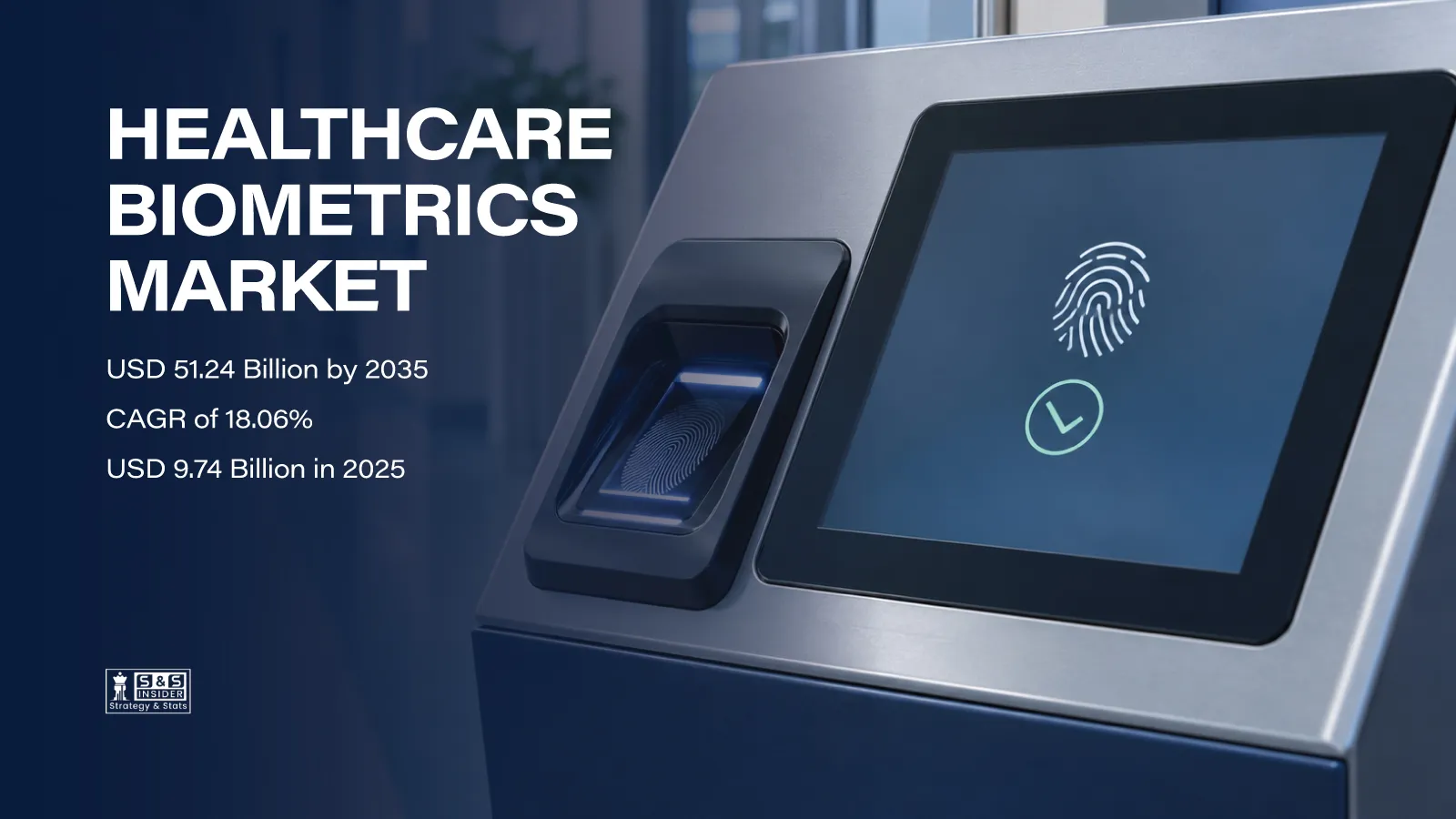
The global healthcare biometrics market was valued at USD 9.74 Billion in 2025 and is estimated at USD 11.50 Billion in 2026. It is projected to reach USD 51.24 Billion by 2035, growing at a CAGR of 18.06% during 2026–2035.
Fingerprint systems remain the most widely used technology because they are low in cost and well understood by staff. Facial recognition is gaining ground quickly as providers look for contactless check-in and remote identity checks that work on a phone.
Patient identification is still the main use, since a wrong match can lead to the wrong treatment or a billing error. Telehealth onboarding, record access and caregiver sign-in are adding new demand. Rising data breaches also push providers to replace weak passwords with stronger proof of identity.
North America is the largest regional market, while Asia Pacific is growing fastest as national digital health ID programs expand.
To Get Detailed Insights on the Healthcare Biometrics Market – Request a Sample Report
Demand Drivers and Constraints
Primary Demand Drivers
- Rising data breaches and identity fraud: Stolen credentials and fake patient identities cost providers money, so they are moving to sign-in methods that are hard to copy.
- Authentication rules: Regulators expect stronger access controls for health records, which pushes providers toward multi-factor and biometric login.
- National digital health ID programs: Governments are building health IDs for their citizens, and many of these programs use biometrics to enroll and verify people.
- EHR and telehealth growth: More care and record access now happen online, and each remote visit needs a reliable way to confirm the patient.
- Demand for AI and contactless tools: Providers want quick, touch-free check-in, and AI improves both accuracy and fraud detection.
Potential Growth Constraints
- High costs for devices and system integration.
- Privacy rules and the risk of lawsuits over biometric data.
- Concerns about algorithm bias and match accuracy.
- Gaps in interoperability with older hospital systems.
- Slow buying cycles at providers with tight budgets.
Demand Structure by Technology
Fingerprint Recognition (2025 Market Share: 35.60%)
Fingerprint recognition held 35.60% of the healthcare biometrics market in 2025, making it the largest technology segment. Hospitals use fingerprint readers for staff sign-in, medication cabinet access and patient matching at registration. The readers are low in cost, small and easy to add to existing workstations. Staff and patients already know how to use them, so training needs are low. As providers replace shared passwords on clinical systems, fingerprint login remains a practical first step that fits most budgets and workflows.
Current trend: Wider use of fingerprint sign-in for clinical workstations and drug dispensing.
Major trends: Tap-and-go login, multi-factor access, medication cabinet security, and compact sensors.
Facial Recognition (Forecast CAGR: 21.12%)
Facial recognition is projected to grow at a CAGR of 21.12% during 2026–2035, the fastest rate among technologies. It needs no contact and works with the cameras already built into phones, tablets and kiosks. That makes it useful for remote patient onboarding, telehealth visits and self check-in. Providers also use it to confirm identity when patients request records online. Better liveness checks are reducing the risk of photo or video spoofing, which builds trust among buyers.
Current trend: Growing use of face checks for remote onboarding and self check-in.
Major trends: Liveness detection, deepfake screening, mobile identity checks, and kiosk check-in.
Demand Structure by Component
Hardware (2025 Market Share: 49.15%)
Hardware accounted for 49.15% of the market in 2025. Every biometric program starts with devices that capture the fingerprint, face, palm or iris. Hospitals buy readers for workstations, scanners for registration desks and cameras for kiosks and entry points. Large health systems need thousands of devices across many sites, and older units must be replaced over time. As contactless and multimodal readers come to market, providers upgrade their equipment, which keeps hardware the largest share of spending.
Current trend: Steady device rollouts across registration desks, workstations and entry points.
Major trends: Palm vein scanners, multimodal readers, contactless cameras, and device refresh cycles.
Services (Forecast CAGR: 19.41%)
Services are expected to grow at a CAGR of 19.41% through 2035. Biometric systems must connect to electronic records, identity platforms and billing tools, and many providers lack staff to do this work. They hire outside partners for setup, integration, training and ongoing support. Managed services also help smaller clinics run biometric programs without large upfront costs. As deployments grow and rules change, demand for compliance reviews and system tuning keeps rising.
Current trend: More providers using outside partners for integration and managed support.
Major trends: EHR integration, managed identity services, compliance support, and staff training.
Demand Structure by Application
Patient Identification and Tracking (2025 Market Share: 32.18%)
Patient identification and tracking represented 32.18% of the market in 2025. Duplicate and mismatched records are a common problem in hospitals and can lead to wrong treatment, repeat tests and denied claims. Biometric matching links each patient to one record at every visit. It also helps stop people from using another person's insurance. Health systems that merge with others use biometrics to clean up duplicate records, which keeps this the largest application.
Current trend: Biometric matching at registration to reduce duplicate records.
Major trends: Palm-based check-in, single patient records, insurance fraud prevention, and record cleanup.
Telehealth and Remote Onboarding (Forecast CAGR: 23.26%)
Telehealth and remote onboarding is projected to grow at a CAGR of 23.26% during 2026–2035. More patients sign up for care, refill prescriptions and see doctors online, and each step needs proof of identity. Biometric checks on a phone confirm the patient without an in-person visit. Reusable digital IDs let patients prove who they are once and then use that proof across portals and apps. Providers and payers are adding these tools to cut fraud and speed up enrollment.
Current trend: Fast growth of phone-based identity checks for virtual care.
Major trends: Reusable digital IDs, selfie verification, remote enrollment, and secure record requests.
Demand Structure by End User
Hospitals and Clinics (2025 Market Share: 44.07%)
Hospitals and clinics accounted for 44.07% of global revenue in 2025, making them the largest end user group. They register large numbers of patients, run many clinical systems and store sensitive records that attackers target. Biometric tools help them confirm patients, control staff access and meet security rules. Large systems roll out biometrics across many sites at once, which leads to big orders. Ongoing threats and audits keep these buyers investing.
Current trend: System-wide rollouts of biometric check-in and staff authentication.
Major trends: Enterprise identity platforms, contactless check-in, access control, and audit-ready logging.
Long-Term and Home Care (Forecast CAGR: 20.26%)
Long-term and home care is expected to grow at a CAGR of 20.26% through 2035. Care moves to homes and nursing facilities as populations age. Agencies need to confirm that the right caregiver visited the right patient at the right time. Biometric visit checks support billing accuracy and reduce fraud. Facilities also use biometrics to control access to medicines and resident records.
Current trend: More use of biometric visit checks in home care.
Major trends: Caregiver visit checks, resident identity, medication access, and mobile authentication.
Key Market Participants
The healthcare biometrics market includes identity security companies, biometric device makers and digital identity providers.
Key participants include Imprivata, NEC, IDEMIA, Thales, HID Global, BIO-key, M2SYS, RightPatient, Daon, Jumio, Precise Biometrics, CLEAR, ID.me, 1Kosmos, and Amazon.
Competition centers on match accuracy, fraud defenses, ease of use and how well a product connects to electronic records. Suppliers with contactless options, strong liveness checks and ready links to major health IT platforms are in the best position to win large contracts.
Regional Market Dynamics
North America (2025 Market Share: 37.84%)
North America led the global healthcare biometrics market with a 37.84% share in 2025. The United States holds 83.70% of the region. Its market was worth USD 3.08 Billion in 2025 and is projected to grow at a CAGR of 17.62%. High breach rates, strict security expectations and a large telehealth base keep demand strong. Providers and payers are adding biometric check-in and digital ID tools to their portals. Canada adds demand through provincial health systems that are improving patient identity checks.
Direction: Continued leadership supported by security spending and digital identity adoption.
Europe (Second-Largest Regional Market)
Europe is a major market, supported by Germany, the United Kingdom, France and the Nordic countries. Germany leads the region with a 22.58% share. Public health systems are building national e-health services that need secure patient and staff access. Strict data protection law shapes how biometric data is stored and used, so buyers prefer suppliers that can show clear compliance. National digital ID programs are also making it easier to use biometrics in healthcare.
Direction: Steady growth driven by e-health programs and strict data protection rules.
Asia Pacific (Forecast CAGR: 21.76%)
Asia Pacific is expected to grow fastest, with a CAGR of 21.76% through 2035. China leads the region with a 31.46% share, supported by large hospital networks and wide use of face recognition. India is linking health records to national digital IDs, while Japan, South Korea and Australia invest in secure digital health services. New hospitals and the fast growth of mobile health apps add further demand.
Direction: Fastest regional growth supported by national health ID programs and mobile health use.
Middle East & Africa
The Middle East and Africa market is growing as governments invest in digital health. Saudi Arabia leads the region with a 27.13% share, supported by national programs that link hospitals and health records. The United Arab Emirates uses biometric identity in many public services, including healthcare. In Africa, biometric enrollment supports public health programs and patient records, although budgets and infrastructure limit faster uptake.
Direction: Rising demand supported by national digital health and identity programs.
Latin America
Latin America offers growing demand as hospitals improve patient records and fight insurance fraud. Brazil is the largest country market, with a 46.29% share of the region, supported by its large public health system and growing private hospital groups. Mexico, Chile and Colombia are also adding digital health tools. Cost limits lead many buyers to choose subscription and cloud-based options.
Direction: Gradual growth supported by record modernization and fraud prevention needs.
Market Outlook (2026–2035)
The global healthcare biometrics market is forecast to reach USD 51.24 Billion by 2035, reflecting steady investment in patient identity and data security.
Data breaches, authentication rules and national health ID programs will remain the main growth drivers. Facial recognition and services will grow fastest as providers move to contactless and managed options.
Telehealth onboarding and home care will widen demand beyond hospital registration desks. Cost, privacy rules and accuracy concerns will slow some buyers.
North America will keep the largest share, while Asia Pacific will offer the fastest growth.
Overall, the healthcare biometrics market is set for strong growth through 2035, with success depending on match accuracy, fraud defense, privacy compliance and easy integration with health IT systems.
About the Author

Get in touch