
According to the latest SNS Insider Healthcare IT Consulting Market report, demand for outside expertise is growing steadily. Hospitals, payers and other healthcare organizations are taking on larger technology projects than their own teams can handle. Record system upgrades, cloud moves and new data rules all need careful planning, and many organizations now hire consultants to do this work.
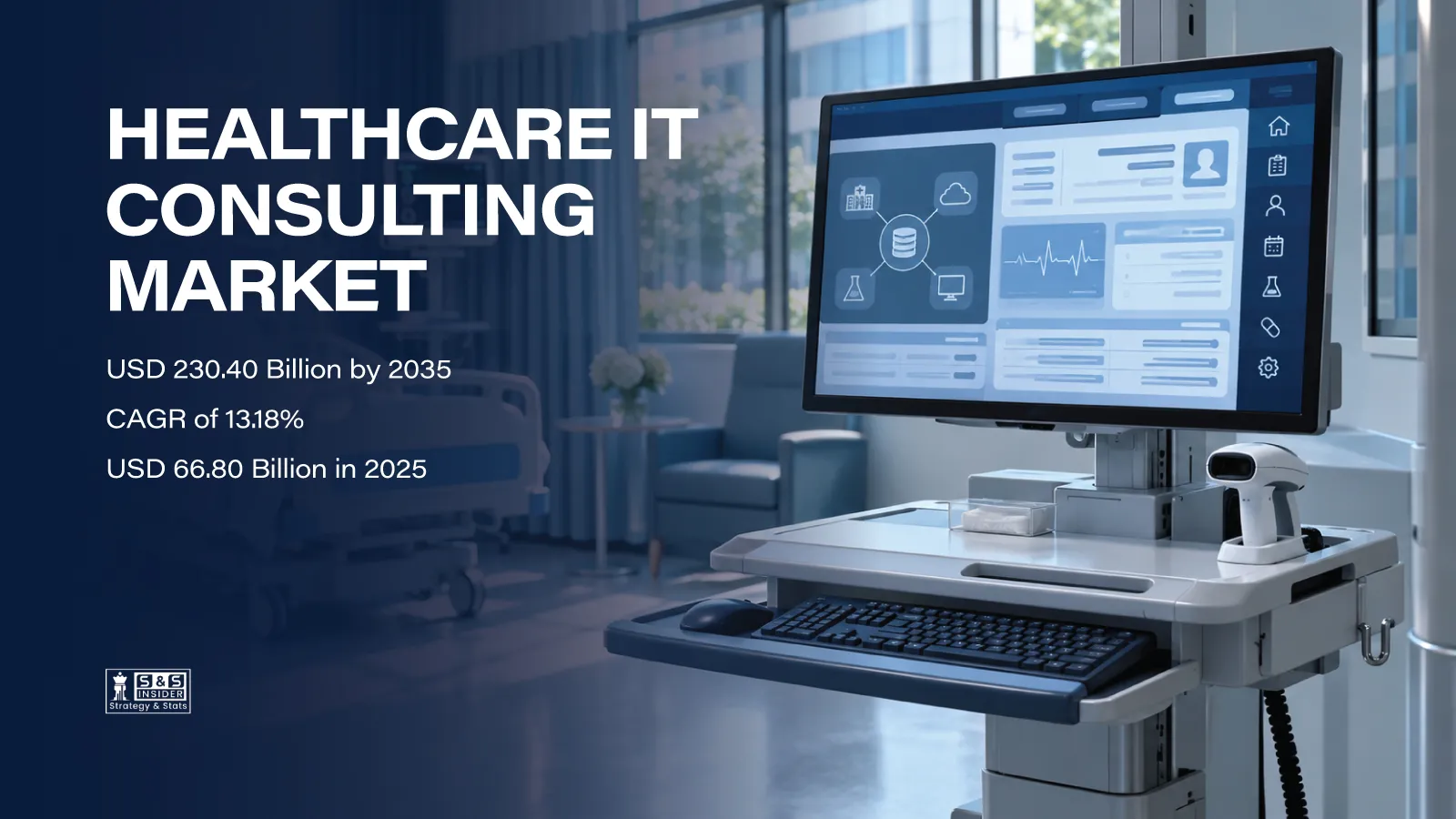
The global healthcare IT consulting market was valued at USD 66.80 Billion in 2025 and is estimated at USD 75.60 Billion in 2026. It is projected to reach USD 230.40 Billion by 2035, growing at a CAGR of 13.18% during 2026–2035.
Most organizations still run a mix of local and cloud systems, so hybrid projects make up the largest share of consulting work. Cloud-based engagements are growing faster as providers retire older data centers and move core applications to hosted platforms.
Business process work remains the largest consulting area, because providers want to cut costs in billing, scheduling and claims. Data analytics and AI advisory is growing fastest as organizations look for practical ways to use their clinical and financial data.
North America is the largest regional market. Asia Pacific has the strongest growth outlook, led by national digital health programs and new hospital construction.
To Get Detailed Insights on the Healthcare IT Consulting Market – Request a Sample Report
Demand Drivers and Constraints
Primary Demand Drivers
- EHR and cloud migration: Moving record systems and data to new platforms is complex, so providers bring in consultants to plan the move and reduce risk.
- AI and analytics adoption: Organizations want help choosing AI tools, preparing their data and fitting new models into daily clinical and business work.
- Interoperability and compliance: Data exchange rules require changes to systems and workflows, and outside advisors help organizations meet the deadlines.
- Margin pressure: Thin margins push providers to automate revenue cycle tasks, which creates steady demand for process and technology advice.
- Talent shortages: Many health systems lack in-house IT and cybersecurity staff, so they rely on consultants to fill the gap.
Potential Growth Constraints
- Tight provider budgets and delayed discretionary spending.
- Liability concerns tied to data privacy, security and compliance.
- Shortages of skilled consultants and rising delivery costs.
- Vendor lock-in and a shift of advisory work to in-house teams.
Demand Structure by Consulting Type
Healthcare Business Process Management (2025 Market Share: 27.14%)
Healthcare business process management held 27.14% of the market in 2025, the largest share of any consulting type. Providers and payers hire advisors to redesign billing, claims, scheduling and supply chain work. These tasks touch revenue directly, so even small improvements matter to organizations with thin margins. Consultants map current workflows, find delays and errors, and help put new tools in place. Demand stays steady because rules and payment models keep changing, and processes need regular review.
Current trend: Rising demand for revenue cycle redesign and process automation.
Major trends: Revenue cycle optimization, claims automation, workflow redesign, and shared service models.
Data Analytics and AI Advisory (Forecast CAGR: 16.84%)
Data analytics and AI advisory is projected to grow at the fastest CAGR of 16.84% through 2035. Healthcare organizations hold large amounts of clinical and financial data but often struggle to use it well. Consultants help them clean and organize data, select analytics and AI tools, and set rules for safe use. Many providers also need guidance on how to test AI models and fit them into clinical work. As AI moves from pilots to daily use, demand for this advice keeps rising.
Current trend: Growing number of AI projects moving from pilot stage to full use.
Major trends: AI governance, predictive analytics, data platform design, and clinical decision support advisory.
Demand Structure by Deployment Model
Hybrid (2025 Market Share: 44.62%)
Hybrid deployment accounted for 44.62% of the market in 2025. Most healthcare organizations keep some systems on local servers while moving others to the cloud. This mix suits providers that need fast access to core clinical systems but want cloud capacity for backup, analytics and less sensitive workloads. Managing two environments is complex, so consultants help design the split, connect the systems and keep data secure. Hybrid setups will remain common because data residency rules limit full cloud moves.
Current trend: Steady demand for help managing mixed local and cloud environments.
Major trends: Workload planning, integration services, unified security controls, and phased cloud migration.
Cloud-Based (Forecast CAGR: 15.37%)
Cloud-based deployment is expected to grow at a CAGR of 15.37% during 2026–2035. Providers are retiring older data centers and moving record systems, analytics and business applications to hosted platforms. Cloud models lower upfront spending and make it easier to add capacity as needs change. However, each move needs careful planning to protect patient data and avoid downtime. Consultants guide this work, from vendor selection to testing, which keeps cloud projects a fast-growing source of demand.
Current trend: Increasing migration of EHR and analytics workloads to hosted platforms.
Major trends: Cloud readiness assessment, managed cloud services, cost control, and cloud security advisory.
Demand Structure by Organization Size
Large Enterprises (2025 Market Share: 63.48%)
Large enterprises held 63.48% of the market in 2025. Big health systems and national payers run many sites, applications and data sources, which makes their technology projects large and long. They often hire several consulting firms at once for record system upgrades, mergers and security programs. These organizations also have the budgets to fund multi-year advisory work. As they continue to combine systems after mergers and modernize older platforms, their spending is expected to stay the largest share of the market.
Current trend: Large multi-year programs for system consolidation and modernization.
Major trends: Post-merger integration, enterprise EHR upgrades, cybersecurity programs, and IT operating model redesign.
Small and Medium-Sized Enterprises (Forecast CAGR: 15.12%)
Small and medium-sized enterprises are projected to grow at a CAGR of 15.12% through 2035. Community hospitals, clinics and smaller payers face the same rules and security risks as large systems but have far fewer IT staff. Many now turn to consultants for help with cloud moves, compliance and basic cybersecurity. Flexible pricing and shorter projects make outside advice easier for these buyers to afford. Growing use of cloud-based record systems also opens new consulting needs in this group.
Current trend: Rising use of outside advisors by smaller providers with limited IT teams.
Major trends: Packaged consulting services, managed IT support, compliance readiness, and cloud EHR adoption.
Demand Structure by End User
Healthcare Providers (2025 Market Share: 68.21%)
Healthcare providers accounted for 68.21% of the market in 2025, making them the largest end-user group. Hospitals, clinics and health systems run complex clinical and business systems that need regular upgrades. They hire consultants for record system projects, revenue cycle work, data exchange and security. Staff shortages and cost pressure make outside help more attractive than building large internal teams. Ongoing system replacement and new data rules are expected to keep provider demand strong through 2035.
Current trend: Continued investment in record system upgrades and revenue cycle improvement.
Major trends: EHR optimization, interoperability projects, cybersecurity assessments, and clinical workflow redesign.
Healthcare Payers (Forecast CAGR: 14.92%)
Healthcare payers are expected to grow at the fastest end-user CAGR of 14.92% during 2026–2035. Insurers face new rules on data sharing, prior authorization and price transparency. Meeting these rules requires changes to claims systems, member portals and data platforms. Payers also want to use analytics and AI to manage costs and improve member service. Consultants help them plan these changes and connect with provider systems, which supports steady growth in this group.
Current trend: Rising demand for compliance and data exchange projects among insurers.
Major trends: Prior authorization automation, claims modernization, member data platforms, and payer analytics.
Key Market Participants
The healthcare IT consulting market includes global consulting firms, technology service providers and specialist healthcare advisory firms.
Key participants include Accenture, Deloitte Touche Tohmatsu, Cognizant, Infosys, IBM, Genpact, HCL Technologies, Oracle, Kyndryl, Chartis Group, Huron Consulting Group, Impact Advisors, VMG Health, and Med Tech Solutions.
Competition centers on healthcare expertise, AI and data skills, delivery capacity and long-term client relationships. Recent acquisitions show firms adding specialist teams to widen their services and reach more provider and payer clients.
Regional Market Dynamics
North America (2025 Market Share: 38.76%)
North America led the global healthcare IT consulting market with a 38.76% share in 2025. The United States accounts for 89.37% of regional revenue and was valued at USD 23.14 Billion in 2025, with a projected CAGR of 13.52%. Large health systems, complex payment rules and strict data exchange requirements create steady demand for advisory work. Staff shortages and frequent mergers add further projects. Canada adds demand through provincial digital health programs.
Direction: Continued leadership supported by record system upgrades, compliance work and AI adoption.
Asia Pacific (Forecast CAGR: 14.46%)
Asia Pacific is expected to register the fastest regional growth, with a CAGR of 14.46% through 2035. India leads the region with 27.65% of regional revenue, helped by national digital health programs and a large base of IT service firms. China, Japan, South Korea and Australia continue to invest in hospital systems and data platforms. New hospital construction and growing insurance coverage create fresh demand for consulting support.
Direction: Fastest regional expansion supported by digital health programs and hospital growth.
Overall, the healthcare IT consulting market is set for strong expansion through 2035. Success will depend more and more on healthcare expertise, practical AI skills, security knowledge and the ability to deliver complex projects on time.
About the Author

Get in touch




