
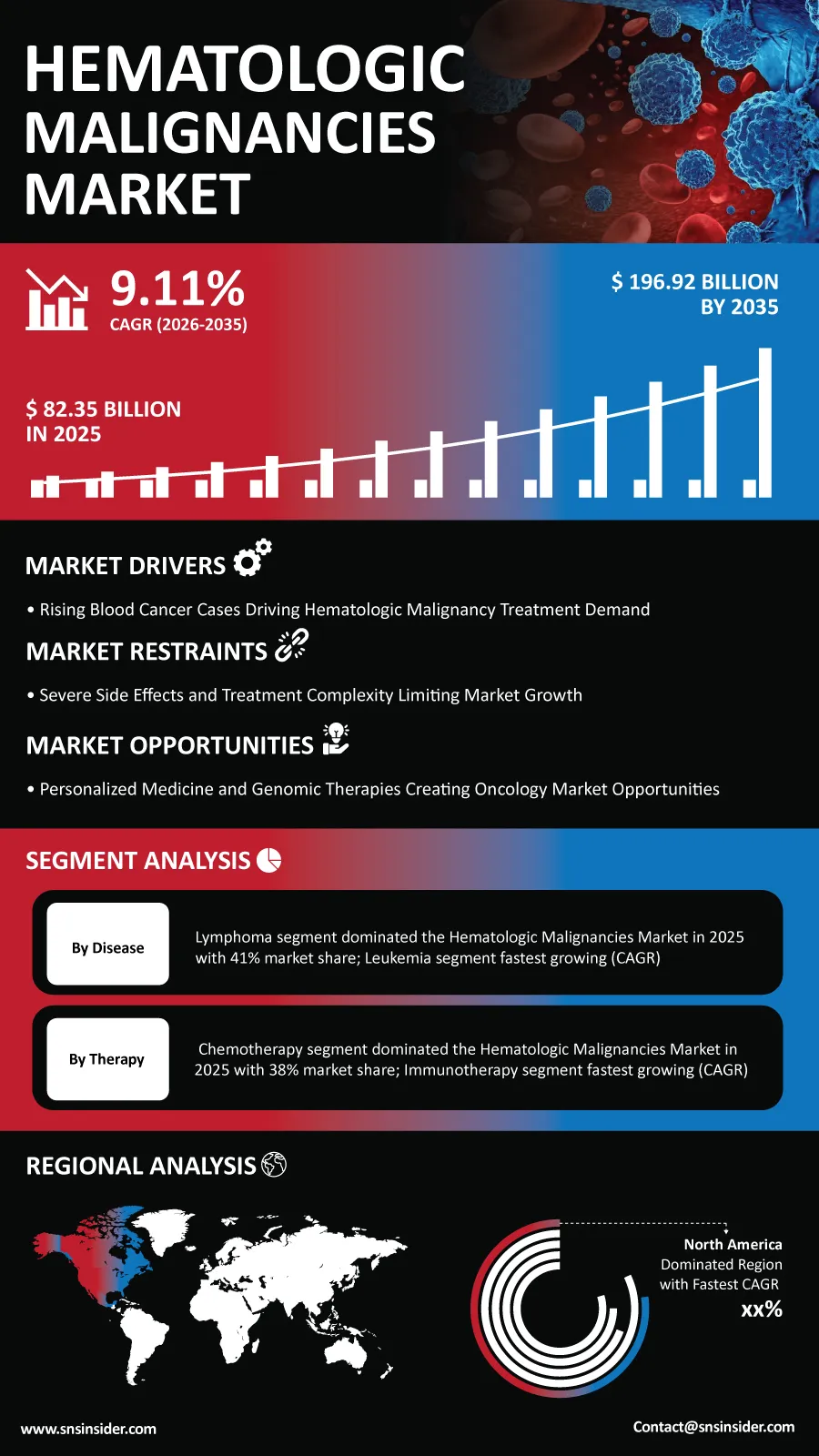
The global Hematologic Malignancies Market is witnessing sustained expansion as healthcare systems strengthen their focus on advanced blood cancer treatment, precision medicine, and early disease diagnosis. According to a recent study by SNS Insider, the global Hematologic Malignancies Market size valued at USD 82.35 Billion in 2025, is anticipated to grow to USD 196.92 Billion by 2035, registering a CAGR of 9.11% over the 2026–2035 forecast period.
The mounting incidence of leukemia, lymphoma, and multiple myelomas has kept on transforming the approach towards the management of these cancers globally. The healthcare industry is rapidly adopting the application of targeted therapy, cellular immunotherapy, and advanced diagnostics technology in the treatment of cancer, which provides an excellent environment for growth in the market.
Increased collaboration between biotech firms, academic organizations, and health care establishments is further fueling innovation in developing new treatment modalities. Ongoing funding for clinical research, biomarker identification, and molecular diagnostic techniques is anticipated to help bring new therapeutic solutions into practice for both developed and developing health care markets.
To Get Detailed Insights on the Hematologic Malignancies Market – Request a Sample Report
Breakthrough Oncology Therapies Drive Market Momentum
In the hematologic malignancies space, there are changes happening as new treatments provide enhanced survival rates for patients with hematologic malignancies. More and more, immunotherapy, monoclonal antibodies, targeted therapies, and CAR-T cell therapy are being used alongside traditional therapies in order to improve patient survival rates, especially in the case of patients who have undergone relapses and developed resistance to initial therapy.
Data supporting new methods of treatment keeps growing, and according to the statistics provided by the U.S. National Cancer Institute, 187,000 cases of leukemia, lymphomas, and multiple myelomas occur annually in the U.S. In addition, according to the information provided by the FDA about the outcomes of clinical trials, CAR-T cell therapy provides an overall response rate from 70% to 90% in cases of leukemia and lymphomas.
Key Market Findings Highlight Leading Growth Segments
Among disease types, the lymphoma segment accounted for the largest market share of 41% in 2025, supported by high diagnosis rates, broad treatment availability, and continuous advancements in combination therapies. The leukemia segment is projected to record the fastest expansion throughout the forecast period as precision medicine, genetic profiling, and cellular therapies become increasingly accessible.
By therapy, chemotherapy remained the leading treatment category with a 38% market share in 2025, reflecting its continued role across numerous hematologic cancer treatment protocols. However, immunotherapy is expected to experience the strongest future growth as physicians increasingly adopt monoclonal antibodies, checkpoint inhibitors, and CAR-T therapies that offer improved efficacy and more targeted treatment mechanisms.
Based on end use, hospital pharmacies represented 52% of total market revenue in 2025 due to the concentration of specialized oncology services within hospitals and comprehensive cancer treatment centers. Meanwhile, retail pharmacies are anticipated to witness the fastest growth as outpatient oncology services expand and demand for oral cancer medications and supportive therapies continues to increase.
Precision Medicine and Diagnostics Reshape Clinical Care
The widespread use of genomics and molecular diagnostics in the management of hematological cancers is changing the approach to the treatment of these conditions. The increasing use of biomarker-based treatment decisions is helping doctors select treatments that fit the needs of individual patients.
In addition, drug manufacturers are continuing their development of the next generation of immunotherapy drugs, antibody-drug conjugates, and cellular therapy drugs. These treatments are predicted to increase survival rates and provide more treatment choices for different blood cancers in the upcoming years.
Regional Markets Continue Expanding Healthcare Access
The largest market region-wise in 2025 was North America owing to developed infrastructure, good research potential in the pharmaceutical industry, reimbursement policies, and use of novel approaches in cancer treatment. The United States accounted for 88.7% of the regional market due to its position in oncology research and development and advanced blood cancer treatments. The market value of the U.S. Hematologic Malignancies Market was recorded to be USD 17.95 Billion in 2025 and is anticipated to grow up to USD 42.23 Billion till 2035 with a CAGR of 8.93%.
Asia-Pacific will register the fastest growth due to the efforts made by countries of this region to provide oncology care infrastructure, better access to advanced drugs, and investment in cancer awareness, diagnostics, and research studies. Growth in patient population and healthcare modernization programs make the future market prospects promising.
Leading Companies Advance Innovation Across Oncology
Competition within the Hematologic Malignancies Market continues to intensify as leading pharmaceutical companies expand research pipelines, accelerate regulatory approvals, and strengthen strategic collaborations focused on next-generation oncology therapies.
Major companies operating in the global hematologic malignancies market include Pfizer Inc., F. Hoffmann-La Roche Ltd, Sanofi S.A., Bristol-Myers Squibb Company, AbbVie Inc., Novartis AG, Amgen Inc., Johnson & Johnson (Janssen), AstraZeneca plc, Takeda Pharmaceutical Company, Gilead Sciences Inc., Eli Lilly and Company, GlaxoSmithKline plc, BeiGene (BeOne Medicines), Incyte Corporation, Celgene (part of Bristol-Myers Squibb), Seagen Inc. (Pfizer oncology unit), Kite Pharma (Gilead company), Alexion Pharmaceuticals (AstraZeneca), and Merck & Co., Inc.
An SNS Insider analyst Parry Kardani commented, "The future of hematologic malignancy treatment is being shaped by precision oncology, cellular immunotherapy, and continuous innovation in targeted medicines. Organizations investing in personalized treatment strategies and advanced clinical research will be well positioned to address the growing global burden of blood cancers while improving long-term patient outcomes."
About the Author

Get in touch




