
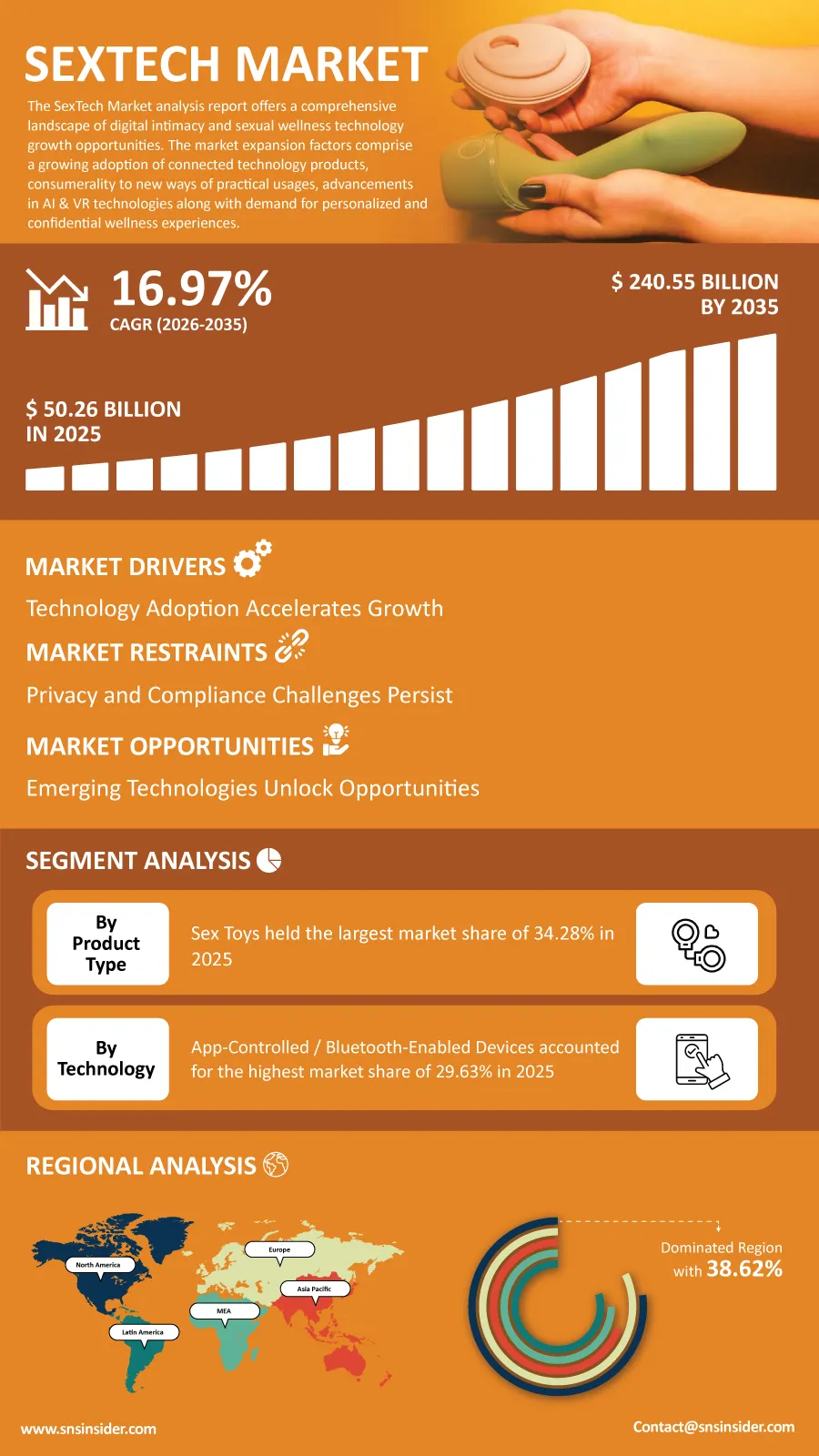
The global SexTech Market is entering a new phase of growth as consumers increasingly embrace technology-driven wellness solutions designed to deliver personalized, connected, and discreet experiences. “According to a recent study by SNS Insider, the global SexTech Market size valued at USD 50.26 billion in 2025, is anticipated to grow to USD 240.55 billion by 2035, registering a CAGR of 16.97% over the 2026–2035 forecast period.”
Increased consumer adoption of digital wellness solutions, the growing reach of smartphones, as well as the constant innovation in artificial intelligence, immersive technologies, and smart devices, provide numerous opportunities for firms active in the industry. With the continued evolution of digital life styles, technology-based wellness solutions are being incorporated into people’s lives.
Participants within the industry are increasingly concerned with intelligent ecosystems of products that integrate hardware, mobile apps, cloud integration, and personalized data to increase engagement while still retaining privacy and ease-of-use.
To Get Detailed Insights on the SexTech Market – Request a Sample Report
Connected and Intelligent Technology Disrupts Consumer Experiences
With new innovations continuously disrupting the competitive business environment, manufacturers have developed advanced connected technologies able to provide dynamic and personalized customer interactions. Thanks to artificial intelligence and machine learning algorithms, the Internet of Things connectivity and immersive digital experience, firms are designing their products that would be personalized according to individual choices.
Moreover, digital subscription services, mobile apps, and connected platforms offer opportunities for continuous revenue streams to the market players. Meanwhile, a rising concern about information protection and confidentiality contributes to improving cybersecurity measures within companies.
The above developments are helping shape SexTech from being a niche consumer category to a wider digital wellness ecosystem with growing commercial prospects.
Key Market Findings Highlight High-Growth Segments
Sex toys have constituted the largest product category share of 34.28% in terms of revenue generated in the global market in 2025. Smart sex devices are expected to witness the fastest growth rate of 18.74% in revenue until 2035 owing to an increase in the use of app connectivity and intelligent interaction technology.
Innovation in technology is another major factor for market growth. App-controlled and Bluetooth enabled devices constituted 29.63% of the total market revenue in 2025. These devices retained their leading position owing to their ease of operation on smartphones. AI enabled devices are anticipated to witness the fastest growth with a CAGR of 21.56%.
Moreover, the consumer purchase behaviors are undergoing rapid changes. The e-commerce and online retail segment was responsible for 48.77% of the market revenues in 2025, which was facilitated by the benefits provided due to convenience, product range and discretion in making purchases. On the other hand, subscription-based models are expected to grow at the highest CAGR of 19.34%, indicating increased popularity of personalized offerings and engagement with digital platforms.
Trends in the applications indicate consumer changing preferences. The personal pleasure and entertainment category constituted 55.92% of the market revenues in 2025, whereas the segments of sexual wellness and health applications are expected to witness the highest growth at a CAGR of 20.27% up to 2035.
Digital Wellness Continues to Expand Beyond Traditional Consumer Markets
The increasing importance of wellness in general, including mental wellness and relational wellness, has been driving increased usage of technological wellness solutions. Businesses have started considering various possibilities for application in education, therapeutic services, collaboration in healthcare, and personalized wellness programs to increase their offerings and consumer interaction.
Further advances in immersive technologies, intelligent automation, and digital ecosystems would be driving new opportunities and industry growth in the long run.
Regional Markets Continue to Create Significant Opportunities
North America holds a position in terms of global market share revenue in 2025 that stands at 38.62%. Factors such as wide-scale digital adoption, well-developed technology infrastructure, higher buying power of consumers, and positive consumer reception towards connected wellness devices make North America an effective leader of the market.
On the other hand, the Asia Pacific region will emerge as the fastest growing regional market with a growth rate of 19.34% from 2025 till 2035. Increased use of the internet, increased use of smartphones, disposable income, and increased consumer acceptance of digital wellness devices are making this region more lucrative.
Industry Leaders Focus on Connected Innovation
Competition in the international market for SexTech is getting stronger due to the investment that companies are making in artificial intelligence, connectivity, immersive technology, innovation, and digital platforms. Manufacturers are placing an emphasis on intelligent ecosystems, privacy improvements, and good user experiences to get ahead of competitors.
Key companies operating in the global SexTech market include Vibease, Kiiroo B.V., Wow Tech Europe GmbH, LELO, MysteryVibe, Lovense, Lovehoney Group, Satisfyer, RealDoll, and OhMiBod.
An SNS Insider analyst Parry Kardani commented, "Rapid advances in connected technologies, artificial intelligence, and digital wellness platforms are reshaping consumer expectations across the SexTech industry. Companies that prioritize innovation, privacy, personalization, and seamless digital experiences are expected to capture significant long-term growth opportunities."
About the Author

Get in touch




