
Specialty Generics Market is gaining momentum as healthcare systems around the world are focusing on ways to provide increased access to novel treatments while keeping the growing cost of treatments under control. Biosimilars, patent expiries of premium drugs, and rising demand for affordable drugs are changing the dynamics of the market.
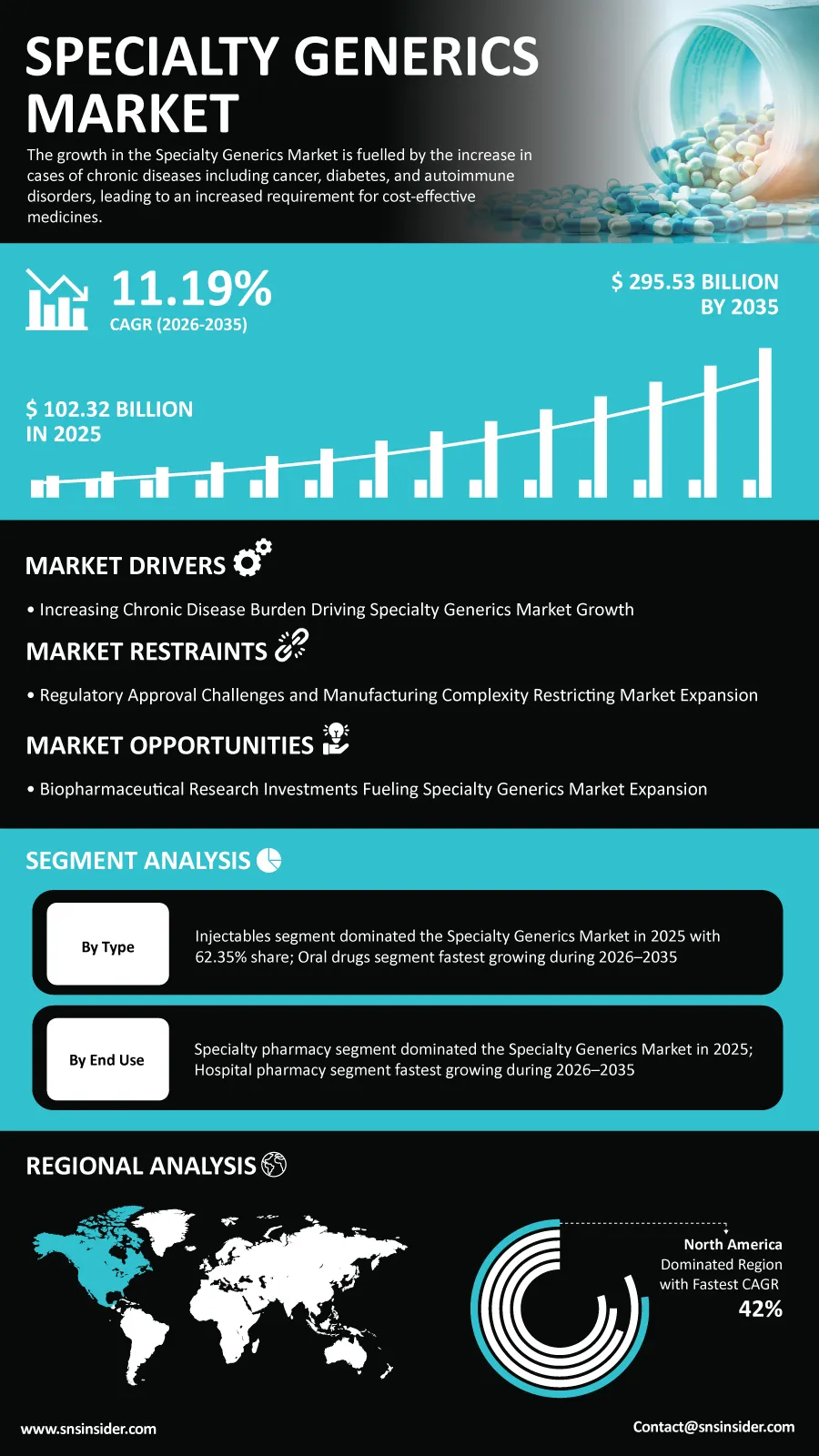
According to a recent study by SNS Insider, the global Specialty Generics Market size valued at USD 102.32 billion in 2025, is anticipated to grow to USD 295.53 billion by 2035, registering a CAGR of 11.19% over the 2026–2035 forecast period. The market's expansion is supported by increasing treatment needs for chronic illnesses, broader regulatory acceptance of specialty generics, and continued investment in complex pharmaceutical manufacturing.
Healthcare professionals and payors are looking at specialty generics more and more often in order to combine quality results with cost optimization. On the other hand, the pharmaceutical industry is working on creating new drug products that belong to the complex formulations and biosimilars groups and respond to the needs of the specialty markets.
To Get Detailed Insights on the Specialty Generics Market – Request a Sample Report
Patent Expirations Open New Growth Opportunities
The expiration of patents on high-end specialty drugs is providing great business prospects for generic drug makers. Businesses are focusing on building state-of-the-art production facilities, developing biologics, and using advanced drug delivery systems in order to provide superior generic versions that help in saving costs.
The industry is also experiencing increased collaboration among pharmaceutical firms, health care practitioners, and regulatory bodies. Collaboration has enabled increased efficiency in product approvals, increased adoption of biosimilars, and development of logistics systems that can cope with increased global demand.
Market Segments Reflect Evolving Treatment Preferences
By type, injectables accounted for about 62.35% share in the Specialty Generics Market in 2025. Continued use in areas such as oncology, autoimmune diseases, and hospital drugs will ensure that injectables maintain market dominance. Oral drugs will continue to be the fastest-growing segment from 2025 to 2035 as patients will seek non-invasive treatment methods due to advances in formulation.
Based on indication, inflammation was the largest market segment in 2025 as the treatment of autoimmune disease requires continuous therapy. Cancer is expected to be the fastest-growing segment over the forecast period due to rising incidences and the availability of cheap specialty medicines.
Among end users, specialty pharmacies were the leading segment in 2025 since they had the capability to deal with complicated medications. Hospital pharmacies will continue recording high growth due to an expansion in hospitals providing affordable specialty drugs to patients.
Innovation and Biosimilars Transform Industry Competition
The industry landscape is evolving at a fast pace with manufacturers focusing on advanced generics, biologicals, and biosimilars. Advances in the area of pharmaceutical manufacturing and biotech have helped them bring out products that perform better therapeutically without becoming costly.
There are growing investments in R&D and therefore, robust pipelines of products in areas such as oncology, immunology, respiratory diseases, and others. The trend of value-based care in healthcare is anticipated to make the specialty generics more relevant in future.
Regional Markets Demonstrate Strong Expansion
In 2025, North America was the largest regional market with a share of roughly 42% in the global revenue. The regional market has a well-developed healthcare infrastructure, use of specialty drugs and reimbursement system. Within North America, the U.S. contributed approximately 88.9% in regional revenue. The value of the U.S. Specialty Generics Market in 2025 was USD 34.84 billion and is expected to reach USD 99.73 billion by 2035 with a CAGR of 11.09%.
The fastest growing regional market in the period through 2035 will be the Asia Pacific region due to government support of healthcare access, increased use of generics and increase in pharmaceutical production capacity. Approximately 7.1% of regional revenue in Asia Pacific is attributed to Australia, while several developing countries are still making investments in specialty healthcare infrastructure.
In Europe, the U.K. contributed approximately 20.8% in regional revenue driven by high biosimilar penetration and advanced healthcare system. In Latin America, the share of Brazil in regional revenue was 52.2%, while the United Arab Emirates contributed 13.4% in Middle East & Africa regional revenue.
Leading Companies Strengthen Global Specialty Portfolios
Competition continues to intensify as pharmaceutical manufacturers pursue acquisitions, strategic partnerships, and product launches to strengthen their specialty generics businesses. During 2025, Sun Pharmaceutical Industries expanded its oncology portfolio through the acquisition of Checkpoint Therapeutics and further strengthened its dermatology business following its acquisition of Taro Pharmaceuticals. Cipla also expanded its specialty and complex generics portfolio across respiratory and oncology segments through new product introductions and strategic collaborations.
Major companies operating in the global Specialty Generics Market include Teva Pharmaceutical Industries Ltd., Sandoz (Novartis Division), Viatris Inc., Sun Pharmaceutical Industries Ltd., Lupin Limited, Dr. Reddy's Laboratories Ltd., Aurobindo Pharma Ltd., Zydus Lifesciences Ltd., Cipla Ltd., Fresenius Kabi AG, Mylan Pharmaceuticals (now Viatris), Amneal Pharmaceuticals, Inc., Hikma Pharmaceuticals PLC, Apotex Inc., Stada Arzneimittel AG, Torrent Pharmaceuticals Ltd., Alvogen, Glenmark Pharmaceuticals Ltd., Bausch Health Companies Inc., and Endo International plc.
An SNS Insider analyst commented, "The specialty generics industry is entering a period of sustained expansion as healthcare systems seek broader access to advanced therapies without compromising affordability. Companies capable of combining biosimilar expertise, complex manufacturing capabilities, and strategic portfolio expansion will be well positioned to capitalize on the next wave of global pharmaceutical growth."
About the Author

Get in touch




