The Type 2 Diabetes Market is about to experience an era of continued expansion within the pharma segment as the increased incidence of the disease matches up with innovations within the area of glucose lowering drugs, weight loss medications, connectivity technology and other treatment options. The changing treatment environment also makes the commercial use of diabetes medications more evident by their advantages in other therapeutic areas.
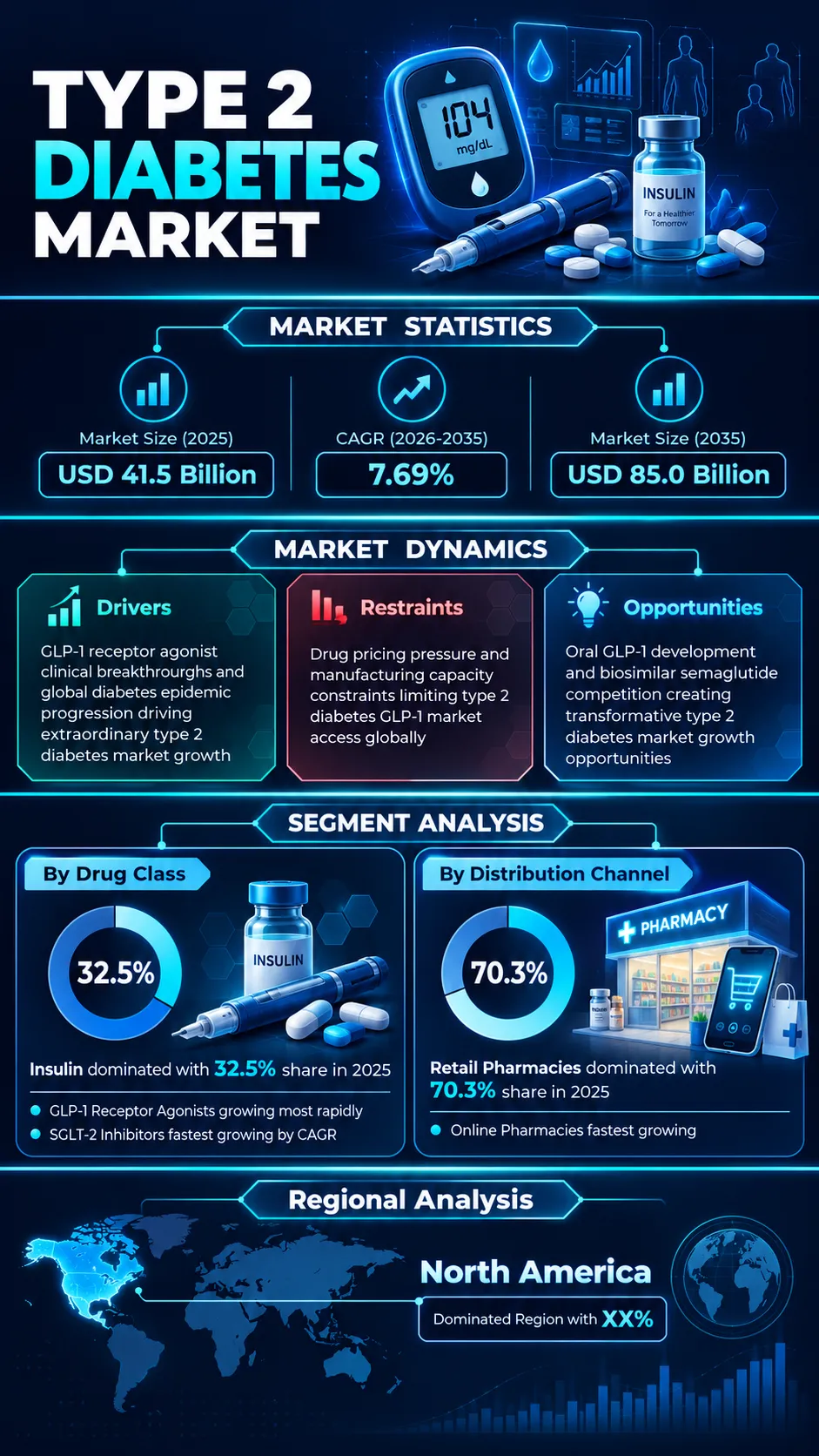
According to a recent study by SNS Insider, the global Type 2 Diabetes Market size valued at USD 41.5 billion in 2025, is anticipated to grow to USD 85.0 billion by 2035, registering a CAGR of 7.69% over the 2026–2035 forecast period. The market is being influenced by the growth in numbers of diabetics, the use of new classes of drugs, improvements in treatment compliance technology, and growing pharma investments in future treatment options.
Drug Innovation Reshapes Diabetes Treatment
GLP-1 receptor agonists and dual action therapies play a key role in the expansion strategies of the pharmaceutical market players. The drugs developed on the basis of semaglutide and tirzepatide have been receiving increasing attention because the therapeutic benefit of these compounds goes beyond lowering of blood glucose levels, but includes weight loss and positive effects on the cardiovascular system.
The business prospects of the industry have thus increased. Novo Nordisk's Ozempic and Eli Lilly's Mounjaro brought in more than USD 25 billion in revenue in 2023, demonstrating the level of success reached by new-generation diabetes drugs.
On the other hand, SGLT-2 inhibitors are becoming increasingly relevant for the cardiometabolic market. Empagliflozin, dapagliflozin, and canagliflozin find their application in patients suffering from either heart failure or kidney diseases.
To Get Detailed Insights on the Type 2 Diabetes Market – Request a Sample Report
Insulin Remains Large While Newer Classes Accelerate
The share of insulin was around 32.5% in 2025, holding a prominent share since many people may need it at a later stage in the disease progression, where they stop producing insulin internally. There is a new trend with biosimilar competition in the market, offering low-cost options to many patients.
GLP-1 receptor agonists constitute a fast-growing share of the market, while SGLT-2 inhibitors have been predicted to have the highest CAGR in terms of drug class. The ongoing developments in the clinical area are motivating many companies to invest in combined treatments that could treat multiple risks together.
There is also a shift in terms of route of administration. Subcutaneous route of administration held the leading share in 2025 due to insulin as well as GLP-1 injections. However, oral administration will be growing at the highest rate due to oral semaglutide along with other incretin therapies in oral form.
Digital Diabetes Care Expands Beyond Traditional Prescribing
The integration of technology in diabetes management is rising gradually. The emergence of continuous glucose monitors, smart pens, dose delivery mechanisms, and digital health applications is driving the adoption of a more data-based approach for managing diabetes.
Moreover, online pharmacies are growing significantly. In 2023, retail pharmacies accounted for about 70.3% of distribution, while digital distribution is increasing via home delivery, telemedicine consultations, prescription management, and remote patient support services.
North America Leads a High-Value Market
North America still dominated the regional market in 2025 with the United States contributing approximately 88% of revenues earned in North America. The U.S. Type 2 Diabetes Market was worth USD 10.62 billion in 2023 and is expected to grow to USD 19.07 billion by 2032 at a 6.75% CAGR.
The market in the U.S. has significant diabetes prevalence and usage of novel pharmaceutical products. CDC has noted that there were 38.4 million people in the United States suffering from diabetes in 2021 which is 11.6% of the population, and type 2 diabetes constitutes 90-95% of this population.
Policy measures are also impacting economic conditions related to the medicines. Out-of-pocket costs cap at USD 35 per month on insulin via the Medicare program, while the negotiated pricing clause under the Inflation Reduction Act is changing the commercial landscape for certain medicines.
Asia Pacific Creates New Growth Opportunities
The Asia-Pacific region is expected to stay the fastest growing regional market due to increased screening and treatments available through healthcare access and drug therapy. China represented about 42% of regional sales, whereas the number of patients with diabetes in China is around 140 million. The number of adults in India with diabetes is around 101 million, which gives good treatment prospects.
In Europe, there remains potential for the existing healthcare systems and reimbursements to be utilized. Germany represented about 27% of European sales. In the Middle East and Africa, Saudi Arabia represented about 38% of regional sales.
Oral Therapies and Automated Care Drive the Next Phase
The development of oral incretin medicines could significantly alter treatment preferences by reducing reliance on injections. Alongside this, automated insulin delivery and connected monitoring systems are creating opportunities for more personalized diabetes management.
Recent industry developments include Novo Nordisk's 2026 FDA approval of Wegovy for cardiovascular risk reduction in certain adults with obesity or overweight, Eli Lilly's 2025 completion of Phase 3 development for oral tirzepatide, and Tandem Diabetes Care's 2025 FDA clearance of Control-IQ+ for adults with type 2 diabetes.
Key companies in the Type 2 Diabetes Market include Novo Nordisk A/S, Eli Lilly and Company, AstraZeneca plc, Sanofi SA, Boehringer Ingelheim GmbH, Merck & Co. Inc. (MSD), Johnson & Johnson (Janssen), Takeda Pharmaceutical Co. Ltd., Pfizer Inc., Daiichi Sankyo Co. Ltd., Biocon Ltd., Wockhardt Ltd., Sun Pharmaceutical Industries Ltd., Tonghua Dongbao Pharmaceutical, MannKind Corporation, Zealand Pharma A/S, Structure Therapeutics Inc., Altimmune Inc., Inventiva Pharma SA, and Carmot Therapeutics Inc. (Roche).
An SNS Insider analyst Parry Kardani commented, “The Type 2 Diabetes Market is moving toward increasingly diversified treatment strategies, with incretin-based medicines, SGLT-2 inhibitors, oral therapies, and connected technologies expanding the range of options available to patients and healthcare providers.
About the Author

Get in touch