
ADHD Therapeutics Market Report Scope & Overview:
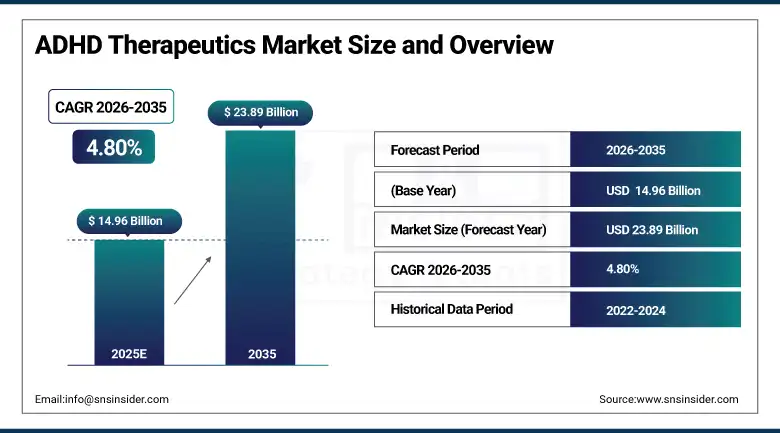
The ADHD Therapeutics Market size is valued at USD 14.96 Billion in 2025 and is expected to reach USD 23.89 Billion by 2035 and grow at a CAGR of 4.80% over the forecast period 2026-2035.
The ADHD Therapeutics market is anticipated to witness significant growth due to the increasing prevalence and diagnosis of attention deficit hyperactivity disorder across children, adolescents, and adults worldwide. Rising awareness of mental health conditions, improved access to psychiatric care, and expanding treatment acceptance are encouraging the adoption of both stimulant and non-stimulant medications. Advancements in long-acting drug formulations, personalized treatment approaches, and the integration of behavioral and cognitive therapies are improving treatment effectiveness and patient adherence.
According to industry studies, over 70% of ADHD Therapeutics demand is driven by stimulant medications, fueled by their high clinical effectiveness, rapid symptom control, and widespread prescription for managing attention deficit hyperactivity disorder across children, adolescents, and adults.
ADHD Therapeutics Market Size and Forecast:
-
Market Size in 2025: USD 14.96 Billion
-
Market Size by 2035: USD 23.89 Billion
-
CAGR: 4.80% from 2026 to 2035
-
Base Year: 2025
-
Forecast Period: 2026–2035
-
Historical Data: 2022–2024
To Get more information On ADHD Therapeutics Market - Request Free Sample Report
ADHD Therapeutics Market Trends:
-
Increasing adoption of long-acting and extended-release ADHD medications to improve treatment adherence.
-
Growing use of digital therapeutics and telepsychiatry platforms for ADHD diagnosis and patient monitoring.
-
Rising demand for non-stimulant medications due to lower abuse risk and better tolerance in some patients.
-
Advancements in personalized treatment approaches combining medication with behavioral therapies.
-
Expanding awareness of adult ADHD is increasing diagnosis rates and treatment demand globally.
U.S. Specialty ADHD Therapeutics Market Insights:
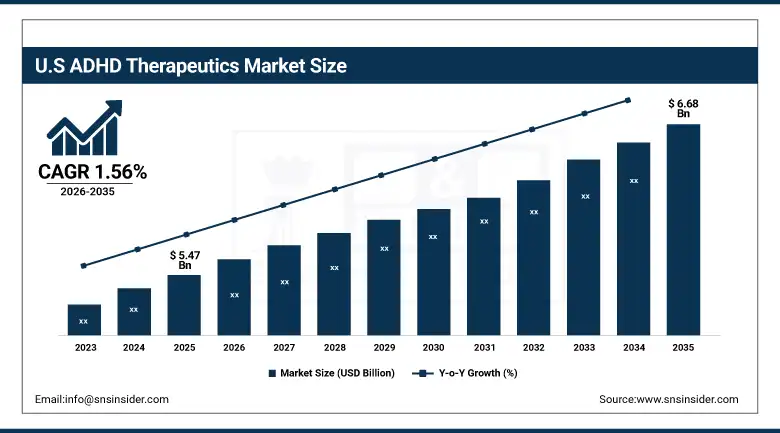
The U.S. ADHD Therapeutics Market size is USD 5.47 Billion in 2025 and is expected to reach USD 6.68 Billion by 2035, growing at a CAGR of 1.56% over the forecast period of 2026-2035.
Factors such as high prevalence and diagnosis of attention deficit hyperactivity disorder, high awareness for mental health conditions, and easy accessibility to advanced healthcare services are some of the major driving forces for U.S. ADHD therapeutics market. Growing prescription types of stimulant and non-stimulant medications, the presence of major pharmaceutical companies, and developments of extended-release drug formulation facilitate treatment efficacy and compliance.
ADHD Therapeutics Market Growth Drivers:
-
Rising Prevalence and Diagnosis of ADHD
Increasing incidence and diagnosis of ADHD in children, adolescents and adults around the globe has also become a prime driver for the growth of the ADHD Therapeutics market. Increased availability of treatments such as psychiatric drugs, epidemiological studies, and monitoring programs are encouraging early adoption and treatment of mental diseases when diagnosed which gives people a better chance to be treated for their condition. Stimulant medications are still the most often prescribed because they have been well studied and benefit attention, focus and control of behavior. Moreover, rising acceptance of mental health treatment and better healthcare infrastructure further drive the prescribing of this drug, to help boost market demand.
ADHD Therapeutics Market Growth Restraints:
-
Side Effects, Misuse Risk, and Regulatory Restrictions
Market expansion is constrained by apprehension about stimulant side effects and misuse and abuse potential that represents the drugs most frequently employed to treat ADHD. Many patients may be dissuaded from long-term use for concerns with dependency risk, appetite suppression, and impact on nighttime-exclusive sleep as these drugs only target the sleep-wake cycle. Accessibility can also be limited in many countries with stringent regulations on controlled substances, prescription monitoring programs. Additionally, variation in the practice of diagnosing mental illnesses, lack of sufficient mental health infrastructure in developing regions, and stigma around psychiatric treatment can impede market uptake.
ADHD Therapeutics Market Growth Opportunities:
-
Advancements in Non-Stimulant Drugs and Digital Therapeutics
There are big opportunities for developing non-stimulant medications; new extended-release formulations of medications for ADHD; and new modalities of digital therapeutics for treating ADHD. More and more pharmaceutical companies are putting their money into more sustainable treatment types with significantly less adverse side effects. Also, the growth of telepsychiatry services, smartphone health apps and artificial intelligence-based cognitive training products are facilitating improved diagnosis, assessment and tailored treatment approaches. The long-term growth is further anticipated to be driven by rising awareness of adult ADHD and increasing global mental health expenditure.
ADHD Therapeutics Market Segment:
-
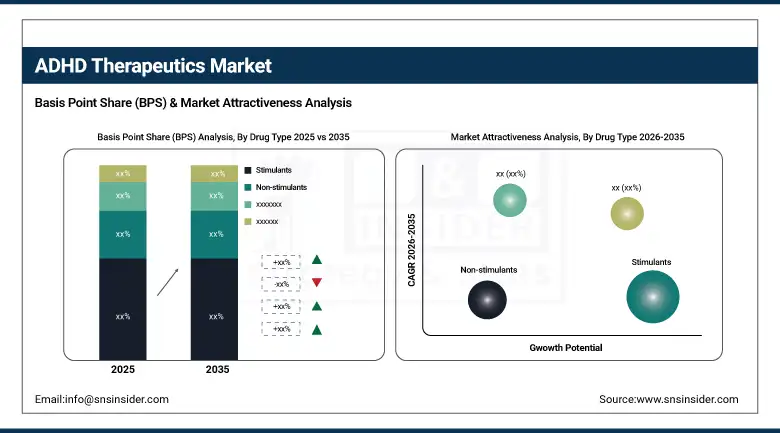
By Drug Type: In 2025, stimulants dominated with around 70% share; non-stimulants are the fastest-growing segment during 2026–2035.
-
By Distribution Channel: In 2025, retail pharmacies dominated with about 50% share; online pharmacies are the fastest-growing segment during 2026–2035.
-
By Age Group: In 2025, children dominated with around 45% share; adults are the fastest-growing segment during 2026–2035.
-
By Therapy Type: In 2025, medication therapy dominated with nearly 65% share; cognitive behavioral therapy is the fastest-growing segment during 2026–2035.
ADHD Therapeutics Market Segment Analysis:
By Drug Type: Stimulants Lead as Non-Stimulants Gain Traction.
Based on drug type, stimulant medications are poised to be the largest segment of ADHD Therapeutics market harnessing the strong clinical efficacy in conjunction with proven safety in improving attention span, impulse control, and behavioral regulation. These drugs have been a mainstay of treatment among pediatric and adult patients, with many providers even considering them first-line therapy. The fast relief of their symptoms and thorough testing have positioned them as the major therapy choice from most healthcare systems worldwide.
With increased interest in medications with a lower potential for abuse and fewer potential side-effects from stimulants, non-stimulant medications are increasingly being utilized. The growing need for controlled substance scrutiny and more recent non-stimulant formulations is encouraging use in those who do poorly on stimulant therapy.
By Distribution Channel: Retail Pharmacies Lead as Online Pharmacies Expand.
Retail pharmacies account for larger share of ADHD Therapeutics market due to their convenience, their vast prescription dispensing network, as well as their interaction with HC providers. ADHD medications are mainly available through the retail pharmacy chains so there's easy access for the patients and also consistency in terms of medication management.
The increasing adoption of digital healthcare services and telepsychiatry consultations are creating opportunities for online pharmacies, which are also witnessing rapid growth. Through consistent e-prescribing and home delivery, ADHD medications are becoming relatively accessible; the growing number of e-prescriptions and online pharmacies are also giving more options for patients who prefer a more convenient and discreet method of treatment.
By Age Group: Children Lead as Adult ADHD Treatment Expands.
The largest patient segment in the ADHD Therapeutics market is children, this is due to the disorder being routinely diagnosed during early school years. Pediatric medication therapy is typically combined with a behavioral approach to help improve basic academic and other social functioning. Such control is further boosted by the high diagnosis rate the disorder maintains among school age arena children globally.
There is a growing recognition in the medical community that adult ADHD treatment is a rapidly expanding field, as adults may well carry their disorder into later life. The greater awareness of mental illness national screening programs workplace productivity concerns and more acceptance of mental health treatment have contributed to a higher diagnosis and treatment rates among adults.
By Therapy Type: Medication Therapy Leads as Cognitive Behavioral Therapy Gains Momentum.
The ADHD Therapeutics market is dominated by treatment strategies involving psychostimulants as these medications which help provide rapid control over symptoms and potential quantifiable gains in focus and impulse control. Stimulant or non-stimulant medications are often the first-line treatment approach and are frequently accompanied by behavioral interventions.
CBT stands for cognitive behavioral therapy, and it is becoming increasingly popular as one piece of a multifaceted ADHD treatment puzzle. As more and more focus is placed on long term behavioral modification, emotional regulation, and skill building CBT is increasingly being coupled with medication treatment, especially in adolescents and adults looking for a more comprehensive treatment approach.
ADHD Therapeutics Market Regional Analysis:
North America ADHD Therapeutics Market Insights:
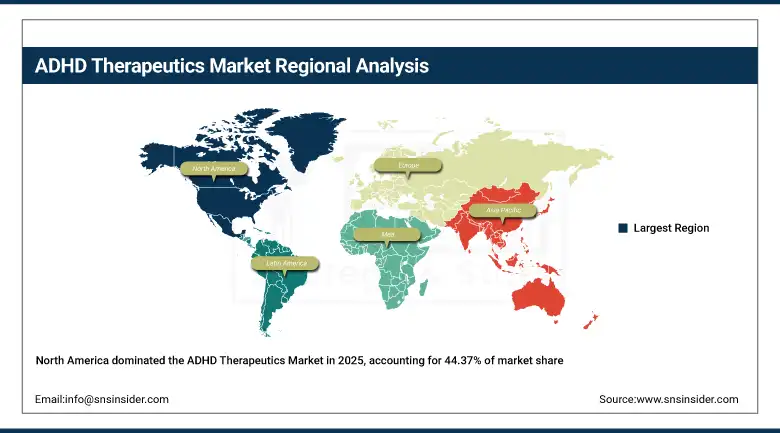
In 2025, North America’s ADHD Therapeutics Market accounted for the highest regional revenue share of approximately 44.37%. North America ADHD therapeutics market is driven by the rising cases of attention deficit hyperactivity disorder and its diagnosis, high recognition of mental health conditions, and the presence of stringent healthcare infrastructure. Factors such as high presence of major pharmaceutical manufacturers, R&D and easy availability of stimulant and non-stimulant medications augment the dominant position of the region. Moreover, favorable reimbursement policies, improved diagnostic capacity and growing utilization of telepsychiatry and digital mental health platforms further the market in the US and Canada.
Get Customized Report as per Your Business Requirement - Enquiry Now
Asia Pacific ADHD Therapeutics Market Insights:
Asia Pacific represents a high-growth region for the ADHD Therapeutics market, registering a CAGR of 8.95% during 2026–2035. The robust growth is attributed to increasing awareness of mental health disorders, improving healthcare infrastructure, and rising diagnosis rates of ADHD across countries such as China, India, Japan, and South Korea. Growing investments in psychiatric healthcare services, expanding pharmaceutical distribution networks, and increasing access to modern treatment options are supporting market expansion. Additionally, government initiatives promoting mental health awareness and the increasing adoption of telemedicine services are expected to accelerate market growth across the region during the forecast period.
Europe ADHD Therapeutics Market Insights:
Due to the growing acknowledgment of attention deficit hyperactivity disorder (ADHD) as a global burden, the European market for ADHD therapeutics is likely to see increasing demand for effective treatment options for pediatric and adult populations. Market growth is driven by the availability of developed healthcare systems, a robust regulatory framework, and growing investments in mental health services. Growing utilization of stimulant medicines, non-stimulant treatments, and comprehensive behavioral treatment programs are encouraging greater uptake of ADHD therapies in other European countries including Germany, the U.K. and France.
Latin America ADHD Therapeutics Market Insights:
The Latin America ADHD Therapeutics market is expanding steadily due to improving mental health awareness, increasing diagnosis rates, and gradual improvements in healthcare accessibility. Growth in pharmaceutical distribution channels and expanding access to prescription medications are supporting treatment adoption across the region. Countries such as Brazil and Mexico are witnessing rising demand for ADHD medications as healthcare providers focus more on early diagnosis and management of neurodevelopmental disorders.
Middle East and Africa ADHD Therapeutics Market Insights:
the therapeutic market is growing in the Middle East and Africa for ADHD keeping improving healthcare infrastructure and rising awareness for mental disorders. The increasing investments in health services, expanding access to psychiatric care, and increased emphasis on early detection are fueling ADHD medication and treatment adoption. Moreover, enhanced collaboration among healthcare providers and pharmaceutical companies is contributing towards improving the accessibility of the treatment in the prominent markets in the region.
ADHD Therapeutics Market Competitive Landscape:
Takeda Pharmaceutical Company Limited is a leading company in the ADHD Therapeutics market known for its strong portfolio of central nervous system (CNS) treatments, including widely prescribed ADHD medications. The company focuses on developing innovative stimulant therapies and long-acting formulations that improve symptom control and patient adherence. Takeda has a strong global presence across North America, Europe, and Asia Pacific, supported by extensive research and development capabilities and collaborations with healthcare providers.
-
In 2025, Takeda expanded the availability of its ADHD treatment portfolio in several international markets following regulatory approvals and supply expansion initiatives aimed at improving patient access to long-acting stimulant medications.
Eli Lilly and Company is a prominent pharmaceutical company in the ADHD Therapeutics market, known for developing innovative treatments for neurological and psychiatric disorders. The company has played a significant role in advancing non-stimulant ADHD therapies and continues to invest in research aimed at improving treatment safety and long-term patient outcomes. Eli Lilly’s strong global presence and focus on neuroscience research support its leadership in mental health therapeutics.
-
In 2025, Eli Lilly expanded research initiatives in neuropsychiatric disorders, including ADHD-related treatment development, as part of its broader strategy to strengthen its neuroscience drug pipeline.
Teva Pharmaceutical Industries Ltd. is a major participant in the ADHD Therapeutics market, recognized for its extensive range of generic and branded ADHD medications. The company focuses on cost-effective treatment options and broad distribution through retail and hospital pharmacy networks worldwide. Teva is known for its strong manufacturing capacity and expertise in extended-release drug formulations designed to improve treatment adherence and therapeutic outcomes.
-
In 2025, Teva strengthened its ADHD medication supply chain and expanded production capacity for several generic stimulant formulations to address increasing global demand and medication shortages.
ADHD Therapeutics Market Key Players:
-
Takeda Pharmaceutical Company Limited
-
Teva Pharmaceutical Industries Ltd.
-
Eli Lilly and Company
-
Johnson & Johnson
-
Novartis AG
-
Pfizer Inc.
-
Supernus Pharmaceuticals, Inc.
-
Amneal Pharmaceuticals, Inc.
-
Sun Pharmaceutical Industries Ltd.
-
Mallinckrodt Pharmaceuticals
-
Aytu BioPharma, Inc.
-
Tris Pharma, Inc.
-
Noven Pharmaceuticals, Inc.
-
Arbor Pharmaceuticals, LLC
-
Rhodes Pharmaceuticals L.P.
-
Apotex Inc.
-
Hikma Pharmaceuticals PLC
-
Lupin Limited
-
Zydus Lifesciences Limited
-
Granules India Limited
| Report Attributes | Details |
|---|---|
| Market Size in 2025 | USD 14.96 Billion |
| Market Size by 2035 | USD 23.89 Billion |
| CAGR | CAGR of 4.80% From 2026 to 2035 |
| Base Year | 2025 |
| Forecast Period | 2026-2035 |
| Historical Data | 2022-2024 |
| Report Scope & Coverage | Market Size, Segments Analysis, Competitive Landscape, Regional Analysis, DROC & SWOT Analysis, Forecast Outlook |
| Key Segments | • By Drug Type: (Stimulants, Non-stimulants, Combination therapy) • By Distribution Channel: (Hospital pharmacies, Retail pharmacies, Online pharmacies) • By Age Group: (Children, Adolescents, Adults) • By Therapy Type: (Medication therapy, Behavioral therapy, Cognitive behavioral therapy) |
| Regional Analysis/Coverage | North America (US, Canada), Europe (Germany, UK, France, Italy, Spain, Russia, Poland, Rest of Europe), Asia Pacific (China, India, Japan, South Korea, Australia, ASEAN Countries, Rest of Asia Pacific), Middle East & Africa (UAE, Saudi Arabia, Qatar, South Africa, Rest of Middle East & Africa), Latin America (Brazil, Argentina, Mexico, Colombia, Rest of Latin America). |
| Company Profiles | Takeda Pharmaceutical Company Limited, Teva Pharmaceutical Industries Ltd., Eli Lilly and Company, Johnson & Johnson, Novartis AG, Pfizer Inc., Supernus Pharmaceuticals, Inc., Amneal Pharmaceuticals, Inc., Sun Pharmaceutical Industries Ltd., Mallinckrodt Pharmaceuticals, Aytu BioPharma, Inc., Tris Pharma, Inc., Noven Pharmaceuticals, Inc., Arbor Pharmaceuticals, LLC, Rhodes Pharmaceuticals L.P., Apotex Inc., Hikma Pharmaceuticals PLC, Lupin Limited, Zydus Lifesciences Limited, Granules India Limited. |
Frequently Asked Questions
The ADHD Therapeutics market is expected to grow at a CAGR of 4.80% during 2026-2035.
The market was valued at USD 14.96 Billion in 2025 and is projected to reach USD 23.89 Billion by 2035.
The key drivers of the ADHD Therapeutics market include rising ADHD diagnosis rates, increasing awareness of mental health disorders.
The Drug Type segment, led by stimulant medications, dominated the ADHD Therapeutics market due to their high clinical effectiveness, rapid symptom control, and widespread prescription for both pediatric and adult ADHD patients.
North America dominated the ADHD Therapeutics market in 2025.
Get in Touch
