
Functional Ingredients Market Report Scope & Overview:
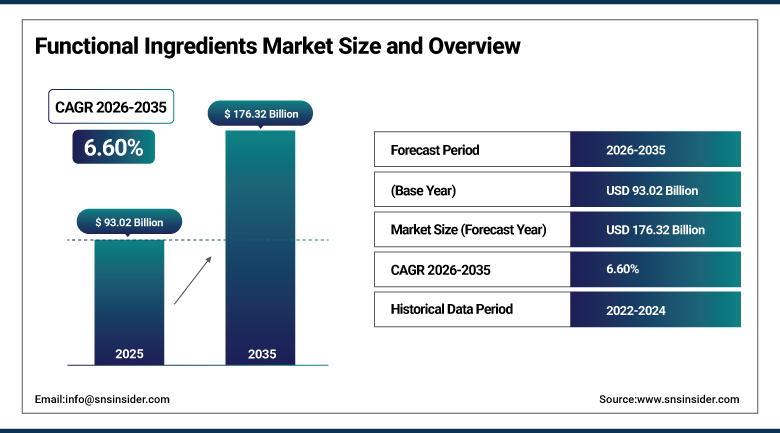
The Functional Ingredients Market was valued at USD 93.02 Billion in 2025 and is expected to reach USD 176.32 Billion by 2035, growing at a CAGR of 6.60% from 2026 to 2035.
Functional Ingredients Market is expanding rapidly due to the rising incidence of chronic diseases and micronutrient deficiencies, the emergence of middle classes in developing countries, and rising consumer demands for healthier products. Functional ingredients can be described as specific substances produced from plants, animals, and microorganisms, which are used in food, beverages, and personal care products in order to increase their health benefits, functionality, or shelf life, including probiotics, prebiotics, vitamins, minerals, and antioxidants. Moreover, the development of the market is boosted by rising awareness about the health benefits of probiotics not only for digestive tract but for the whole body as well, rising consumer demand for healthy and sustainable products, and increasing regulation and guidelines concerning synthetically produced ingredients imposed by regulatory bodies.
Functional ingredients market presents many natural ingredients like adaptogens, for example, ashwagandha, which helps to cope with stress and antioxidants found in berries protecting cells from damage, and reflects consumer interest in ingredients which can positively impact immunity, gut microbiota, and mental wellbeing.
To Get more information Functional Ingredients Market - Request Free Sample Report
Functional Ingredients Market Trends
- Rising consumer demand for gut health and immunity support is driving continued research into probiotics' health benefits beyond traditional digestive health positioning.
- Growing surge in plant-based and functional food products, including dairy alternatives and functional beverages, is enhancing demand for probiotic and prebiotic ingredients across an expanding range of product categories.
- Increasing consumer preference for adaptogens and stress-reducing natural compounds is expanding functional ingredient applications beyond conventional nutrition into mood and mental wellness positioning.
- Expanding e-commerce sector availability is improving accessibility of vitamin-based and other functional ingredient supplements, supporting sustained market growth across digital retail channels.
- Strategic partnerships among functional ingredient suppliers, food manufacturers, and personal care brands are supporting development of increasingly diverse, application-specific ingredient portfolios.
U.S. Functional Ingredients Market Outlook
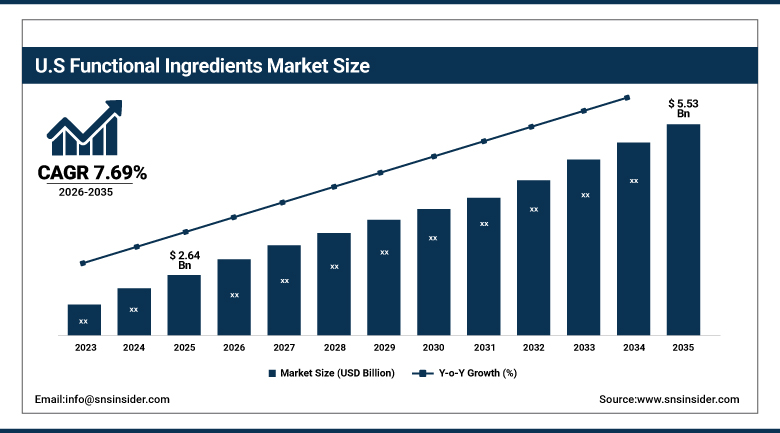
The U.S. Functional Ingredients Market was valued at USD 2.64 Billion in 2025 and is projected to reach USD 5.53 Billion by 2035, growing at a CAGR of 7.69% during 2026–2035.
The nation’s major food, beverages, and personal care producers keep pushing functional ingredients, owing to the increasing local demand for healthy and sustainable goods. The rising awareness of consumers about the need for living a healthy life, along with the incorporation of functional elements in the personal care sector, keeps ensuring the continuous demand for natural and synthetic functional ingredients within the diverse sectors of food, beverages, dietary supplements, and personal care production within the country.
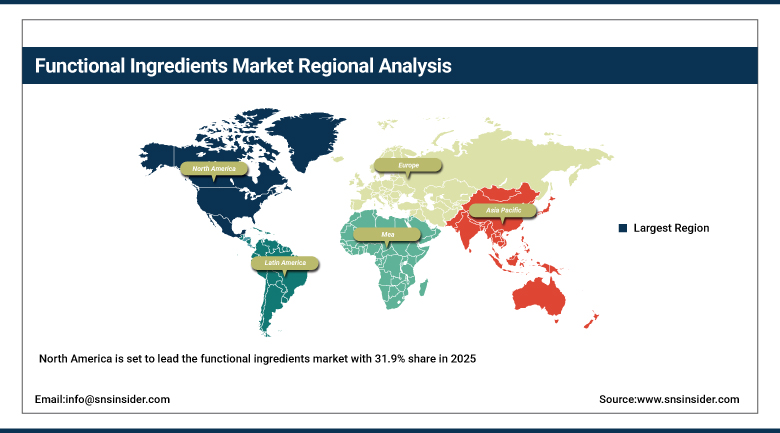
North America is expected to hold the highest share in the global functional ingredients market in 2025, accounting for 31.9%, owing to the increasing demand for functional probiotics and increasing chronic diseases among health-conscious consumers in the region.
Functional Ingredients Market Segment Analysis
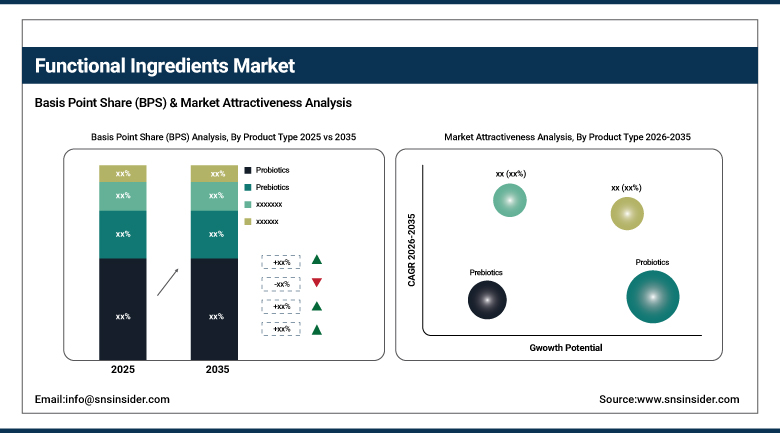
- By Product Type, Probiotics dominated the Functional Ingredients Market with a 36.70% share in 2025, while Prebiotics is the fastest-growing product type segment with a CAGR of 8.20% from 2026–2035.
- By Source, Natural-Sourced dominated the Functional Ingredients Market with a 64.60% share in 2025, while Synthetic-Sourced is the fastest-growing source segment with a CAGR of 7.40% from 2026–2035.
- By Application, Food & Beverages dominated the Functional Ingredients Market with a 45.00% share in 2025, while Personal Care is the fastest-growing application segment with a CAGR of 8.60% from 2026–2035.
- By Distribution Channel, Direct/B2B Ingredient Sales dominated the Functional Ingredients Market with a 68.90% share in 2025, while Retail/Online is the fastest-growing distribution channel segment with a CAGR of 8.90% from 2026–2035.
By Product Type, Probiotics dominated the Functional Ingredients Market, while Prebiotics is the fastest-growing segment.
Based on Product, the Probiotics segment is expected to hold the largest share of the market in 2025, fueled by rising demand for gut health and immunity. Probiotics are forecast to dominate, contributing significant market share because of documented benefits in digestive balance and immune modulation, with probiotic-rich spreads and refrigerated dips increasingly replacing synthetic-labeled alternatives across natural retailers.
The Prebiotics segment is expected to register the fastest CAGR of 8.20% during the forecast period 2026-2035. Growing scientific validation of prebiotic fiber's role in supporting gut microbiome health and enhancing probiotic effectiveness is driving rising segment demand, as manufacturers increasingly incorporate prebiotic ingredients into functional food and beverage formulations targeting digestive wellness.
By Source, Natural-Sourced dominated the Functional Ingredients Market, while Synthetic-Sourced is the fastest-growing segment.
In 2025, the natural-sourced functional ingredients segment is expected to account for the larger share of the global functional ingredients market. The large market share of this segment is attributed to increased consumer preferences for health-conscious and sustainable products and their concern about possible health risks and side effects associated with artificial food and synthetic chemicals.
The Synthetic Segment is expected to grow at the fastest CAGR during the forecast period. Despite growing consumer preference for natural alternatives, cost-effective synthetic production methods and consistent supply chain reliability continue driving demand across price-sensitive food and beverage fortification applications requiring standardized ingredient specifications.
By Application, Food & Beverages dominated the Functional Ingredients Market, while Personal Care is the fastest-growing segment.
Based on Application, the Food & Beverages segment is projected to capture 45% share of the market in 2025, driven by health-conscious consumers seeking functional everyday foods. The share of food and beverages is forecast to slightly increase, driven by innovations in functional ingredients and new product launches aimed at addressing specific health concerns across mainstream packaged food categories.
The personal care segment is expected to grow at the fastest CAGR during the forecast period, driven by the high preference of healthy people and patients for personal care routines. Growing consumer interest in incorporating functional, bioactive ingredients into skincare and haircare formulations is driving rapid segment growth as personal care brands increasingly leverage antioxidants and adaptogens for differentiated product positioning.
Regional Analysis
|
Region |
Major Country |
Share within Region, 2025 (%) |
|
North America |
United States |
85.00% |
|
Europe |
Germany |
27.60% |
|
Asia Pacific |
China |
44.60% |
|
Middle East & Africa |
UAE |
25.60% |
|
Latin America |
Brazil |
37.70% |
North America Functional Ingredients Market Insights
North America is set to lead the functional ingredients market with 31.9% share in 2025, driven by strong demand for functional probiotic ingredients, rising prevalence of chronic disease, and supportive food research initiatives and agricultural programs across the region.
The US was the leading country within the North America Functional Ingredients Market in 2025, driven by growing consumer awareness regarding healthy lifestyles and the benefits of incorporating functional ingredients into daily routines. Canada is contributing to regional growth through its own expanding natural health product market and growing consumer interest in functional food fortification.
Get Customized Report as per Your Business Requirement - Enquiry Now
Europe Functional Ingredients Market Insights
Europe functional ingredients market was a major contributor in 2025. This is attributed to the region's strong regulatory frameworks favoring natural ingredients, growing consumer demand for clean-label functional products, and expanding aging population requiring preventive health nutrition support.
Germany is one of the major markets in Europe owing to its strong food and personal care manufacturing base and growing consumer demand for natural, functional ingredients. Other countries such as France and the United Kingdom are also contributing to market growth through expanding functional food fortification and personal care sector adoption.
Asia Pacific Functional Ingredients Market Insights
Asia Pacific is anticipated to be the fastest growing region in the functional ingredients market. The market growth is driven by rising disposable incomes, growth of the middle class, and expanding domestic functional food and personal care manufacturing capacity across the region's major economies.
China is one of the main growth drivers in the Asia Pacific functional ingredients market, owing to its massive consumer base and rapidly expanding functional food manufacturing capacity. Japan, a historic pioneer in functional food regulatory frameworks, and India are also contributing to regional growth through expanding health-conscious consumer bases and rising demand for fortified products.
Middle East & Africa and Latin America Functional Ingredients Market Insights
Middle East & Africa and Latin American regions are gradually expanding functional ingredients adoption as retail infrastructure develops and consumer awareness of preventive health benefits grows across both regions.
Brazil is set to be a prominent Latin American market fueled by growing functional food manufacturing capacity, with Arla Foods Ingredients having launched a toolbox in February 2025 to help South American functional food manufacturers develop high-protein and dairy-based desserts. The Middle East & Africa region has UAE and Saudi Arabia investing in modern retail infrastructure expanding access to functional ingredient-based product categories.
Market Dynamics
Growth Drivers: Rising chronic disease prevalence and health consciousness driving market growth
The rising prevalence of chronic diseases and micronutrient deficiencies, the growth of the middle class in emerging countries, and rising consumer demand for healthier products are among the primary drivers of the Functional Ingredients Market. The increasing demand for vitamins for fortification of food and beverages, animal feed, healthcare, and personal care products, combined with the growing aging population, continues to sustain broad-based functional ingredient demand worldwide.
The rising consumer awareness regarding the importance of maintaining a healthy lifestyle and the benefits of incorporating functional ingredients into daily routines continues to drive market growth. Growing awareness about the health benefits of probiotics beyond digestive health, the expansion of the e-commerce sector improving ingredient accessibility, and increasing prevalence of vitamin deficiencies are further supporting demand across the forecast period.
Restraints: Stringent regulations and high production costs limiting market expansion
One of the key challenges for growth in the market includes strict regulations that pertain to issues such as safety and efficacy of formulations and ingredient claims, and these regulations have continued to be a challenge for the manufacturers who want to substantiate their health benefit positioning in various jurisdictions around the world.
Another challenge is that of high costs involved in sourcing, manufacturing, and clinical validation of natural functional ingredients, and these have continued to be an obstacle to the growth of the market, especially when smaller manufacturers compete with large manufacturers in the same industry, which have research and development capabilities.
Opportunities: Expansion of personal care applications and natural sourcing creating new growth avenues
The rising imposition of stringent regulations and guidelines from regulatory bodies regarding the use of synthetic-sourced functional ingredients is creating substantial opportunities for natural ingredient suppliers, as this regulatory shift continues favoring natural-sourced alternatives poised to capture growing market share.
There is a considerable growth opportunity in the continued expansion of functional ingredient incorporation into personal care formulations addressing growing consumer interest in bioactive skincare and haircare products. The expansion of functional food manufacturing capacity and health-conscious consumption in emerging markets across Asia Pacific and Latin America is likely to unlock substantial new demand throughout the forecast period.
Recent Developments:
- 2026: DuPont Nutrition & Biosciences expanded its probiotic strain production capacity, strengthening its ability to supply growing global demand for gut health and immunity-focused functional ingredients.
- 2026: Kemin Industries introduced a new antioxidant ingredient blend designed to improve shelf life and nutritional value in functional food products, targeting manufacturers seeking multifunctional ingredient solutions.
- 2025: Symrise completed the acquisition of Sensient Natural Ingredients, enhancing its portfolio of natural and functional food ingredients and strengthening its position across the broader functional ingredients supply chain.
- 2025: Arla Foods Ingredients announced the launch of a toolbox to help South American functional food manufacturers in the development of high-protein and dairy-based desserts, expanding its regional application support capability.
Functional Ingredients Market key players are:
- Archer Daniels Midland Company
- Cargill, Incorporated
- IFF (DuPont de Nemours, Inc.)
- Ingredion Incorporated
- dsm-firmenich (Koninklijke DSM N.V.)
- Tate & Lyle plc
- FMC Corporation
- Omega Protein Corporation
- Kerry Group plc
- Tereos S.A.
- Meelunie B.V.
- Roquette Frères
- Euroduna Food Ingredients GmbH
- Blattmann Schweiz AG
- Arla Foods Ingredients Group P/S
- BASF SE
- Symrise AG
- Kemin Industries, Inc.
- Novonesis (Chr. Hansen Holding A/S)
- Givaudan SA
Functional Ingredients Market Report Scope:
| Report Attributes | Details |
|---|---|
| Market Size in 2025 | USD 93.02 Billion |
| Market Size by 2035 | USD 176.32 Billion |
| CAGR | CAGR of 6.60% From 2026 to 2035 |
| Base Year | 2025 |
| Forecast Period | 2026-2035 |
| Historical Data | 2022-2024 |
| Report Scope & Coverage | Market Size, Segments Analysis, Competitive Landscape, Regional Analysis, DROC & SWOT Analysis, Forecast Outlook |
| Key Segments | • By Product Type (Probiotics, Prebiotics, Vitamins, Minerals, Omega-3 Fatty Acids) • By Source (Natural-Sourced, Synthetic-Sourced) • By Application (Food & Beverages, Personal Care, Dietary Supplements, Animal Feed) • By Distribution Channel (Direct/B2B Ingredient Sales, Retail/Online) |
| Regional Analysis/Coverage | North America (US, Canada), Europe (Germany, UK, France, Italy, Spain, Russia, Poland, Rest of Europe), Asia Pacific (China, India, Japan, South Korea, Australia, ASEAN Countries, Rest of Asia Pacific), Middle East & Africa (UAE, Saudi Arabia, Qatar, South Africa, Rest of Middle East & Africa), Latin America (Brazil, Argentina, Mexico, Colombia, Rest of Latin America). |
| Company Profiles | Archer Daniels Midland Company, Cargill, Incorporated, IFF (DuPont de Nemours, Inc.), Ingredion Incorporated, dsm-firmenich (Koninklijke DSM N.V.), Tate & Lyle plc, FMC Corporation, Omega Protein Corporation, Kerry Group plc, Tereos S.A., Meelunie B.V., Roquette Frères, Euroduna Food Ingredients GmbH, Blattmann Schweiz AG, Arla Foods Ingredients Group P/S, BASF SE, Symrise AG, Kemin Industries, Inc., Novonesis (Chr. Hansen Holding A/S), and Givaudan SA |
Frequently Asked Questions
The Functional Ingredients Market is expected to grow at a CAGR of 6.60% from 2026 to 2035.
The Functional Ingredients Market was valued at USD 93.02 Billion in 2025.
The market is driven by the rising prevalence of chronic diseases and micronutrient deficiencies, growth of the middle class in emerging countries, and rising demand for healthier products.
The Probiotics segment dominated the Functional Ingredients Market, accounting for approximately 36.70% market share.
The North America region dominated the Functional Ingredients Market in 2025 with a 31.9% share, driven by strong demand for functional probiotic ingredients.
