
Pelvic Floor Dysfunction Device & Rehabilitation Market Report Scope & Overview:
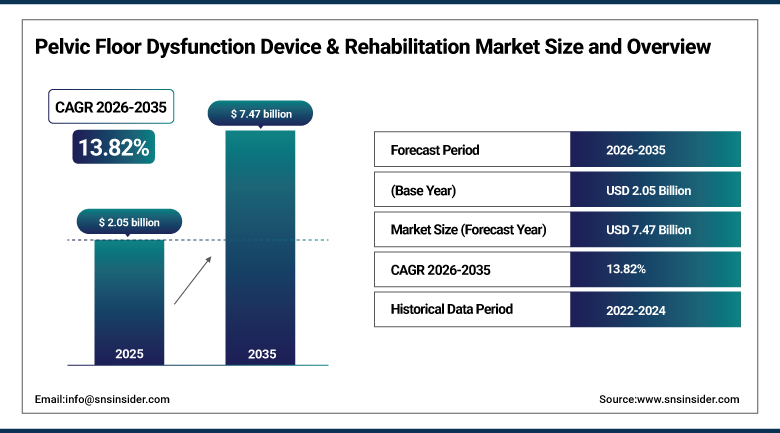
The Pelvic Floor Dysfunction Device & Rehabilitation Market was valued at USD 2.05 billion in 2025 and is expected to reach USD 7.47 billion by 2035, growing at a CAGR of 13.82% from 2026–2035.
The pelvic floor dysfunction device & rehabilitation market is witnessing steady growth in the global market owing to rising prevalence of pelvic floor disorders. Increasing awareness regarding pelvic health management across women and elderly populations is boosting adoption. Growing investments in rehabilitation technologies are supporting market expansion. Manufacturers are focusing on advanced stimulation devices and digital rehabilitation solutions. Rising demand for non-invasive treatment options and home-based care solutions is driving innovation. Increasing use in physiotherapy centers and specialized clinics is further accelerating market adoption.
According to the World Health Organization and International Continence Society, approximately 423 million individuals worldwide suffer from urinary incontinence, which is considered the primary conservative treatment for this condition through the use of pelvic floor muscle training. The statistics provided by the NIH of the United States state that about 30% to 50% of women suffer from urinary incontinence at some point in their life time.
To Get more information Pelvic Floor Dysfunction Device & Rehabilitation Market - Request Free Sample Report
Pelvic Floor Dysfunction Device & Rehabilitation Market Trends:
-
Increased uptake of at-home pelvic rehabilitation options is making life more convenient for patients worldwide.
-
The use of remote patient monitoring tools is improving the process of continuous monitoring and personalization of pelvic health care.
-
Connection between mobile applications and devices is improving compliance and involvement in pelvic therapy.
-
New digital pelvic rehabilitation technologies are enabling the provision of effective and tailored treatments for pelvic floors.
-
There is increased use of biofeedback tools and electrical stimulation tools in pelvic rehabilitation.
-
Medical practitioners are using new medical devices for pelvic floor therapy.
U.S. Pelvic Floor Dysfunction Device & Rehabilitation Market Outlook:
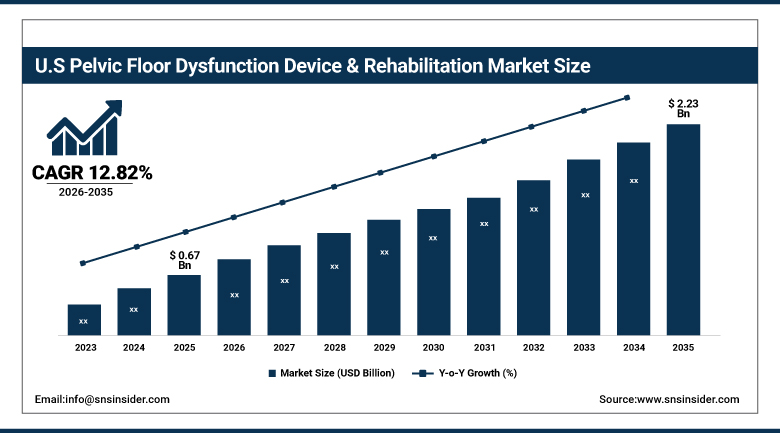
The U.S. Pelvic Floor Dysfunction Device & Rehabilitation Market was valued at USD 0.67 billion in 2025 and is expected to reach around USD 2.23 billion by 2035, growing at a CAGR of 12.82% from 2026–2035.
The U.S. pelvic floor dysfunction device & rehabilitation market is expanding steadily owing to strong demand for advanced pelvic health solutions. Increasing prevalence of urinary incontinence and pelvic disorders across aging populations is supporting market growth. Rising adoption of rehabilitation technologies is driving implementation across healthcare facilities. Growth in home-based pelvic floor therapies and specialized care services is further accelerating demand. Manufacturers are focusing on innovative stimulation devices and digital rehabilitation systems. Increasing use in physiotherapy, clinics, and personal wellness applications is strengthening market penetration.
Based on the NIH and NIDDK-supported statistics, over 25 million American adults suffer from incontinence, with increased numbers among females. It is worth noting that the Census Bureau statistics reveal that people aged 65 years and above represent 18% of the total number of people in the country. As such, it should be noted that the American Physical Therapy Association supports pelvic floor rehabilitation as an evidence-based practice, making the use of rehabilitation devices and remote monitoring necessary.
Pelvic Floor Dysfunction Device & Rehabilitation Market Segment Analysis:
-
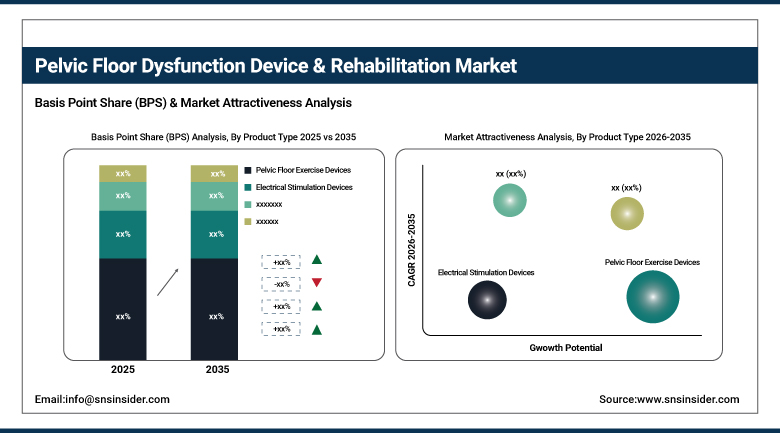
By Product Type, pelvic floor exercise devices dominated the market with 32.50% share in 2025; while electrical stimulation devices are the fastest growing segment with CAGR of 17.27% during 2026 to 2035.
-
By Condition Type, urinary incontinence dominated the market with 45.60% share in 2025; while pelvic organ prolapse is the fastest growing segment with CAGR of 17.82% during 2026 to 2035.
-
By End User, homecare settings dominated the market with 23.70% share in 2025; while physiotherapy & rehabilitation centers are the fastest growing segment with CAGR of 16.97% during 2026 to 2035.
By Product Type, pelvic floor exercise devices dominated the market, while electrical stimulation devices are the fastest growing segment.
The pelvic floor exercise devices category captured the dominated market share in the pelvic floor dysfunction device & rehabilitation market due to its high popularity owing to their use being recommended and accepted as an effective initial step for pelvic muscle strength training. The devices are safe, economical, and easy-to-use for the management of incontinence and other pelvic floor weakness conditions. Rising awareness about pelvic health conditions and increasing usage in the homecare setup also propelled the growth of the segment.
Electrical stimulation devices category is estimated to be the fastest-growing category in the coming years owing to increasing demand for modern rehabilitation techniques with better therapeutic results. These devices are used for the stimulation of muscles for patients who require pelvic floor rehabilitation. Increasing adoption of the devices in physiotherapy centers and specialized clinics is boosting the segment’s growth.
By Condition Type, urinary incontinence dominated the market, while pelvic organ prolapse is the fastest growing segment.
Urinary incontinence segment captured dominated revenue share in 2025 pelvic floor dysfunction device & rehabilitation market due to high prevalence rate of leakage related disorders among females and aged population. High awareness of pelvic floor treatment, high demand for treatment without surgery, and higher usage of exercise devices, biofeedback devices and rehabilitation devices is driving segment growth. Growing emphasis of healthcare organizations to enhance quality of life is further enhancing segment dominance.
Pelvic organ prolapse segment will register fastest CAGR between 2026 and 2035 due to high prevalence among aged women and increasing need for support for pelvic organs. Increasing awareness about diagnosis and minimally invasive techniques for managing disorder is boosting segment adoption. Improvements in rehabilitation devices, availability of specialized care and use of personalized treatments are further driving rapid segment expansion.
By End User, homecare settings dominated the market, while physiotherapy & rehabilitation centers are the fastest growing segment.
The homecare settings segment has occupied the dominated revenue share in the pelvic floor dysfunction device & rehabilitation market in 2025. The growth is mainly due to the rising preference of patients towards convenient, confidential, and pocket-friendly pelvic floor rehabilitation solutions. The rise in the use of exercise devices, digital monitoring systems, and self-rehabilitation procedures is fuelling the growth of homecare settings.
The Physiotherapy & Rehabilitation Centers segment is expected to witness the fastest CAGR during the forecast period from 2026-2035. The growth is fueled by the high demand for personalized pelvic floor therapy and rehabilitation services. An increase in the occurrence of urinary incontinence, pelvic organ prolapses, and chronic pelvic disorders is driving the growth of this segment.
Regional Analysis:
|
Region |
Major Country |
Share within Region, 2025(%) |
|---|---|---|
|
North America |
United States |
84.60% |
|
Europe |
Germany |
24.80% |
|
Asia Pacific |
China |
36.50% |
|
Middle East & Africa |
UAE |
14.20% |
|
Latin America |
Brazil |
42.00% |
North America Pelvic Floor Dysfunction Device & Rehabilitation Market Insights.
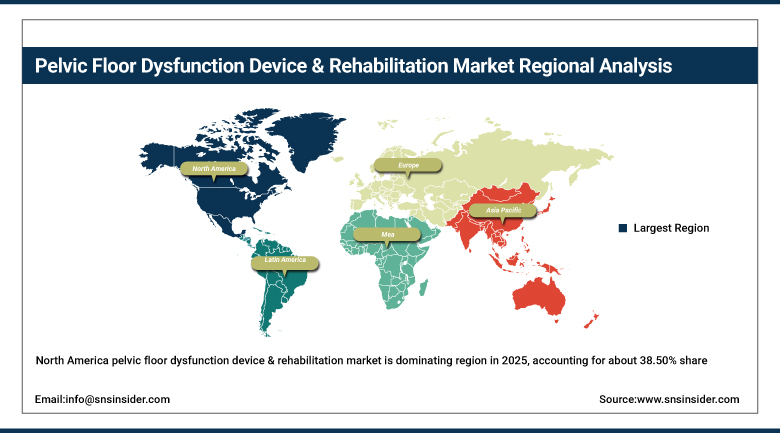
North America pelvic floor dysfunction device & rehabilitation market is dominating region in 2025, accounting for about 38.50% share, driven by strong demand for advanced pelvic health solutions. The region benefits from developed healthcare infrastructure and increasing adoption of rehabilitation technologies. Rising awareness regarding urinary incontinence and pelvic disorders is significantly strengthening product adoption. Expansion of specialized physiotherapy services is accelerating demand. Strong focus on women’s health management and non-invasive therapies further reinforces the region’s dominant position in the market.
According to the findings from the National Institutes of Health and urological data, the issue of incontinence in the US is faced by about 25 million people, where the female gender has greater prevalence rates compared to men. According to the data on the NHANES register of the Centers for Disease Control and Prevention, more than 60% of women above 20 years suffer from urinary incontinence. The ACOG encourages the use of pelvic floor training exercise.
Get Customized Report as per Your Business Requirement - Enquiry Now
Europe Pelvic Floor Dysfunction Device & Rehabilitation Market Insights.
Europe pelvic floor dysfunction device & rehabilitation market is characterized by stable growth in 2025 owing to increasing demand for advanced rehabilitation and pelvic health management solutions. Key countries include Germany, France, United Kingdom, and Italy. Rising healthcare investments and increasing awareness of pelvic disorders are driving adoption. Growing focus on women’s health and aging population care is boosting demand. Expansion of physiotherapy services and supportive healthcare policies are further supporting market expansion. Strict clinical standards are encouraging innovation in rehabilitation technologies.
According to EAU, as well as from the statistics on public health of the region, pelvic floor disorders occur widely among European adult population, with the incidence of incontinence being estimated at 10-2%, with an increase in age. According to Eurostat statistics, the share of people aged 65+ constitutes 22% of the EU population. Pelvic floor muscle exercises are included in WHO/EU healthcare policies as a key intervention method.
Asia Pacific Pelvic Floor Dysfunction Device & Rehabilitation Market Insights.
Asia Pacific is the fastest growing region in the pelvic floor dysfunction device & rehabilitation market, registering a CAGR of about 16.24% during 2026–2035. Rapid healthcare development and expanding medical technology adoption are driving strong demand across China, India, Japan, South Korea, and Southeast Asia. Increasing prevalence of pelvic floor disorders is boosting market growth. Rising healthcare awareness is further accelerating adoption. Growth in home-based rehabilitation and digital health solutions is supporting large scale market expansion.
As per the reports of WHO and UN population databases, more than 60% of the world’s population resides in the Asia-Pacific region, with changes in demographics resulting in age-related diseases. According to the projections of UN ESCAP, people of 60 years or above will constitute more than 25% of the population in the region by 2050. Urinary incontinence and pelvic floor disorder is a common issue recognized by the International Continence Society.
Middle East & Africa and Latin America Pelvic Floor Dysfunction Device & Rehabilitation Market Insights.
The Middle East & Africa along with Latin America regions are witnessing steady growth due to improving healthcare infrastructure and increasing awareness of pelvic floor disorders. Key contributing countries include Brazil, Mexico, UAE, Saudi Arabia, and South Africa. Increasing demand for specialized rehabilitation services is driving adoption. Growth in women’s healthcare programs is further supporting market expansion. Rising investments in medical technologies and non-invasive treatment solutions are boosting regional demand.
Recent population estimates from the United Nations and World Health Organization indicate that there is an increased prevalence of pelvic floor dysfunction due to aging population and issues surrounding the health of pregnant women. According to current estimates, adults older than 60 years will surpass 20% to 24% of the population in various locations by 2050. The World Health Organization reports over 140 million births per year throughout the world, increasing the risk for pelvic floor injuries.
Market Dynamics:
Growth Drivers: Increasing Adoption of Digital Rehabilitation and Advanced Therapeutic Devices
Developments in digital healthcare technology and rehabilitation technology have led to an increase in the expansion of the pelvic floor dysfunction devices and rehabilitation market. The use of biofeedback systems, electrical stimulation devices, and remote monitoring devices has led to improvements in treatment results. There is an increase in the preference for patients for convenient and personalized rehabilitation treatment. The adoption of technologically advanced devices by hospitals is also contributing to improvements in the effectiveness of therapy. Investments being made by companies in the development of pelvic health solutions are opening up immense growth opportunities.
As per the digital health global efforts by the World Health Organization and International Telecommunication Union, around 130 countries have developed digital health strategies by the year 2025. Rehabilitation indicators of the World Health Organization reveal that around 2.4 billion individuals worldwide need rehabilitation services. Centers for Medicare & Medicaid Services of America has developed pathways for Remote Patient Monitoring and Remote Therapeutic Monitoring.
Restraints: Limited Awareness and Underdiagnosis of Pelvic Floor Disorders
The absence of awareness about pelvic floor dysfunction symptoms as well as the treatment methods is limiting the growth of the market in many places. People are afraid to visit doctors because of the stigma associated with the condition as well as ignorance of the rehabilitation process. Misdiagnosis of diseases like urinary incontinence and pelvic organ prolapse limits the usage of special devices. There are difficulties related to the access to healthcare services in developing countries. The lack of specialists in the pelvic floor rehabilitation process is another factor that influences the market negatively.
Opportunities: Expansion of Home-Based Rehabilitation and Remote Patient Monitoring Solutions
There are many possibilities being opened up for the pelvic floor dysfunction device and rehabilitation market because of rising demand for effective and convenient ways of delivering healthcare from home. There is an increasing inclination of patients towards portable devices allowing them to manage their treatment process privately and flexibly. The emergence of telemedicine platforms and remote monitoring technologies is boosting the availability of pelvic rehabilitation facilities. The use of mobile apps along with connected devices is encouraging better adherence among patients.
As per United Nations datasets on population as well as WHO guidelines, the number of the world population that is above 60 years old has surpassed the 1 billion marks, thus resulting in an increase in the requirement of rehabilitation care. According to the WHO Digital Health Strategy, more than 128 nations have digital health policies in place for providing telehealth and remote monitoring services. Researches in the clinical field have shown that 60-70% of women experience improved symptoms after pelvic muscle training.
Recent Developments:
-
2026: Medtronic showcased positive twelve-month data from its TITAN 2 pivotal study, achieving significant symptom reduction with its implantable tibial neuromodulation system.
-
2025: Prometheus Group expanded its pelvic floor rehabilitation market portfolio through the commercial release of its clinician-assisted tablet diagnostic platform.
-
2025: Axonics expanded its market reach via integration into Boston Scientific following an acquired transaction valuation of 3.7 billion dollars.
-
2024: Laborie Medical Technologies successfully acquired GiMer Medical, securing proprietary neuromodulation technology to advance therapies for overactive bladder and pelvic health.
Pelvic Floor Dysfunction Device & Rehabilitation Market Key Players are:
-
Medtronic
-
Boston Scientific
-
Coloplast
-
Axonics
-
B. Braun Melsungen
-
Laborie Medical Technologies
-
Elvie
-
Perifit
-
Chiaro Technology
-
Innovo (Atlantic Therapeutics)
-
Zynex Medical
-
Verity Medical
-
The Prometheus Group
-
Neen (Performance Health)
-
Restorative Therapies
-
Marnitz (Magneto Stym)
-
EMSLabs (Elitone)
-
Shenzhen BioMedical
-
Schippers-Medizintechnik
-
TensCare
Pelvic Floor Dysfunction Device & Rehabilitation Market Report Scope:
| Report Attributes | Details |
|---|---|
| Market Size in 2025 | USD 2.05 Billion |
| Market Size by 2035 | USD 7.47 Billion |
| CAGR | CAGR of 13.82% From 2026 to 2035 |
| Base Year | 2025 |
| Forecast Period | 2026-2035 |
| Historical Data | 2022-2024 |
| Report Scope & Coverage | Market Size, Segments Analysis, Competitive Landscape, Regional Analysis, DROC & SWOT Analysis, Forecast Outlook |
| Key Segments | • By Product Type (Pelvic Floor Exercise Devices, Electrical Stimulation Devices, Biofeedback Devices, Vaginal Cones & Weights, Pelvic Floor Support Devices, Others) • By Condition Type (Urinary Incontinence, Fecal Incontinence, Pelvic Organ Prolapse, Pelvic Pain Disorders, Sexual Dysfunction Disorders) • By End User (Hospitals, Specialty Clinics, Physiotherapy & Rehabilitation Centers, Ambulatory Surgical Centers, Homecare Settings, Others) |
| Regional Analysis/Coverage | North America (US, Canada), Europe (Germany, UK, France, Italy, Spain, Russia, Poland, Rest of Europe), Asia Pacific (China, India, Japan, South Korea, Australia, ASEAN Countries, Rest of Asia Pacific), Middle East & Africa (UAE, Saudi Arabia, Qatar, South Africa, Rest of Middle East & Africa), Latin America (Brazil, Argentina, Mexico, Colombia, Rest of Latin America). |
| Company Profiles | Medtronic, Boston Scientific, Coloplast, Axonics, B. Braun Melsungen, Laborie Medical Technologies, Elvie, Perifit, Chiaro Technology, Innovo (Atlantic Therapeutics), Zynex Medical, Verity Medical, The Prometheus Group, Neen (Performance Health), Restorative Therapies, Marnitz (Magneto Stym), EMSLabs (Elitone), Shenzhen BioMedical, Schippers-Medizintechnik, TensCare. |
Frequently Asked Questions
North America dominated the pelvic floor dysfunction device & rehabilitation market in 2025.
The pelvic floor dysfunction device & rehabilitation market is expected to grow at a CAGR of 13.82% from 2026 to 2035.
The pelvic floor dysfunction device & rehabilitation market was valued at USD 2.05 billion in 2025.
The major growth factors include rising pelvic floor disorders, digital rehabilitation adoption, non-invasive therapies, home-based solutions, and advanced biofeedback systems.
The pelvic floor exercise devices dominated due to affordability, safety, effectiveness, and growing homecare rehabilitation adoption.
