
Peptide Drug Conjugates Market Report Scope & Overview:
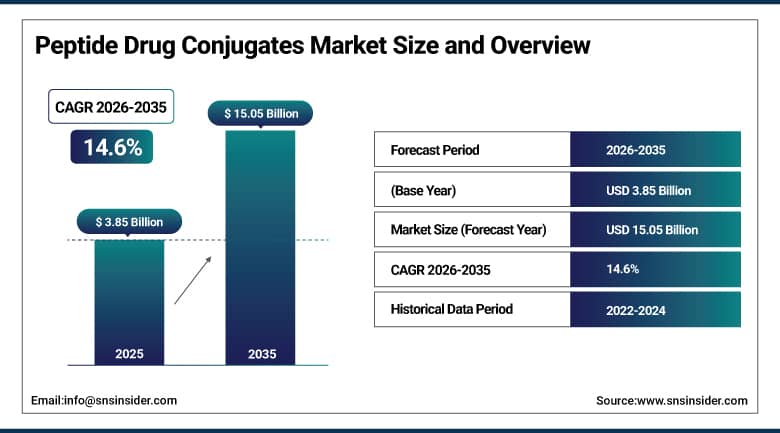
The Peptide Drug Conjugates Market was valued at USD 3.85 Billion in 2025 and is expected to reach USD 15.05 Billion by 2035, growing at a CAGR of 14.6% from 2026–2035.
Peptide drug conjugates link a short homing peptide to a cytotoxic, radioactive, or biologically active payload through a chemical linker, using the peptide's selective binding to receptors on diseased cells to deliver the payload directly where needed rather than letting it circulate systemically. Compared with antibody-drug conjugates, peptides penetrate tumor tissue more readily, cost less to manufacture at scale, and carry lower immunogenicity risk, drawing growing biotech and pharmaceutical investment into the modality. Most commercial revenue today comes from approved radioligand therapies in prostate cancer and neuroendocrine tumors, while cytotoxic and antigen-independent conjugates advance through trials targeting historically resistant cancers.
⮞May 2026: Novartis reported PSMAddition trial findings showing a 58% lower risk of PSA progression with Pluvicto plus standard care compared with standard care alone in PSMA-positive metastatic hormone-sensitive prostate cancer. The results strengthened evidence for peptide-targeted radioligand therapy in an earlier metastatic treatment setting.
To Get More Information On Peptide Drug Conjugates Market - Request Free Sample Report
Peptide Drug Conjugates Market Trends:
-
Radioligand-based PDCs continue anchoring commercial revenue as Pluvicto's label expands into earlier-stage prostate cancer.
-
Non-oncology applications are diversifying pipelines into inflammatory, metabolic, and infectious disease indications.
-
Bicyclic and constrained peptide scaffolds are gaining traction against historically undruggable targets like EphA2.
-
Antigen-independent, receptor-agnostic platforms are opening tumor types once unaddressable by targeted conjugates.
-
Pharma-biotech collaborations are accelerating pipeline development, with radioconjugate partnerships becoming a common deal structure.
U.S. Peptide Drug Conjugates Market Outlook:
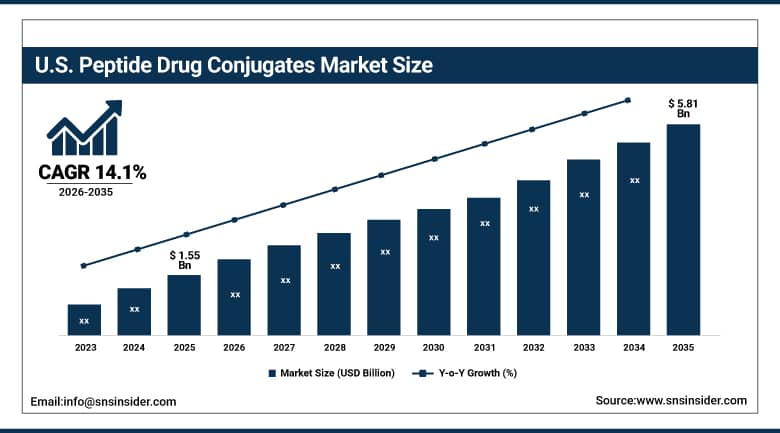
The U.S. Peptide Drug Conjugates Market was valued at approximately USD 1.55 Billion in 2025 and is expected to reach approximately USD 5.81 Billion by 2035, growing at a CAGR of approximately 14.1%.
The United States hosts the largest concentration of approved and late-stage peptide drug conjugate programs globally, anchored by Novartis’s commercial radioligand franchise and a deep bench of clinical-stage developers working on cytotoxic and antigen-independent PDC platforms. A well-established radiopharmaceutical distribution and dosing infrastructure, built up around existing nuclear medicine and oncology networks, gives domestic developers a meaningfully faster path from approval to patient access than in most other markets. Sustained National Institutes of Health and venture capital funding for targeted oncology research continues supporting both early discovery work and the clinical trial infrastructure that later-stage PDC candidates depend on.
⮞March 2025: U.S.-based Cybrexa Therapeutics presented preclinical findings for its antigen-independent alphalex peptide-drug conjugates, demonstrating selective tumor delivery of auristatin and maytansinoid payloads. The results supported further investigation of cytotoxic PDCs in solid tumors that may lack suitable antigen targets.
Peptide Drug Conjugates Market Segment Analysis:
-
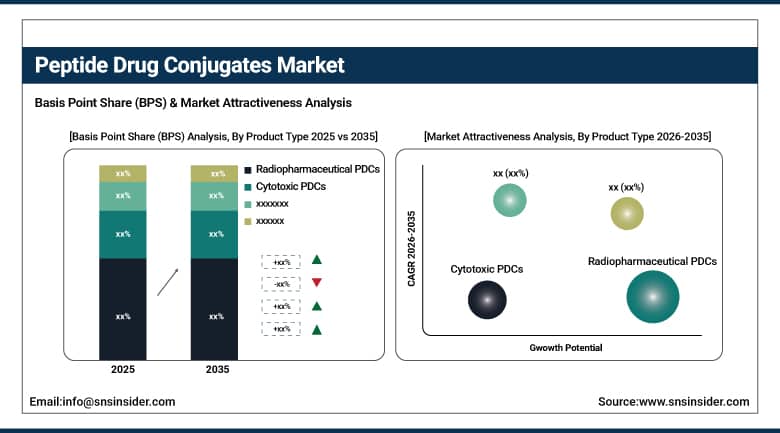
By Product Type, the Radiopharmaceutical PDCs segment dominated the Peptide Drug Conjugates Market with approximately 41.85% share in 2025, while the Cytotoxic PDCs segment is the fastest growing with a CAGR of approximately 17.35%.
-
By Therapy Area, the Oncology segment dominated the Peptide Drug Conjugates Market with approximately 76.92% share in 2025, while the Immunology & Autoimmune Diseases segment is the fastest growing with a CAGR of approximately 18.24%.
-
By Route of Administration, the Intravenous segment dominated the Peptide Drug Conjugates Market with approximately 63.47% share in 2025, while the Subcutaneous segment is the fastest growing with a CAGR of approximately 16.85%.
-
By End User, the Hospitals segment dominated the Peptide Drug Conjugates Market with approximately 46.28% share in 2025, while the Specialty Clinics segment is the fastest growing with a CAGR of approximately 16.12%.
By Product Type, Radiopharmaceutical PDCs dominate, Cytotoxic PDCs grow fastest
Radiopharmaceutical peptide drug conjugates held the largest share of the product-type segment in 2025, led by commercially established PSMA- and somatostatin receptor-targeted radioligand therapies that already carry regulatory approval and established reimbursement pathways in major markets. Their maturity relative to competing PDC classes, combined with a growing base of real-world clinical evidence, has made them the default revenue driver for the industry to date.
Cytotoxic PDCs are growing fastest as antigen-independent and receptor-agnostic platforms demonstrate that a peptide conjugate does not require an overexpressed tumor receptor to achieve selective, potent tumor cell killing. Developers pursuing this design approach are targeting cancers that have historically resisted both antibody-drug conjugates and conventional chemotherapy, and encouraging early clinical data is pulling development capital toward this segment at an above-average pace.
⮞April 2026: Bicycle Therapeutics reported Phase I/II findings for its EphA2-targeted peptide-drug conjugate nuzefatide pevedotin (formerly BT5528) combined with nivolumab in previously treated metastatic urothelial cancer. The company reported a 40% confirmed response rate among 10 evaluable patients with EphA2-positive tumors, supporting further clinical investigation of targeted cytotoxic conjugates.
By Therapy Area, oncology dominates, immunology & autoimmune diseases grows fastest
Oncology accounted for the overwhelming majority of therapy-area share in 2025, reflecting where essentially all approved products and the vast majority of the clinical pipeline are concentrated, from radioligand therapies in prostate and neuroendocrine cancers to cytotoxic conjugates in solid tumors. This remains the most mature and best-funded therapeutic application of the PDC modality by a wide margin.
Immunology & autoimmune diseases is the fastest-growing therapy area as peptide engineering advances make it feasible to conjugate immune-modulating payloads to disease-specific homing peptides, extending the precision-targeting logic that has worked in oncology to conditions such as rheumatoid arthritis and inflammatory bowel disease. Early-stage developers moving into this space are betting that the same selectivity advantage that reduces off-target toxicity in cancer treatment will translate into fewer systemic side effects for chronic autoimmune therapy as well.
⮞July 2026: ITM published Phase III COMPETE results showing that investigational lutetium-177 edotreotide significantly prolonged progression-free survival compared with everolimus in patients with somatostatin receptor-positive gastroenteropancreatic neuroendocrine tumors. The findings reinforced the clinical potential of peptide-targeted radiopharmaceuticals across oncology indications beyond prostate cancer.
By Route of Administration, intravenous dominates, subcutaneous grows fastest
Intravenous administration held the largest share of the route-of-administration segment in 2025, since nearly all currently approved radioligand and cytotoxic PDCs require infusion-center dosing under clinical supervision, particularly where radioactive isotopes are involved. This remains the default administration route for the most clinically advanced products on the market today.
Subcutaneous administration is growing fastest as developers of non-radioactive PDC candidates increasingly design formulations for at-home or outpatient dosing, a shift that mirrors the broader peptide therapeutics industry’s move toward patient-administered injections. Reducing dependence on infusion-center capacity also meaningfully lowers the cost of care for chronic or maintenance-dosing PDC regimens, a growing consideration for non-oncology applications in particular.
⮞June 2026: ITM presented Phase III COMPETE dosimetry findings suggesting that single-timepoint imaging could support individualized radiation-dose assessment for lutetium-177 edotreotide. The research highlights efforts to simplify treatment monitoring associated with intravenously administered peptide-targeted radioligand therapies.
By End User, hospitals dominate, specialty clinics grow fastest
Hospitals accounted for the largest end-user share in 2025, reflecting their capacity to manage the radiation safety protocols, infusion monitoring, and complex adverse-event management that current-generation PDC therapies, especially radioligand products, require. Their established oncology and nuclear medicine departments make them the natural first point of access for newly approved PDC therapies.
Specialty clinics are the fastest-growing end-user segment as dedicated infusion and oncology clinics increasingly build out the capability to administer PDC therapies outside a full hospital setting, offering patients a more convenient and often lower-cost alternative for maintenance treatment. Expanding outpatient PDC capacity is becoming a meaningful competitive differentiator for specialty clinic networks in markets with dense hospital infrastructure.
Regional Analysis:
|
Region |
Major Country |
Share within Region, 2025 (%) |
|---|---|---|
|
North America |
United States |
85.0% |
|
Europe |
Germany |
25.0% |
|
Asia Pacific |
Japan |
33.0% |
|
Latin America |
Brazil |
37.0% |
|
Middle East & Africa |
Saudi Arabia |
29.0% |
North America Peptide Drug Conjugates Market Insights
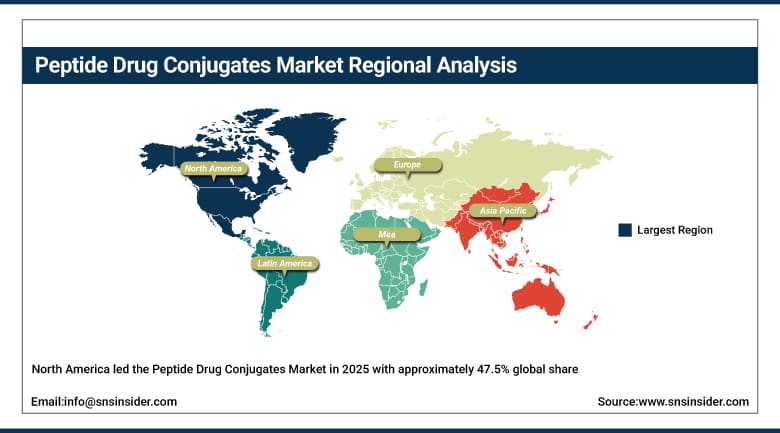
North America led the Peptide Drug Conjugates Market in 2025 with approximately 47.5% global share, supported by Novartis’s commercial radioligand franchise, a deep bench of clinical-stage PDC developers, and reimbursement pathways for targeted oncology therapies that are more established than in most other regions. The United States anchors this leadership, hosting the largest concentration of approved and late-stage peptide conjugate programs globally alongside a well-developed radiopharmaceutical distribution network.
Canada contributes a smaller but growing share through its own oncology research infrastructure and academic peptide chemistry programs, while Mexico’s market remains largely nascent, without significant domestic PDC development activity of its own. Cross-border clinical trial networks and licensing partnerships tie much of North American demand together, with U.S. developers often serving as the region’s primary technology source.
⮞July 2026: The U.S. FDA approved Pluvicto in combination with an androgen receptor pathway inhibitor for PSMA-positive metastatic hormone-sensitive prostate cancer. This expanded the therapy's approved use beyond its earlier metastatic castration-resistant setting and strengthened the commercial outlook for peptide-targeted radioligand treatment in North America.
Get Customized Report as Per Your Business Requirement - Enquiry Now
Asia Pacific Peptide Drug Conjugates Market Insights
Asia Pacific is expected to register the fastest regional growth through 2035, at a CAGR of approximately 17.8%, propelled by expanding biopharmaceutical manufacturing capacity, growing government support for domestic oncology drug development, and a large and still-underserved patient population across the region’s largest economies. Japan’s peptide macrocycle discovery ecosystem, anchored by platform companies partnering with global pharmaceutical majors, is supporting early-stage domestic PDC development.
China’s expanding contract development and manufacturing base and growing radiopharmaceutical infrastructure investment are drawing an increasing share of global PDC pipeline activity, while South Korea and India’s growing biotechnology sectors are attracting early-stage interest from international developers. Southeast Asian and Australian markets remain at an earlier stage, watching developments in more advanced regional markets closely before committing significant investment of their own.
⮞February 2026: PeptiDream, PDRadiopharma and Curium announced the first patient dosing in a Japanese registrational Phase II trial of lutetium-177 PSMA-I&T for PSMA-positive metastatic castration-resistant prostate cancer. The study represents a clinical development milestone for peptide-targeted radioligand therapy in Japan.
Europe Peptide Drug Conjugates Market Insights
Europe represents a technically advanced peptide drug conjugates market, anchored by Germany’s deep pharmaceutical manufacturing base and its role in several major radioconjugate research collaborations, alongside strong government-backed biotechnology funding. Established European regulatory pathways for radiopharmaceuticals and oncology therapies continue supporting the region’s leading research position.
The United Kingdom contributes significant clinical development activity as well, hosting some of the industry’s most advanced bicyclic peptide conjugate developers, while France and Italy contribute meaningful peptide chemistry and contract manufacturing expertise. EU-level biotechnology and precision-medicine funding continues reinforcing research and development activity across the broader region.
⮞March 2026: Germany-based ITM presented Phase III COMPETE subgroup findings showing median progression-free survival of 24.5 months with investigational lutetium-177 edotreotide versus 14.7 months with everolimus among patients with pancreatic neuroendocrine tumors. The results supported continued European clinical development of peptide-targeted radiopharmaceutical therapies.
MEA & Latin America Peptide Drug Conjugates Market Insights
The Middle East and Africa host a smaller but strategically emerging share of the peptide drug conjugates market, with Saudi Arabia driving early interest through broader healthcare investment under its national economic diversification agenda and growing oncology treatment infrastructure. Growth elsewhere in the region remains tied closely to the pace of broader healthcare infrastructure development.
Latin America remains an early-stage market, with Brazil showing the most visible interest given its established pharmaceutical manufacturing base and regional oncology treatment network. Argentina and Mexico are following developments in more advanced markets closely, though commercial PDC treatment activity across the broader region remains limited for now.
⮞October 2025: King Faisal Specialist Hospital and Research Centre signed a memorandum of understanding with Novartis covering clinical research, patient support and innovative therapies, including plans for a radioligand therapy and advanced nuclear medicine center of excellence. The agreement supports Saudi Arabia's development of specialized infrastructure relevant to targeted radiopharmaceutical treatment.
Market Dynamics:
Growth Drivers: Rising cancer incidence and radioligand therapy expansion fueling adoption
Rising global cancer incidence is one of the clearest forces behind increasing peptide drug conjugate investment, as oncologists and health systems look for treatment options that improve tumor selectivity and reduce the systemic toxicity associated with conventional chemotherapy. That demand is reinforced by an aging global population and growing diagnostic capability that is identifying cancers earlier, when targeted therapies tend to be most effective.
Expanding radioligand therapy indications add a second major driver, as clinical data showing benefit in earlier disease stages, such as Pluvicto’s expansion into earlier-stage prostate cancer, meaningfully broaden the treatable patient population for the approach that currently generates the bulk of commercial PDC revenue. Growing pharmaceutical investment in peptide engineering and linker chemistry is reinforcing confidence that today’s early clinical wins can be replicated across a broader set of targets and disease areas.
⮞March 2025: Novartis received FDA approval to use Pluvicto before chemotherapy in eligible patients with PSMA-positive metastatic castration-resistant prostate cancer following androgen receptor pathway inhibitor treatment. The expanded indication substantially increased the eligible treatment population, demonstrating how regulatory approvals can accelerate demand for peptide-targeted radioligand therapies.
Restraints: Metabolic instability and manufacturing complexity limiting near-term adoption
Metabolic instability remains a genuine restraint, since peptide conjugates are prone to rapid renal clearance and premature linker cleavage that can limit both efficacy and safety, a challenge underscored by the market withdrawal of the peptide conjugate Pepaxto following post-marketing safety concerns. That kind of clinical setback strains investor patience and slows the pace at which newer candidates can move confidently through later-stage trials.
Manufacturing complexity and cost remain a fundamental restraint for radioligand PDCs specifically, since reliable radioisotope supply chains and specialized handling infrastructure add meaningful cost and logistical complexity relative to conventional small-molecule drug manufacturing. That constraint currently limits how quickly radioligand PDC capacity can scale to meet growing demand, even where clinical need is well established.
Opportunities: Non-oncology diversification and antigen-independent platforms opening new growth avenues
Expanding peptide drug conjugates beyond oncology into immunology, metabolic, and infectious disease indications offers developers a genuine avenue for long-term growth, letting them apply proven conjugation and linker chemistry expertise to disease areas that are currently underserved by targeted biologics. Companies that successfully diversify their pipeline beyond cancer are positioned to reduce their dependence on the highly competitive oncology PDC landscape.
Antigen-independent and receptor-agnostic PDC platforms represent a second significant opportunity, since they open tumor types that lack a validated overexpressed receptor to targeted conjugate therapy for the first time, a patient population that antibody-drug conjugates and earlier PDC designs could not reach. Developers that build strong antigen-independent platform expertise are positioned to capture meaningful first-mover advantage in cancers that have historically resisted targeted treatment.
⮞April 2026: Bicycle Therapeutics announced the first patient dosing in a Phase II trial of nuzefatide pevedotin for recurrent pancreatic ductal adenocarcinoma. The development expanded clinical evaluation of EphA2-targeted peptide-drug conjugates into a difficult-to-treat solid tumor indication, supporting opportunities for novel peptide targeting platforms.
Recent Developments:
-
March 2026: Bicycle Therapeutics reported full-year 2025 results highlighting a strategic reprioritization toward BT5528 and its next-generation Bicycle Radioconjugate (BRC) pipeline, with additional EphA2 human imaging and Phase 1 combination data planned for the first half of 2026.
-
May 2026: Novartis reported stronger PSA responses with Pluvicto when used in earlier-stage prostate cancer patients, supporting the therapy’s expansion earlier in the treatment pathway.
-
Early 2026: Bicycle Therapeutics continued seeking regulatory feedback on zelenectide pevedotin, a Bicycle Drug Conjugate evaluated in the Phase 2/3 Duravelo-2 pivotal trial for metastatic urothelial cancer in combination with pembrolizumab, with an update on the approval pathway expected following meetings with multiple regulatory agencies.
-
2025: Cybrexa Therapeutics advanced its antigen-independent peptide-drug conjugate CBX-12 into Phase II evaluation in platinum-resistant ovarian cancer following completed Phase I enrollment, with encouraging clinical activity observed even in receptor-negative tumors.
Peptide Drug Conjugates Market Key Players
-
Oncopeptides AB
-
AstraZeneca plc
-
PeptiDream Inc.
-
Theratechnologies Inc.
-
Avacta Group plc
-
Angiochem Inc.
-
Soricimed Biopharma Inc.
-
WuXi AppTec Co., Ltd. (WuXi STA)
-
Bristol-Myers Squibb Company
-
Eli Lilly and Company
-
Telix Pharmaceuticals Limited
-
Curium Pharma
-
Ipsen S.A.
-
Genentech, Inc. (Roche Group)
-
Fusion Pharmaceuticals Inc.
-
ITM Isotope Technologies Munich SE
-
Sanofi S.A.
Peptide Drug Conjugates Market Report Scope:
| Report Attributes | Details |
|---|---|
| Market Size in 2025 | USD 3.85 Billion |
| Market Size by 2035 | USD 15.05 Billion |
| CAGR | CAGR of 14.6% From 2026 to 2035 |
| Base Year | 2025 |
| Forecast Period | 2026-2035 |
| Historical Data | 2022-2024 |
| Report Scope & Coverage | Market Size, Segments Analysis, Competitive Landscape, Regional Analysis, DROC & SWOT Analysis, Forecast Outlook |
| Key Segments | • By Product Type (Radiopharmaceutical PDCs, Cytotoxic PDCs, Diagnostic PDCs, Other Emerging PDCs) • By Therapy Area (Oncology, Immunology & Autoimmune Diseases, Infectious Diseases, Other Therapy Areas) • By Route of Administration (Intravenous, Subcutaneous, Other Routes) • By End User (Hospitals, Specialty Clinics, Diagnostic & Research Institutes, Other End Users) |
| Regional Analysis/Coverage | North America (US, Canada), Europe (Germany, UK, France, Italy, Spain, Russia, Poland, Rest of Europe), Asia Pacific (China, India, Japan, South Korea, Australia, ASEAN Countries, Rest of Asia Pacific), Middle East & Africa (UAE, Saudi Arabia, Qatar, South Africa, Rest of Middle East & Africa), Latin America (Brazil, Argentina, Mexico, Colombia, Rest of Latin America). |
| Company Profiles | Novartis AG, Bicycle Therapeutics plc, Cybrexa Therapeutics, Inc., Oncopeptides AB, AstraZeneca plc, PeptiDream Inc., Theratechnologies Inc., Avacta Group plc, Angiochem Inc., Soricimed Biopharma Inc., WuXi AppTec Co., Ltd. (WuXi STA), Bristol-Myers Squibb Company, Eli Lilly and Company, Telix Pharmaceuticals Limited, Curium Pharma, Ipsen S.A., Genentech, Inc. (Roche Group), Fusion Pharmaceuticals Inc., ITM Isotope Technologies Munich SE, Sanofi S.A. |

Frequently Asked Questions
Key players in the Peptide Drug Conjugates Market include Novartis AG, Bicycle Therapeutics plc, Cybrexa Therapeutics, Inc., Oncopeptides AB, and AstraZeneca plc, among others.
Key opportunities in the Peptide Drug Conjugates Market include diversifying peptide conjugate pipelines beyond oncology into immunology, metabolic, and infectious disease indications, and developing antigen-independent, receptor-agnostic platforms that can reach tumor types earlier targeted therapies could not address.
The market is driven by rising global cancer incidence and demand for more selective, less toxic targeted therapies, along with expanding clinical evidence supporting the use of approved radioligand therapies in earlier disease stages.
The Radiopharmaceutical PDCs segment dominated the Peptide Drug Conjugates Market, accounting for approximately 41.85% market share.
The North America region dominated the Peptide Drug Conjugates Market in 2025 with approximately 47.5% share, driven by Novartis’s commercial radioligand franchise and a deep bench of clinical-stage PDC developers.
