
Plant-Based Protein Supplements Market Report Scope & Overview:
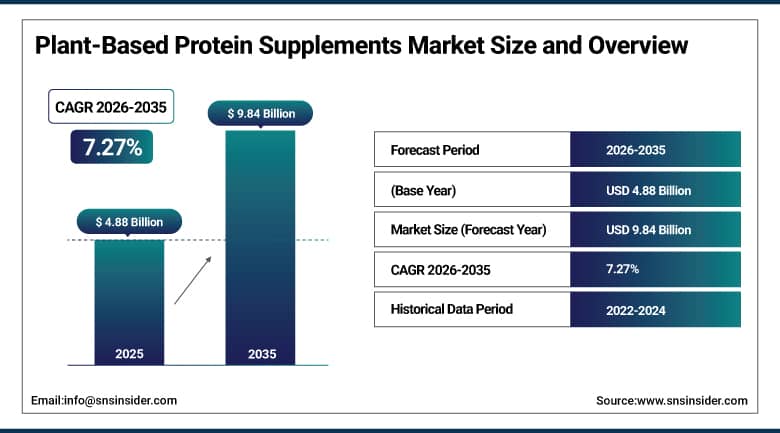
The Plant-Based Protein Supplements Market was valued at USD 4.88 Billion in 2025 and is expected to reach USD 9.84 Billion by 2035, growing at a CAGR of 7.27% from 2026 to 2035.
The Plant-Based Protein Supplements Market is witnessing steady growth due to increasing popularity of vegan and flexitarian diets among health-conscious and environmentally aware consumers who are opting away from conventional sources of proteins, which involve consumption of animals. Rising demand for proteins among athletes, fitness-conscious people, and older age groups looking for protein sources other than dairy products is widening the addressable market size. Advances in extraction processes and better flavoring and textures are helping drive this adoption of such products among non-vegan consumer segments. In addition to these factors, growing sales through e-commerce channels, rising sustainability concerns, and increasing innovations in protein powders, shakes, and bars are some other elements driving this trend.
In November 2025, Orgain launched an upgraded plant-based protein powder made from oat, chia, and pea blends designed for improved creaminess and digestive comfort, reflecting continued brand investment in addressing taste and texture barriers that have historically limited plant-based protein adoption.
To Get More Information On Plant-Based Protein Supplements Market - Request Free Sample Report
Market Size and Forecast
- Market Size in 2026E: USD 5.24 Billion
- Market Size by 2035: USD 9.84 Billion
- CAGR: 7.27% from 2026 to 2035
- Fastest Growing Region: Asia Pacific
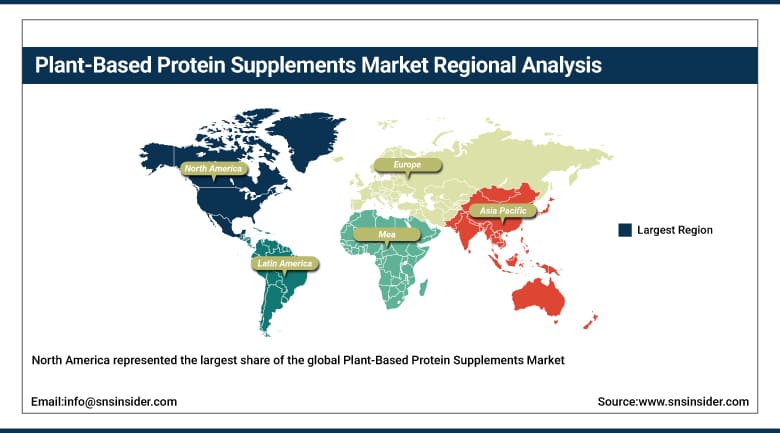
- Largest Region: North America
Plant-Based Protein Supplements Market Trends
- Growing consumer preference for pea protein is expanding rapidly as a soy-free and allergen-friendly alternative within plant-based protein formulations.
- Rising demand for ready-to-drink plant-based protein shakes is broadening the category’s reach among convenience-focused, on-the-go consumers.
- Expanding clinical and consumer testing scrutiny of heavy metal content in plant proteins is pushing manufacturers to invest in more rigorous sourcing and quality verification.
- Increasing use of multi-source protein blends combining pea, rice, and other plant proteins is improving amino acid completeness and consumer acceptance.
- Growing e-commerce and subscription-based purchasing models are facilitating greater accessibility to plant-based protein products, particularly in the Asia-Pacific region.
U.S. Plant-Based Protein Supplements Market Outlook
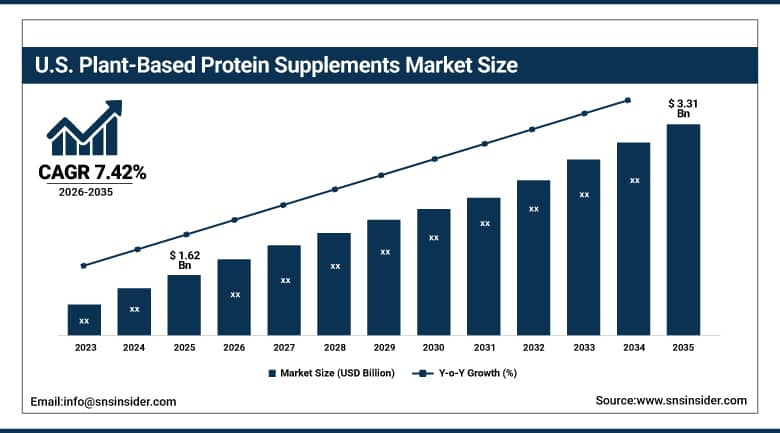
The U.S. Plant-Based Protein Supplements Market was valued at USD 1.62 Billion in 2025 and is projected to reach USD 3.31 Billion by 2035, growing at a CAGR of 7.42% during 2026-2035.
The U.S. Plant-Based Protein Supplements Market has been registering steady growth owing to growing consciousness about the environmental impact of animal proteins and the health benefits linked with plant-based nutrition. Growth in the popularity of vegan and flexitarian diets among consumers is one of the important factors behind consumption from both dedicated fitness consumers as well as general wellness-conscious households. Leading brand players in the market offering plant-based protein supplements have been making significant efforts in terms of formulation innovation and widening their range of offerings. Innovations like multi-source protein formulas and better taste systems are helping drive consumer choices. A strong network of distribution channels via retail stores, health shops, and online portals is helping increase availability of products. Additionally, investments being made by supplement companies and changing preference among consumers towards sustainable and plant-based nutrition is paving the way for new growth opportunities.
In October 2025, Garden of Life invested USD 24 Million to expand its production capacity, reflecting continued capital investment by established brands in scaling plant-based protein manufacturing to meet rising consumer demand.
Plant-Based Protein Supplements Market Segment Analysis
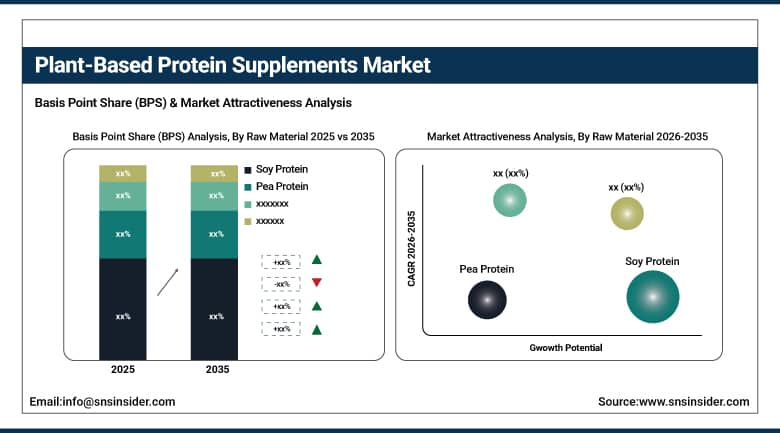
- By Raw Material, soy protein segment dominated the plant-based protein supplements market in 2025 with around 28% share; pea protein segment is the fastest-growing segment.
- By Product Type, protein powder segment dominated the market in 2025 with around 58% share; ready-to-drink shakes segment is the fastest-growing segment.
- By Application, sports nutrition & fitness segment dominated the market in 2025 with around 46% share; general wellness & weight management segment is the fastest-growing segment.
- By Distribution Channel, retail stores segment dominated the market in 2025 with around 64% share; online segment is the fastest-growing segment.
By Raw Material, Soy Protein Dominates the Plant-Based Protein Supplements Market While Pea Protein Registers the Fastest Growth
Soy Protein dominates the Plant-Based Protein Supplements Market owing to its complete amino acid profile, cost efficiency, and long-established position as a traditional replacement for dairy and animal-based protein sources. Soy-based protein supplements benefit from established supply chains and extensive manufacturing infrastructure, allowing brands to secure consistent volumes at competitive costs. Its compatibility with powder, bar, and beverage formats makes it well-suited across a wide range of plant-based protein applications. Consumer familiarity, competitive pricing, and wide availability will keep soy protein in the leadership position among raw material sources.
Pea Protein is experiencing rapid growth driven by increasing consumer preference for soy-free and allergen-friendly protein sources that align with clean-label and non-GMO positioning. Pea-derived protein has found strong favor among consumers seeking hypoallergenic alternatives while maintaining a strong amino acid profile suitable for muscle recovery and general nutrition. Its association with sustainable agriculture and lower environmental impact compared to animal-derived proteins is driving adoption among manufacturers seeking differentiated, sustainability-focused positioning.
By Product Type, Protein Powder Dominates the Plant-Based Protein Supplements Market While Ready-to-Drink Shakes Emerge as the Fastest-Growing Type
Protein Powder takes the lead in the Plant-Based Protein Supplements Market owing to its flexibility, cost-effective nature, and ease of customization to make smoothies, baked products, and beverages as per consumer choice. The powder form gets advantages from its long shelf life and well-developed manufacturing and distribution chain across specialty and mass retail stores. The availability, popularity, and versatile applications of the protein powder are helping the product gain a competitive edge in the market.
Ready-To-Drink Shakes is the fastest-growing category in the market as consumer preferences have started inclining toward convenience in the form of ready-to-consume nutrition supplements without any effort for mixing or preparation. The rising popularity among professionals, athletes, and consumers seeking recovery after workouts without preparing the powder is supporting this category's growth. Several opportunities exist in this category owing to innovations in taste and packaging.
By Application, Sports Nutrition & Fitness Dominates the Plant-Based Protein Supplements Market While General Wellness & Weight Management Experiences the Fastest Growth
Sports Nutrition & Fitness dominates the Plant-Based Protein Supplements Market due to the widespread use of plant-based protein among athletes and fitness enthusiasts seeking muscle recovery and performance support without dairy-based ingredients. The growing popularity of vegan and flexitarian diets among active consumers, alongside rising awareness regarding sustainable athletic nutrition, is driving consumption. Widespread retail and e-commerce availability, along with an expanding range of sports-nutrition-focused product formats, are further fueling demand in this application space.
General Wellness & Weight Management is growing rapidly on account of increasing adoption of plant-based protein among general health-conscious consumers beyond dedicated athletes, driven by rising awareness of protein’s role in satiety and metabolic health. Growing consumer interest in plant-based diets for broader health and environmental reasons, rather than performance alone, is expanding the addressable consumer base. Advances in flavor and formulation innovation are opening up several opportunities for commercial utilization in this segment.
Regional Analysis
|
Region |
Country |
Share (2025) |
|
North America |
United States |
82.60% |
|
Asia Pacific |
China |
33.20% |
|
Europe |
Germany |
21.30% |
|
Middle East & Africa |
UAE |
17.40% |
|
Latin America |
Brazil |
23.10% |
North America Plant-Based Protein Supplements Market Insights
North America represented the largest share of the global Plant-Based Protein Supplements Market, accounting for approximately 44.0% of the market in 2025, supported by strong consumer demand for dairy-free and sustainable protein alternatives alongside the presence of leading, well-established plant-based protein brands. Increasing adoption of vegan and flexitarian lifestyles is reinforcing consumption across both fitness-focused and general wellness consumer segments. Growing consumer interest in clean-label, sustainably sourced protein products is encouraging manufacturers to expand product lines. Well-established supplement manufacturing and e-commerce infrastructure across the United States and Canada is also improving product accessibility and sustaining regional market development.
The United States accounted for approximately 82.60% of the North American market in 2025, reflecting its large health-conscious consumer base and extensive plant-based protein supplement manufacturing and distribution infrastructure. Canada is contributing to regional growth through steady demand for natural health products regulated under its Natural Health Products framework, including plant-based protein blends marketed for muscle-building support.
Get Customized Report as Per Your Business Requirement - Enquiry Now
Europe Plant-Based Protein Supplements Market Insights
Europe region had an important presence in the Plant-Based Protein Supplements market in 2025 due to high consumer preference for sustainable and non-dairy nutrition products along with governmental initiatives aimed at encouraging home-grown plant protein manufacturing. High demand for soy free protein products such as pea in countries like Germany, UK, and France has helped the products gain popularity. In addition, increasing regulatory support for sustainable protein autonomy and reducing environmental impact are contributing further to the market dominance of Europe.
Among these countries, Germany has been leading the Europe region with a 21.30% regional market share in 2025 due to its large number of health conscious consumers and manufacturing infrastructure of plant-based nutrition products. The United Kingdom and France are also contributing to regional growth owing to increased preference for sustainable and non-dairy protein products.
Asia Pacific Plant-Based Protein Supplements Market Insights
Asia Pacific is expected to register the fastest CAGR in the Plant-Based Protein Supplements Market during 2026–2035, driven by expanding e-commerce accessibility, rising health consciousness, and growing fitness industry participation across the region’s large population base. China and India are witnessing particularly strong growth as expanding middle-class populations increasingly adopt plant-based diets and sports nutrition products. Rising product innovation and growing consumer awareness regarding sustainable protein sources are further supporting market expansion. Rising demand for convenient, on-the-go nutrition formats is also reinforcing Asia Pacific’s above-average growth trajectory compared with more mature markets.
China accounted for approximately 33.20% of the Asia Pacific market in 2025, supported by its expanding health and wellness product manufacturing base and rising domestic demand for plant-based nutrition. Japan, India, and South Korea are also contributing meaningfully to regional growth, with India benefiting from rapidly expanding vegetarian and vegan dietary culture and fitness industry growth.
Middle East & Africa and Latin America Plant-Based Protein Supplements Market Insights
The Middle East & Africa region is showing sustained growth as health and wellness consciousness continues to increase among the Gulf nations, fueled by increasing modern retail facilities. Latin America is also experiencing the advantage of increased urban health-awareness spending along with the increasing consumer inclination towards nutritious plant-based foods in the region’s major cities.
In the year 2025, the UAE dominated the Middle East & Africa market, taking a 17.40% regional share due to rising consumer demands for healthy food options along with increasing modern retail penetration. In 2025, Brazil held 23.10% share of the Latin American market due to increasing consumption of plant-based proteins, while Mexico contributed to regional growth by being interested in dairy-free nutrition products.
Market Dynamics
Growth Drivers: Veganism Adoption and Sustainability Awareness Driving Market Growth
Primary drivers behind the expansion of the Plant-Based Protein Supplements Market include the growing popularity of vegan and flexitarian diets, growing health awareness, and growing environmental consciousness related to the ecological implications of the production of animal-based proteins. As more consumers come to realize that plant-based proteins offer healthier and more environmentally friendly alternatives, growth is realized in categories such as sports nutrition, general health, and weight management, contributing to growth in the global market for this product.
Growing innovation in extraction technologies and improved flavor and texture profiles keeps expanding as brands look to circumvent past barriers in the adoption of plant-based proteins by mainstream consumers. Growing popularity of multi-protein blends is influencing trends in new products in the plant-based protein supplement market.
Restraints: Quality and Safety Concerns and Taste Perception Challenges Limiting Market Expansion
Despite the ongoing consumer interest in the protein powders, the industry is held back by the issues of product quality and safety in terms of possible contamination with heavy metals due to the absorption of such contaminants through the soil in the process of growing plants. The regional variations in legislation in terms of labeling requirements, permitted ingredients, and health benefits have an effect on the timing of market entry and require extra efforts in terms of compliance with the standards and product quality assurance. Also, the issues related to taste and texture perception in comparison with the protein powders made from milk can affect their adoption rate.
The high cost of production is also explained by the need to conduct the research in the area of quality assurance and contaminants, as well as the improvement of product taste. Furthermore, the competition between brands already present on the market and regional newcomers is increasing.
Opportunities: Multi-Source Protein Innovation and Emerging Market Expansion Creating New Growth Avenues
There are notable business opportunities that could be leveraged by creating new protein blends from multiple sources, introducing more ready-to-drink product forms, and tapping into emerging health and wellness markets. Creating protein blends with pea, rice, and other sources will mitigate the issue of lack of amino acids while improving the taste and texture of the products. Businesses can leverage on the increasing consumer interest in easy to consume products that minimize preparation time and make life convenient for them. Tapping into the emerging health and wellness and weight loss consumer categories, apart from athletes, is another option available to increase product penetration.
Creating innovations in verifying the high quality of the products as well as sourcing ingredients free of contaminants will differentiate the products from competitors while appealing to consumers interested in safety. Creating partnerships with agricultural producers of raw material will provide the opportunity to tap into the traceable and sustainable source of ingredients. Finally, increasing e-commerce presence will also enable differentiation of products.
Recent Developments:
- 2025: Orgain launched an upgraded plant-based protein powder made from oat, chia, and pea blends designed for improved creaminess and digestive comfort.
- 2025: OWYN expanded its ready-to-drink plant protein portfolio, positioning its products around rigorous third-party safety verification amid heightened consumer scrutiny of contaminant testing across the category.
Plant-Based Protein Supplements Market key players are:
- Garden of Life LLC
- Vega (Danone S.A.)
- Orgain, Inc.
- Ancient Nutrition
- Sunwarrior, LLC
- NOW Health Group, Inc.
- Nutiva, Inc.
- Naked Nutrition
- Transparent Labs
- Optimum Nutrition (Glanbia Performance Nutrition)
- Amway Corporation (Nutrilite)
- Herbalife Nutrition Ltd.
- GNC Holdings, LLC
- Truvani
- PlantFusion
- Sunfood Superfoods
- Health Warrior, Inc.
- Bob’s Red Mill Natural Foods
- Bulletproof 360, Inc.
- Iovate Health Sciences (MuscleTech)
Plant-Based Protein Supplements Market Report Scope:
| Report Attributes | Details |
|---|---|
| Market Size in 2025 | USD 4.88 Billion |
| Market Size by 2035 | USD 9.84 Billion |
| CAGR | CAGR of 7.27% From 2026 to 2035 |
| Base Year | 2025 |
| Forecast Period | 2026-2035 |
| Historical Data | 2022-2024 |
| Report Scope & Coverage | Market Size, Segments Analysis, Competitive Landscape, Regional Analysis, DROC & SWOT Analysis, Forecast Outlook |
| Key Segments | • By Raw Material (Soy Protein, Pea Protein, Rice Protein, and Others) • By Product Type (Protein Powder, Ready-to-Drink Shakes, Protein Bars, and Others) • By Application (Sports Nutrition & Fitness, General Wellness & Weight Management, and Others) • By Distribution Channel (Retail Stores, and Online) |
| Regional Analysis/Coverage | North America (US, Canada), Europe (Germany, UK, France, Italy, Spain, Russia, Poland, Rest of Europe), Asia Pacific (China, India, Japan, South Korea, Australia, ASEAN Countries, Rest of Asia Pacific), Middle East & Africa (UAE, Saudi Arabia, Qatar, South Africa, Rest of Middle East & Africa), Latin America (Brazil, Argentina, Mexico, Colombia, Rest of Latin America). |
| Company Profiles | Garden of Life LLC; Vega (Danone S.A.); Orgain, Inc.; Ancient Nutrition; Sunwarrior, LLC; NOW Health Group, Inc.; Nutiva, Inc.; Naked Nutrition; Transparent Labs; Optimum Nutrition (Glanbia Performance Nutrition); Amway Corporation (Nutrilite); Herbalife Nutrition Ltd.; GNC Holdings, LLC; Truvani; PlantFusion; Sunfood Superfoods; Health Warrior, Inc.; Bob’s Red Mill Natural Foods; Bulletproof 360, Inc.; Iovate Health Sciences (MuscleTech) |
Frequently Asked Questions
Some of the major companies that operate in the global plant-based protein supplements market are Garden of Life LLC, Vega (Danone S.A.), Orgain, Inc., Ancient Nutrition, Sunwarrior, LLC, NOW Health Group, Inc., Nutiva, Inc., Naked Nutrition.
Multi-Source Protein Innovation and Emerging Market Expansion Creating New Growth Avenues
The market is driven by increasing adoption of vegan and flexitarian diets, rising health consciousness, and growing environmental awareness surrounding animal-based protein production.
The Soy Protein segment dominated the Plant-Based Protein Supplements Market in 2025.
The North America region dominated the Plant-Based Protein Supplements Market in 2025, accounting for approximately 46% of global market share.
