
Radiopharmaceuticals Market Report Scope & Overview:
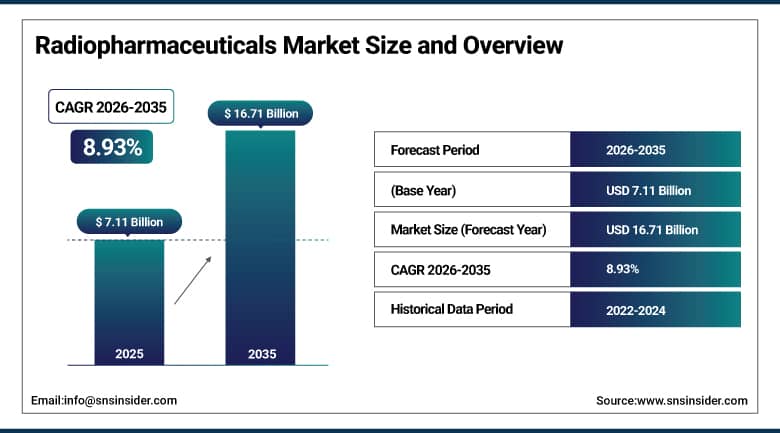
The Radiopharmaceuticals Market was valued at USD 7.11 Billion in 2025 and is expected to reach USD 16.71 Billion by 2035, growing at a CAGR of 8.93% from 2026-2035.
The Radiopharmaceuticals Market is expanding as nuclear medicine moves from imaging into targeted cancer treatment. Diagnostic tracers still account for most sales, led by technetium-99m and fluorine-18 products. Therapeutic radioligands built on lutetium-177 and actinium-225 are the fastest growing area. Prostate and neuroendocrine cancers lead current use, while new targets are in late-stage trials. Producers are adding reactors, cyclotrons and accelerators to secure isotope supply. Short half-lives require fast, local manufacturing and delivery. Regulatory and handling rules also add cost for new entrants. The market is expected to grow as theranostics pairs imaging with therapy for more diseases. Competition is shifting toward isotope access and clinical evidence.
⮞In November 2025, the U.S. Centers for Medicare and Medicaid Services finalized its 2026 outpatient rule with a USD 10 per-dose add-on payment for technetium-99m made from domestic molybdenum-99. The payment shows regulators are using reimbursement to support isotope supply security.
To Get More Information On Radiopharmaceuticals Market - Request Free Sample Report
Radiopharmaceuticals Market Trends:
-
Rapid growth of lutetium-177 and actinium-225 radioligand therapies
-
Expansion of PSMA, DOTATATE and tau PET imaging agents
-
New isotope production capacity using accelerators and reactors
-
Large pharmaceutical acquisitions of radiopharmaceutical developers
-
Local manufacturing networks to deliver short half-life products
U.S. Radiopharmaceuticals Market Outlook:
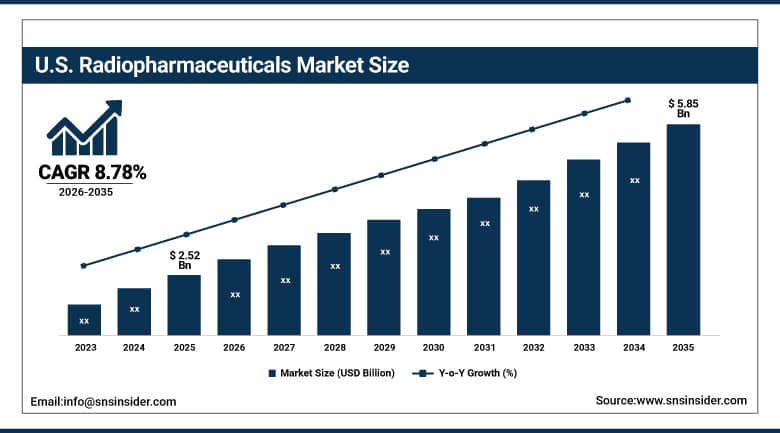
The U.S. Radiopharmaceuticals Market was valued at USD 2.52 Billion in 2025 and is expected to reach USD 5.85 Billion by 2035, growing at a CAGR of 8.78% from 2026-2035.
The U.S. Radiopharmaceuticals Market is the largest national market and benefits from early approvals and broad imaging use. Hospitals and radiopharmacy networks deliver PET and SPECT agents for cancer, heart and brain disease. PSMA PET imaging and lutetium-based therapy have become part of prostate cancer care. Medicare payment rules strongly influence adoption of new tracers. Isotope production within the United States is a policy priority after past supply shortages. Large pharma groups continue to buy radiopharmaceutical developers. A shortage of trained nuclear medicine staff can limit treatment capacity. Demand is therefore expected to rise with new approvals and wider reimbursement. Payers and hospitals are watching cost and capacity closely.
⮞In August 2026, Lantheus reported second quarter revenue of USD 388.20 million, up 2.7% from the prior year. The result shows the scale of the U.S. diagnostic radiopharmaceutical business.
Radiopharmaceuticals Market Segment Analysis:
-
By Type, the Diagnostic Radiopharmaceuticals segment dominated the Radiopharmaceuticals Market with approximately 68.48% share in 2025, while the Therapeutic Radiopharmaceuticals segment is the fastest growing with a CAGR of approximately 11.93%.
-
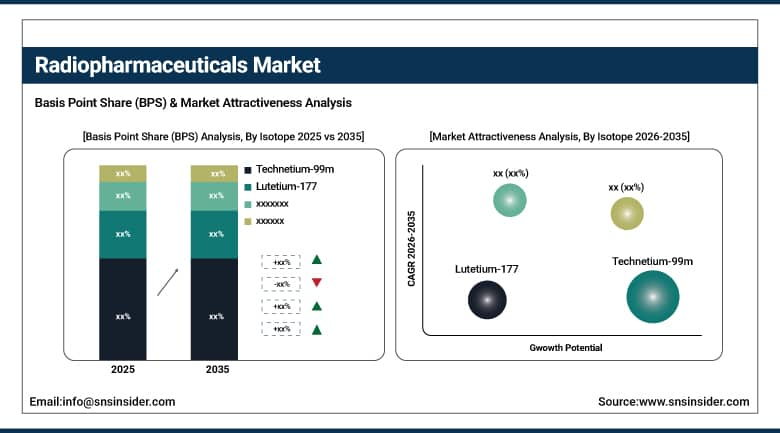
By Isotope, the Technetium-99m segment dominated the Radiopharmaceuticals Market with approximately 37.96% share in 2025, while the Lutetium-177 segment is the fastest growing with a CAGR of approximately 12.43%.
-
By Application, the Oncology segment dominated the Radiopharmaceuticals Market with approximately 47.06% share in 2025 and is also the fastest growing with a CAGR of approximately 9.93%.
-
By End User, the Hospitals and Clinics segment dominated the Radiopharmaceuticals Market with approximately 53.00% share in 2025, while the Diagnostic Imaging Centers segment is the fastest growing with a CAGR of approximately 10.73%.
By Isotope, Technetium-99m Dominates the Radiopharmaceuticals Market and Lutetium-177 Grows Fastest
Technetium-99m leads because it is the workhorse of SPECT imaging and is used in bone, heart, lung, kidney and thyroid scans. It is available from generators in hospitals and radiopharmacies, which makes delivery simple. The isotope has a convenient six hour half-life and low radiation dose. Many kits are generic and widely used, so volumes are high. Supply depends on molybdenum-99 from a small number of reactors, which makes security of supply a recurring policy issue, but demand remains strong worldwide. Generic kits from several suppliers keep prices competitive, which encourages hospitals to use the isotope for routine bone and cardiac scans and sustains high procedure volumes.
Lutetium-177 is growing fastest because it is the isotope behind the leading radioligand therapies for prostate cancer and neuroendocrine tumors. Its beta emission and manageable half-life suit outpatient treatment. Many pipeline candidates use lutetium, and producers are building reactor and accelerator capacity to meet demand. Regulatory approvals in new countries add patients each year. Clinical trials are testing earlier lines of treatment and combinations with other drugs, which could expand use further. Reliable supply of high purity lutetium is a priority for developers. Developers also use lutetium in combination trials, and a growing list of target molecules means demand from drug makers should rise alongside commercial therapy sales.
⮞In February 2026, Eckert & Ziegler and the Czech Nuclear Physics Institute began continuous production of actinium-225 at sites in Řež and Braunschweig. The start-up shows investment in alpha emitter supply to complement lutetium-177.
By Type, Diagnostic Radiopharmaceuticals Dominates the Radiopharmaceuticals Market and Therapeutic Radiopharmaceuticals Grows Fastest
Diagnostic radiopharmaceuticals lead because millions of PET and SPECT scans are performed each year to stage cancer, assess heart function and study brain disease. Tracers are well established, reimbursed in most developed markets and supported by clear guidelines. Hospitals own large imaging fleets that need a steady supply of agents. Newer products such as PSMA and tau tracers add to volume. Because each scan uses a single dose, diagnostic sales recur with patient numbers and provide stable revenue to producers and radiopharmacies. Pharmacies and hospitals often bundle tracers with imaging services, which keeps diagnostic doses embedded in routine cancer, cardiac and neurology pathways across developed markets.
Therapeutic radiopharmaceuticals are growing fastest because radioligand therapy delivers radiation directly to tumor cells and has shown survival benefits in prostate cancer and neuroendocrine tumors. Approvals in earlier lines of treatment are widening the eligible patient base. Large pharmaceutical groups have invested billions in developers and manufacturing plants. Each therapeutic dose carries a much higher price than a diagnostic dose, so revenue grows faster than patient numbers. Hospitals are building treatment suites and training staff to deliver these therapies in more countries. Payers also tend to accept the cost of therapy when imaging identifies suitable patients, so diagnostic and therapeutic volumes support each other as theranostic programs scale.
⮞In July 2026, Novartis reported second quarter Pluvicto sales of USD 651 million, up 43%. The result shows the pace of growth in radioligand therapy.
By Application, Oncology Dominates the Radiopharmaceuticals Market and Is Also the Fastest Growing
Oncology leads because cancer staging and therapy are the largest uses of both PET imaging and radioligand treatment. Tracers help physicians find disease, plan surgery and monitor response, and clinical guidelines now include several of them. Prostate cancer is the largest single use, followed by neuroendocrine tumors and lymphoma. Reimbursement for cancer imaging is well established in major markets. The same targets used for imaging can be used for treatment, which links diagnostic and therapeutic volumes and supports steady growth in this application. Physicians use the same cancer imaging results to select patients for therapy, which links imaging demand to treatment pathways and keeps oncology at the center of nuclear medicine activity.
Oncology is also the fastest growing application because most new radiopharmaceutical candidates target tumors. Companies are developing agents for breast, lung, colorectal, pancreatic and brain cancers, and alpha emitters are being tested in patients who no longer respond to lutetium. Earlier-line approvals could multiply the patient pool. Hospitals are investing in theranostic programs that pair imaging with therapy under one pathway. As evidence from late-stage trials accumulates, payers are expected to widen coverage, which supports growth in this segment through the forecast period. Academic centers and biotech companies are also running more cancer trials with radioligands, which adds both research demand and future commercial volume for this application.
⮞In October 2026, Bristol Myers Squibb reported that the Phase 3 ACTION-1 trial of RYZ101, an actinium-225 DOTATATE therapy, met its primary progression-free survival endpoint among 343 patients. The result supports the case for alpha emitter therapy in neuroendocrine tumors.
By End User, Hospitals and Clinics Dominates the Radiopharmaceuticals Market and Diagnostic Imaging Centers Grows Fastest
Hospitals and clinics lead because they house nuclear medicine departments, PET and SPECT scanners, and the shielded rooms needed to handle radioactive products. They treat the sickest patients and administer most therapies. Specialist staff, including nuclear physicians, radiopharmacists and physicists, are concentrated in these settings. Hospitals often have contracts with radiopharmacy networks for daily delivery. Regulatory licenses for radioactive materials are easier to hold in large institutions, which keeps the bulk of procedures and purchases in this segment. Large hospital systems also negotiate supply contracts with radiopharmacies, which gives them reliable delivery and a broad menu of tracers for many specialties under one agreement.
Diagnostic imaging centers are growing fastest as outpatient PET scanning expands and payers favor lower cost sites. Independent centers and cardiac imaging networks are adding cyclotron-supplied tracers and new cardiac PET agents. They can schedule patients quickly and offer extended hours. Radiopharmacy networks deliver doses on a just-in-time basis, which allows centers to avoid in-house production. Growth in cardiac PET and prostate imaging adds volume, and private equity-backed operators are buying and building new sites to meet demand. Cardiac PET services and prostate imaging programs are being added in standalone sites, and operators value the shorter scheduling times and lower facility fees these settings offer.
⮞In November 2025, GE HealthCare reported that Cardiovascular Associates of America would roll out its Flyrcado cardiac PET agent to about 25 sites after a pilot. The network performs about 85,000 cardiac PET procedures a year.
Regional Analysis:
|
Region |
Major Country |
Share within Region, 2025 (%) |
|---|---|---|
|
North America |
U.S. |
79.90 |
|
Europe |
Germany |
24.36 |
|
Asia Pacific |
Japan |
33.19 |
|
Latin America |
Brazil |
48.72 |
|
Middle East & Africa |
Saudi Arabia |
30.58 |
North America Radiopharmaceuticals Market Insights
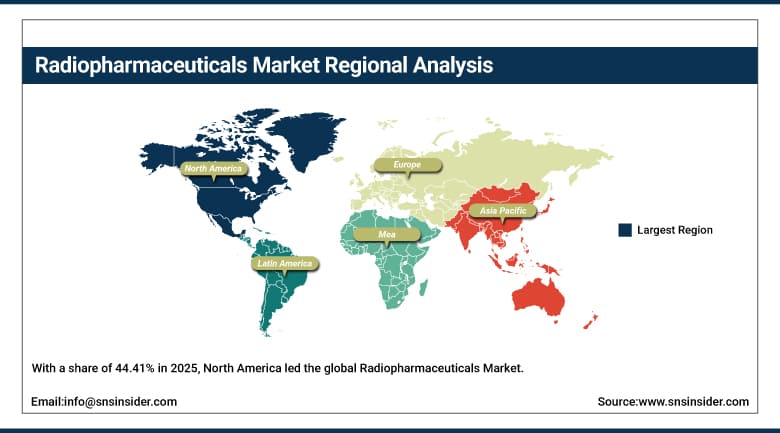
With a share of 44.41% in 2025, North America led the global Radiopharmaceuticals Market. The United States accounts for most regional demand through early regulatory approvals, large cancer centers and well-developed reimbursement. Canada contributes isotope production and research expertise. Novartis, Lantheus, Cardinal Health, GE HealthCare, Telix and NorthStar are active in the region, and many global launches start here. Radiopharmacy networks deliver doses to hospitals daily, which supports rapid adoption of new agents. Strong venture and corporate funding also helps start-ups finance trials, and academic centers such as cancer institutes provide trained investigators who accelerate recruitment for new radioligand studies.
Policy and investment shape the market. Federal agencies support domestic production of molybdenum-99 and actinium-225, and payment rules include add-ons for domestic isotopes. Large pharmaceutical groups have bought developers and are building manufacturing plants. Competition for isotopes, cyclotron sites and trained staff is intense. Treatment centers must also meet radiation safety and waste rules. At the same time, a pending merger of two leading imaging companies shows consolidation, which may change supply and pricing. Canadian and U.S. regulators are working to speed reviews, and hospital groups are adding therapy suites so that approved products can reach patients without long waiting lists.
⮞In April 2026, Cardinal Health announced that its weekly actinium-225 output had quadrupled since the end of 2024 at its Indianapolis site. The expansion shows capacity growth for alpha emitter supply in North America.
Get Customized Report as Per Your Business Requirement - Enquiry Now
Europe Radiopharmaceuticals Market Insights
Europe is the second largest region and is led by Germany, France, the United Kingdom, Italy and the Netherlands. The Netherlands and Belgium host reactors that supply molybdenum-99, and Germany and France have strong isotope and radiopharmaceutical producers. The European Medicines Agency approves radioligands for the region, and national health systems decide reimbursement. Hospitals are building nuclear medicine capacity, although waiting lists and shortages of specialists remain a challenge in several countries. Strong university hospitals and research institutes support clinical trials, and European tender processes often favor suppliers with proven delivery records across many hospitals.
Isotope supply is a strategic topic. Europe depends on a few aging research reactors, and outages can disrupt scans across the region. Governments and companies are investing in new reactors, accelerators and alpha emitter production. Companies such as Eckert & Ziegler, ITM and Orano Med are expanding capacity. Regulatory requirements for good manufacturing practice and radiation protection are strict. Cross-border cooperation helps share isotopes during shortages and supports clinical trials that run in several countries. Reimbursement differs between countries, so companies often launch first in Germany and then expand, while health technology assessments weigh the survival benefit against the price of each dose.
⮞In October 2026, Orano Med opened a lead-212 production facility in Valenciennes, France, with capacity for up to 10,000 doses per year. The EUR 25 million site shows investment in new alpha emitter supply in Europe.
Asia Pacific Radiopharmaceuticals Market Insights
Asia Pacific is projected to be the fastest growing region, with a CAGR of 9.73% during 2026-2035. Japan, China, India, South Korea and Australia lead regional demand. Japan has a mature nuclear medicine sector with local producers, while China is approving its first radioligand therapies and building new plants. India has a growing cancer burden and is expanding PET centers. Rising incomes and national cancer programs increase the number of patients who can reach imaging and therapy. Government programs for cancer screening and hospital expansion are adding PET scanners, and demand for imaging tracers is rising alongside the installed base of equipment.
Local production is growing. Chinese and Indian companies are investing in cyclotrons and radiopharmacy networks, and global companies are partnering with regional distributors. Regulatory approvals have been faster in some countries, but many markets still lack reimbursement. Imported products face long transport times, which is difficult for short half-life isotopes. As a result, new manufacturing sites are being built close to patients. Training programs for nuclear medicine physicians and technologists are also expanding across the region. Regulatory harmonization is improving as agencies recognize foreign trial data, which shortens the time from global approval to local launch for several leading products.
⮞In August 2026, Jubilant Pharmova reported first quarter fiscal 2027 radiopharma revenue of Rs 1,022 crore, up 18%. The result shows growth among Indian radiopharmaceutical suppliers.
MEA & Latin America Radiopharmaceuticals Market Insights
In Latin America, Brazil is the largest market, followed by Mexico, Argentina and Chile. Brazil operates research reactors and cyclotrons and is working to produce more isotopes locally. Hospitals depend on imported lutetium-177 and other therapeutic isotopes, which raises costs. Public systems are expanding PET access but face budget limits. Regional collaboration with international suppliers helps provide training and equipment, and private cancer centers are early adopters of new agents. Brazil and Mexico also host regulatory agencies that have been modernizing approval pathways, which could make it easier for foreign suppliers to introduce new tracers and therapies.
In the Middle East and Africa, Saudi Arabia, the United Arab Emirates and South Africa lead demand. Gulf countries are building specialty cancer centers and cyclotron facilities as part of national health programs. South Africa produces medical isotopes and exports molybdenum-99. Limited infrastructure and shortages of trained staff slow growth in many other countries. International partnerships and government investment are expected to widen access to nuclear medicine over the forecast period, especially in oncology and cardiology. Medical tourism and private hospital groups in the Gulf are investing in advanced oncology care, and several countries plan national isotope or cyclotron projects to reduce reliance on imports.
⮞In January 2025, Eletronuclear and the Brazilian Society of Nuclear Medicine signed a memorandum for a feasibility study on lutetium-177 production at the Angra 2 nuclear plant. The study reflects efforts to reduce import dependence in Latin America.
Market Dynamics:
Growth Drivers: Cancer Burden and Theranostic Approvals
Rising cancer incidence is the main driver of the market. Prostate, breast, lung and neuroendocrine cancers are increasing as populations age, and physicians rely on PET imaging to stage disease accurately. Radioligand therapy has shown survival benefits for patients who have exhausted other options. Clinical guidelines now include PSMA imaging and lutetium therapy in prostate cancer pathways. This evidence encourages hospitals to build nuclear medicine capacity and to refer more patients for imaging and targeted radiation treatment. Ageing populations also raise demand for cardiac and brain imaging, and screening programs identify more patients who need accurate staging.
Theranostic approvals and a deep pipeline reinforce growth. More than 200 clinical-stage programs are testing new targets, isotopes and combinations. Earlier-line use could expand eligible patient numbers several times. Large pharmaceutical groups are investing in manufacturing and acquiring developers, which brings commercial expertise and funding. Better PET scanners, digital detectors and artificial intelligence tools improve image quality and reduce dose, and cardiac and neurology tracers add further growth. Together these factors support a long period of strong demand. Strong financial results from leading producers give companies funds to expand plants and sign supply contracts.
⮞In July 2026, Telix reported second quarter revenue of USD 247 million, up 21% from a year earlier. The result shows rapid commercial growth for companies with imaging and therapy products.
Restraints: Isotope Supply, Short Half-Lives and Regulatory Complexity
Isotope supply is the main restraint. Molybdenum-99, lutetium-177 and actinium-225 come from a small number of reactors and accelerators, and outages or delays can interrupt patient care. Building new production capacity takes years and large capital. Short half-lives mean that products must be made close to patients and delivered within hours, which complicates logistics. Each missed delivery wastes costly material and delays treatment, so producers must invest in redundant supply and flexible manufacturing networks. Transport risks, customs delays and air freight disruptions can also spoil doses, and manufacturers need back-up sites and flexible schedules.
Regulatory and workforce constraints add cost. Radiopharmaceuticals must meet drug manufacturing rules and radiation safety requirements, and approval filings can be delayed by manufacturing or inspection findings. Hospitals need licensed facilities, shielding and waste handling. A shortage of trained nuclear medicine physicians, physicists and technologists limits treatment capacity. Reimbursement for new agents can lag approval. Smaller developers may struggle to fund clinical trials and commercial plants, which can slow the entry of new products to market. Compliance costs and uncertain reimbursement reduce the return on early investment, particularly for small developers.
⮞In August 2026, ITM announced that the U.S. Food and Drug Administration issued a complete response letter for its lutetium-177 edotreotide application, citing manufacturing and third-party facility inspection items. The letter shows how manufacturing readiness can delay new radiopharmaceutical approvals.
Opportunities: Alpha Emitters and New Targets Beyond Prostate Cancer
Alpha emitters offer a major opportunity. Actinium-225 and lead-212 deliver highly energetic particles over short distances, which can kill tumor cells with less damage to nearby tissue. Early clinical results suggest benefit for patients who stop responding to beta therapy. Producers are building accelerator and generator capacity to supply developers, and financing for these projects is increasing. Companies that secure reliable alpha isotope supply could gain strong positions as pipeline candidates move toward approval. Governments are funding isotope programs and fast-track reviews, which lowers risk for developers entering the field.
New targets beyond prostate cancer are a second opportunity. Developers are exploring breast, lung, colorectal and brain tumors, as well as neurology and cardiac imaging. Tau and amyloid PET agents support Alzheimer's disease diagnosis, and new cardiac tracers improve detection of coronary disease. Emerging markets in Asia, Latin America and the Middle East have low penetration and growing cancer burdens. Local production, training programs and lower cost generators can widen access in these regions and create long-term demand. Partnerships between drug makers, academic centers and contract manufacturers can spread cost and speed up the creation of new treatment networks.
⮞In October 2026, NorthStar announced a financing facility of up to USD 185 million to expand its radioisotope production, including actinium-225. The financing shows investor interest in isotope supply for alpha therapies.
Recent Developments:
-
In August 2026, Curium agreed to acquire Lantheus for USD 102.50 per share in cash plus contingent value rights of up to USD 12.00 per share. The deal is valued at up to about USD 8.0 billion and is expected to close in the first half of 2027.
-
In July 2026, the European Investment Bank granted Orano a EUR 125 million credit line to finance Orano Med's innovations and industrial infrastructure. The loan supports construction of a thorium-228 facility used to produce lead-212 for cancer therapy.
-
In April 2026, Clarity Pharmaceuticals signed a commercial manufacturing agreement with Nucleus RadioPharma for copper-64 SAR-bisPSMA. The Rochester, Minnesota site makes about 50,000 doses a year, and a planned Pennsylvania site could raise capacity further.
-
In September 2026, Telix received U.S. FDA approval for Pixclara, an 18F-FET PET agent for glioma imaging. The approval makes it the first FET PET agent cleared for use in glioma in the United States.
Radiopharmaceuticals Market Key Players:
-
Novartis AG (Advanced Accelerator Applications)
-
Lantheus Holdings, Inc.
-
Curium
-
Telix Pharmaceuticals Limited
-
GE HealthCare Technologies Inc.
-
Cardinal Health, Inc.
-
Jubilant Radiopharma
-
Eckert & Ziegler SE
-
ITM Isotope Technologies Munich SE
-
Orano Med
-
NorthStar Medical Radioisotopes, LLC
Radiopharmaceuticals Market Report Scope:
| Report Attributes | Details |
|---|---|
| Market Size in 2025 | USD 7.11 Billion |
| Market Size by 2035 | USD 16.71 Billion |
| CAGR | CAGR of 8.93% From 2026 to 2035 |
| Base Year | 2025 |
| Forecast Period | 2026-2035 |
| Historical Data | 2022-2024 |
| Report Scope & Coverage | Market Size, Segments Analysis, Competitive Landscape, Regional Analysis, DROC & SWOT Analysis, Forecast Outlook |
| Key Segments | • By Type (Diagnostic Radiopharmaceuticals and Therapeutic Radiopharmaceuticals) • By Isotope (Technetium-99m, Fluorine-18, Gallium-68, Lutetium-177, Iodine-131, and Other Isotopes) • By Application (Oncology, Cardiology, Neurology, and Other Applications) • By End User (Hospitals and Clinics, Diagnostic Imaging Centers, and Academic and Research Institutes) |
| Regional Analysis/Coverage | North America (US, Canada), Europe (Germany, UK, France, Italy, Spain, Russia, Poland, Rest of Europe), Asia Pacific (China, India, Japan, South Korea, Australia, ASEAN Countries, Rest of Asia Pacific), Middle East & Africa (UAE, Saudi Arabia, Qatar, South Africa, Rest of Middle East & Africa), Latin America (Brazil, Argentina, Mexico, Colombia, Rest of Latin America). |
| Company Profiles | Novartis AG (Advanced Accelerator Applications), Lantheus Holdings, Inc., Curium, Telix Pharmaceuticals Limited, GE HealthCare Technologies Inc., Cardinal Health, Inc., Jubilant Radiopharma, Eckert & Ziegler SE, ITM Isotope Technologies Munich SE, Orano Med, NorthStar Medical Radioisotopes, LLC |

Frequently Asked Questions
Key players include Novartis (Advanced Accelerator Applications), Lantheus, Curium, Telix, GE HealthCare, Cardinal Health, Jubilant Radiopharma, Eckert & Ziegler, ITM, Orano Med and NorthStar Medical Radioisotopes.
Key opportunities include alpha emitter therapies, new targets beyond prostate cancer, domestic isotope production and growth in emerging markets.
Rising cancer incidence and the spread of theranostics, supported by new approvals and a deep clinical pipeline, are the main growth factors.
By Type, the Diagnostic Radiopharmaceuticals segment dominated the market in 2025 with an estimated 68.48% share, supported by high PET and SPECT scan volumes.
North America dominated the market with a share of 44.41% in 2025, driven by early approvals, large cancer centers and strong reimbursement.
