
Stem Cell Banking Market Report Scope & Overview:
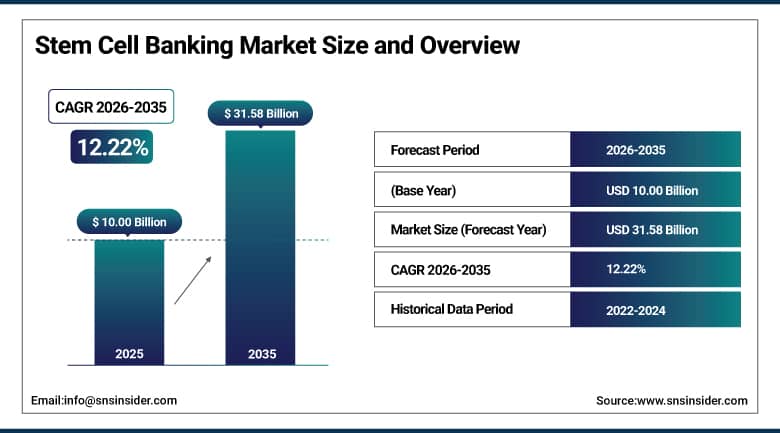
The Stem Cell Banking Market was valued at USD 10.00 Billion in 2025 and is projected to reach USD 31.58 Billion by 2035, expanding at a CAGR of 12.22% from 2026 to 2035.
The Stem Cell Banking Market growth is driven by increasing awareness about regenerative medicine, rising demand for personalized healthcare and increasing utilization of stem cells in clinical research and advanced therapeutic applications. The market growth is driven by increasing investments in biobanking infrastructure, advancements in cryopreservation technologies and increasing acceptance of cord blood and adult stem cell preservation. Increasing research activities in the field of oncology, neurology, orthopedics and rare genetic disorders are encouraging the healthcare providers and families to invest in long-term stem cell storage services.
Cryo-Cell International in 2026 enhanced its stem cell preservation services with the addition of advanced cryogenic storage infrastructure and digital specimen tracking solutions. In 2025, CBR (Cord Blood Registry) added to its newborn stem cell banking services with enhanced processing capabilities and increased long-term storage capacity to support increased demand for family stem cell preservation.
To Get More Information On Stem Cell Banking Market - Request Free Sample Report
Market Trends:
-
Growing adoption of cord blood and tissue banking to support regenerative medicine and future cell-based therapeutic applications.
-
Increasing investment in advanced cryopreservation and biobanking technologies to improve long-term stem cell viability and storage efficiency.
-
Rising demand for personalized regenerative therapies driving greater adoption of stem cell preservation services worldwide.
-
Expanding clinical research involving stem cells for chronic diseases, genetic disorders, and regenerative treatment development.
-
Growing integration of digital sample tracking and automated biobank management systems to enhance storage accuracy and operational efficiency.
U.S. Stem Cell Banking Market Outlook:
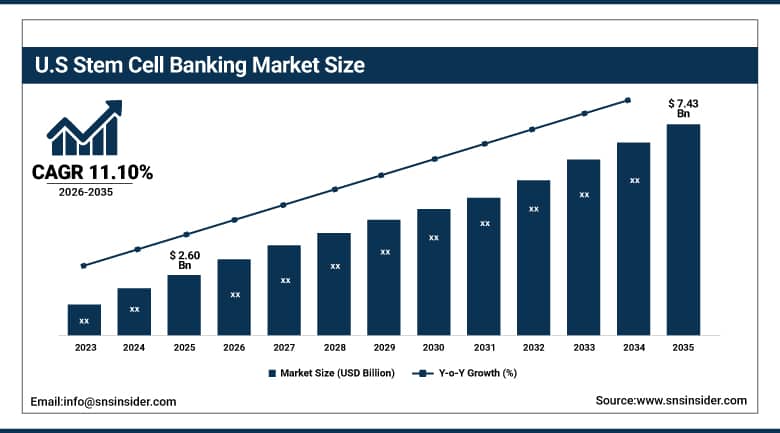
The U.S. Stem Cell Banking Market was valued at approximately USD 2.60 Billion in 2025 and is expected to reach approximately USD 7.43 Billion by 2035, growing at a CAGR of approximately 11.10% from 2026 to 2035.
The U.S. dominates the North American stem cell banking ecosystem due to its advanced healthcare infrastructure, rising awareness of regenerative medicine and substantial investment in biotechnology research. The growth in the market is propelled by growing demand of cord blood preservation, increasing stem cell based clinical research, increasing personalized medicine initiatives and advancements in cryogenic storage technologies. As potential future therapeutic applications expand in oncology, hematology, neurology and autoimmune disease, healthcare providers and families continue to invest in stem cell preservation.
ViaCord announced in 2026 it is expanding its newborn stem cell preservation services with upgraded processing technologies and enhanced long-term storage capabilities. Meanwhile, Americord Registry in 2025 expanded its stem cell banking portfolio with new advanced cell processing technologies and expanded genetic screening services to newborn stem cell preservation.
Stem Cell Banking Market Segment Analysis:
-
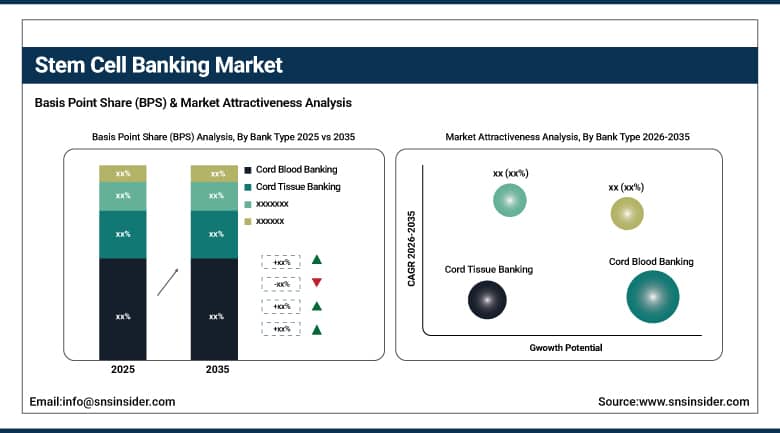
By Bank Type, Cord Blood Banking dominated the stem cell banking market with 46.20% share in 2025, while Induced Pluripotent Stem Cell Banking (iPSC Banking) is the fastest-growing bank type segment from 2026 to 2035.
-
By Service Type, Storage dominated the stem cell banking market with 38.70% share in 2025, while Analysis & Testing is the fastest-growing service segment from 2026 to 2035.
-
By Source, Umbilical Cord Blood dominated the stem cell banking market with 42.50% share in 2025, while Dental Pulp is the fastest-growing source segment from 2026 to 2035.
-
By End User, Individual Consumers dominated the stem cell banking market with 51.30% share in 2025, while Biotechnology & Pharmaceutical Companies are the fastest-growing end-user segment from 2026 to 2035.
By Bank Type, Cord Blood Banking dominates, Induced Pluripotent Stem Cell Banking grows fastest
The Cord Blood Banking was the dominating segment in the stem cell banking market in 2025, holding around 46.20% revenue share. The segment continues to lead due to rising awareness of newborn stem cell preservation, rising use of stem cells from cord blood to treat hematological disorders and rising applications of stem cells in regenerative medicine. Growing collaborations of maternity hospitals with private stem cell banks and improvement in cryopreservation techniques and long-term storage of cryopreserved cord blood are some of the factors that continue to drive demand for cord blood banking services across the globe.
The Induced Pluripotent Stem Cell (iPSC) Banking segment is projected to register the fastest CAGR over the forecast period. The need for iPSC preservation arises from growing research in personalized regenerative medicine, disease modelling, drug discovery, and cell-based therapies. Growing investments in advanced stem cell technologies by research institutes, pharmaceutical organizations and biotechnology companies are further driving global adoption of iPSC banking.
By Service Type, Storage dominates, Analysis & Testing grows fastest
Storage dominated the stem cell banking market in 2025 and accounted for about 38.70% revenue share. The demand for safe cryogenic storage of cord blood, cord tissue and adult stem cells is expanding and public and private stem cell banks continue to provide this core service for long-term preservation. Ongoing investments in automated storage facilities, temperature monitoring systems and quality assurance technologies are further reinforcing this segment within global biobanking networks.
The Analysis & Testing segment is projected to witness fastest growth during the forecast period. The rising standards of regulation, demand for high quality samples, genetic screening, infectious disease testing, and stem cell viability assessment are some of the factors boosting the adoption of advanced laboratory testing services. Stem cell banks are continuously increasing analytical capabilities to improve storage quality and ensure future therapeutic usability.
By Source, Umbilical Cord Blood dominates, Dental Pulp grows fastest
Umbilical Cord Blood dominated the stem cell banking market in 2025, holding approximately 42.50% revenue share. Umbilical cord blood is still the most widely stored stem cell source, due to its noninvasive collection process, high concentration of hematopoietic stem cells, and extensive clinical applications. Growing awareness among expectant parents, expanding newborn banking programmes, and increased use of cord blood in transplantation continue to support segment leadership globally.
Dental Pulp is anticipated to grow at the fastest CAGR during the forecast period. Interest in preservation of the dental pulp is growing as a result of increasing research into therapies involving mesenchymal stem cells, regenerative dentistry, tissue engineering, and neurological applications. Rising awareness of stem cell collection from naturally shed teeth is further creating new growth opportunities for specialized stem cell banking providers.
By End User, Individual Consumers dominate, Biotechnology & Pharmaceutical Companies grow fastest
Individual Consumers dominated the stem cell banking market in 2025 with a revenue share of around 51.30%. The increasing disposable income, growing awareness about the benefits of stem cell preservation in newborns, and increasing acceptance of preventive healthcare are driving the growth in private stem cell banking services. Education campaigns on future therapeutic uses and personalized medicine are expanding, further motivating families to invest in long-term stem cell preservation.
Biotechnology & Pharmaceutical Companies are projected to witness the fastest CAGR growth during the forecast period. Growing investment in the regenerative medicine field, the emergence of cell therapies and the conduct of gene therapy research and clinical trials are driving demand for high quality stem cell storage and processing services. Expanding partnerships between stem cell banks and life science companies improve research capabilities and accelerate innovation in advanced therapeutic development.
Regional Analysis:
|
Region |
Major Country |
Share within Region, 2025 (%) |
|---|---|---|
|
North America |
United States |
81.82% |
|
Europe |
Germany |
27.60% |
|
Asia Pacific |
China |
38.70% |
|
Middle East |
Saudi Arabia |
34.20% |
|
Latin America |
Brazil |
46.10% |
North America Stem Cell Banking Market Insights
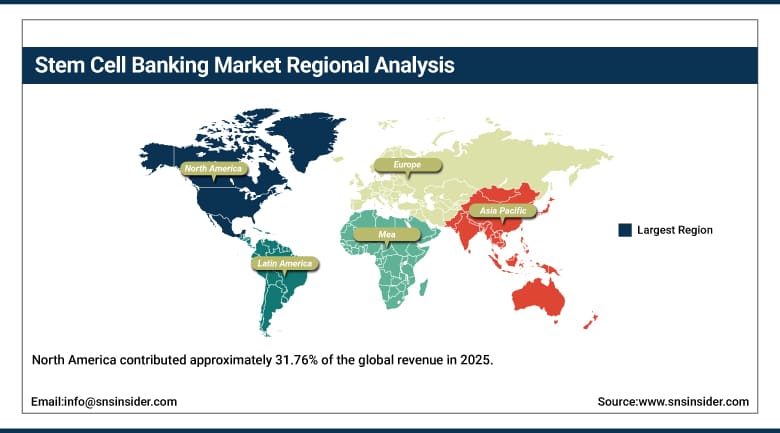
North America contributed approximately 31.76% of the global revenue in 2025 and is the dominant region in the global stem cell banking market. High awareness on stem cell preservation, existence of advanced healthcare infrastructure and huge investments in regenerative medicine research keep the region at the forefront. The growth of the market in the United States and Canada is also supported by favorable reimbursement initiatives, established private and public stem cell banks and increasing adoption of newborn stem cell preservation.
Regional growth is being driven by the rising number of clinical trials with stem cell therapies, the ongoing development of cryopreservation technologies and the rising partnerships between hospitals, biotechnology companies and stem cell banks. Increasing demand for personalized medicine, rising applications of hematopoietic and mesenchymal stem cells and favorable regulatory framework are contributing to the regional market dominance of North America.
Get Customized Report as Per Your Business Requirement - Enquiry Now
Europe Stem Cell Banking Market Insights
Europe is expected to experience the highest growth rate over the forecast period, driven by the growth of regenerative medicine research, government investments in biobanking and the growing demand for therapeutic applications using stem cells. The investments made in healthcare facilities and stem cell research programmes are expected to contribute towards the increasing acceptance of public and private stem cell banking.
With the growing collaboration between research institutions, biotech firms and healthcare organizations it is expected to bring in innovations in stem cell storage technology. Increasing awareness regarding newborn stem cell banking, favorable government regulations and clinical applications of stem cell therapy are some of the factors that would boost the market growth in major European countries.
Asia Pacific Stem Cell Banking Market Insights
Asia Pacific continues to be one of the fastest growing markets due to increasing investments in healthcare, growing awareness of stem cell preservation and increasing biotechnology research activities. Across the region, countries are strengthening healthcare infrastructure and encouraging greater adoption of regenerative medicine and advanced therapeutic research with supportive public and private sector initiatives.
Demand for cord blood and tissue banking services is driven by growing birth rates in several countries, increasing disposable income and rising involvement of private healthcare providers. Continued investment in biotech innovation, growth in clinical research capacity and more partnerships with global life science organizations continue to underpin regional market development.
Middle East & Africa & Latin America Stem Cell Banking Market Insights
The Middle East and Latin America continue to be promising markets for stem cell banking due to improving healthcare infrastructure, rising awareness about regenerative medicine and growing investments in advanced healthcare services. Increasing interest in preservation of stem cells from newborns and expansion of access to specialized healthcare facilities are supporting gradual market development in both the regions.
Governments and private healthcare organizations are increasing their investment in biotechnology research, modernization of laboratories, and advanced biobanking capabilities. Increasing partnerships with international stem cell banking providers, growing awareness of future therapeutic applications, and expanding healthcare spending are likely to create sustainable long-term growth opportunities across both regional markets.
Market Dynamics:
Growth Driver: Rising Demand for Regenerative Medicine and Personalized Healthcare
Stem Cell Banking Market is majorly driven by increasing adoption of regenerative medicine and rising demand for personalized healthcare solutions. Increasingly, more families are banking stem cells, as the potential to use preserved stem cells to treat blood disorders, autoimmune diseases, neurological conditions and regenerative therapies in the future is receiving greater recognition. The rising biotechnology research and the growing number of stem cell clinical trials are the key factors that support the long-term market growth.
The growth of the market is further boosted by improvements in cryopreservation technologies, automated biobanking systems and high-quality processing techniques. The need for infrastructure for stem cell preservation for therapeutic use in future is increasing. Hospitals, research centers and biotech firms are spending more money on infrastructure to preserve stem cells. Awareness campaigns, access to healthcare and proliferation of newborn stem cell preservation programmes continues to drive adoption in developed economies as well as in developing economies.
Restraint: High Banking Costs and Limited Clinical Utilization
The market is hindered by relatively high costs involved in stem cell collection, processing, long-term storage and annual maintenance services. Despite increasing awareness of regenerative medicine, many families in developing countries are reluctant to invest in private stem cell banking due to limited affordability and uncertainty about future clinical use.
Also, inconsistent reimbursement policies, ethical concerns about certain stem cell sources and diverse regulatory frameworks are still hindering broader market adoption. Lack of funding and infrastructure is another issue for public stem cell banks. The small number of approved stem cell therapies compared to the number of stored samples means that sustained commercial expansion is a challenge.
Opportunity: Expanding Cell Therapy Research and Advanced Biobanking Technologies
The stem cell banking market is experiencing substantial growth opportunities driven by the rapid growth of cell therapy research, gene editing technologies and precision medicine. Increasing investments by biotechnological and pharmaceutical organizations into regenerative medicine are driving the demand for high-quality stem cell preservation, processing and analytical services in global healthcare ecosystems.
AI enabled laboratory automation, digital biobank management platforms, robotic cryogenic storage systems and advanced genomic screening technologies are helping to enhance operational efficiency and sample quality. Increasing collaborations between hospitals, academic research institutes and biotech companies and increasing clinical applications of stem cells are expected to provide substantial long-term opportunities for global stem cell banking providers.
Recent Developments:
-
2026: Cryo-Cell International expanded its advanced stem cell processing and cryogenic storage infrastructure to strengthen long-term preservation capacity for newborn stem cell banking.
-
2026: Americord Registry enhanced its stem cell banking platform with advanced laboratory automation and expanded genetic screening services to improve processing quality.
-
2025: Cord Blood Registry (CBR) expanded its newborn stem cell banking capabilities by upgrading automated processing technologies and increasing long-term bio storage capacity.
-
2025: ViaCord strengthened its cord blood and cord tissue banking services through enhanced laboratory technologies and expanded nationwide collection capabilities
Key Players:
-
Cord Blood Registry (CBR)
-
ViaCord
-
Cryo-Cell International
-
Americord Registry
-
Smart Cells International
-
Vita 34 AG
-
Cells4Life
-
Cryo-Save
-
Cordlife Group Limited
-
StemCyte
-
LifeCell International
-
Global Cord Blood Corporation
-
China Cord Blood Corporation
-
FamiCord Group
-
Future Health Biobank
-
BioEden
-
Virgin Health Bank
-
Stemade Biotech
-
PBKM FamiCord
-
NovaCord
Stem Cell Banking Market Report Scope:
| Report Attributes | Details |
|---|---|
| Market Size in 2025 | USD 10.00 Billion |
| Market Size by 2035 | USD 31.58 Billion |
| CAGR | CAGR of 12.22% from 2026 to 2035 |
| Base Year | 2025 |
| Forecast Period | 2026-2035 |
| Historical Data | 2022-2024 |
| Report Scope & Coverage | Market Size, Segments Analysis, Competitive Landscape, Regional Analysis, DROC & SWOT Analysis, Forecast Outlook |
| Key Segments | • By Bank Type (Cord Blood Banking, Cord Tissue Banking, Adult Stem Cell Banking, Induced Pluripotent Stem Cell Banking) • By Service Type (Collection & Transportation, Processing, Analysis & Testing, Storage) • By Source (Placental Stem Cells, Umbilical Cord Blood, Bone Marrow, Adipose Tissue, Dental Pulp) • By End User (Hospitals, Research Institutes, Biotechnology & Pharmaceutical Companies, Individual Consumers) |
| Regional Analysis/Coverage | North America (US, Canada, Mexico), Europe (Eastern Europe [Poland, Romania, Hungary, Turkey, Rest of Eastern Europe] Western Europe] Germany, France, UK, Italy, Spain, Netherlands, Switzerland, Austria, Rest of Western Europe]), Asia Pacific (China, India, Japan, South Korea, Vietnam, Singapore, Australia, Rest of Asia Pacific), Middle East & Africa (Middle East [UAE, Egypt, Saudi Arabia, Qatar, Rest of Middle East], Africa [Nigeria, South Africa, Rest of Africa], Latin America (Brazil, Argentina, Colombia, Rest of Latin America) |
| Company Profiles | Cord Blood Registry (CBR), ViaCord, Cryo-Cell International, Americord Registry, Smart Cells International, Vita 34 AG, Cells4Life, Cryo-Save, Cordlife Group Limited, StemCyte, LifeCell International, Global Cord Blood Corporation, China Cord Blood Corporation, FamiCord Group, Future Health Biobank, BioEden, Virgin Health Bank, Stemade Biotech, PBKM FamiCord, NovaCord |
Frequently Asked Questions
Cord Blood Banking dominated the market in 2025 due to widespread adoption of newborn stem cell preservation and its established use in hematopoietic stem cell transplantation and regenerative medicine research.
North America dominated the Stem Cell Banking Market in 2025 due to advanced healthcare infrastructure, strong biotechnology investments, high awareness of stem cell preservation, and the presence of leading public and private stem cell banking providers.
The Stem Cell Banking Market was valued at approximately USD 10.00 Billion in 2025.
Growing adoption of regenerative medicine, increasing awareness of newborn stem cell preservation, and expanding applications of stem cell therapies are the primary factors driving market growth.
