
Wearable ECG Patch Market Report Scope and Overview:
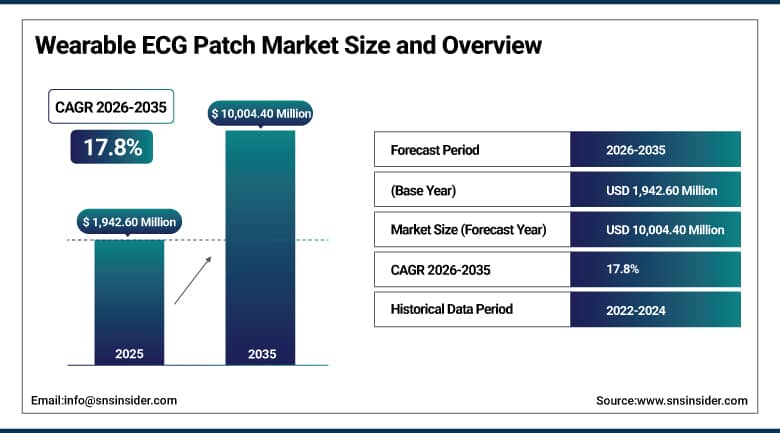
The Wearable ECG Patch Market was valued at USD 1,942.60 Million in 2025 and is projected to reach USD 10,004.40 Million by 2035, registering a CAGR of 17.8% from 2026 to 2035.
The Wearable ECG Patch Market is revolutionizing ambulatory cardiac monitoring with its capability to replace traditional cumbersome and wired Holter monitors with small, adhesive and either disposable or rechargeable patches that can record ECG continuously for several days. Key drivers in the wearable ECG patch market include high incidence of heart ailments, increasing use of AI-based arrhythmia detectors, increased reimbursement for remote patient monitoring, and growing demand for a comfortable, waterproof and extended wear design for improved yield than conventional short duration monitoring. Some key areas of growth witnessed in this market include interoperability of cloud connectivity, electronic health records integration, and home and consumer facing distribution channels owing to preference of extended wear patches over wired monitoring systems.
In 2025, iRhythm Technologies expanded commercial availability of its Zio monitor family with enhanced AI-powered arrhythmia detection algorithms, improving diagnostic yield for atrial fibrillation and other cardiac events across ambulatory cardiac monitoring programs nationwide.
To Get More Information On Wearable ECG Patch Market - Request Free Sample Report
Wearable ECG Patch Market Trends
-
Rising integration of AI-powered arrhythmia detection algorithms continues improving diagnostic yield compared with traditional manual ECG interpretation.
-
Growing adoption of extended-wear, waterproof adhesive patches continues improving patient compliance versus short-duration wired Holter monitors.
-
Expanding interoperable API connectivity continues streamlining real-time ECG data transfer directly into electronic health record systems.
-
Increasing insurer-backed remote cardiac monitoring programs continues accelerating post-discharge patch adoption for cardiac event surveillance.
-
Rising consumer-facing distribution through telehealth and direct-to-patient channels continues expanding access beyond traditional hospital settings.
U.S. Wearable ECG Patch Market Outlook
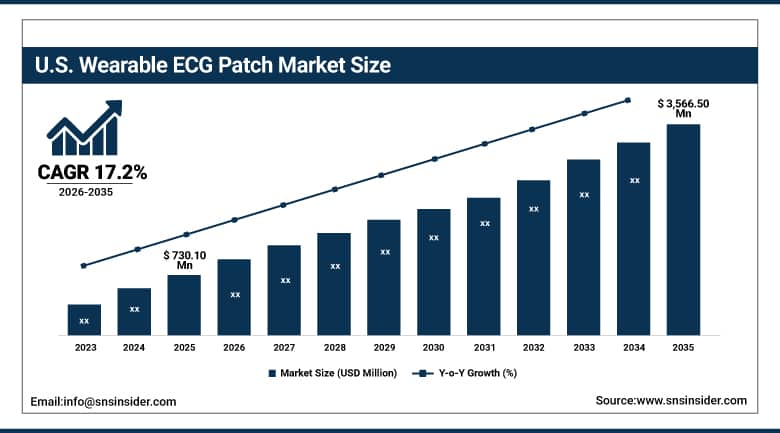
The U.S. Wearable ECG Patch Market was valued at approximately USD 730.10 Million in 2025 and is projected to reach approximately USD 3,566.50 Million by 2035, registering a CAGR of approximately 17.2% from 2026 to 2035.
In the United States, demand remained driven by the high occurrence of cardiovascular disease, significant coverage of ambulatory cardiac monitoring via Medicare and private insurance, and an intense presence of companies manufacturing leading brands of ECG patches within the country. The growing use of remote monitoring programs by major cardiology practices and hospital networks helped cement the U.S.’s role as not only the largest but also the most sophisticated market for wearable ECG patches technology. Growing investments in cloud diagnostics, artificial intelligence-based arrhythmia detection and expansion of home care channels were adding additional layers of demand beyond traditional hospital cardiology departments.
In 2025 VitalConnect launched an updated version of its VitalPatch biosensor, integrating expanded interoperable API connectivity for real-time ECG data transfer directly into electronic health record systems across major American hospital networks.
Wearable ECG Patch Market Segment Analysis
-
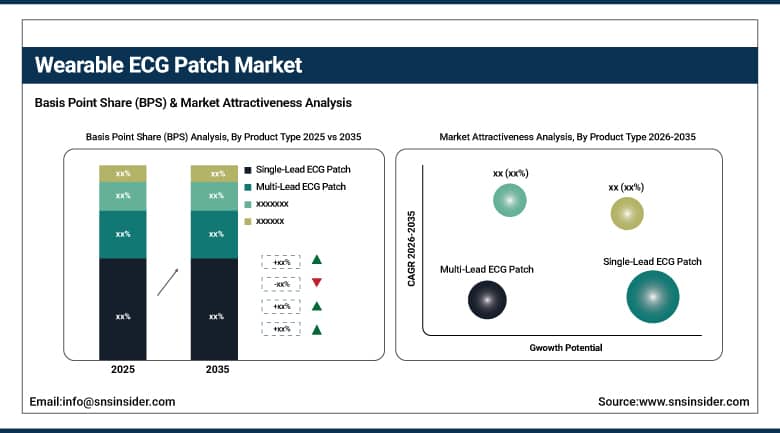
By Product Type, Single-Lead ECG Patch segment dominated the Wearable ECG Patch Market in 2025 with 62.40% share; Multi-Lead ECG Patch segment is the fastest growing segment, registering a CAGR of 19.1% from 2026 to 2035.
-
By Application, Atrial Fibrillation segment dominated the market in 2025 with 46.80% share; Cardiac Event Monitoring segment is the fastest growing segment, registering a CAGR of 19.4% from 2026 to 2035.
-
By End User, Hospitals & Clinics segment dominated the market in 2025 with 48.60% share; Home Care Settings segment is the fastest growing segment, registering a CAGR of 20.0% from 2026 to 2035.
-
By Distribution Channel, Offline segment dominated the market in 2025 with 68.30% share; Online segment is the fastest growing segment, registering a CAGR of 20.3% from 2026 to 2035.
By Product Type, Single-Lead Patches Lead the Market While Multi-Lead Patches Post the Fastest Growth
The Single-Lead ECG Patch segment dominated Wearable ECG Patch Market in 2025 owing to its less expensive manufacturing, easier regulatory clearance process, and proven adequacy to detect common arrhythmias such as atrial fibrillation in standard ambulatory monitoring. Prevalent usage of single lead patches by physicians along with wide insurance coverage for standard ambulatory cardiac monitoring procedures strengthened Single Lead patch's status as a standard solution for ambulatory cardiac monitoring. Furthermore, well-established manufacturing scale of existing device manufacturers also backed revenue dominance of single lead segment.
The Multi-Lead ECG Patch segment is the fastest growing in the Wearable ECG Patch Market, driven by rising clinical demand for higher diagnostic resolution capable of detecting complex arrhythmias and subtle morphological changes that single-lead devices may miss. Growing physician preference for multi-lead patches in complex cardiology cases, combined with continued miniaturization of multi-electrode sensor technology, continues expanding this segment's addressable clinical use cases beyond routine screening into more specialized diagnostic applications.
By Application, Atrial Fibrillation Dominates While Cardiac Event Monitoring Records the Fastest Growth
The Atrial Fibrillation segment was the biggest revenue-generating segment in the Wearable ECG Patch Market in 2025 due to the nature of the condition being the most prevalent type of sustained cardiac arrhythmia and hence the biggest clinical indication for the use of ECG patches. Increasing prevalence of the atrial fibrillation condition due to aging populations across the globe coupled with increasing emphasis on longer monitoring periods to increase diagnostic yield contributed to the growth of the application.
The Cardiac Event Monitoring segment is the fastest growing in the Wearable ECG Patch Market as insurer-backed remote monitoring programs increasingly rely on extended-wear patches to track post-discharge cardiac patients and detect intermittent, symptom-triggered arrhythmic events that shorter monitoring periods would miss. Growing adoption of value-based care models emphasizing proactive cardiac event detection continues expanding demand for continuous, multi-day monitoring capability across both hospital and home care settings.
By End User, Hospitals Dominate While Home Care Settings Post the Fastest Growth
The Hospitals & Clinics segment dominated the Wearable ECG Patch Market in 2025 due to the concentration of cardiology specialists, diagnostic infrastructure, and clinical protocols required to prescribe, apply, and interpret ambulatory ECG patch monitoring results. Large hospital networks and outpatient cardiology practices continued investing in patch-based monitoring programs to replace legacy wired Holter systems, reinforcing this segment's position as the largest end-user category for wearable ECG patch technology.
The Home Care Settings segment is the fastest growing in the Wearable ECG Patch Market as remote patient monitoring programs increasingly enable patients to wear and self-apply ECG patches at home while data streams directly to monitoring centers and treating physicians. Growing payer support for home-based chronic disease management, combined with rising patient preference for monitoring outside clinical settings, continues accelerating this segment's growth well ahead of traditional hospital-based monitoring channels.
By Distribution Channel, Offline Sales Dominate While Online Channels Post the Fastest Growth
Offline segment led the Wearable ECG Patch Market in 2025 due to the pre-existing business arrangements between the manufacturers and purchasing departments of hospitals, cardiologists, and medical device distribution firms, who still account for the vast bulk of prescriptions for ECG patches. Pre-existing network of distributors and procurement agreements made offline distribution the dominant channel for such medical devices.
The Online segment is the fastest growing in the Wearable ECG Patch Market as telehealth-driven prescribing models and direct-to-patient digital fulfillment platforms increasingly support recurring patch replacement orders for chronic remote monitoring patients. Growing manufacturer investment in digital ordering and patient support platforms continues accelerating online channel adoption as remote cardiac monitoring programs scale beyond traditional in-person clinical procurement pathways.
Regional Analysis
|
Region |
Major Country |
Share within Region, 2025 (%) |
|
North America |
United States |
87.00% |
|
Europe |
Germany |
22.60% |
|
Asia Pacific |
China |
31.50% |
|
Middle East and Africa |
UAE |
26.20% |
|
Latin America |
Brazil |
34.10% |
North America Wearable ECG Patch Market Insights
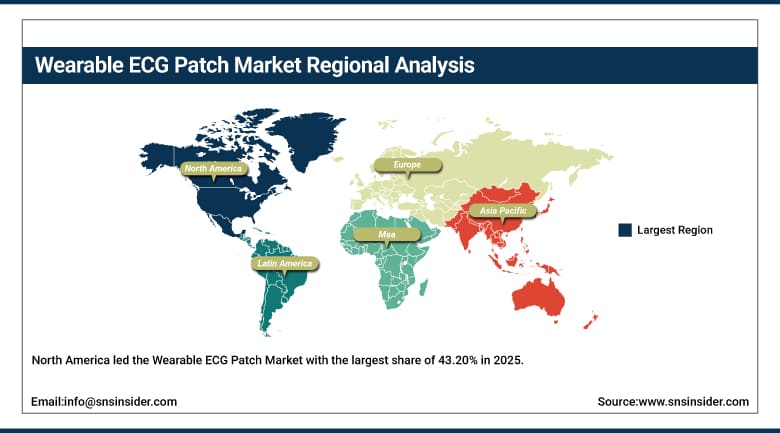
North America led the Wearable ECG Patch Market with the largest share of 43.20% in 2025. High cardiovascular disease prevalence, extensive Medicare and commercial insurance reimbursement for ambulatory cardiac monitoring, and a dense concentration of leading device manufacturers continued reinforcing this dominant regional position. Well-established cardiology practice infrastructure, broad clinical guideline support for extended-wear monitoring, and early adoption of AI-driven arrhythmia detection technology further supported sustained regional demand throughout the current forecast period.
The United States accounted for highest regional revenue, anchored by its large cardiovascular disease patient population, extensive outpatient cardiology infrastructure, and favorable reimbursement policy covering both diagnostic and remote monitoring patch applications. Canada added further regional demand through steady public healthcare system investment in cardiac diagnostic modernization, and that combined strength kept the continent the largest addressable market for wearable ECG patch vendors through the forecast period.
Get Customized Report as Per Your Business Requirement - Enquiry Now
Europe Wearable ECG Patch Market Insights
Europe held a meaningful share of global revenue, supported by well-established public healthcare systems, strong national health service investment in digital cardiac diagnostics, and growing regulatory support for remote patient monitoring reimbursement pathways. Continued clinical guideline emphasis on extended cardiac monitoring for atrial fibrillation detection reinforced sustained demand for wearable ECG patch technology across the region's leading healthcare economies.
Germany accounted for most of the demand share driven by Germany’s established medical devices manufacturing industry and good statutory health insurance system that offers coverage for the cardiac diagnostics technologies. The UK and France also made up for the substantial demand from their NHS and hospital investments into remote cardiac monitoring systems. Expansion of digital health initiatives in Europe would keep the regional demand growing during the forecast period.
Asia Pacific Wearable ECG Patch Market Insights
Asia Pacific is advancing at the fastest pace among all regions tracked in this report, growing at a CAGR of 21.40% through 2035, driven by rapidly rising cardiovascular disease prevalence, expanding hospital and diagnostic infrastructure, and growing healthcare expenditure across the region's largest economies. Rising domestic device manufacturing capability and improving patient access to advanced cardiac diagnostic technology kept the region's growth trajectory well ahead of every other region tracked in this report.
China led the pack of regional revenue, supported by substantial government investment in hospital infrastructure and rapidly expanding domestic wearable medical device manufacturing capability. Japan and India contributed meaningful additional demand, with India's growing outpatient cardiology infrastructure and Japan's advanced healthcare technology adoption both reinforcing the region's position as the fastest-growing market tracked in this report.
MEA and Latin America Wearable ECG Patch Market Insights
The Middle East and Africa and Latin America both showed steady growth, driven by expanding hospital infrastructure investment, growing government focus on cardiovascular disease management, and rising demand for advanced ambulatory cardiac diagnostic capacity across both areas. As these markets continued building out modern healthcare infrastructure, wearable ECG patches offered a genuinely efficient way to expand cardiac monitoring capacity beyond conventional wired diagnostic equipment alone.
The UAE led Middle East and Africa demand of regional revenue, supported by the country's advanced private hospital infrastructure and substantial cardiovascular care investment. Saudi Arabia contributed further demand through its own hospital modernization programs. In Latin America, Brazil accounted for significant share of regional revenue, with growing public and private hospital investment continuing to anchor regional demand for wearable ECG patch technology.
Market Dynamics
Growth Drivers: Rising Cardiovascular Disease Burden and Remote Monitoring Adoption
The industry is driven by rising global cardiovascular disease prevalence, growing clinical demand for extended-wear cardiac monitoring capable of detecting intermittent arrhythmic events, and expanding insurer reimbursement for remote patient monitoring programs. As aging populations continue driving elevated atrial fibrillation and other arrhythmia incidence, the clinical need for continuous, patient-friendly monitoring solutions continues driving adoption of wearable ECG patches over legacy wired Holter monitoring systems.
Growing integration of AI-powered arrhythmia detection algorithms continues reinforcing this driver, as automated analysis improves diagnostic yield while reducing the manual interpretation burden on cardiology staff reviewing extended monitoring data. Rising adoption of interoperable cloud connectivity and direct electronic health record integration continues improving clinical workflow efficiency, and that combination of diagnostic accuracy and workflow convenience is exactly what keeps hospital and remote monitoring demand climbing at such a sustained, steady pace.
Restraints: Signal Quality Limitations and Reimbursement Variability
Signal quality limitations inherent to single-lead patch technology continue posing a genuine restraint on faster market-wide expansion, particularly for complex arrhythmia cases requiring the diagnostic resolution that only multi-lead systems can reliably provide. That technical limitation has kept some cardiology specialists reserving patch-based monitoring for routine screening while retaining traditional multi-lead systems for complex diagnostic workups.
Reimbursement variability across different healthcare systems and payer policies continues posing a further restraint, as coverage for extended-wear ambulatory monitoring differs meaningfully by country and insurance plan type. That inconsistency keeps some smaller healthcare providers and cost-constrained health systems reliant on shorter-duration monitoring protocols rather than committing to extended-wear patch-based programs.
Opportunities: AI-Driven Diagnostics and Emerging Market Healthcare Infrastructure Expansion
Advancing artificial intelligence and machine learning capability for automated arrhythmia detection represents a genuinely significant opportunity, as improved algorithmic accuracy could substantially reduce the clinical review burden currently required for interpreting extended ECG patch monitoring data. Vendors positioned early with strong AI-assisted diagnostic software stand to capture meaningful share as healthcare systems seek to scale remote cardiac monitoring capacity without proportionally expanding cardiology staffing.
Rapidly expanding hospital and diagnostic infrastructure across emerging markets offers a second substantial opportunity, as government healthcare investment programs across Asia Pacific, Latin America, and the Middle East continue creating fresh demand for accessible ambulatory cardiac diagnostic capacity. Vendors with proven, cost-competitive single-lead patch platforms stand to capture meaningful share as developing healthcare systems build out modern cardiac diagnostic capability from a comparatively low existing base.
Recent Developments:
-
2026: FDA has cleared AliveCor for its Kardia 12L ECG system, which adds a mobile 12-lead offering to the firm’s clinically-focused ECG monitoring product line.
-
2026: Industry of ECG Patches: New technological innovations have been incorporating ECG patches, arrhythmia detection with AI, connectivity to the cloud, and multi-parameter sensing into ECG patches to aid in the transition to remote cardiac monitoring.
-
2025: AliveCor received expanded regulatory clearance for its KardiaMobile Card wearable ECG platform, broadening consumer and clinical access to single-lead cardiac rhythm monitoring.
-
2024: Philips expanded its mobile cardiac telemetry patch portfolio with a redesigned adhesive sensor aimed at improving multi-day wear comfort for extended ambulatory cardiac monitoring.
Wearable ECG Patch Market key players are:
-
iRhythm Technologies, Inc.
-
Koninklijke Philips N.V.
-
VitalConnect, Inc.
-
AliveCor, Inc.
-
GE HealthCare Technologies Inc.
-
Boston Scientific Corporation
-
Biotricity Inc.
-
Baxter International Inc.
-
Medtronic plc
-
QT Medical, Inc.
-
CardioComm Solutions Inc.
-
Vivalink Inc.
-
Biofourmis Inc.
-
Nihon Kohden Corporation
-
LifeSignals Group Inc.
-
Zoll Medical Corporation
-
GENTAG Inc.
-
2M Engineering Ltd.
-
DarioHealth Corp.
-
PKvitality S.A.S.
Wearable ECG Patch Market Report Scope:
| Report Attributes | Details |
|---|---|
| Market Size in 2025 | USD 1,942.60 Million |
| Market Size by 2035 | USD 10,004.40 Million |
| CAGR | CAGR of 17.8% From 2026 to 2035 |
| Base Year | 2025 |
| Forecast Period | 2026-2035 |
| Historical Data | 2022-2024 |
| Report Scope & Coverage | Market Size, Segments Analysis, Competitive Landscape, Regional Analysis, DROC & SWOT Analysis, Forecast Outlook |
| Key Segments | • By Product Type (Single-Lead ECG Patch, Multi-Lead ECG Patch) • By Application (Arrhythmia, Atrial Fibrillation, Cardiac Event Monitoring, Others) • By End User (Hospitals & Clinics, Home Care Settings, Ambulatory Surgical Centers, Others) • By Distribution Channel (Online, Offline) |
| Regional Analysis/Coverage | North America (US, Canada), Europe (Germany, UK, France, Italy, Spain, Russia, Poland, Rest of Europe), Asia Pacific (China, India, Japan, South Korea, Australia, ASEAN Countries, Rest of Asia Pacific), Middle East & Africa (UAE, Saudi Arabia, Qatar, South Africa, Rest of Middle East & Africa), Latin America (Brazil, Argentina, Mexico, Colombia, Rest of Latin America). |
| Company Profiles | iRhythm Technologies, Inc., Koninklijke Philips N.V., VitalConnect, Inc., AliveCor, Inc., GE HealthCare Technologies Inc., Boston Scientific Corporation, Biotricity Inc., Baxter International Inc., Medtronic plc, QT Medical, Inc., CardioComm Solutions Inc., Vivalink Inc., Biofourmis Inc., Nihon Kohden Corporation, LifeSignals Group Inc., Zoll Medical Corporation, GENTAG Inc., 2M Engineering Ltd., DarioHealth Corp., PKvitality S.A.S. |

Frequently Asked Questions
Key players include iRhythm Technologies, Inc., Koninklijke Philips N.V., VitalConnect, Inc., AliveCor, Inc., and GE HealthCare Technologies Inc., among others.
Key opportunities include rising demand for continuous cardiac monitoring, increasing prevalence of cardiovascular diseases, AI-enabled arrhythmia detection, remote patient monitoring adoption, and growing preference for minimally invasive wearable devices.
The major growth factor is rising cardiovascular disease prevalence, expanding remote patient monitoring reimbursement, and growing adoption of AI-powered arrhythmia detection technology.
The Single-Lead ECG Patch segment dominated the Wearable ECG Patch Market by product type, representing the largest share of revenue in 2025.
North America dominated the Wearable ECG Patch Market in 2025, holding an estimated 43.20% share of total global market revenue.
